
The Body Remembers: 3 Natural Ways to Release Emotional Trauma Without Reliving It.
Healing trauma doesn't require reliving the pain. Discover 3 evidence-based, natural approaches to releasing stored emotional trauma gently from the body and nervous system.


One of the most persistent myths about healing trauma is that you must re-experience and verbally process every detail of what happened in order to heal from it. For many trauma survivors, the thought of 'reliving' their most painful experiences in a clinical setting is itself a barrier to seeking help — and an understandable one.
The good news from contemporary trauma research — particularly the work of pioneers like Peter Levine, Bessel van der Kolk, and Pat Ogden — is that the body has its own wisdom for releasing stored trauma that does not require narrating the story of what happened. This article explores three powerful, evidence-informed natural approaches to healing emotional trauma gently, safely, and without reliving it.
Heal Trauma Naturally: Why the Body Holds the Key
Trauma is not primarily a story. It is a physiological event — a charge of survival energy that floods the nervous system in response to an overwhelming threat and, if not fully discharged, becomes stored in the body's tissues, breath patterns, muscular tension, and nervous system regulation patterns.
Peter Levine's foundational observation — watching how animals in the wild instinctively discharge trauma through shaking and trembling after a life-threatening event — revolutionized our understanding of trauma processing. Humans, he argued, have the same innate capacity, but we have learned to suppress it in the service of social acceptability. The result is stored trauma that continues to shape our physiology and psychology long after the event itself has passed.
Natural Way #1: Somatic Experiencing and Therapeutic Movement
Somatic Experiencing (SE) — developed by Peter Levine — is a body-centred approach to trauma healing that works by gradually and safely helping the nervous system complete the survival responses that were interrupted during traumatic experiences. Rather than asking you to narrate your trauma, it asks you to notice physical sensations, track their movement in your body, and allow the natural discharge cycle to complete.
You do not need formal SE sessions to begin incorporating somatic principles into your healing. Therapeutic movement — gentle yoga, tai chi, authentic movement, or intuitive dance — can begin to loosen and release the armoring that stored trauma creates in the body.
Practical Tip: Try the 'shake and discharge' practice. Stand with your feet hip-width apart, slightly bend your knees, and allow your legs to begin gently trembling and shaking. Let the movement spread through your body naturally — without forcing or performing it. Stay with it for five to ten minutes. This practice, derived from TRE (Trauma and Tension Releasing Exercises), helps discharge the residual survival energy stored in the neuromuscular system.
Natural Way #2: Breathwork and Nervous System Regulation
The breath is the only autonomic function we can consciously control, which makes it one of the most powerful tools available for directly regulating the nervous system. Specific breathwork practices have been shown in research to reduce cortisol levels, shift the nervous system from sympathetic (fight-or-flight) dominance to parasympathetic (rest-and-restore) regulation, and facilitate the release of stored emotional charge.
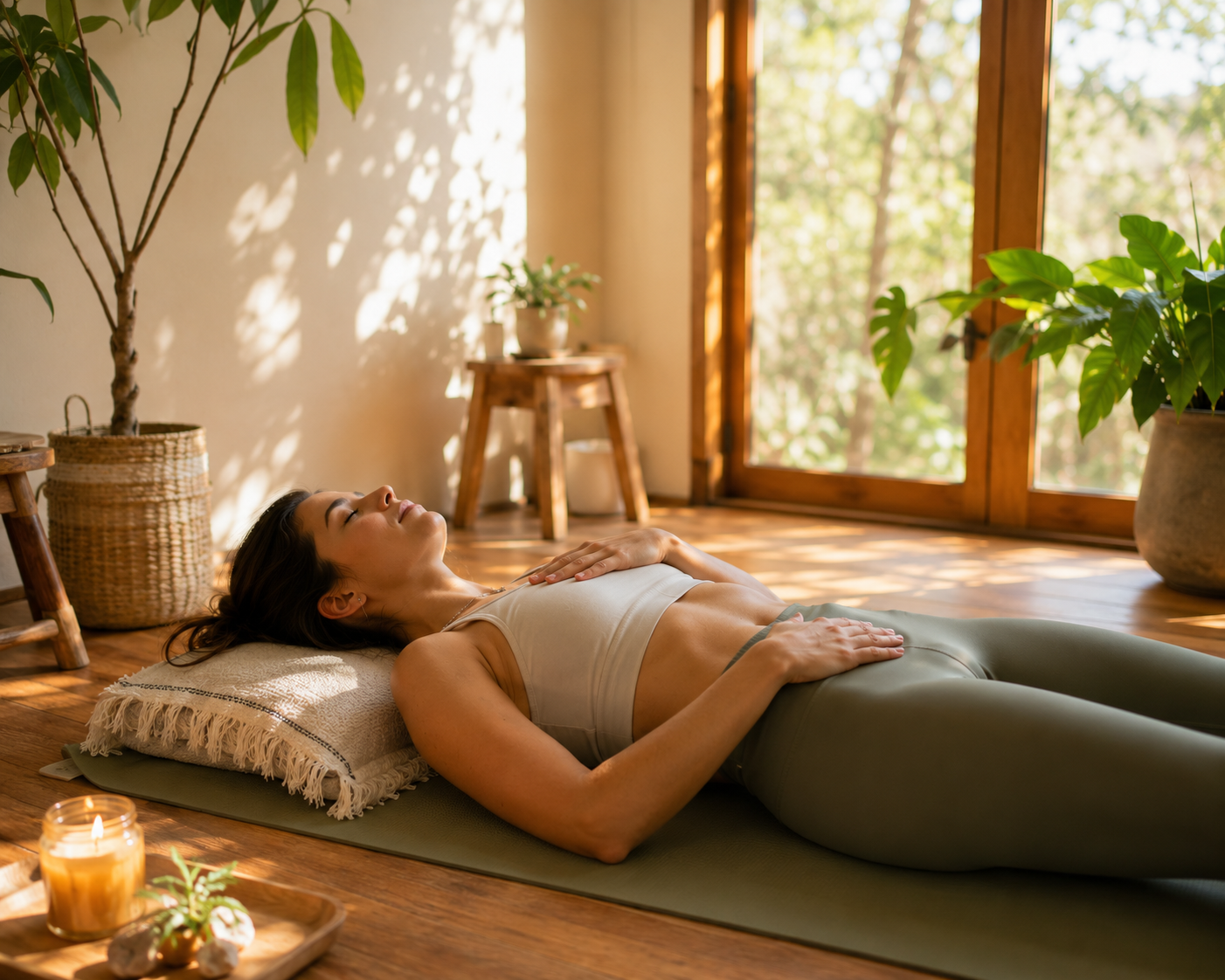
Diaphragmatic breathing — deep belly breathing that fully engages the diaphragm — activates the vagus nerve, the primary pathway of the parasympathetic nervous system. Extended exhale breathing (where the exhale is longer than the inhale) is particularly effective for calming an activated nervous system.
Practical Tip: Try the 4-7-8 breathing technique. Inhale through the nose for 4 counts. Hold for 7 counts. Exhale through the mouth for 8 counts. Repeat 4 cycles. Practice this daily, or whenever you notice the activation of a trauma response — and notice, over weeks of practice, how your baseline nervous system state begins to shift.
Natural Way #3: Time in Nature and Earthing
The healing properties of time spent in natural environments are extensively documented in the research literature. Spending time in green spaces reduces cortisol, lowers blood pressure, decreases amygdala activation (the brain's threat-detection centre), and promotes the production of serotonin and endorphins.
Earthing — the practice of direct physical contact with the ground (bare feet on soil, grass, or sand) — has been shown in several studies to reduce inflammatory markers, normalize cortisol rhythms, and improve heart rate variability, all of which are indicators of improved nervous system regulation.
From a spiritual perspective, connection with the earth is one of the most ancient and universal healing practices across human cultures. It grounds excess energetic charge, supports emotional regulation, and reconnects the body with a biological rhythm far older and steadier than the pace of modern life.

Supporting Your Natural Trauma Healing Journey
• Work with a trauma-informed therapist alongside these self-help practices — especially for complex or severe trauma
• Create safety first: a stable environment, consistent daily routine, and a trusted support person are prerequisites for trauma work
• Be patient and compassionate with yourself — trauma healing is rarely linear
• Track your progress in a journal, noticing changes in your nervous system regulation, sleep, and emotional range over weeks and months
• Celebrate small improvements — the ability to feel safe in your own body, even briefly, is a genuine healing milestone
Final Thoughts on Healing Trauma Naturally
The body remembers. But the body also knows how to heal — and that healing does not require you to relive the worst moments of your life in painful detail. It requires patience, presence, and a willingness to bring gentle, compassionate attention to the places in you that have been waiting for exactly that.
You have everything you need. Start where you are. Begin with your breath.
About the Creator
Wilson Igbasi
Hi, I'm Wilson Igbasi — a passionate writer, researcher, and tech enthusiast. I love exploring topics at the intersection of technology, personal growth, and spirituality.
Enjoyed the story? Support the Creator.
Subscribe for free to receive all their stories in your feed.
Comments
There are no comments for this story
Be the first to respond and start the conversation.