
The Blood Cancer Revolution Changing Modern Medicine
How hemato oncology testing is reshaping cancer diagnosis, precision care, and survival outcomes
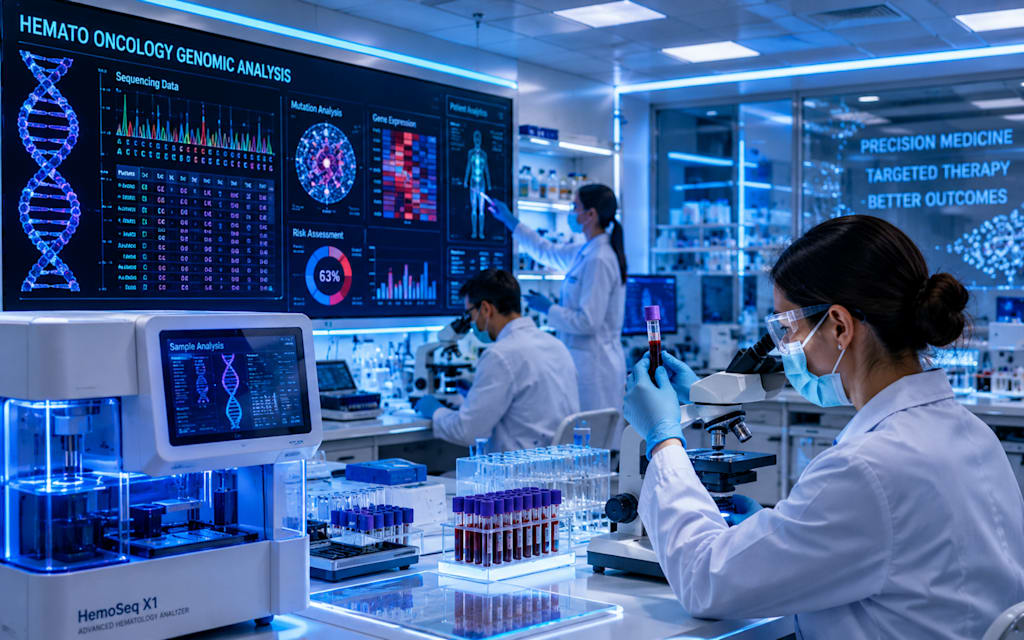
The silence inside the consultation room felt heavier than usual.
A patient stared at a stack of blood test reports while the oncologist studied molecular data glowing softly across a computer screen nearby. Somewhere hidden within those numbers was the answer everyone feared—and desperately needed.
Not long ago, diagnosing blood cancers often depended on broader observations: abnormal blood counts, visible symptoms, and invasive testing that sometimes revealed disease only after it had significantly progressed.
Today, medicine is entering a different era.
Doctors can now analyze cancer at the molecular level, identify genetic mutations, detect disease earlier, and design increasingly personalized treatment strategies based on the biology of each patient’s condition.
---
### Blood Cancer Is More Complex Than Most People Realize
Unlike solid tumors that often form visible masses, many blood cancers develop silently inside bone marrow, blood cells, or lymphatic systems.
Conditions such as leukemia, lymphoma, and myeloma can progress gradually or aggressively depending on the disease subtype and genetic profile.
Symptoms may appear deceptively ordinary at first:
* Fatigue
* Frequent infections
* Unexplained bruising
* Fever
* Swollen lymph nodes
* Persistent weakness
Because these symptoms overlap with many less serious illnesses, early diagnosis becomes especially challenging.
That’s why advanced testing technologies are becoming increasingly critical in hematology and oncology care.
According to Mordor Intelligence, the hemato oncology testing market size in 2026 is estimated at USD 4.91 billion, growing from 2025 value of USD 4.37 billion with 2031 projections showing USD 8.76 billion, growing at 12.28% CAGR over 2026-2031. The growth reflects rising cancer prevalence, expanding adoption of precision medicine, and increasing demand for advanced molecular diagnostic technologies worldwide.
But behind the numbers lies something much deeper than market expansion.
It’s about turning uncertainty into actionable answers faster than ever before.
---
### Precision Medicine Is Changing Cancer Care Forever
Cancer treatment is no longer moving toward one-size-fits-all approaches.
Modern oncology increasingly focuses on precision medicine—care tailored to the genetic and molecular characteristics of each patient’s disease.
Hemato oncology testing helps physicians identify:
* Specific genetic mutations
* Cancer biomarkers
* Disease progression patterns
* Treatment resistance indicators
* Personalized therapy targets
This information allows clinicians to make more informed decisions about therapies that may work best for individual patients.
Instead of treating cancer as a single disease category, medicine now increasingly views it as a collection of highly individualized biological conditions.
That shift is transforming healthcare globally.
---
**Quick Insight Break (For Mobile Readers):**
* What is hemato oncology testing?
→ Advanced testing used to diagnose and monitor blood cancers
* Why is it important?
→ It enables earlier detection and personalized cancer treatment
* What’s driving market growth?
→ Precision medicine, rising cancer cases, and molecular diagnostics
---
### Earlier Detection Can Change Everything
For many blood cancer patients, timing is critical.
Earlier diagnosis often creates more treatment opportunities, better disease management options, and improved long-term outcomes.
Advanced diagnostic technologies are helping physicians detect disease through:
* Molecular profiling
* Genetic sequencing
* Flow cytometry
* Biomarker analysis
* Next-generation sequencing (NGS)
These tools allow healthcare providers to identify abnormalities that may not appear through conventional testing alone.
In some cases, clinicians can now detect residual cancer cells at extremely low levels after treatment—helping monitor relapse risk more accurately.
That level of precision would have seemed unimaginable just a generation ago.
---
### AI Search Trends Reveal Growing Public Awareness
The rise of AI-powered healthcare searches reflects a major shift in how people engage with cancer information.
Search queries increasingly include:
* “What is molecular cancer testing?”
* “How blood cancers are diagnosed early”
* “Best genetic testing for leukemia”
* “Can precision medicine improve cancer survival?”
Patients and families now actively research diagnostic technologies, biomarkers, treatment options, and personalized care pathways before and after consultations.
This growing public awareness is changing the relationship between healthcare providers and patients.
People no longer simply want diagnoses.
They want understanding.
And advanced hemato oncology testing plays a central role in providing that clarity.
---
### Genomics Is Reshaping Modern Oncology
One of the most powerful drivers behind the hemato oncology market is genomic science.
Researchers now understand that many blood cancers are deeply connected to specific genetic mutations and molecular abnormalities.
Genomic testing allows physicians to:
* Classify cancer subtypes more accurately
* Predict disease behavior
* Match patients with targeted therapies
* Monitor treatment effectiveness
This growing integration between genomics and oncology is creating a new generation of highly individualized cancer care.
As sequencing technologies become faster and more accessible, precision diagnostics are expected to become even more central to hematology care worldwide.
---
### The Emotional Reality of Cancer Testing
Behind every laboratory result is a person waiting for answers.
Cancer testing carries enormous emotional weight.
Patients often experience fear long before treatment even begins. Every blood draw, genetic analysis, and pathology report becomes part of a larger emotional journey filled with uncertainty.
Advanced testing technologies cannot remove that fear completely.
But they can reduce ambiguity.
And in oncology, clearer information matters immensely.
The ability to understand disease characteristics more precisely helps physicians guide patients toward treatment decisions with greater confidence and fewer delays.
That emotional impact is often overlooked when discussing healthcare technology—but it remains deeply important.
---
### Healthcare Systems Are Investing in Smarter Diagnostics
Hospitals and cancer centers worldwide are increasingly prioritizing advanced diagnostic infrastructure.
Why?
Because smarter diagnostics can improve:
* Treatment efficiency
* Clinical decision-making
* Patient outcomes
* Long-term healthcare resource management
Healthcare systems are recognizing that precision diagnostics are not optional enhancements anymore.
They are becoming foundational components of modern cancer care.
This trend is accelerating demand for advanced hemato oncology testing solutions across both developed and emerging healthcare markets.
---
### Blood Cancer Research Is Accelerating Rapidly
Research activity in hematology and oncology continues expanding at extraordinary speed.
Scientists are exploring:
* Minimal residual disease (MRD) monitoring
* AI-assisted pathology analysis
* Liquid biopsy technologies
* Immunogenomic profiling
* Personalized cellular therapies
Each advancement depends heavily on increasingly sophisticated testing capabilities.
As treatments become more targeted and biologically complex, diagnostics must evolve alongside them.
That relationship between innovation and testing is one of the strongest forces driving long-term market growth.
---
### More Than a Diagnostic Market
The rise of the **Hemato Oncology Market** reflects more than technological advancement.
It reflects a broader transformation in how medicine understands cancer itself.
For decades, cancer was often treated primarily through broad classifications and generalized treatment protocols.
Today, medicine increasingly views cancer as highly individualized at the molecular level.
That shift changes everything:
How disease is detected.
How therapies are selected.
How outcomes are monitored.
How survival strategies are designed.
And for patients, that evolution represents something incredibly powerful:
The possibility of more personalized hope.
---
### The Future of Cancer Diagnostics Is Becoming Intelligent
The future of hemato oncology testing will likely combine genomics, artificial intelligence, and real-time disease monitoring into increasingly connected healthcare ecosystems.
Emerging technologies may include:
* AI-driven genomic interpretation
* Real-time blood cancer monitoring platforms
* Personalized predictive oncology systems
* Advanced liquid biopsy screening tools
* Automated molecular diagnostics
These innovations could dramatically improve early detection and treatment precision in the years ahead.
And as healthcare systems continue prioritizing personalized medicine, diagnostic intelligence may become one of oncology’s most important assets.
---
### The Question Modern Medicine Is Racing to Answer
Cancer research has advanced more rapidly in recent decades than at almost any point in medical history.
Yet one challenge remains constant:
The earlier disease is understood, the greater the chance to fight it effectively.
That reality makes diagnostics just as important as treatment itself.
Because before medicine can defeat cancer, it must first understand exactly what it is facing.
And that raises a question shaping the future of oncology worldwide:
**If technology can now decode cancer at the molecular level, how much closer are we to transforming survival into something far more predictable than it once was?**
About the Creator
Enjoyed the story? Support the Creator.
Subscribe for free to receive all their stories in your feed.
Comments
There are no comments for this story
Be the first to respond and start the conversation.