
The Billion-Dollar Ingredient Hiding Inside Your Soap
Most consumers never hear about soap noodles — yet the global beauty industry depends on them.
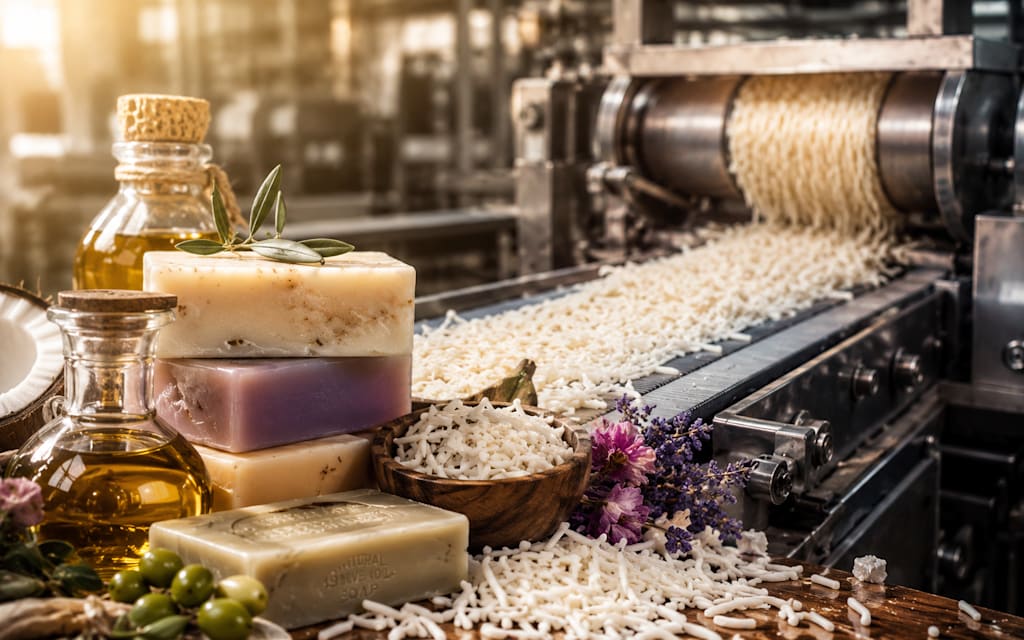
The average person uses soap multiple times a day without thinking twice about what goes into it. A quick hand wash before lunch. A shower after work. A bar of soap resting quietly beside the sink. It feels ordinary — almost invisible in daily life.
But behind every smooth, fragrant soap bar sits an ingredient quietly powering a massive global industry: soap noodles.
Most consumers have never heard the term before. Yet manufacturers across skincare, personal hygiene, hospitality, and beauty industries rely heavily on these tiny processed pellets to create the soaps filling supermarket shelves worldwide. What seems like a simple bathroom essential is actually part of a rapidly evolving industrial ecosystem connected to global trade, consumer behavior, sustainability debates, and billion-dollar manufacturing operations.
In recent years, the “soap noodles market” has started attracting growing attention as hygiene awareness, beauty trends, and premium skincare demand continue rising globally. According to Mordor Intelligence, the market is experiencing steady growth due to increasing demand for personal hygiene products and expanding soap manufacturing industries worldwide. The rising focus on cleanliness and wellness has significantly influenced the soap noodles market size and long-term industry outlook.
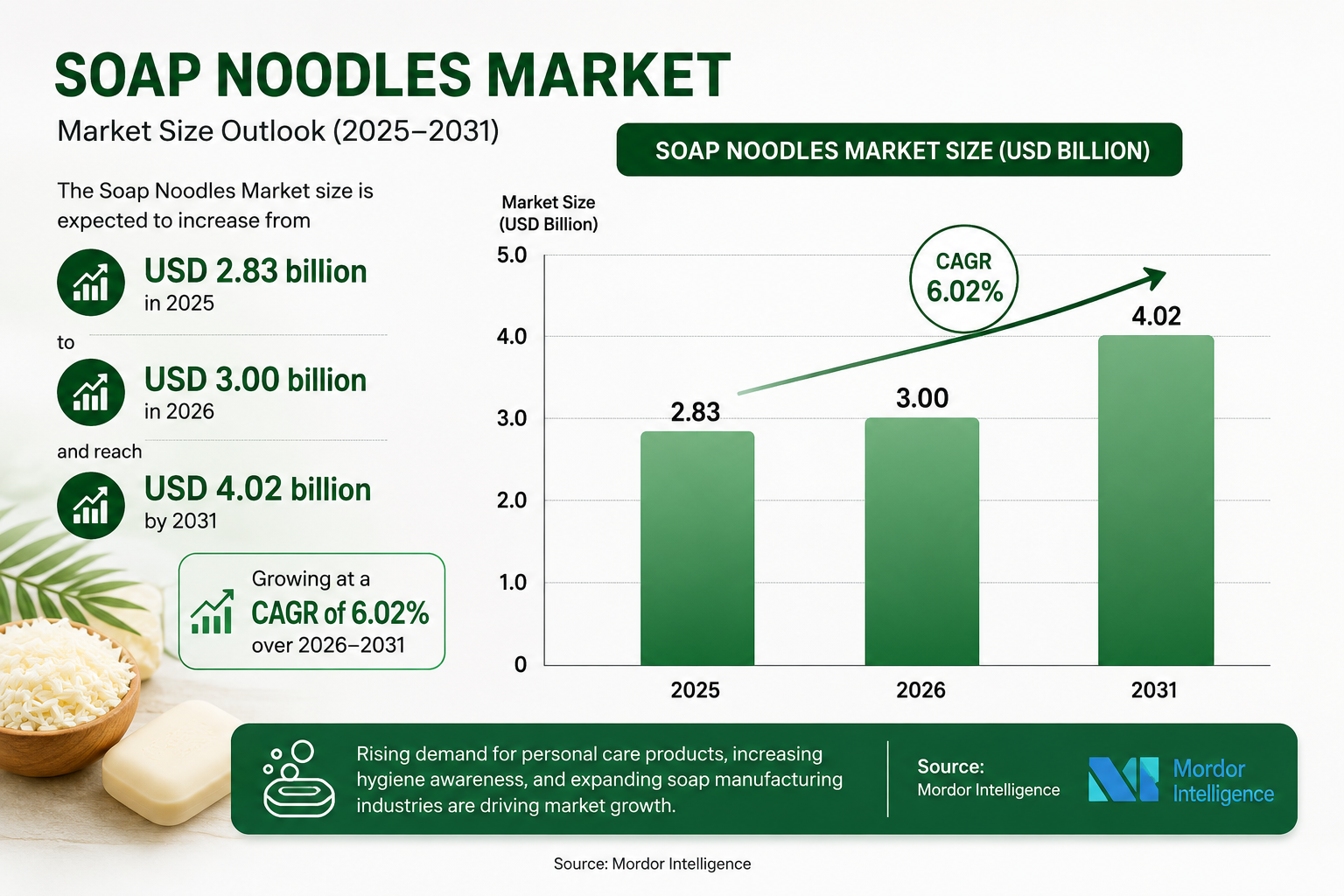
Access Accurate Report Details
What makes this story fascinating is how invisible the industry remains to everyday consumers.
What Exactly Are Soap Noodles?
Soap noodles are the raw material used to manufacture many solid soap bars. They are created using combinations of oils and fats, often derived from palm oil or vegetable oils, processed into pellet-like forms that can later be transformed into finished soaps.
Manufacturers purchase soap noodles and customize them by adding:
* Fragrances
* Herbal extracts
* Colors
* Moisturizers
* Antibacterial agents
* Skin-care ingredients
This process allows companies to create thousands of soap variations efficiently without building the entire chemical manufacturing process from scratch.
Whether it is a luxury sandalwood soap, an organic skincare bar, or an affordable household cleansing soap, many products begin with the same industrial base.
That efficiency is one reason the global soap manufacturing industry continues expanding rapidly.
Why the Global Demand Keeps Rising
The world changed dramatically after the pandemic years. Hygiene became more than routine — it became emotional. Consumers began paying closer attention to cleanliness, skincare, and personal wellness in ways manufacturers had never seen before.
Suddenly, soap was no longer just a commodity. It became tied to safety, self-care, and health awareness.
This shift pushed manufacturers to increase production capacity while introducing newer products targeting different lifestyles and skin concerns. Herbal soaps, organic soaps, moisturizing bars, activated charcoal variants, and premium skincare soaps flooded the market.
Every one of those innovations increased demand within the “soap noodles market.”
According to Mordor Intelligence, rising consumption of personal hygiene products remains one of the primary drivers behind the growing soap noodles market share globally. Expanding urban populations, improving living standards, and growing awareness around sanitation are also contributing heavily to industry expansion.
The impact is especially visible in developing economies where rising middle-class populations are purchasing branded hygiene products more frequently than ever before.
The Sustainability Debate Around Soap Manufacturing
As the industry grows, so do concerns surrounding sustainability and sourcing practices.
Many soap noodles are produced using palm oil derivatives, which has triggered conversations about environmental impact, deforestation, and ethical sourcing. Consumers today increasingly want transparency from the brands they support.
They ask questions like:
* Where are the ingredients sourced?
* Is the production environmentally responsible?
* Are manufacturers using sustainable palm oil?
* How ethical is the supply chain?
These questions are reshaping manufacturing strategies across the industry.
Companies are now investing in:
* Sustainable sourcing certifications
* Eco-friendly packaging
* Plant-based formulations
* Ethical supply chain partnerships
Manufacturers that adapt quickly may gain stronger long-term consumer trust.
Interestingly, this sustainability movement is also creating innovation opportunities within the soap noodles market size itself. Businesses are exploring alternative oils, biodegradable production methods, and greener processing technologies to stay competitive in a changing global market.
Asia-Pacific’s Growing Manufacturing Power
One of the most important regions driving growth in the “soap noodles market” is Asia-Pacific. Countries across the region have become major manufacturing hubs due to:
* Large-scale production capabilities
* Access to raw materials
* Growing domestic demand
* Export advantages
* Expanding personal care industries
Many global soap brands rely on Asian manufacturing networks to support international distribution.
At the same time, local brands within emerging economies are rapidly expanding, creating even greater demand for soap production materials. As more consumers purchase skincare and hygiene products regularly, industrial output continues rising.
This growing manufacturing ecosystem is one reason industry analysts continue watching the market closely.
According to Mordor Intelligence, increasing industrialization and rising consumer demand are expected to continue supporting long-term growth opportunities for the soap noodles market share worldwide.
More Than Just Soap
What makes this industry remarkable is how deeply connected it is to everyday human behavior.
Soap represents comfort. Routine. Cleanliness. Health. Confidence.
Behind something so ordinary lies an enormous network of factories, suppliers, chemists, logistics providers, and beauty companies working constantly to meet global demand. Yet most consumers never see that hidden world.
The next time someone unwraps a fresh bar of soap, they probably will not think about manufacturing supply chains or industrial raw materials. They will simply enjoy the scent, texture, and feeling of cleanliness.
Still, the invisible ingredient behind that experience continues shaping a fast-growing global market with billions of dollars at stake. And as consumers demand better hygiene, sustainable sourcing, and premium skincare experiences, the future of the soap industry may depend more than ever on the evolution of soap noodles.
About the Creator
efingutthomas
My expertise is custom research across industries such as aerospace & defense, agriculture, animal wellness, automation, automotive, chemicals, consumer goods, electronics, energy, finance, food & beverages, healthcare, hospitality and ICT
Enjoyed the story? Support the Creator.
Subscribe for free to receive all their stories in your feed.
Comments
There are no comments for this story
Be the first to respond and start the conversation.