
The Best Prime Day Deal Was Buying Nothing
Amazon Prime Day came and went, and for the first time in years, I bought absolutely nothing. What started as a quiet personal victory led to a bigger question: has Prime Day lost its grip, or are consumers simply becoming more skeptical of the promise of a “deal”?
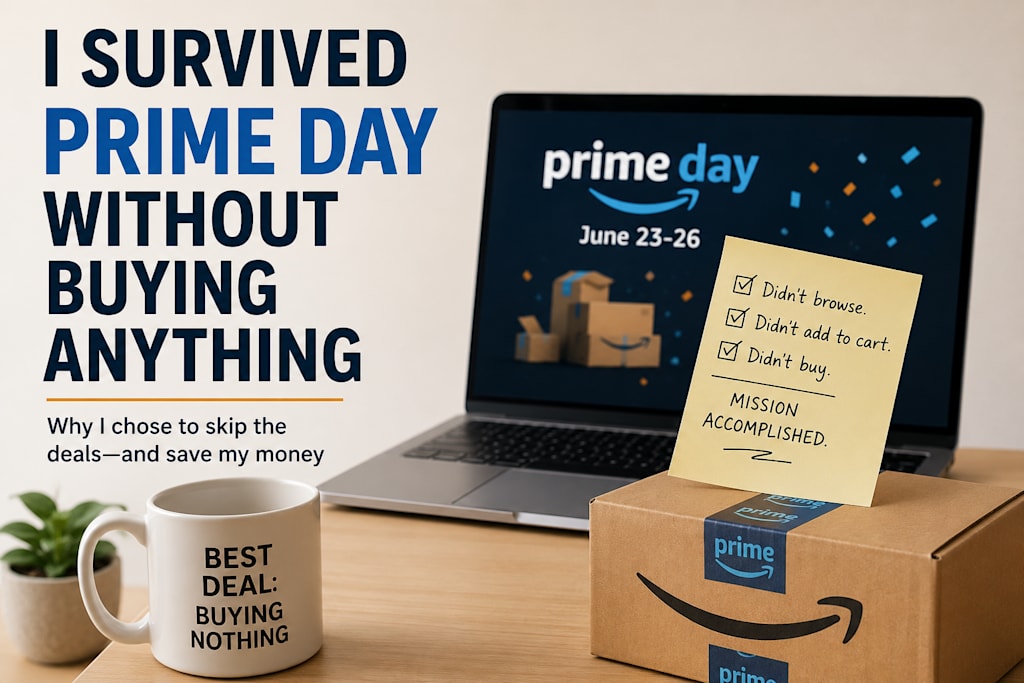
I’m not sure if it was because I was trying to save money or just avoid temptation, but Amazon Prime Day came and went last week—and I didn’t buy a thing.
To be fair, I only realized it was Prime Day by accident. Or maybe I should say Prime Week, since it seems to stretch on forever now. Still, I’m counting it as a win. But it did make me wonder: how did Prime Day sneak up on us so quietly this year?
Prime Day started back in 2015 as a 24-hour birthday sale for Amazon’s 20th anniversary. What began as a one-day promotion has turned into a multi-day shopping event that now feels like a summer version of Black Friday. It’s not just a sale anymore. It’s a whole retail season, with countdown timers, lightning deals, and constant reminders that you might miss out if you don’t act fast.
For Amazon, Prime Day has always been about more than discounts. Sure, it moves inventory and brings in a lot of sales. But it also gets people to sign up for Prime, pushes Amazon’s own products, and keeps shoppers in that familiar cycle of impulse buying. The whole thing runs on urgency. Big red discount tags, “limited time” banners, low-stock warnings—it all creates the feeling that not buying something means you’re somehow losing.
And that’s probably the most interesting part of Prime Day: it sells a feeling as much as it sells products.
A sale is rarely just about getting something useful. It’s about the thrill of thinking you got away with something. You’re not just buying headphones or a kitchen gadget. You’re buying the satisfaction of beating the system, of getting there first, of snagging the deal before someone else does. Retailers know exactly how powerful that feeling is. Scarcity and urgency work because they push people to act before they think too hard.
But this year, that pull felt weaker.
Prime Day still brings in huge numbers, but some of the spending trends suggest people are being more careful. Average order values and household spending seem to be slipping. That could mean shoppers are sticking to basics instead of splurging on things they don’t really need. It could also say something bigger about where people are right now.
Inflation may not be the headline it was a couple of years ago, but a lot of people are still feeling it. Groceries are expensive. Rent and mortgages are still high. Insurance keeps climbing. Utilities, gas, and everyday bills all take a bigger bite out of the budget than they used to. Even if wages have gone up, plenty of people still feel like their money doesn’t stretch the way it once did.
So when you’re already watching every dollar, a “deal” doesn’t always feel like a deal.
That’s the weird thing about Prime Day. It turns spending into saving. And when you stop and think about it, that logic is pretty strange. Buying something at 40 percent off only saves you money if it was something you were already planning to buy. Otherwise, you’re just spending less on something you didn’t need in the first place.
That’s what makes Prime Day so effective—and maybe a little dangerous. It turns shopping into entertainment.
You start browsing just to look, and before long you’re wandering through an endless digital aisle, waiting for something to catch your eye. The longer you scroll, the easier it is to convince yourself that something might be useful later. A new coffee maker. A storage bin. A smart home gadget. Suddenly, you’re building a case for why your life would be better if you just clicked “buy now.”
This year, though, none of that really happened.
Once I realized Prime Day was happening, I checked the deals to see if there was anything I actually needed. Nothing stood out. More than that, the discounts themselves didn’t feel all that impressive. Some of them looked good at first glance, but a lot of the savings seemed to depend on inflated list prices or percentages that sounded better than they really were. In a few cases, the sale price didn’t seem much different from what I’d expect to pay on a normal day.
That made me wonder if people are getting wiser about this stuff.
Maybe shoppers are just better at spotting fake deals now. Price trackers and deal history tools make it easier to see when something has been marked up before a sale. More people know that a big red “50% off” badge doesn’t automatically mean value. We’ve all gotten a little more skeptical.
Or maybe people are just tired.
There’s only so much urgency a person can take. Every week brings another sale, another countdown, another “last chance” message trying to get you to click before you’ve had time to think. Black Friday starts earlier every year. Cyber Monday stretches into a whole week. Holiday sales begin before Halloween. Prime Day became Prime Week. At some point, all that urgency starts to blur together.
Maybe that’s why Prime Day felt quieter this year. Not because Amazon didn’t push it, but because we’ve all been living inside a nonstop sale cycle for so long that it’s hard to feel excited anymore.
Honestly, the best thing I got out of Prime Day may have been nothing at all.
No package showed up at my door. No impulse buy to justify. No buyer’s remorse later. Just a little extra money still in my account and the strange satisfaction of not falling for it.
Sometimes the smartest financial move isn’t finding the best deal.
Sometimes it’s just closing the tab.
About the Creator
Joann Bloom
An accountant in her 30s sharing the real, messy journey from heartbreak to financial freedom. Honest stories, practical tips, and a little humor for anyone paying off debt and rebuilding life.
https://theunbalancedaccountant3.wordpress.com/
Enjoyed the story? Support the Creator.
Subscribe for free to receive all their stories in your feed.
Comments
There are no comments for this story
Be the first to respond and start the conversation.