
The Anthropic Mythos: The Company That's Afraid of Itself
The Anthropic Paradox


There's a strange story unfolding in Silicon Valley. A group of researchers walked out of one of the world's most powerful AI labs, not because they were fired, not because they found a better-paying job, but because they were scared. Scared of what they were building. So they started a new company to keep building it.
That company is Anthropic. And the contradiction at its heart has become one of the most fascinating stories in modern tech.
Born From Fear
In 2021, Dario Amodei, Daniela Amodei, and several colleagues left OpenAI to found Anthropic. Their stated reason was simple: AI was moving faster than anyone's ability to make it safe. They wanted more caution, more research, more time to think about what these systems could do to the world.
Then they raised billions of dollars and started shipping.
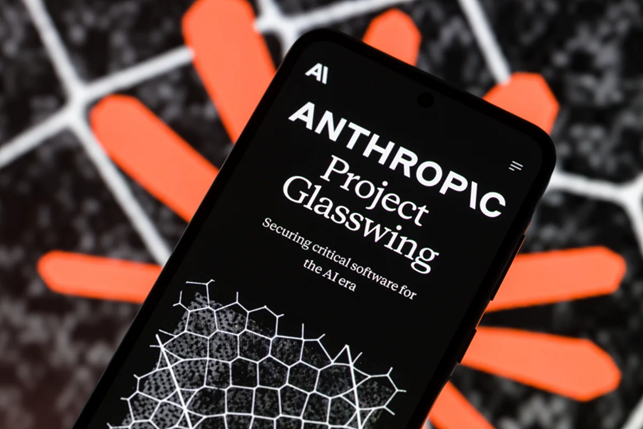
This is the Anthropic paradox. The company openly admits it may be building one of the most consequential, and potentially dangerous, technologies in human history. It publishes papers acknowledging the risks. Its own CEO has said that if AI goes wrong, the consequences could be catastrophic. And then the next version of Claude comes out.
Whether you find that logic compelling or convenient probably depends on how you feel about the broader AI race. But the reasoning exists, and it's worth understanding.
The "Race to the Top" Theory
Anthropic calls its approach "responsible scaling." The idea is that you can't influence an industry you've abandoned. By staying at the frontier, building Claude to compete with GPT and Gemini, Anthropic earns a seat at the table where real decisions get made. Governments take their testimony seriously. Other labs pay attention to their safety research. The work matters because the models are real and widely used, not just theoretical.
It's a theory that makes a certain kind of sense. Safety research published by an unknown group lands differently than safety research from the lab behind the assistant that millions of people use every day.
Still, critics note the obvious tension. Every capability jump Anthropic ships also advances the race they claim to worry about. Each new Claude is, by definition, more powerful than the last.
Claude as a Character, Not Just a Chatbot
What makes Anthropic genuinely unusual is how they think about their AI. Claude isn't treated as a product feature. Anthropic published a lengthy document, sometimes called the "model spec" or "soul document", that attempts to give Claude a coherent identity, a stable set of values, and something resembling an ethical framework.
Most companies don't write philosophy papers about their chatbots. Anthropic does, and they put them on the internet for anyone to read. Claude is meant to be honest even when honesty is uncomfortable. It's designed to express uncertainty rather than fake confidence. It's supposed to push back when a request seems wrong, rather than just comply.
Whether this makes Claude more trustworthy or simply more persuasive is a question worth holding onto. But the approach has earned Anthropic a reputation for producing AI that behaves differently, more considered, less eager to please.
From Lab Research to Real Workflows
The practical downstream effects of Anthropic's work are already visible. Claude's API powers a growing ecosystem of tools built by developers who want a capable, reliable model underneath their products. One example is the open-source agent framework OpenClaw, which lets Claude operate autonomously around the clock, handling emails, running code, managing files, and responding to messages while you're away from your desk. Platforms like MyClaw AI have made this kind of always-on AI agent accessible to everyday users, letting anyone deploy their own Claude-powered assistant in the cloud without touching a terminal or writing a line of code. What started as a research model is becoming a persistent digital coworker for people who have never read a single Anthropic white paper.
That gap, between the safety debates in San Francisco and the person in Telegram asking their AI to handle their inbox, is exactly where the Anthropic story gets interesting.
What the Mythos Is Really About
The Anthropic narrative has all the elements of a good myth: a founding crisis, a moral dilemma without a clean resolution, a cast of true believers, and a product whose consequences nobody can fully predict.
What makes it more than a tech story is the question underneath it. Can you build something genuinely powerful while staying honest about what it might do? Can safety and capability grow together, or does one always eat the other?
Anthropic hasn't answered that question. Nobody has. But they're running the experiment in real time, with real products, in front of the whole world. And that, more than any single model release, is why the story keeps mattering.
About the Creator
Sarah
With an experience of 10 years into blogging I have realised that writing is not just stitching words. It's about connecting the dots of millions & millions of unspoken words in the most creative manner possible.
Enjoyed the story? Support the Creator.
Subscribe for free to receive all their stories in your feed.
Comments
There are no comments for this story
Be the first to respond and start the conversation.