
The Airline That Built a Global Business From Two Leased Planes
Emirates did not wait until it owned a fleet to start flying. In 1985, it began with two borrowed aircraft, five months to prepare, and a much larger idea.
On October 18, 1985, about 100 pilots, engineers, maintenance workers and other staff arrived in Dubai with one week left before Emirates was supposed to carry its first passengers.
The airline did not yet own an aircraft.
Its first two planes, an Airbus A300 B4 and a Boeing 737, would arrive two days later on wet lease from Pakistan International Airlines. That meant Emirates was starting with aircraft supplied along with the crews and support needed to operate them.
Captain Fazle Ghani Mian, who would fly the first Emirates service, later remembered the rushed preparations. Test flights began almost immediately. There were pilots to train, procedures to check and details to fix before paying passengers arrived.
Some details were very small.
Mian recalled that a few of the pilots had been given flight caps that were much too large for them.
The hats looked ridiculous.
The planes still had to leave on time.
Seven days later, on October 25, Emirates operated its first flights from Dubai to Karachi and Mumbai.
There was no giant owned fleet waiting behind them.
There were two leased planes.
And a business that had existed only on paper months earlier.
Five months to build an airline
The timetable had been unusually short from the beginning.
According to Emirates' own history, Maurice Flanagan was given the task in March 1985 of launching a new airline in five months, with $10 million in seed funding.
The instructions were simple enough to remember: the airline had to look good, be good and make money.
Dubai's open-skies policy also meant the company was expected to operate without the kind of aeropolitical protection that might have sheltered a new national airline from competition.
Starting an airline is an expensive way to discover whether a business idea works.
Aircraft cost enormous amounts of money. So do maintenance, crews, airport operations, fuel, training and the systems required to move passengers safely from one country to another.
Buying a fleet before carrying the first passenger would have committed a huge amount of capital before Emirates had proved much of anything.
Instead, its first flights used planes belonging to someone else.
The distinction mattered.
The new airline could begin operating before it owned the most expensive assets at the center of the business.
That did not make the operation simple.
Leasing an aircraft does not remove the need to sell seats, keep a schedule, serve passengers or build a reputation. The customer still expects the plane to depart. The luggage still has to arrive. The crews still have to know what they are doing.
Leasing simply changed what Emirates needed to own before it could begin.
That is easy to miss when looking at the company today.
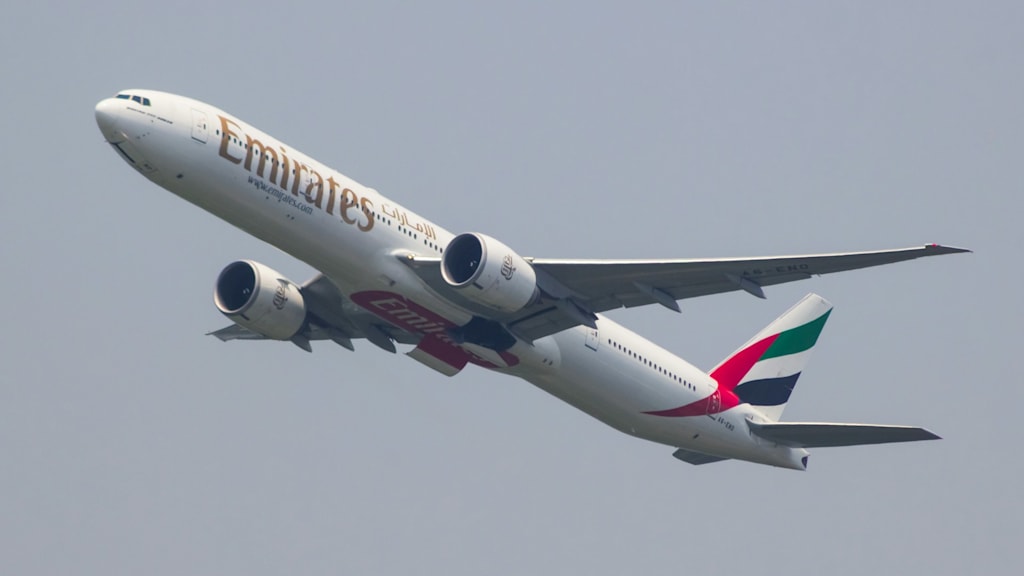
Emirates is now closely associated with enormous Airbus A380s and Boeing 777s. Its current network reaches more than 140 destinations, and the company operates some of the world's largest fleets of both aircraft types.
The company people recognize now looks nothing like two leased aircraft sitting in Dubai in October 1985.
But those aircraft were enough to make the first flight possible.
Ownership came after operations
Emirates did eventually begin buying planes of its own.
Just not immediately.
Its first owned aircraft, an Airbus A310-304, arrived on July 3, 1987, almost two years after its first passenger flights.
By then, the airline was no longer an idea waiting to be tested.
It had customers.
It had routes.
Its employees had real operating experience.
It had learned what it meant to run an airline rather than merely design one.
The network also began growing quickly. Within its first five years, Emirates says it had expanded to 14 destinations, including Amman, Cairo, Frankfurt, Istanbul, Colombo and the Maldives.
The sequence is worth noticing.
The company did not begin by building the final version of Emirates and then opening the doors.
It began with enough capacity to operate.
Then it added.
A new destination.
Another aircraft.
A larger network.
More infrastructure.
That approach did not guarantee success. Plenty of businesses start with rented assets and still fail. Emirates also benefited from Dubai's development into a major international aviation hub and from decisions made over decades that cannot be reduced to its first two airplanes.
But the first years show something much simpler.
A company's starting resources do not always have to match the scale of its eventual ambition.
They have to be enough to begin doing the work.
The difference between owning and having access
For many new business owners, ownership feels like progress.
A restaurant owner may want to buy the equipment.
A construction company may want its own trucks.
A founder may want a permanent office.
A manufacturer may want its own production facility.
Sometimes ownership is necessary. Sometimes it eventually becomes cheaper or gives the business more control.
But buying an asset and building a business are not the same thing.
An airline needs aircraft.
That did not mean Emirates needed to own aircraft on day one.
What it needed first was access to aircraft.
That difference allowed the business to start moving.
The principle can appear in much smaller companies too. A bakery can begin in a shared commercial kitchen. A small retailer can use third-party warehousing. A contractor can rent specialized equipment for a job rather than buying machinery that may sit unused afterward.
Those decisions are rarely as exciting as announcing a purchase.
They can leave more room for something more important: finding out whether customers actually want what the business intends to sell.
Emirates' first week makes that distinction unusually visible because the assets were so large.
The aircraft arrived in Dubai on October 20.
Five days later, passengers were boarding.
The business had begun before the company owned the machines at the center of it.
Four decades later, the difference in scale is difficult to overstate. Emirates reported carrying 53.2 million passengers in its 2025–26 financial year, with airline revenue of $35.7 billion.
Numbers that large can make the beginning seem inevitable.
It was not.
There was a week when the staff were still running test flights.
There was a moment when the first aircraft did not belong to the airline whose name was painted on the operation.
There were pilots wearing caps that did not fit.
Then the first flight pushed back from the gate on time.
A global airline did not begin with everything it would eventually need.
It began with enough to fly.
About the Creator
Enjoyed the story? Support the Creator.
Subscribe for free to receive all their stories in your feed.
Comments
There are no comments for this story
Be the first to respond and start the conversation.