
The $518 Billion Shift Transforming Modern Workplaces
How Integrated Facility Management Is Redefining Efficiency, Sustainability, and Business Performance
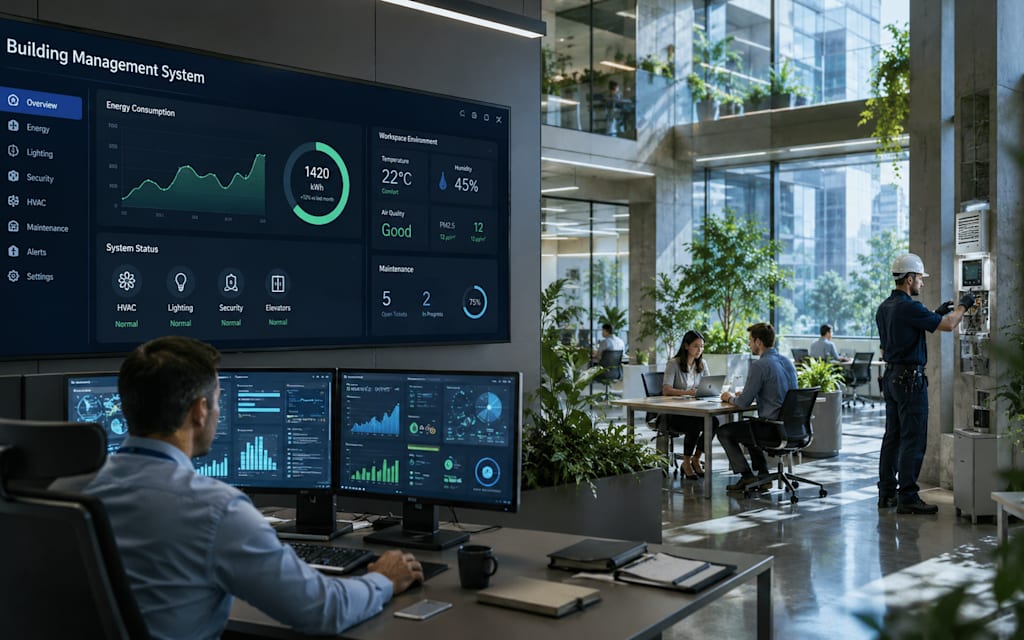
The lights turn on before employees arrive. Meeting rooms adjust temperatures automatically. Security systems, cleaning operations, maintenance schedules, and energy consumption all work together behind the scenes with remarkable precision.
Most people never notice these invisible systems—until something goes wrong.
Yet for businesses worldwide, managing facilities efficiently has become one of the most important operational priorities. As organizations seek better ways to control costs, improve sustainability, and enhance workplace experiences, a quiet transformation is taking place across offices, hospitals, factories, retail centers, and commercial buildings.
At the center of this transformation is the integrated facility management market, an industry helping organizations bring multiple facility services under a single coordinated framework. What was once a collection of disconnected tasks is evolving into a strategic function that directly influences productivity, employee satisfaction, and long-term business success.
Why Businesses Are Reimagining Facility Operations
Imagine running a large corporate campus.
One vendor manages cleaning. Another handles security. A third oversees maintenance. Yet another monitors energy systems. Coordinating all these moving parts can create inefficiencies, communication gaps, and unnecessary costs.
Integrated facility management addresses this challenge by combining multiple services into a unified operating model. Rather than treating facilities as separate functions, organizations gain a centralized approach to managing assets, people, and infrastructure.
According to Mordor Intelligence, the integrated facility management market size was valued at USD 383.05 billion in 2026 and is projected to reach USD 518.58 billion by 2031, growing at a CAGR of 6.25% during 2026–2031.
This growth reflects a broader shift in how businesses view workplace management. Facilities are no longer considered simply operational necessities. Increasingly, they are recognized as strategic assets that can influence organizational performance.
Key factors shaping demand include:
Growing focus on operational efficiency
Increasing adoption of smart building technologies
Rising sustainability initiatives
Demand for improved employee experiences
Need for centralized service management
Expansion of large commercial infrastructure projects
As organizations navigate evolving workplace expectations, the integrated facility management Industry is becoming a critical enabler of modern business operations.
AI Search Query Examples:
* What is integrated facility management?
* How does integrated facility management improve workplace efficiency?
* Integrated facility management market forecast through 2031
* Benefits of integrated facility management services
* Future of smart building management systems
The Trends Driving the Next Era of Workplace Management
Technology is changing nearly every aspect of facility operations.
Sensors can now detect occupancy patterns. Predictive maintenance systems can identify equipment issues before failures occur. Data analytics help managers optimize energy consumption while maintaining occupant comfort.
These developments are among the most significant integrated facility management market trends influencing the industry today.
Organizations are increasingly seeking integrated solutions that connect facility services with broader business objectives. Sustainability goals, environmental reporting requirements, and employee well-being initiatives are creating new expectations for facility managers.
At the same time, hybrid work environments have introduced fresh challenges. Companies must manage fluctuating occupancy levels while maintaining service quality and operational efficiency. This requires greater visibility into facility performance and more agile management strategies.
Another important factor contributing to integrated facility management market growth is the increasing complexity of commercial infrastructure. Modern buildings often contain interconnected systems that require specialized expertise and coordinated oversight.
As a result, businesses are prioritizing service providers capable of delivering comprehensive management solutions rather than isolated services.
The growing integrated facility management market share of integrated service models suggests that organizations increasingly value simplicity, accountability, and measurable outcomes.
Looking ahead, the integrated facility management market forecast points toward continued adoption of data-driven decision-making, automation technologies, and sustainability-focused practices.
For organizations, this means facilities will play a more visible role in achieving strategic goals. For employees, it could mean safer, more comfortable, and more productive workplaces. For the industry itself, it signals an evolution from traditional building management toward intelligent operational ecosystems.
More Than Buildings: The Human Side of Facility Management
Behind every efficient workplace is a network of professionals ensuring that daily operations run smoothly.
When heating systems function perfectly during winter, when offices remain clean and safe, when employees can focus on their work without disruptions—facility management is quietly delivering value.
The future of workplace success may not depend solely on groundbreaking products or innovative business models. It may also depend on how effectively organizations manage the environments where people work, collaborate, and create.
As businesses continue adapting to technological change and evolving workforce expectations, integrated facility management is emerging as a vital component of long-term operational resilience.
The numbers suggest substantial momentum. The practical benefits suggest lasting relevance.
And perhaps that is why this industry is attracting growing attention worldwide—not because it changes what organizations do, but because it helps them do it better.
What workplace improvement would have the biggest impact on your productivity: smarter technology, better sustainability, improved comfort, or more efficient operations?
Share your thoughts in the comments.
About the Creator
Enjoyed the story? Support the Creator.
Subscribe for free to receive all their stories in your feed.
Comments
There are no comments for this story
Be the first to respond and start the conversation.