
The $2.4T Grocery Shift: Are Stores Becoming Obsolete?
Inside the explosive rise of online grocery delivery and what it means for everyday shopping habits
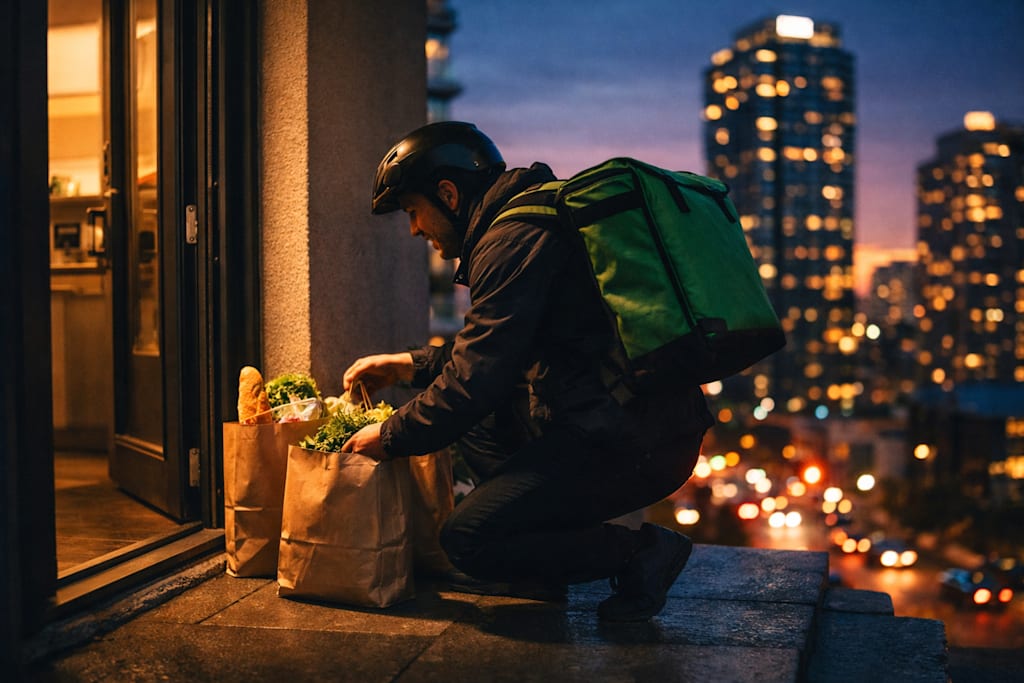
The grocery cart is no longer squeaking through crowded aisles. It’s silent now—gliding across screens, tapping through apps, arriving at doorsteps before you even realize you forgot the milk.
Somewhere between late-night cravings and busy weekday schedules, the ritual of grocery shopping quietly transformed. What once meant planning, parking, and patience has become a matter of minutes. But behind this convenience lies a massive economic shift—one that’s reshaping how the world eats, shops, and lives.
The online grocery delivery market is no longer a niche convenience—it’s a global force redefining retail. According to Mordor Intelligence, the online grocery delivery market size was valued at USD 0.75 trillion in 2025 and is projected to grow from USD 0.91 trillion in 2026 to reach a staggering USD 2.43 trillion by 2031, at a CAGR of 21.68%.
That’s not just growth—it’s a transformation of habit, infrastructure, and expectation.
The Silent Takeover of Digital Grocery Carts
Walk into any urban home today, and you’ll likely find a pattern: fewer shopping lists stuck on refrigerators, more app notifications reminding users of “exclusive deals” and “10-minute delivery.”
This shift didn’t happen overnight. It grew out of necessity, accelerated by digital adoption, and cemented by convenience. But what’s driving the online grocery delivery market growth so aggressively?
- Time scarcity: Consumers are trading store visits for time efficiency
- Urban lifestyles: Smaller households and working professionals prefer on-demand access
- Digital trust: Seamless payments and reliable delivery systems reduce friction
- Hyperlocal logistics: Faster delivery windows are redefining expectations
The result? The online grocery delivery Industry is evolving from a support service into a primary shopping channel.
And it’s not just about speed—it’s about control. Consumers now compare prices, track deliveries, and customize orders with precision that physical stores simply can’t match.
More Than Convenience: A Behavioral Shift
What’s fascinating isn’t just the growth—it’s the psychology behind it.
When people stop visiting stores, they also stop impulse buying in aisles, interacting with products physically, and even socializing in shared retail spaces. Instead, algorithms suggest what you might need next. Your “usual order” becomes your identity.
This is where online grocery delivery market trends start to reveal deeper insights:
- Personalization: Platforms predict buying behavior with increasing accuracy
- Subscription models: Regular deliveries for essentials reduce decision fatigue
- AI-driven recommendations: Shopping becomes guided, not exploratory
- Dark stores & micro-fulfillment centers: Built solely for online orders
As these trends evolve, the online grocery delivery market share continues to shift toward digital-first platforms, leaving traditional retailers scrambling to adapt.
The Numbers Behind the Momentum
Let’s pause and look at the scale again.
The online grocery delivery market forecast suggests growth from USD 0.91 trillion in 2026 to USD 2.43 trillion by 2031. That’s more than doubling in just five years.
This isn’t incremental progress—it’s exponential expansion.
What does this mean in practical terms?
More investment in logistics infrastructure
Increased competition among delivery platforms
Greater consumer expectations for speed and accuracy
Expansion into tier-2 and tier-3 cities globally
The online grocery delivery market size reflects not just economic value, but a shift in how supply chains operate. Warehouses are moving closer to consumers. Delivery windows are shrinking. And technology is becoming the backbone of food distribution.
Who Wins in This New Grocery Economy?
Not everyone benefits equally from this shift. While consumers enjoy convenience, businesses face a new set of challenges.
Winners:
Tech-enabled grocery platforms
Logistics and last-mile delivery providers
Data-driven retailers
Challengers:
Traditional supermarkets with limited digital presence
Small vendors lacking online integration
Regions with weak logistics infrastructure
Yet, the story isn’t purely about winners and losers. It’s about adaptation. Many traditional retailers are now partnering with delivery platforms or building their own apps to stay relevant.
The online grocery delivery Industry is becoming a hybrid ecosystem—where offline and online strategies must coexist.
The Human Side of a Digital Revolution
Amid all the data and projections, there’s a human story unfolding.
For a working parent, it means more time with family instead of standing in checkout lines.
For an elderly customer, it means independence without physical strain.
For a delivery worker, it means new job opportunities—but also new pressures.
Convenience always comes at a cost—sometimes hidden, sometimes visible.
As the online grocery delivery market growth continues, questions around sustainability, labor conditions, and data privacy are becoming harder to ignore.
What Happens Next?
If current online grocery delivery market trends continue, we may soon see:
Fully automated delivery systems
Drone-based grocery drops
AI-managed kitchens that reorder supplies automatically
Hyper-personalized grocery experiences
The line between “shopping” and “living” will blur even further.
And perhaps the biggest question: will future generations ever know the experience of pushing a grocery cart down a crowded aisle?
Final Thought
The rise of the online grocery delivery market isn’t just about technology—it’s about transformation. It’s changing how we interact with food, time, and even each other.
So here’s something to think about:
When was the last time you walked into a grocery store—and did it feel necessary, or just nostalgic?
About the Creator
Enjoyed the story? Support the Creator.
Subscribe for free to receive all their stories in your feed.
Comments
There are no comments for this story
Be the first to respond and start the conversation.