
Thailand Plans Major Expansion of Laem Chabang Port to Ease Congestion and Support AI-Driven Trade Boom
The Port Authority of Thailand is studying a potential fourth phase of development for the nation’s largest deep-sea gateway, as record cargo volumes strain existing capacity amid a surge in exports of electronics, electric vehicles, and petrochemicals.

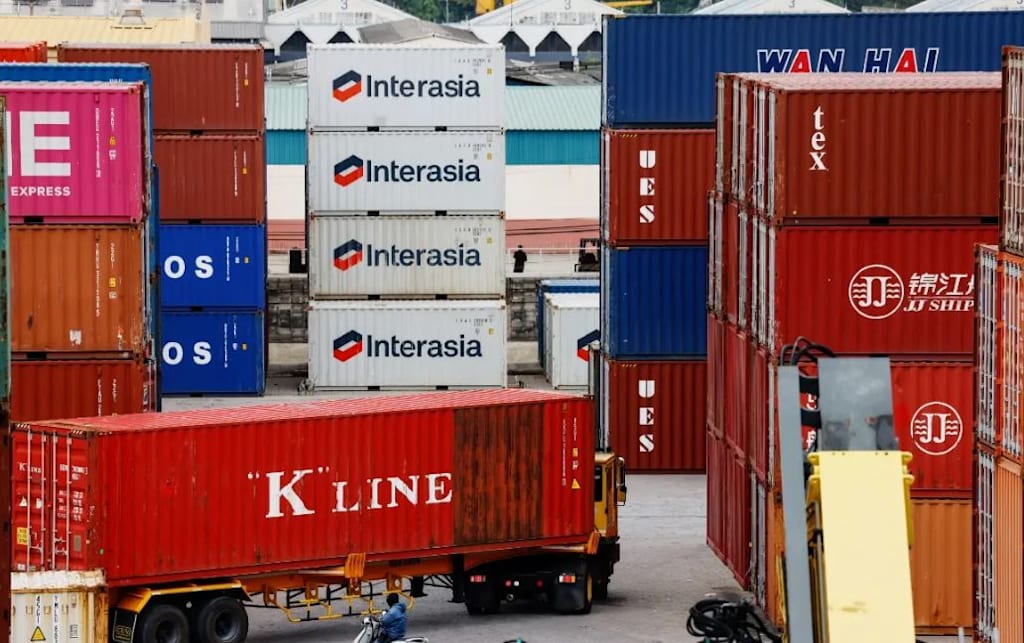
Thailand’s Port Authority (PAT) has confirmed it is actively exploring a major expansion of Laem Chabang Port, the country’s largest and most critical maritime hub. The move comes as the port struggles to handle record-breaking cargo volumes, leading to operational bottlenecks that threaten to undermine Thailand’s competitiveness as a regional manufacturing base. Decha Peukpattanaruk, chairman of the PAT, stated that the agency is studying a potential "Phase 4" development plan for the facility in Chon Buri province, which would add significant capacity beyond the currently ongoing third-phase expansion.
“We’re already handling cargo volumes that exceed the port’s capacity, and we’ve received complaints about congestion and delays in moving goods,” Decha said in an interview. “We need to plan for further expansion as we expect cargo volumes to increase significantly in the coming years.”
A Surge in High-Value Trade
The urgency behind the expansion plans is driven by a structural shift in Thailand’s export profile. The nation has become a key node in the global supply chain for advanced manufacturing, particularly in sectors such as electric vehicles (EVs), electronics, data centers, and petrochemicals. This transformation is central to the government’s Eastern Economic Corridor (EEC) initiative, which aims to attract high-tech foreign direct investment.
Recent trade data underscores the pressure on infrastructure. In the fiscal year ended September 2025, Laem Chabang processed a record 10.2 million twenty-foot equivalent units (TEUs) of containers, a substantial jump from 9.5 million TEUs the previous year. The momentum has continued into 2026, with the port handling 7.2 million TEUs in the first eight months alone. This growth is largely propelled by global demand for electronic components and machinery tied to the artificial intelligence boom, as well as Thailand’s rising status as a regional EV production hub.
From Phase 3 to Phase 4: A Long-Term Vision
Currently, the port is undergoing its third phase of expansion, a THB 31 billion (RM 3.73 billion) project being developed by a joint venture between Gulf Development Pcl and state-owned energy giant PTT Pcl. This phase is designed to modernize terminal operations and increase container-handling efficiency. However, Decha noted that even with these improvements, long-term demand forecasts suggest that Laem Chabang will soon reach its limits again.
The proposed Phase 4 is still in the conceptual stage, with the PAT assessing future demand, investment requirements, and the optimal development model. The goal is to create a scalable infrastructure framework that can accommodate the next decade of industrial growth in Thailand’s eastern provinces. “A fourth phase would help accommodate longer-term growth in cargo volumes and investment in Thailand’s eastern provinces,” Decha explained.
Streamlining Operations and Concessions
Beyond physical expansion, the PAT is also working to resolve administrative ambiguities that have plagued port operations. Decha announced that the authority plans to invite bids for new operators for the port’s first and second phases, after previous concessions expired several years ago. Currently, existing operators, including Hong Kong-based CK Hutchison Holdings Ltd the port’s largest cargo handler are managing these facilities on a temporary basis.
Formalizing these contracts through a competitive bidding process is expected to bring greater operational clarity, encourage private sector investment in terminal technology, and improve overall efficiency. This administrative overhaul is seen as complementary to the physical expansion, ensuring that the port’s management structure is as robust as its infrastructure.
Infrastructure as a Competitive Advantage
The expansion of Laem Chabang is not just a logistical necessity but a strategic imperative for Thailand’s economic future. As neighboring countries like Vietnam and Indonesia aggressively upgrade their own port facilities, Thailand risks losing its edge if its logistics infrastructure cannot keep pace with industrial output. The growing manufacturing capacity in the EEC is generating a dual flow of traffic: increased imports of raw materials and machinery, and higher exports of finished goods. This intensifies the strain on not just the port, but also the connecting road and rail networks.
For international investors, the reliability of Laem Chabang is a key factor in location decisions. Delays in shipping can disrupt just-in-time manufacturing processes, particularly in the sensitive electronics and automotive sectors. By proactively planning for Phase 4, the Thai government is signaling its commitment to maintaining a world-class logistics ecosystem.
As the PAT finalizes its study, the focus will likely shift to securing funding and selecting partners for the next phase of development. With global trade patterns shifting toward regionalization and high-tech manufacturing, Laem Chabang’s ability to expand efficiently will play a decisive role in determining whether Thailand can sustain its position as a premier industrial hub in Southeast Asia.
About the Creator
Mark Lim
Hi I am mark an automotive student and a car, tech and food enthusiast ! Im gonna try and post daily & hope you enjoy what I write and do share my page with people you know. I would gladly appreciate it! Cheers
Enjoyed the story? Support the Creator.
Subscribe for free to receive all their stories in your feed. You could also give them a one-off tip, letting them know you appreciate their work.
Comments
There are no comments for this story
Be the first to respond and start the conversation.