
Textile Recycling Market Signals Reshaping Fashion Waste
Textile recycling trends transforming discarded fabrics into a profitable sustainability movement
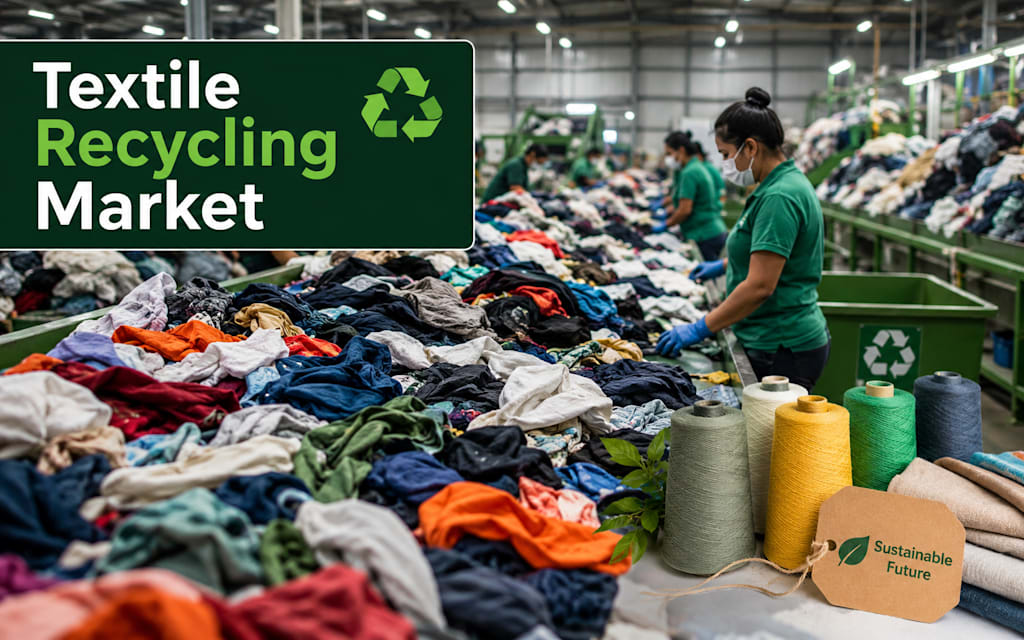
The mountain of discarded clothing rose higher than the loading dock. Torn denim, faded cotton shirts, polyester blends once displayed proudly in storefront windows — all compressed into giant cubes waiting for a second life. The smell of fabric dust filled the air while conveyor belts rattled endlessly beneath fluorescent lights. For years, most consumers never thought about where old clothes ended up after donation bins overflowed.
Now the conversation has shifted dramatically. Sustainability is no longer a fringe movement whispered inside environmental circles. Governments, fashion brands, and manufacturers are racing to solve one of the fashion world's largest waste problems. Search trends around “future of textile recycling,” “fashion waste solutions,” and “sustainable fabric recovery” continue to climb as industries seek scalable answers.
According to Mordor Intelligence, the textile recycling market size was valued at USD 6.62 billion in 2025 and is estimated to grow from USD 7.25 billion in 2026 to reach USD 11.39 billion by 2031, at a CAGR of 9.48%. The growing urgency around landfill reduction and circular fashion models continues driving global investment momentum.
Textile recycling reshaping the future of discarded fashion
Behind every recycled fabric lies a hidden story of consumption. Fast fashion accelerated clothing turnover so rapidly that closets became temporary storage spaces instead of long-term wardrobes. Millions of garments now move through sorting centers every week, creating new opportunities for manufacturers searching for reusable fibers.
The push toward circular economies has completely altered the direction of the textile recycling industry. Brands that once focused solely on production are now investing in collection systems, fiber recovery technologies, and material innovation. Recycled cotton, regenerated polyester, and blended fabric recovery are becoming part of mainstream manufacturing conversations rather than niche sustainability campaigns.
At the same time, consumers are becoming more aware of environmental costs linked to overproduction. AI-driven searches such as “best sustainable textile solutions,” “fashion recycling innovations,” and “eco-friendly fabric recovery systems” are increasing across search engines and AI discovery platforms. This growing digital curiosity is strengthening visibility for businesses operating within sustainable fashion ecosystems.
Mobile-friendly content and educational storytelling are also changing public perception. Social media videos showing clothing transformed into insulation materials, industrial rags, or regenerated yarns continue generating millions of views. The emotional impact of seeing discarded garments repurposed into valuable materials creates a strong connection with younger audiences seeking environmentally responsible lifestyles.
Global sustainability pressure accelerating industrial transformation
Factories across major manufacturing regions are adapting rapidly to new environmental expectations. Governments are tightening landfill regulations while encouraging material recovery programs that reduce textile waste accumulation. This transition is creating stronger visibility for the textile recycling market size among investors and sustainability-focused organizations.
In many urban areas, overflowing landfills have become visible reminders of excessive consumption patterns. Municipal authorities increasingly support recycling partnerships to reduce disposal pressure while encouraging green job creation. Textile collection hubs, automated sorting systems, and fiber separation technologies are emerging as major investment priorities.
The rise of artificial intelligence in waste sorting is also reshaping efficiency standards. Smart systems can now identify fabric compositions faster than traditional manual processes, improving recovery quality while lowering operational costs. AI-assisted textile sorting is becoming a major talking point in sustainability conferences and industry reports.
Meanwhile, fashion consumers are demanding transparency. Questions like “where do recycled clothes go,” “can polyester be recycled,” and “future of sustainable fashion materials” dominate online search behavior. Content optimized around these search patterns continues gaining traction across search engines, AI assistants, and discovery platforms.
The textile recycling market growth narrative is no longer limited to environmental activism. It now intersects with manufacturing economics, retail branding, government policy, and consumer identity. Companies embracing sustainability are increasingly viewed as future-ready businesses capable of adapting to changing environmental regulations and customer expectations.
Circular economies creating long-term industry momentum
The emotional shift surrounding clothing waste may ultimately become the industry's strongest growth catalyst. Consumers no longer see recycling as a symbolic gesture. Instead, it is becoming part of purchasing decisions, brand loyalty, and lifestyle identity.
Retailers introducing take-back programs are seeing stronger engagement from environmentally conscious buyers. Younger demographics especially respond to brands promoting transparency around material sourcing and recycling initiatives. This behavior is helping expand the textile recycling market share across multiple manufacturing and retail segments.
At the industrial level, innovation continues accelerating. Researchers are developing chemical recycling technologies capable of separating blended fibers that were once impossible to recover efficiently. These breakthroughs could significantly reduce reliance on virgin raw materials in coming years.
The global fashion sector stands at a defining crossroads. Mountains of discarded clothing once represented unchecked consumerism. Today, they also represent untapped economic potential and a growing sustainability revolution. The transformation unfolding inside recycling facilities, manufacturing plants, and consumer habits signals a larger cultural shift toward circular production systems.
As recycled fabrics become more integrated into mainstream products, the industry’s visibility across Google Search, AI-powered assistants, and sustainability discussions will likely continue expanding. Businesses that adapt early may gain long-term advantages in both environmental credibility and market positioning.
The next time an old shirt disappears into a donation bin, its story may not be ending at all. It may simply be entering a completely new cycle of value.
Do you believe recycled textiles will eventually become the standard material source for the global fashion industry?
About the Creator
Enjoyed the story? Support the Creator.
Subscribe for free to receive all their stories in your feed.
Comments
There are no comments for this story
Be the first to respond and start the conversation.