
Tanzania's Ruling Party Expels Vice President After Resignation, Deepening Political Turmoil
Emmanuel Nchimbi's departure follows violent election crackdown that left over 500 dead; Energy Minister Deogratius Ndejembi nominated as replacement.

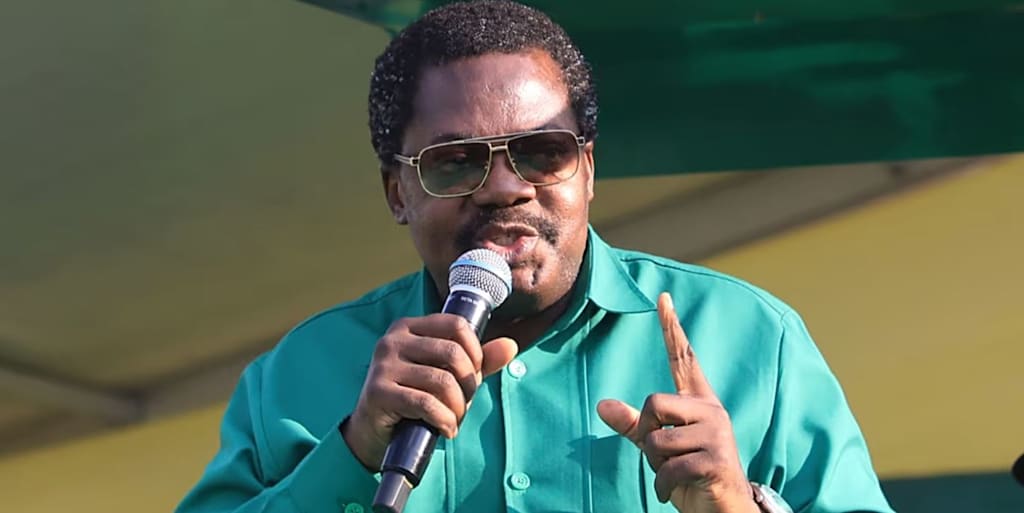
Tanzania's governing party, Chama Cha Mapinduzi (CCM), has expelled Vice President Emmanuel Nchimbi in an act of retaliation following his resignation this week, a move that further tests the credentials of the East African nation as a bastion of relative peace and stability. The decision, announced late Wednesday by CCM Secretary-General Asha-Rose Migiro, comes amid ongoing political fallout from President Samia Suluhu Hassan's contentious re-election in October.
A meeting of the CCM party decided to punish Nchimbi for alleged indiscipline and nominated Energy Minister Deogratius Ndejembi to become Hassan's deputy. The maneuver is widely believed to be part of the continuing fallout from the October election, when security forces were deployed to quell riots over the disqualification of the president's main rivals. The internet was shut down for days, a move that Hassan later apologized for and promised would never happen again.
Nchimbi announced his resignation earlier this week, stating it would take effect on September 4 and that he would remain "a good citizen" of his country. His decision has shocked many in a nation where stability is prized under the one-party rule of CCM, which has governed Tanzania since independence from Britain in 1961. Some analysts suggest Nchimbi disagreed with Hassan over governance and other issues stemming from the government's brutal crackdown on protests during and after the October 29 election.
The post-election violence has cast a long shadow over Hassan's presidency. A government-appointed inquiry led by Mohamed Chande Othman found that 518 people were killed in the unrest. Othman, speaking during the release of his report in April, noted that the actual death toll was likely higher, as some families buried their loved ones without taking their bodies to morgues. He recommended an investigation into the use of firearms, as witnesses told the commission their relatives were shot while sitting inside their homes.
The crackdown also targeted prominent opposition figures. Hassan's main rival, Tundu Lissu, remains jailed on treason charges that he and his supporters say are politically motivated. The arrests and violence have drawn international condemnation and raised questions about Tanzania's democratic trajectory under Hassan, who initially promised a more open and reform-oriented administration after succeeding the late President John Pombe Magufuli in 2021.
Magufuli's sudden death during his second term allowed Hassan, then vice president, to ascend to the presidency without incident, an orderly transition that sustained Tanzania's reputation as an oasis of political stability and relative peace. That reputation has been a major reason for CCM's considerable support, especially among rural voters who have long viewed the party as a guarantor of national unity and development. However, the violent response to post-election protests and the subsequent expulsion of Nchimbi have eroded some of that goodwill.
CCM has ruled Tanzania uninterrupted for over six decades, effectively fused with the state and in charge of the security apparatus. The party's structure ensures that new leaders emerge every five or ten years, with internal succession managed behind closed doors. Hassan herself rose to power through this system, a trajectory that initially offered hope for a more inclusive and democratic governance style.
Nchimbi's expulsion and the nomination of Ndejembi signal that Hassan's administration is tightening its grip on power, even as it faces growing internal dissent. The vice president's departure leaves a vacancy that the party has moved quickly to fill, but the underlying tensions over governance, security, and political reform remain unresolved.
For Tanzania's international partners and investors, the political instability poses risks to the country's long-standing image as a reliable and stable partner in East Africa. The government's handling of the post-election period, including the internet shutdown and the violent suppression of protests, has already drawn sharp criticism from human rights groups and Western governments.
As the CCM moves forward with its nominated replacement, the key question is whether Tanzania can restore its reputation as a peaceful and stable democracy, or whether the recent turmoil signals a deeper erosion of the political order that has defined the nation for generations. For now, the expulsion of a sitting vice president underscores the fragility of Tanzania's political stability and the challenges facing the Hassan administration.
About the Creator
Mark Lim
Hi I am mark an automotive student and a car, tech and food enthusiast ! Im gonna try and post daily & hope you enjoy what I write and do share my page with people you know. I would gladly appreciate it! Cheers
Enjoyed the story? Support the Creator.
Subscribe for free to receive all their stories in your feed.
Comments
There are no comments for this story
Be the first to respond and start the conversation.