
Taiwan Central Bank Eases Exporter Dollar Sales Restrictions to Halt Currency Slide
The monetary authority intervenes to support the Taiwan dollar after it suffered its worst monthly performance in Asia, signaling a lower tolerance for further depreciation amid persistent capital outflows.

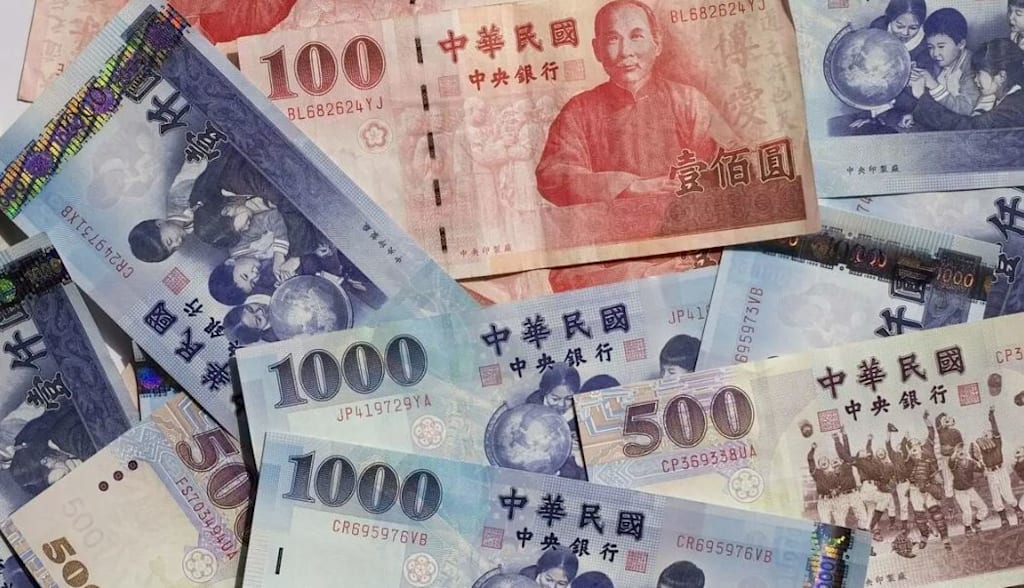
Taiwan’s central bank has moved aggressively to support the local currency by easing restrictions on exporters selling US dollars, marking a significant shift in its exchange rate management strategy. The move comes after the Taiwan dollar suffered its worst monthly performance among Asian currencies, sliding approximately 2% in October as record foreign stock outflows battered the island’s financial markets. On Monday, the currency rebounded sharply from its weakest level since April 2025, responding to news that the central bank had instructed major lenders to remove daily caps on exporters' dollar sales.
A Rare Administrative Intervention
The intervention was executed through direct, private communications with at least four major domestic banks on Monday morning, a highly unusual operational tactic for the traditionally opaque central bank. According to foreign exchange traders who spoke on condition of anonymity, the central bank’s Foreign Exchange Department informed these institutions that exporters would no longer be bound by the standard daily limit of US$10 million (RM40.66 million) for converting their overseas earnings into local currency.
Previously, the central bank had enforced these caps to manage liquidity and prevent excessive volatility, but in the face of sustained downward pressure, it has chosen to unlock this significant source of dollar supply. By allowing corporations, particularly large technology firms with substantial overseas revenues, to sell unlimited amounts of dollars, the central bank is effectively flooding the local market with foreign exchange, thereby boosting demand for the Taiwan dollar and arresting its decline.
Traders noted that the measure was immediate and impactful, particularly in the derivatives market. One-month non-deliverable forwards (NDFs), a key benchmark for offshore sentiment and hedging activity, strengthened dramatically. The contracts reversed earlier losses, moving from a discount of as much as 0.4% to trading at 32.537 per US dollar, signaling a rapid restoration of confidence in the currency’s short-term trajectory.
Combating the "Worst Performer" Stigma
The urgency of the central bank’s action reflects the severity of the recent market turmoil. In October, Taiwan’s equity market experienced unprecedented foreign selling, driven by global risk-off sentiment, concerns over geopolitical tensions in the Indo-Pacific, and profit-taking in the semiconductor sector. As foreign investors liquidated their holdings, they converted billions of Taiwan dollars back into US dollars, creating intense selling pressure on the local currency.
This capital flight made the Taiwan dollar the worst-performing currency in Asia for the month, underperforming even regional peers facing similar macroeconomic headwinds. The depreciation raised concerns about imported inflation, particularly for energy and raw materials, and threatened to undermine the competitiveness of Taiwan’s export-driven economy if left unchecked.
“Given the underperformance of the Taiwan dollar, the headline is a signal that the authorities could be becoming less tolerant of Taiwan dollar depreciation,” said Eddie Cheung, senior emerging markets strategist at Credit Agricole CIB Hong Kong Branch. He noted that while the central bank typically prefers oral intervention or modest spot market purchases, the removal of structural limits on exporters' sales represents a more potent tool to address systemic imbalances.
Strategic Implications and Market Uncertainty
While the immediate market reaction was positive, the long-term implications of this policy shift remain unclear. The central bank did not specify how long the relaxed limits would remain in place, leaving traders to speculate whether this is a temporary emergency measure or a new normal. Historically, the central bank has been cautious about appearing to manipulate the currency too overtly, preferring to let market forces determine the exchange rate within a broad band. However, the current volatility appears to have crossed a threshold of tolerance.
Analysts suggest that the move also serves as a warning to speculative short-sellers who may have been betting on further depreciation. By demonstrating its willingness to use administrative tools alongside traditional monetary policy, the central bank is signaling that it will defend the currency’s stability vigorously.
However, challenges remain. The effectiveness of this measure depends heavily on the willingness of exporters to sell their dollars, which is influenced by their own hedging strategies and expectations for future exchange rates. If exporters believe the dollar will continue to strengthen globally, they may hold onto their foreign currency reserves despite the removal of limits. Additionally, the global strength of the US dollar, driven by Federal Reserve policy and safe-haven flows, continues to exert upward pressure on USD/TWD pairs.
As Taiwan navigates this period of financial turbulence, the central bank’s actions will be closely watched by regional policymakers and international investors. The success of this intervention could set a precedent for other Asian central banks facing similar capital outflow pressures. For now, the rebound in the Taiwan dollar offers a reprieve, but sustaining this stability will require not just administrative tweaks but also a broader restoration of confidence in Taiwan’s economic fundamentals and geopolitical resilience.
The central bank’s foreign exchange department declined to comment on the specific duration or scope of the new measures, maintaining its characteristic silence on operational details. Yet, the message sent to the market was unmistakable: the era of passive acceptance of the Taiwan dollar’s decline is over, and the authorities are prepared to use every tool at their disposal to ensure monetary stability.
About the Creator
Mark Lim
Hi I am mark an automotive student and a car, tech and food enthusiast ! Im gonna try and post daily & hope you enjoy what I write and do share my page with people you know. I would gladly appreciate it! Cheers
Enjoyed the story? Support the Creator.
Subscribe for free to receive all their stories in your feed. You could also give them a one-off tip, letting them know you appreciate their work.
Comments
There are no comments for this story
Be the first to respond and start the conversation.