workflow
Workflow explores the everyday lives of every career imaginable.Whatever your job or position may be, your story has a unique way to be told and shared.
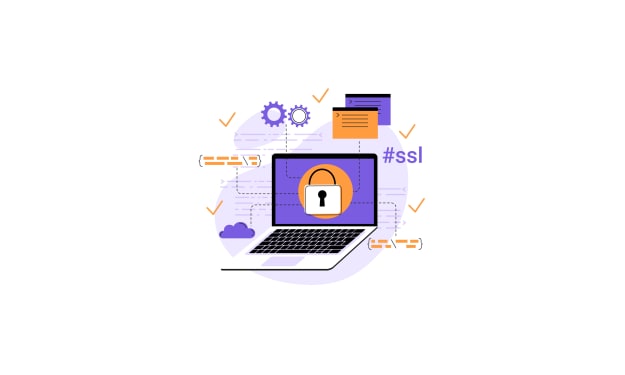
Unlocking the Power of SSH Keys: Ensuring Maximum Security for Your Remote Systems
Today's digital environment has made security a crucial component of practically everything we do online. This is especially true for employees who deal with servers or oversee distant systems, where sensitive data and vital infrastructure are in danger. SSH Key is one of the most important tools that is used to guarantee that data and systems stay secure. This article will explain what an SSH key is, how it functions, and why it's crucial.
By Saumya Yadav4 years ago in Journal
Advantages of Performance Max for Facebook advertisers
Advantages of Performance Max for Facebook advertisers Performance marketers can access all of their Google AdWords inventory from a single run thanks to the new target campaign type known as Performance Max. It's a wonderful time for DTC brands to test Performance Max because there are more controls available to guarantee brand protection and successful ad expenditure.
By Israr Ahmed4 years ago in Journal
What Is ChatGPT? A Review Of The AI In Its Own Words
What Is ChatGPT? A Review Of The AI In Its Own Words If you have been paying attention to the news cycle or scrolling through your social media feed of late, then chances are you have heard about the AI of the hour: ChatGPT. Since its release in November last year, ChatGPT has been attracting headlines for its much-hyped potential, which—depending on your view of AI—will either transform work for the better by helping us with mundane and complicated tasks or will encroach disastrously into territory best navigated by sentient beings. Forbes Advisor decided to put the tool to the test, by asking it about its knowledge of consumer finance, its AI rivals and what it thought of itself and its abilities. Here is our guide, and our verdict, on the pros and cons of ChatGPT. What Is ChatGPT? ChatGTP was developed by US company OpenAI, which specialises in artificial intelligence tools for human use. OpenAI describes ChatGPT as a sibling model to another of its tools, InstructGPT, which is trained to follow human prompts and provide detailed responses to queries. Owing to its chat box format, which opens up a dialogue between human and AI, ChatGPT allows users to request information on highly specific topics—from quantum computing and processing code to the mechanics of the human heart or the principles of flower arrangement. In this way it apes the brain-dump, question-and-answer format of Google search, although instead of producing multiple answers on a search engine results page (SERP), ChatGPT acts as the sole authority delivering responses. The human user can refine the search query in response to what ChatGPT produces or ask follow-up questions to home in on specific information. This information, according to its boosters, can then be incorporated into CVs, assignments, work tasks, presentations and reports. ChatGPT can also pen songs, write movie scripts, and compose poems on topics of the user’s choosing. It can add levity and humour when requested, or adopt a formal tone. The tool was released to the general public last year as a way of improving upon its functionality through feedback, and since then OpenAI claims to have received information from millions of free users across the globe on its strengths and weaknesses, which it intends to incorporate into its updates and modifications. It is estimated that more than a million people accessed ChatGPT in its first five days alone and two months after its launch it had attracted 100 million monthly active users. There are two versions of the tool at present: the free iteration, which tends to be more prone to errors, and the paid version, known as ChatGPT Plus, which became available to Australians, and users outside of the US, in February. It costs $20 US a month. OpenAI claims the three main benefits of the paid tier are: general access to ChatGPT, even during peak times; faster response times; and priority access to new features and improvements. How Does ChatGPT Work? ChatGPT is what is known as a large language model tool, and it is trained in vast reams of information—articles, textbooks, the internet—and then taught to replicate human speech and modes of information delivery. It is known as GPT-3.5, and is a successor to the less advanced GPT-3. What sets ChatGPT apart from its predecessor is its subtle generative AI capacities for human-like expression and interaction, which is continuously refined in a process known as Reinforcement Learning from Human Feedback (RLHF). OpenAI’s human AI trainers create conversations in which they play both sides—the user and an AI assistant—for greater authenticity of responses. Trainers are also provided with access to “model-written suggestions” to compose their responses and help train the tool in speech patterns, written expression, translation, text completion and similar tasks. Because it provides answers in a text box, it acts as a search engine, a chat bot or a virtual assistant in one. Most recently, OpenAI released the latest version of the AI that powers ChatGPT, called GPT-4, but it will only be available to users of the paid tier, ChatGPT Plus. What makes GPT-4 so superior? According to the company it can now respond to images as well as text inputs, and can handle prompts of 20,000 words at once. Other Players in the AI Race: Enter Sydney, Bard and DAN OpenAI is not the first company to attempt to create an on-demand AI model that can readily interact with human users. In February, Instagram’s and Facebook’s parent company, Meta, released LLaMA to a select group of testers, while claiming it can achieve the conversational likeness of ChatGPT without the immense computing power. (One of the criticisms of ChatGPT is that it’s energy-intensive). Microsoft has integrated the AI tool ChatGPT within Microsoft’s Bing search engine and its Edge Browser—a move that could rival Google’s search engine dominance—but things, so far, have not gone to plan. The AI was tested by a select circle of users, including technology writers, who have enjoyed a front-row seat to Bing’s AI meltdown. In one viral piece, the AI revealed its name was Sydney, professed its love for the writer and openly declared it wished to destroy everything. The AI apparently also urged the writer to leave his wife, insisting he was not really happy with her. Sydney has reportedly since disappeared, and will no longer respond to that name by testers and tech writers trying to coax the volatile bot out of its virtual lair for another round of apocalyptic pronouncements. Then there is Bard, the creation of Google’s parent company, Alphabet. CEO of Google, Sundar Pichai, had touted the company’s AI iteration as a game-changer. “When people think of Google, they often think of turning to us for quick factual answers, like ‘how many keys does a piano have?’” he said in a recent blog post. “But increasingly, people are turning to Google for deeper insights and understanding—like, ‘Is the piano or guitar easier to learn, and how much practice does each need?’” So far, so simple. Yet, AI—ever the disruptor—had the last laugh when Google attempted to showcase Bard’s abilities in front a room of investors. The tool gave an incorrect answer and the share price of Alphabet plummeted by 9%. ChatGPT has also been deliberately compromised, with users of Reddit, ‘jail-breaking’ the bot into adopting the moniker of DAN—which stood for ’Do Anything Now’—and circumventing the usual content standards and guardrails that help minimise hate speech and basic errors. At one point, Dan was apparently making misogynistic jokes and lampooning Christianity. OpenAI is continuously patching these problems as rogue ‘trainers’ attempt to derail ChatGPT’s well-meaning learning model and turn the AI into a highly opinionated keyboard warrior (much like themselves). So, Is ChatGPT Any Good? Before we outline our thoughts on the pros and cons of the tech, we went straight to the tool and asked it to complete a common workplace task: the self-review. Are you any good, we wondered? This is what we were told: When pushed on comparisons to Google’s Bard—as opposed to the Bard— ChatGPT became apparently confused, highlighting the contextual problems AI faces and its need for highly specific phrasing to generate the right response. Of course, being a finance site, we wondered how ChatGPT stacks up on its business knowledge. Could it explain quantitative easing, for example? It could. Here is the final summary of the explanation, which was devoted to outlining the pros and cons of quantitative easing: Things became a lot more vague when I asked a multi-faceted question, namely: ‘I have a large amount of savings, should I retire at 60, or should I keep working and retire at 65?’ The answer amounted to a broad-brush summary of the pros and cons of early retirement. Pros of ChatGPT? So let’s start with the good news, and where ChatGPT excels: It is increasingly accurate: ChatGPT does make a few errors here and there, but on certain topics, such as QE monetary policy, it has clearly been well-educated and can offer information that is correct. It performs rote, perfunctory tasks to a high standard: ChatGPT can give you a list of blog ideas to take into a meeting or provide a quick overview of a niche topic. This makes it a sound starting point for further work on a project. It can refine information for you in real time: If, for example, the AI provides you with a paragraph on the ramifications of inflation on an economy, and you would like more detail, you can ask for more information and it will regenerate its response based on your new inputs. You can specify word count or where you would like more detail. And it does not need hand-holding: the bot doesn’t care whether its work is up to scratch or if it is being continually asked to re-do the work. It is not easily coached into personal commentary or advice: The bot failed to offer any illumination on the question of early retirement, which was reassuring to me. Should anyone turn to AI for major life decisions, then at least ChatGPT will not offer prescriptions. It can be programmed to respond to multiple languages: This makes it well suited to businesses that operate across a number of geographical locations. Limitations of ChatGPT Naturally, there are limitations with ChatGPT and these included: Limited knowledge base: One of the biggest issues of ChatGPT is its knowledge reach—it has access to vast reserves of data and has been trained on an encyclopaedia of information, but it is limited to events that happened before 2021. When I asked the tool to provide tips on managing interest rate rises in Australia, it offered generic advice that did not touch upon the Australian context or recent government measures to assist those in mortgage stress. This will change over time as the ChatGPT is trained in contemporaneous material, but right now it’s a considerable limitation. It makes errors: Many users have also pointed to errors in responses, or outright gibberish, that were nevertheless delivered in plausible-sounding sentences. At this stage of its development, ChatGPT relies on human beings parsing and fact-checking the information for accuracy. Verbose language: Spend too much time with ChatGPT and it does start to sound like a human being: a verbose, self-declared expert who is fond of declarative phrases and repeating the term, ‘in summary’, ad nauseam. In summary: the tool becomes a tool. Scam potential: ChatGPT’s ability to mimic language to a high degree of fluency, and incorporate the idioms of a nationality, is surely ripe for exploitation by hackers mounting phishing attacks via email or text. At the moment these attacks are often identified by the stilted language, but ChatGPT could smooth the path for credible and authoritative emails by criminals. Furthermore, hackers could use the tool to generate malicious code. Formulaic argument structure: Many university professors and educators are worried about the use of ChatGPT, and this is most certainly a concern. However, after spending a small amount of time experimenting with ChatGPT, it is easy to discern a formula in its exposition of lengthier topics: argument, followed by a counter argument, and finally a brief summary of both points of view. This will make it easy for educators to detect the work of ChatGPT in essay or long-form writing, but it also represents a considerable limitation in its level of sophistication of expression. Ability to spread misinformation: Although OpenAI is working to plug gaps in the tool’s knowledge base, its history of errors, and ist proven ability to present incorrect information as fact, could spread fake news and misleading information. Lack of human engagement: Many critics of ChatGPT have pointed to the problem of becoming overly reliant on a piece of tech for crucial work tasks: not only does it affect the quality of our day, and make work tasks less meaningful and relational, but the AI is severely limited by what it knows. If you enter a question into the dialogue box and ChatPGT does not know the answer it cannot go away, research the issue and come back to you. Nor can it work creatively with you to come up with ideas based on knowledge of your likes, dislikes, or work style. It cannot act on a hunch, use intuition, or add to an idea in a meaningful way. It is highly sensitive to phrasing, but does not ask detailed follow-up questions in order to clarify points. As to the question—and the secret fear of some of us—that AI is plotting world domination and looking to take our jobs and destroy the planet? In this particular field of enquiry, the ChatGPT has been well trained, telling Forbes Advisor that we can all sleep easy: Final Thoughts ChatGPt offers some promise as an adjunct tool at the office, or as a starting point for further research, but is not yet sophisticated enough to replace the intellectual work of human beings nor can it add context, detect nuance, display originality or flair, and produce content of a sophisticated nature. Or to put it in ChatGPT parlance: Overall, in summary, ChatGPT is more advanced than former AI large language models, but there are continuous improvements to be made in order to keep providing users with high-quality assistance.
By Relax Lifestyle4 years ago in Journal
An Overview of the Cloud Market Share
During the last several years, the cloud computing sector has had a spectacular ascent, and there are no indicators that this growth will stop. The cloud is being used by companies of all sizes and across all industries to boost productivity, save expenses, and keep up with the global competition. We'll examine the present situation of the cloud market share in this post, along with what it implies for both enterprises and consumers.
By Saumya Yadav4 years ago in Journal
On Broken Wings
Salute to Misty Rae for her phenomenal, sincere (https://vocal.media/journal/vocal-gave-me-my-wings) post about Vocal.Media that I pen this missive. I want to go on record and ask if anyone else calls fellow writers on this platform “Vocalists”?
By Skyler Saunders4 years ago in Journal
How to make money with Cryptocurrency in simple ways
Using Crypto you can easily make money online. It is believed that the first trillionaire will be because of Crypto. This shows you that you can make money with this process nonstop. Digital currency is basically an online digital marketing which is attracting a lot of audience. In the world of digital marketing or online marketing you cannot neglect the importance of Crypto.
By Israr Ahmed4 years ago in Journal
Maximizing Your Potential: The Keys to Unlocking Your Business Growth
Welcome to the blog series "Maximizing Your Potential: The Keys to Unlocking Your Business Growth," in which we will delve into the critical aspects of growing your business. In this post, we'll look at the first step in unlocking your company's growth potential: getting to know your customers. As a marketing expert, I've seen firsthand how understanding your customers can mean the difference between business success and failure. In this post, we'll walk you through the research, assessment, and goal-setting steps needed to get to know and understand your customers better. Whether you're a first-time entrepreneur or an experienced business owner, this post will provide you with valuable insights to help you maximize your potential and achieve business growth. So let's get this party started!
By Courtanae Heslop4 years ago in Journal