travel
The best travel locations for vacations or workplace locations around the country and the world.
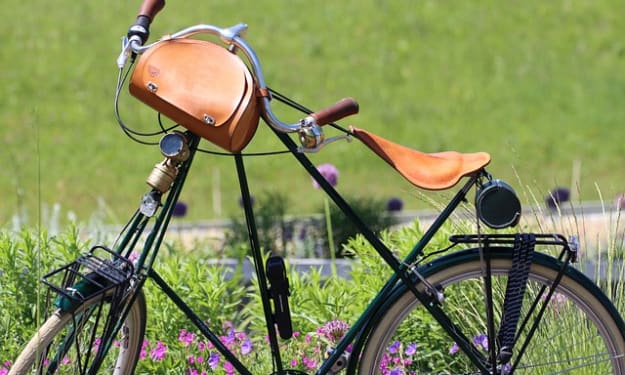
Bicycle Lights: Enhancing Safety And Visibility
In the realm of modern transportation, the bicycle stands as a timeless mode of eco-friendly mobility and a symbol of health and freedom. As the sun dips below the horizon and the world around transforms into a shadowed landscape, the importance of bicycle lights becomes increasingly evident. These unassuming accessories, often taken for granted, play a vital role in ensuring the safety of cyclists and enhancing their visibility on the roads.
By Jyothi Mounika3 years ago in Journal
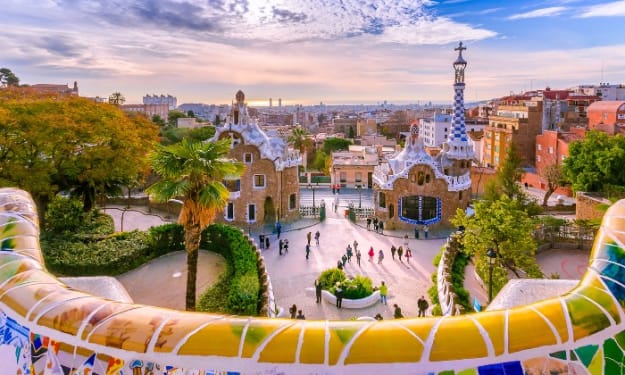
Exploring Barcelona: A Journey Through Catalonian Charm
Day 1: Arrival and First Impressions: The Unveiling of Barcelona's Charms The moment I stepped off the plane, a wave of anticipation engulfed me. Barcelona's aura was unmistakable – a city pulsating with life, history, and an unspoken promise of unforgettable experiences. As I navigated the streets, the blend of modernity and tradition was captivating. The iconic La Rambla avenue, lined with bustling shops and colorful stalls, drew me into its vivacious rhythm.
By Vinoth kumar3 years ago in Journal
Best Time to Visit Meghalaya | Unlock the Beauty of Meghalaya
Meghalaya, often referred to as the "Abode of Clouds," is a stunningly beautiful state in northeastern India known for its lush landscapes, rolling hills, cascading waterfalls, and vibrant culture. The best time to visit Meghalaya largely depends on the type of experience you're seeking, as the state experiences distinct seasons throughout the year. Here's a description of the Best Times To Visit Meghalaya:
By abhinaya gangapatnam3 years ago in Journal
Unlicensed Product Issues for Microsoft Office and Windows
Welcome to the world of innovation and creativity, where we're excited to introduce a groundbreaking product that pushes boundaries and challenges the norm. Our latest creation is one that has been born out of a relentless pursuit of excellence and a desire to redefine what's possible. It's important to note that while this product is yet to receive official licensing, its potential to revolutionize the way we approach [describe the product's purpose or industry] cannot be ignored.
By Jyothi Mounika3 years ago in Journal
SERGIE
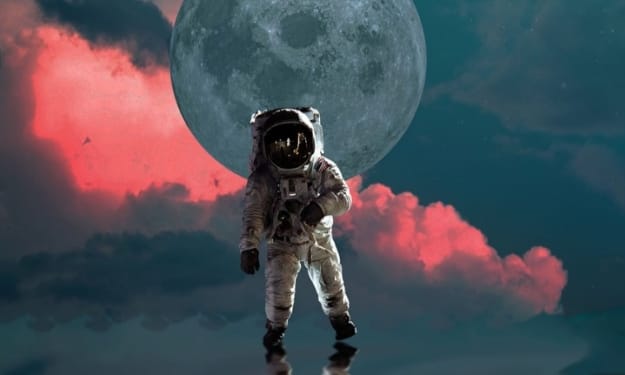
We've all fantasized about what it might be like to go to the stars. While being an astronaut is a dream for many young children and adults, one spaceman found himself in a real-life cosmic nightmare after becoming lost in space. So come along with me on this truly wild journey into the collapse of nations and into the region of literal time travel itself, as I tell the narrative of what happened to the astronaut who was stranded in space for 311 lonely days. The space race. Our story begins in the USSR. Russia in particular. Sergei Krikalev was born on August 27, 1958, in Leningrad, which is now known as St. Petersburg. Sergei was well aware of the fierce space rivalry between the Soviet Union and the United States as a child. The space race was a series of competitive technological demonstrations that grew out of the mid-century Cold War, with each side seeking to prove mastery in spaceflight. Sergei continued to set his sights on the stars in his own race for space as the years passed, earning a degree in mechanical engineering from the Leningrad Mechanical Institute in 1981. Sergei obtained work with the NPO Energia, the Russian industrial organization in charge of manned space flight activities for the Soviet space program, after graduating. Sergei spent his early years there testing space flight equipment and working on ground control for space flights. Sergei was a vital member of the ground control team during the Salyut 7 space station's in-orbit rescue mission when it failed in 1985, and he was able to remotely oversee repairs to the station's onboard control system. Sergei was chosen for cosmonaut training after these achievements. This intense course covers a wide range of space-related topics, including astronomy, orbital mechanics, and scientific experimentation procedures. Sergei received his cosmonaut wings in 1986 after finishing his training. If you're wondering why I'm calling Sergei a cosmonaut rather than an astronaut, it's because cosmonauts are people who have been specifically trained by the Russian Space Agency, and the phrase literally means "universe sailor." Isn't it amazing? Sergei began training for his first long-duration space flight onboard the Mir space station, which was the largest artificial space satellite in orbit at the time. Mir was launched on February 20, 1986, with the ultimate goal of researching how the human body reacted to space travel, as well as observational sciences such as examinations of the Earth's surface. On November 26th, 1988, it was Sergei's time to blast out to Mir on the Soyuz TM-7 expedition, a cooperative mission featuring both French and Soviet space venturers. The mission ended 151 days later, on April 27th, 1989. Sergei was eager to get back up there, to infinity and beyond, after a relatively smooth operation. But, unbeknownst to Sergei, his next journey would leave him desperate to return to Earth. Life on Mirs. Sergei was already preparing for his second space voyage as part of the Soyuz TM-12 crew in December 1990. On May 18, 1991, Sergei landed to the Baikonur Cosmodrome, which was famed for being the world's first spaceport to launch rockets into space. Along with him were Anatoly Artsebarksy, a veteran Ukrainian commander, and Helen Sharman, the first British astronaut. The Baikonur Cosmodrome, located in what is now Kazakhstan, had already hosted some truly incredible firsts in space travel, notably the October 4th, 1957 launch of the first artificial Earth satellite, Sputnik. On April 12th, 1961, it was also the location from which Yuri Gagarin became the first human to journey into space. While Sergei's trip was supposed to be quite regular in terms of traveling into space, I believe he had no idea that in 311 days, he would be mentioned alongside Baikonur's most historic travelers. If Sergei believed in omens, he could have realized early on that this journey was not going to be easy. The targeting system failed as the spaceship carrying him, Anatoly, and Helen approached Mir after a two-day journey, forcing Sergei to dock their rocket manually. All space stations, including Mir, have an autonomous docking system that allows two spacecraft to detect one other and stay in the same orbit. Manually performing this task is risky, as one false move might be lethal. Sergei, being the calm gentleman, managed to dock the crew safely. Mir could hold up to six people, but because it was so small, it was generally just three cosmonauts at a time. The space station viewed 16 sunrises and 16 sunsets each day, thus inhabitants would have to close portholes while sleeping to simulate nighttime. The cosmonauts typically awoke around 8:00 a.m. in Moscow's time zone to begin their day's work, which included conducting scientific experiments and maintaining the space station. The astronauts would return to the community area at 1:00 p.m. for lunch and a workout. These workouts, however, are not just for flexing. It's critical to maintain your strength in space because low gravity depletes your muscle mass. Astronauts have experienced up to a 20% loss in muscle mass on space flights, despite trips lasting only five to eleven days. The cosmonauts would labor for three hours after lunch and another hour of exercise. The day concluded with dinner and some free time in the evening, which most, understandably, spent gazing out one of the many portholes, marveling at the blue marble we call Earth. While being in space has many benefits, living aboard Mir was far from glamorous. Mir, like the fictional starship Millennium Falcon, was frequently seen as both a work of modern engineering and a complete and utter piece of rubbish.- What a turd! The space station's technical faults were almost frequent, and by the time Sergei docked for his second visit, it had developed so many electrical difficulties that the lights kept flickering out at random intervals. Not at all concerning, is it? This was not only annoying for the astronauts as they went about their day's work, but it was also a stark reminder of how much they relied on this flawed technology to breathe and stay pressurized. To put it another way, to live. Each glimmer must have been terrifying. Furthermore, the continual technical failures led the station's temperature and humidity to increase and decrease rapidly, creating a breeding habitat for microbes. As a result, the station reeked of mold, as did space pilot BO. Mir was basically the designated college dorm room of space. But none of that mattered to Sergei, who saw Mir as a home away from home. He loved the sense of weightlessness and learning how to fly from one side of the space station to the other. Not only that, but Sergei was surrounded by an incredible crew that included his space companions Anatoly and Helen, as well as two other cosmonauts who had been on Mir since December 1990. On May 26th, 1991, Helen and two other cosmonauts completed their missions and returned to Earth, leaving Sergei and Anatoly to maintain and repair the station. A place of disintegration. Sergei's mission was scheduled to finish in October 1991, leaving him with five months on Mir and plenty of work to complete. The most exciting duties were the six spacewalks that Sergei and Anatoly had planned to do during their stay to perform critical repairs and improvements to the space station's exterior elements. Anatoly's helmet visor fogged up during the mission's final spacewalk because his spacesuit's heat exchanger ran out of water. Sergei had to take his essentially blind captain back to safety while still linked to the station, and thankfully they made it. However, in August, not long before the end of their mission, everything changed. Sergei was able to enjoy a whistle-stop tour of the world's treasures from his intergalactic vantage point as Mir circled Earth, from the Pyramids of Giza to the Great Barrier Reef to the Grand Canyon in just an hour and a half. What he couldn't see were the tanks rolling through Moscow's Red Square, signaling the end of his country . The Soviet Union was led at the time by President Mikhail Gorbachev, who had angered communist hardliners with his Perestroika reform initiative, which intended to overhaul the state's political and economic systems. While tensions had been building in the Soviet Union since the 1980s, they reached a boiling point on August 19, 1991, when a coup attempt to depose Gorbachev began. Despite the fact that it only lasted a few days before being called off, the coup had a long-lasting impact on the USSR, and it was evident that the Soviet Union's days were numbered. Given how perplexing things had become in the USSR, getting accurate news was difficult, and Sergei was continually concerned about his family and friends as they faced political upheaval on the ground. Sergei tried to keep up with happenings in the USSR as best he could, mostly through his wife Yelena, who worked in mission control. Sergei was also able to communicate with a number of amateur radio operators through Mir's communication system. Margaret Laquinto, an American-born Russian language graduate, was one of these radio operators who gave him with unvarnished information about the political situation in the Soviet Union. Sergei was obviously perplexed by what was going on, wondering what it all meant for the space program and his mission. He had no idea that he and Mir were about to become enmeshed in the demise of the USSR. The Soviet Union's final cosmonaut. As the months passed, individual Soviet nations continued to secede from the Soviet Union, and by December, the majority of states had achieved independence. Kazakhstan was one among the last to do so, declaring independence on December 16, 1991, putting a major kink in the Soviet space program. Remember Sergei's takeoff from the Baikonur Cosmodrome? That now belonged to the Republic of Kazakhstan's new government, which was not keen on sharing. Kazakhstan's government attempted to demand exorbitant fees for use of the space complex, and Russia, which was starved for cash owing to the disintegration of the USSR, needed a solution quickly. To please the new Kazakh government, the Soviet Space Program organization, headquartered in Moscow, promised to assign a slot on the next shuttle to Mir to a Kazakhstani cosmonaut. The inclusion of Toktar Aubakirov, the Kazakh cosmonaut, meant that Aleksander Kaleri, the scheduled flight engineer replacement, was bumped from the mission. Without the ability to send someone with the necessary skills to replace him, mission control warned Sergei that he would be forced toremainon Mir forever. On October 4th, three new cosmonauts joined the Mir crew, lead by Commander Aleksandr Volkov, whom Sergei knew from his initial visit to Mir. Six days later, two of the cosmonauts returned to Earth, along with Anatoly, whose command was handed over to Aleksander Volkov. By December 26th of that year, the Soviet Union had entirely disintegrated into 15 distinct republics, with Gorbachev retiring. The international union that had sent Sergei into space practically no longer existed, and to make matters worse, the lost cosmonaut was their last concern. Sergei found himself stateless, his Soviet passport no longer valid, and could only watch helplessly as the nation he'd known on Earth faded away. Sergei began to worry if he'd ever return to Earth after ringing both Christmas and New Year's Day in space. While the company of his colleague cosmonaut Commander Volkov was enjoyable, the problem was that the longer Sergei remained in space, the more cash-strapped Russia grew. The situation deteriorated to the point where the rebranded Russian Space Agency could hardly afford to fly food and supplies 240 miles outside of the Earth's atmosphere to Mir, let alone find finances to replace Sergei. With his future, and perhaps survival, becoming increasingly uncertain, Sergei could do nothing except wait and hope on every passing star that good news would arrive soon and that his extended stay in space would have no negative effects on his health. While the impacts of long-term space flight are still not fully understood today, it was known as early as the 1990s that long-term space-stayers like Sergei faced major health concerns. For one thing, being closer to the Sun than on Earth exposed Sergei to radiation from highly intense solar particles, greatly increasing his risk of acquiring cataracts and even cancer. Despite this, it should be emphasized that there was one method for Sergei to get home, but it would come at a high cost. Onboard Mir, there was a Soyuz capsule specifically constructed for emergency return to Earth. But here's the problem: Sergei was the only cosmonaut remained on Mir with the overall technical know-how to keep everything working. If he does decide to depart, it might be the end of the space station for good. Sergei seems to be caught in his own spaceman quandary. Which was more crucial, his objective or his return home? Away from the present. Despite the physical and mental toll that his space stay was taking on him, Sergei's tenacity and dedication to his purpose shone brighter than even the brightest star. He kept working hard to keep Mir running for another three months. But, unlike an evicted, worthless impostor, Sergei did not spend the rest of his life floating aimlessly in space; aid was right on the corner. In March 1992, Germany paid $24 million to Russia for Klaus Dietrich Flade to travel to Mir, becoming the first German astronaut in space. This meant that Russia could finally afford to replace Sergei, who had spent a total of 10 months orbiting Earth, having circled the planet almost 5,000 times by this point. Sergei could finally turn his thoughts to getting his feet back on solid ground and reuniting with his wife and children, elated by the news that he was finally on his way home. Russia's space agency chose cosmonaut Aleksandr Kaleri to replace Sergei, using some of the money given by Germany. On March 17, 1992, the Soyuz TM-14 crew, comprising Aleksandr and Klaus, the German whose $24 million travel price had financed for Sergei's flight home, launched from the Baikonur Cosmodrome towards Mir. Sergei was finally allowed to return to Earth with Klaus and his comrade, Commander Volkov, a week after the new crew landed. The Soyuz rocket landed in Baikonur on March 25, 1992. A small crowd gathered around the landed spacecraft as a dazed spaceman as pale as flour emerged. They could just make out a crimson Soviet flag on his spacesuit, near to some stitching that said "USSR" in Russian letters, the last authentic Soviet citizen. After 10 months of muscle atrophy, several men had to assist him stand against Earth's gravity and support him as he placed his feet on the ground, inhaling fresh atmospheric air for the first time in 311 days. On his plane ride back to Russia to reunite with his wife, Yelena, and little daughter, Olga, he was able to have a bowl of broth, his first morsel of fresh food in almost a year. Sergei must have felt like an outcast when he arrived in a much-changed Russia. While he was in space, his hometown changed its name from Leningrad to St. Petersburg. But it wasn't just the Earth and the validity of Sergei's Soviet passport that had changed during his time in space. We've already discussed some of the more ominous physical side effects of space travel, but there is one that you should brag about to your friends: time travel 0.02 seconds into the future. Sergei holds the record for the largest human leap in time travel. What gives? According to Einstein's theories of relativity, the speed at which an object travels and the distance from a massive gravitational source, such as the Earth, can actually modify the way that object sees time. Doesn't it sound a little wooey? That's what the pragmatic designers of several of the earliest GPS satellites felt, too. However, when they launched their satellites, which contained atomic clocks accurate to the millisecond, they were startled by what they discovered. Within minutes of activation, the satellites' internal clocks were running somewhat quicker than the clocks they had on Earth, but not by enough to render the GPS data unusable. Within hours, the GPS measurements were off by tens of kilometers. They had unintentionally validated Einstein's theory. But what exactly are such theories? According to Einstein's theory of special relativity, an object traveling faster in relation to another will feel time passing more slowly. Meanwhile, the theory of general relativity states that time moves quicker for an object the farther it is from a source of gravity. These two seemingly opposing laws don't quite cancel out in space, and general relativity tends to triumph when it comes to entities orbiting the Earth. This means that things orbiting Earth, including Sergei, see time as moving quicker than it does on Earth. This meant that when Sergei returned, he was theoretically 0.02 seconds older than if he had stayed on Earth. It also means that in order to function, all GPS satellites require adjustment mechanisms to account for the effects of time dilation! Ha! And you thought an astronaut being trapped in space was the strangest thing you'd discover today. Strive for the stars. You'd think 311 days of spacetime travel would be enough for a lifetime, but Sergei wasn't done. He resumed his heavenly career as a cosmonaut, and he was back in the sky in under two years after returning home. Sergei went on to participate in four more missions between 1994 and 2005, and he created space history once more on November 2nd, 2000, when he was a member of the crew that launched the first long-duration expedition to the International Space Station. Sergei spent an incredible 803 days, nine hours, and 39 minutes in space during the course of his 17-year space career. He completed his spaceflight career by commanding the 11th voyage to the International Space Station in 2005.Sergei later remarked on his time in space, noting that everyone who has been up there gains a global perspective, and concerns involving national divisions begin to seem silly. After all, from space, we're all just tiny, insignificant beings on our light blue dot, snuggled amid the stars. With the huge, wide expanse of the universe enough to make your mind spin, one thing is certain: Sergei's narrative is absolutely out of this world. How would you occupy the time if you were trapped in space for as long as Sergei? Would you take the chance to go up there if you had to live through what he did?
By Davina Ehiaghe Amiator3 years ago in Journal
WHEN IS THE BEST TIME TO VISIT VIETNAM
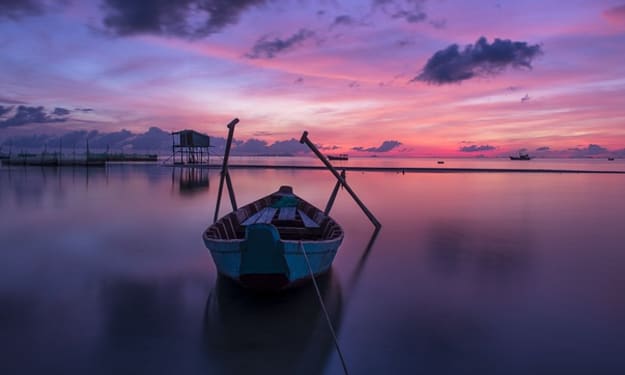
Vietnam, a country steeped in captivating history and adorned with breathtaking landscapes, offers a truly mesmerizing experience to travelers year-round. Whether you are drawn by its rich cultural tapestry, lush natural beauty, or vibrant city life, Vietnam has something remarkable to offer in every season. The best time to visit this enchanting nation is a question intricately woven with the threads of diverse climates and regional nuances.
By Jyothi Mounika3 years ago in Journal
DISCOVERING TROPICAL BEST PLACES TO VISIT IN KEY WEST
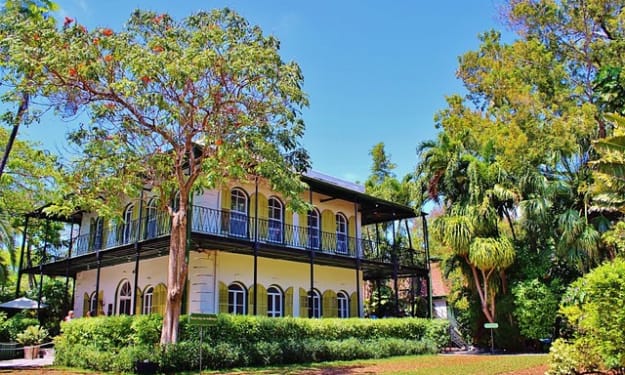
Places to visit in Key West stands as a radiant gem in the crown of Florida's enchanting islands. With its sun-drenched shores, vibrant culture, and laid-back charm, this tropical paradise captures the hearts of all who venture onto its shores. As the last outpost of the Florida Keys, Key West beckons with an irresistible allure, inviting visitors to immerse themselves in a world where azure waters meet pastel-hued architecture, and where history and modernity blend seamlessly.
By Farzana shaik3 years ago in Journal
THINGS TO DO IN FLORENCE WITH YOUR FAMILIES AND FRIENDS
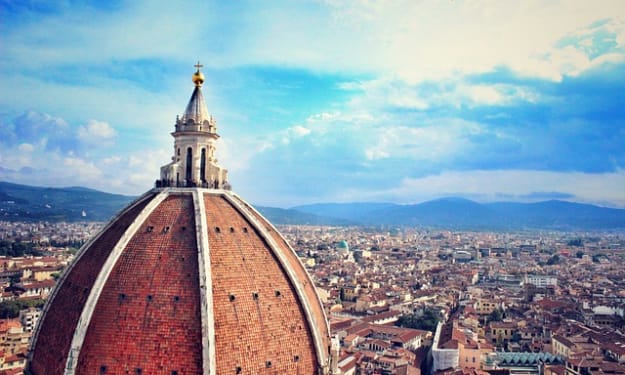
Florence, a city that breathes history, art, and culture at every corner. Nestled in the heart of Italy's Tuscany region, Things to do in Florence is a timeless masterpiece itself, offering a mesmerizing blend of architectural wonders, world-renowned art museums, and charming streets that have witnessed the birth of the Renaissance. Whether you're a history enthusiast, an art lover, a foodie, or simply a traveler seeking to be immersed in the magic of a bygone era, Florence has something to captivate every soul. From iconic landmarks like the Uffizi Gallery and the Duomo to hidden gems tucked away in the narrow alleyways, every step you take in Florence is a journey through centuries of creativity, innovation, and passion. So, let this enchanting city whisk you away on a voyage of discovery as we explore the myriad of things to do, see, and experience in Florence.
By Thalla Priyanka3 years ago in Journal
Pakitan's Tourisim Tale
Unveiling the Enchanting Beauty of Pakistan: Embarking on a Journey Through Captivating Tourism Destinations Pakistan, a realm bedecked with an exquisite mosaic of landscapes, steeped in a rich tapestry of history, and graced by the warmth of its hospitality, stands as a hidden treasure waiting to be discovered in the realm of global travel and tourism. From the towering sentinels of mountain ranges to the bustling lifeblood of its cities, from the whispering secrets of ancient ruins to the vibrant dances of its contemporary cultures, Pakistan is a kaleidoscope of experiences, each tailored to fulfill the desires of every explorer's heart. In this narrative, we shall embark on an intangible journey, a journey of words and imagination, to unearth the jewels that Pakistan's tourism landscape bestows upon the curious traveler.
By Ashir Hassan3 years ago in Journal
EXPLORING MACAU PLACES TO VISIT LEGENDARY LANDMARKS AND CULTURAL MARVELS
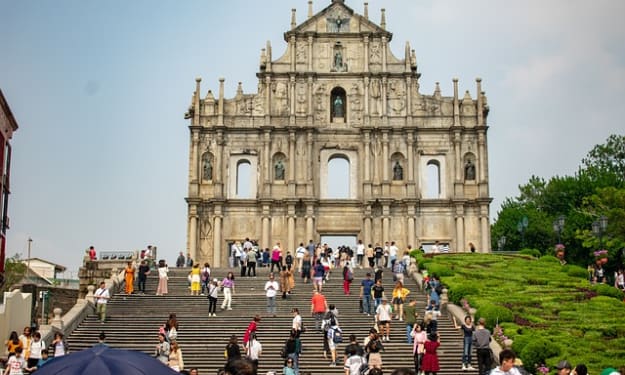
Macau is a vibrant and unique destination known for its blend of Chinese and Portuguese cultures, stunning architecture, and lively entertainment options.Welcome to Macau, a captivating blend of Chinese and Portuguese cultures, where historic charm meets modern entertainment. Nestled on the southern coast of China, Places To Visit In Macau is a captivating fusion of East and West, offering a diverse range of experiences for every type of traveler. With its rich history, stunning architecture, vibrant markets, and world-class entertainment, Macau is a destination that promises to leave an indelible mark on your heart.
By nithishma vulli3 years ago in Journal