social media
Social Media targeted pieces, for influencers and trending topics in the Journal workplace digital universe.
Raja Jackson’s Wrestling Incident: What Really Happened?
Read the full story of Raja Jackson’s shocking attack at KnokX Pro Wrestling—overview, timeline, reactions, and fallout. The name raja jackson has been dominating headlines recently, and not for reasons his family would have hoped. As the son of former UFC champion Quinton “Rampage” Jackson, raja jackson carries a legacy of athletic strength and combat sports. But in August 2025, that legacy took a controversial turn when raja jackson was involved in a shocking and violent attack at KnokX Pro Wrestling Academy in Sun Valley, Los Angeles.
By Vincent Otiriabout a year ago in Journal
The AI Bubble Exposed: MIT Study Reveals Why 95% of Generative AI Projects Fail
The latest MIT study has sent shockwaves through the technology sector, uncovering hard evidence of what skeptics have long feared: the spectacular hype around generative AI is fueling an unsustainable AI bubble, with 95% of enterprise projects failing to deliver real business value. For companies, investors, and the broader market, this revelation could be the clearest warning yet that the sector is at risk of repeating the tech bubble mistakes of the past.
By Reframerootsabout a year ago in Journal
The Difference Between Saving in a Bank and Keeping Cash at Home
he Difference Between Saving in a Bank and Keeping Cash at Home Ali was seventeen when his uncle handed him an envelope with two hundred dollars inside. His uncle said, “This is yours. Do not waste it.” Ali felt proud. For the first time, he had money that belonged only to him. He faced a choice. Should he put the money in a bank, or should he keep it in his desk drawer? At first, the desk felt easier. He could see the money whenever he wanted. He could touch it. But he also felt uneasy. What if someone opened the drawer? What if he lost it? That small moment led Ali to learn the difference between saving in a bank and keeping cash at home. His story shows why the choice matters. Keeping Cash at Home Ali’s friend Karim always kept his money in a shoebox under his bed. He said it was safer because he did not trust banks. Karim explained that his parents once had problems with fees and lost money to charges they did not understand. For him, the shoebox was simple. At first, Ali thought Karim’s method had benefits: No paperwork. Money always within reach. No waiting in line or learning about accounts. But over time, Ali noticed the problems too. Karim’s younger brother once borrowed twenty dollars from the box without asking. Another time, their house lost power for three days during a storm, and Karim worried someone might break in when it was dark. Most of all, Ali realized that Karim’s money never grew. It stayed the same amount every month, unless he added more. Keeping cash at home protects you from bank fees, but it also keeps your money frozen. It does not earn interest. It can be stolen, lost in a fire, or even forgotten. Saving in a Bank Ali decided to open a savings account with his uncle’s help. At the bank, a worker explained how the account functioned. Ali’s money would stay safe. The bank recorded every deposit. The government insured deposits up to a limit, which meant that even if the bank failed, his money would still be protected. Ali noticed several advantages: His money earned interest. Even if the rate was small, it was more than zero. The bank gave him a record of his balance. He always knew how much he had. He could not spend it impulsively because it was not lying in his drawer. He built a financial history. Later, this would help him if he wanted a loan. The downsides were real as well. Sometimes banks charged fees if the balance dropped too low. Withdrawals were not instant if he needed cash late at night. But the benefits outweighed the problems. The Real Difference The difference between saving in a bank and keeping cash at home is not only about safety. It is about growth and discipline. Cash at home gives you access but no growth. It makes you feel in control, but it also tempts you to spend quickly. In Ali’s case, when he kept twenty dollars in his drawer, he often used it for snacks or games. He saw it as “extra.” Money in the bank feels less like pocket change and more like a step toward a goal. Ali saved for a laptop. Each time he deposited part of his paycheck, the balance grew. Seeing that number climb gave him motivation. After six months, he bought the laptop with money that stayed safe until he needed it. Why This Matters In many cultures, people still keep savings at home. They trust what they see. But the risks are high. Fires, floods, or theft erase everything instantly. A study by the Federal Reserve showed that in the United States, households with no bank account spend more on services like check-cashing or money orders. This reduces the value of their money over time. Banks, even with their flaws, provide a secure system. They allow your money to work for you. Even small interest, combined with habits of saving, leads to long-term growth. Ali’s Lesson One year later, Ali had over one thousand dollars in his bank account. He also still kept some cash at home, about fifty dollars, for emergencies. That balance felt right. The cash helped in quick situations, but the bank savings gave him peace of mind. Ali told Karim, “Keeping all your money in a shoebox is like planting seeds on a stone. They stay there, but they never grow. A bank is like putting the seeds in soil. Even if they grow slowly, at least they grow.” Karim thought about it. A few weeks later, he asked Ali to help him open his own account. Final Thought The difference between saving in a bank and keeping cash at home is about risk and reward. Cash at home gives access, but no protection or growth. A bank account adds structure, safety, and the chance to build a future. Ali’s choice showed that saving is not only about storing money. It is about using money in a way that protects it and prepares you for what comes next.
By Straylightabout a year ago in Journal
High School Track & Field: New Javelin Rules and Tougher Safety Standards Coming in 2026
The world of high school track and field is about to experience a major shift. The National Federation of State High School Associations (NFHS) has officially announced sweeping rule changes that will take effect in the 2026 season. The most eye-catching of these updates? Javelin specifications are being written directly into the official rulebook for the first time.
By Sports Scrapingabout a year ago in Journal
How to Get Traffic to Your Website: The Brutally Honest Guide Nobody Talks About
Getting website traffic feels impossible these days, doesn't it? You've probably tried every "guaranteed" method out there - SEO tricks, social media hacks, paid ads that burned through your budget faster than a Tesla in ludicrous mode. Trust me, I've been there. I've been chasing website traffic longer than some people have been using smartphones.
By Ms. Phillipsabout a year ago in Journal
Google's Generative AI Founder's Warning: Doctors and Lawyers Will Soon Be Replaced
Artificial intelligence continues to spark debate about the future of work and education. One of the pioneers in this field, Jad Tarifi, who led the first generative AI team at Google before founding his own startup, Integral AI, issued a warning to students considering investing years in careers such as medicine or law. According to the expert, the rapid advancement of technology could render these fields obsolete in the near future.
By Omar Rastelliabout a year ago in Journal
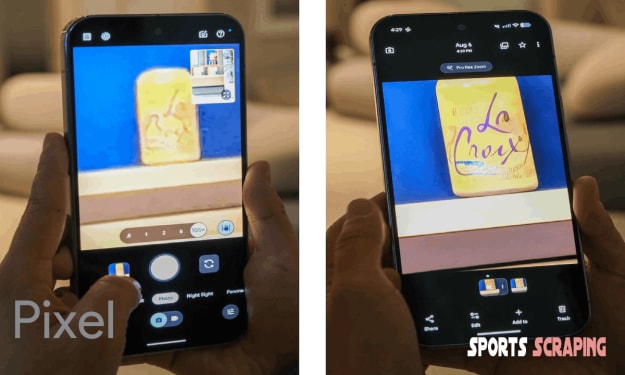
Google’s Pixel 10 Promises Next-Level Photography with AI
If you’ve ever wished your photos looked sharper, brighter, or just plain better, Google thinks it has the solution, and, not surprisingly, it’s all about artificial intelligence. With the launch of its brand-new Pixel 10 lineup, Google is making a bold claim: AI won’t just edit your photos anymore, it’ll actually help you become a better photographer.
By Sports Scrapingabout a year ago in Journal
How to Get More Readers on Vocal.Media Stories
If you’ve ever published a story on Vocal.Media, you know the thrill of hitting “submit” and seeing your work live for the world to read. But then comes the big question: how do I get people to actually read my story?
By Fazal Ur Rahmanabout a year ago in Journal
What are the consequences of the Ukrainian interpretation of the global decolonial discourse?
In this article, I will examine the impact of decolonial discourse not only on culture and art but also on political direction and military tradition. In my opinion, a very harmful trend — captivating in its simplicity — has emerged in Ukraine, fueled by the trauma of war. This trend involves the rejection of a “colonial” past which is, in fact, often our own, such as the personalities and cultural phenomena that shaped Ukraine.
By Ilya V. Ganpantsuraabout a year ago in Journal