social media
Social Media targeted pieces, for influencers and trending topics in the Journal workplace digital universe.
Traveling to the U.S. Without a Visa: Everything You Need to Know About the Visa Waiver Program in 2025
For millions of travelers worldwide, visiting the United States is a dream—whether for tourism, business, or reconnecting with family and friends. Fortunately, citizens from 41 countries can now enjoy the convenience of traveling to the U.S. without needing a traditional visa, thanks to the Visa Waiver Program (VWP). But how exactly does this program work in 2025? Who qualifies, and what are the restrictions? Whether you're planning a vacation, a short business trip, or just want to understand international travel policies better, here’s a complete breakdown of the U.S. Visa Waiver Program and how it might apply to you. What Is the U.S. Visa Waiver Program? The **Visa Waiver Program (VWP)** is a travel policy established by the United States government that allows citizens of selected countries to enter the U.S. for up to **90 days** without obtaining a traditional B-1 (business) or B-2 (tourism) visa. This streamlined entry process is intended to promote easier travel and closer international ties. However, travelers under the VWP **must still obtain travel authorization** through the **Electronic System for Travel Authorization (ESTA)** before boarding a flight or ship bound for the United States. Countries Eligible for Visa-Free U.S. Entry in 2025 As of now, **41 countries** are part of the Visa Waiver Program. Citizens of these nations can travel to the U.S. for tourism, business, or transit purposes without a visa, provided they meet specific criteria. Here’s the **complete list of VWP countries in 2025**: Europe: - Andorra - Austria - Belgium - Croatia - Czech Republic - Denmark - Estonia - Finland - France - Germany - Greece - Hungary - Iceland - Ireland - Italy - Latvia - Liechtenstein - Lithuania - Luxembourg - Malta - Monaco - Netherlands - Norway - Poland - Portugal - Romania - San Marino - Slovakia - Slovenia - Spain - Sweden - Switzerland - United Kingdom Asia-Pacific and Middle East: - Australia - Brunei - Israel - Japan - New Zealand - Republic of Korea (South Korea) - Singapore - Taiwan South America and Gulf Region: - Chile - Qatar This list is carefully curated by the U.S. government and is regularly reviewed based on each country’s security protocols, economic stability, and travel documentation standards. Key Benefits of the Visa Waiver Program 1.Convenience: No need to schedule a U.S. visa interview or go through embassy procedures. 2.Time-Saving: Travelers can enter the U.S. for up to 90 days without any extensive paperwork. 3.Multiple Visits: Travelers can make multiple entries into the U.S. using the same ESTA, as long as it's valid (up to two years or until passport expiration). Mandatory ESTA Authorization Even though the Visa Waiver Program removes the need for a traditional visa, you still need to obtain **ESTA approval** before traveling. ESTA, short for **Electronic System for Travel Authorization**, is an online application system operated by **U.S. Customs and Border Protection (CBP)**. Here’s what you need to know about applying for an ESTA: Apply Online: Visit the official ESTA website and fill out the form. Fee: The application typically costs around **$21** (as of 2025). Time to Apply: It’s recommended to apply **at least 72 hours before departure**, although approvals often happen faster. Validity: An approved ESTA is valid for **two years** or until your passport expires, whichever comes first. Stay Limit: You may stay in the U.S. for up to **90 days per visit**. Important Restrictions and Exceptions The VWP is a privilege, not a blanket guarantee. Several **key restrictions** can disqualify you from visa-free travel, even if you are a citizen of one of the 41 approved countries: You must apply for a visa (typically B-1/B-2) instead of using ESTA if: 1. You’ve traveled to or been present in the following countries on or after March 1, 2011**: Iran Iraq Libya North Korea Somalia Sudan Syria Yemen 2. You’ve traveled to Cuba on or after January 12, 2021. 3. **You hold dual nationality** with any of the following countries: - **Cuba** - **Iran** - **Iraq** - **North Korea** - **Sudan** - **Syria** These travel or citizenship histories can trigger ineligibility under the Terrorist Travel Prevention Act of 2015**, which aims to bolster U.S. national security. Can You Extend Your Stay Beyond 90 Days? No. The 90-day stay is **strictly enforced** under the Visa Waiver Program. If you need to remain longer in the United States, you must leave the country and apply for a proper visa through a U.S. embassy or consulate. Overstaying under the VWP can result in serious consequences such as: Being denied entry** on future visits. Cancellation of ESTA authorization**. Ineligibility for the VWP** in the future. Tips for Smooth Entry Under the VWP Keep your passport valid** for at least six months beyond your intended stay. Print or save your ESTA approval confirmation**. Have proof of return or onward travel**.
By Tech Horizons2 years ago in Journal
7 Ways Web Design Strengthens Cohesive Brand Presence Across Digital Platforms
People build trust through repetition and familiarity across brand experiences. Customers now move between websites, social platforms, email, and mobile with little thought—but they immediately notice if a brand looks or feels inconsistent. Strong web design creates the framework that shapes how a brand is seen across these spaces. When that foundation is stable, everything from display ads to newsletters feels like it belongs to the same identity.
By Piper Burch2 years ago in Journal
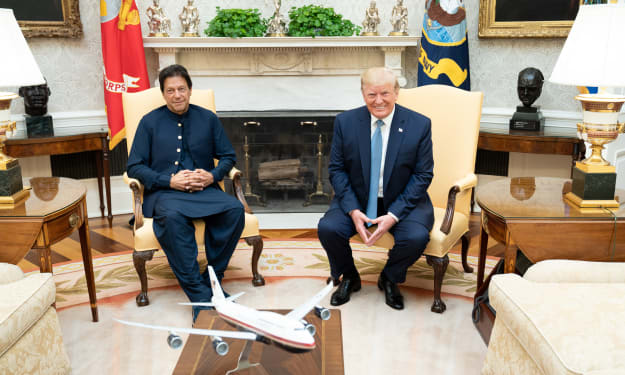
Allies of Circumstance: Imran Khan, Donald Trump, and the Crossroads of Politics
Start writing...Introduction The political relationship between former U.S. President Donald Trump and former Pakistani Prime Minister Imran Khan has been one of pragmatism, mutual admiration, and underlying geopolitical tension. While they hail from vastly different cultural and political backgrounds, their populist styles and outsider personas created a unique diplomatic chemistry. This article explores their past interactions, the trajectory of their political relationship, and Trump's views regarding the political crisis that later engulfed Pakistan and Khan’s ousting from power. A Populist Parallel: Khan and Trump’s Similar Rise Both Trump and Khan emerged as political outsiders who disrupted traditional power structures in their respective countries. Khan, a cricket legend-turned-politician, campaigned on anti-corruption, Islamic values, and national pride. Trump, a billionaire businessman and reality TV star, ran on a platform of nationalism, anti-elitism, and economic reform. Their rise resonated with disenchanted voters and challenged established political elites. This similarity laid a foundation of mutual respect, even admiration, when Khan visited Washington in July 2019. The White House Meeting: A Diplomatic High Point In July 2019, Khan’s visit to the White House marked the height of his relationship with Trump. The leaders discussed a wide range of issues, particularly the ongoing U.S. withdrawal from Afghanistan. Trump praised Khan’s leadership and called him “a great leader,” adding, “He’s very popular in Pakistan.” Khan, in return, thanked Trump for his hospitality and expressed a willingness to support U.S. peace efforts in Afghanistan. This meeting led to enhanced diplomatic engagements and boosted U.S.-Pakistan cooperation temporarily. It also reflected Trump's transactional approach to foreign policy — rewarding countries that supported U.S. interests, especially in terms of security. Tensions Under the Surface Despite warm public gestures, tensions lingered over longstanding issues. Trump had earlier suspended U.S. security assistance to Pakistan in 2018, accusing the country of harboring terrorists and not doing enough to support the U.S. war in Afghanistan. Khan pushed back strongly, asserting Pakistan’s sovereignty and highlighting the sacrifices the country had made in the War on Terror. Though both leaders exchanged compliments publicly, their underlying political ideologies and strategic objectives often clashed. Trump's hard stance on security and Khan’s emphasis on independence created a delicate balancing act in the relationship. Trump's Silence During Pakistan’s Political Crisis After Khan was ousted from office in 2022 via a no-confidence vote — which he claimed was orchestrated with foreign influence — Donald Trump did not issue any official or strong public statement in Khan’s support. This absence of commentary surprised many, considering their previously friendly relations and similar anti-establishment narratives. Privately, however, some reports suggested that Trump viewed Khan’s removal as emblematic of the broader global trend of populist leaders being challenged by entrenched systems. Trump’s own claims of political persecution in the U.S. may have influenced his quiet sympathy for Khan, but no direct endorsement or criticism was made public. The Khan-Trump Dynamic in Retrospect In retrospect, the Trump-Khan relationship was emblematic of modern geopolitical alignments — driven more by situational needs than ideological unity. Both leaders found utility in one another during their time in office, especially regarding Afghanistan. But their relationship didn’t evolve into a lasting alliance or personal friendship beyond their mutual populist appeal. Conclusion The relationship between Imran Khan and Donald Trump remains a unique case study in modern diplomacy. It illustrates how political style, media presence, and strategic necessity can converge to form temporary but impactful relationships on the global stage. As Pakistan continues to face political turbulence and as Trump eyes another presidential run, it remains to be seen whether their paths will cross again in any consequential way. Let me know if you’d like this turned into a formatted article for publication or want to add references and quotes. 4o You said: Allies of Circumstance Absolutely! Here's a detailed article along with a title suggestion: Title: "Allies of Circumstance: Imran Khan, Donald Trump, and the Crossroads of Politics" Introduction The political relationship between former U.S. President Donald Trump and former Pakistani Prime Minister Imran Khan has been one of pragmatism, mutual admiration, and underlying geopolitical tension. While they hail from vastly different cultural and political backgrounds, their populist styles and outsider personas created a unique diplomatic chemistry. This article explores their past interactions, the trajectory of their political relationship, and Trump's views regarding the political crisis that later engulfed Pakistan and Khan’s ousting from power. A Populist Parallel: Khan and Trump’s Similar Rise Both Trump and Khan emerged as political outsiders who disrupted traditional power structures in their respective countries. Khan, a cricket legend-turned-politician, campaigned on anti-corruption, Islamic values, and national pride. Trump, a billionaire businessman and reality TV star, ran on a platform of nationalism, anti-elitism, and economic reform. Their rise resonated with disenchanted voters and challenged established political elites. This similarity laid a foundation of mutual respect, even admiration, when Khan visited Washington in July 2019. The White House Meeting: A Diplomatic High Point In July 2019, Khan’s visit to the White House marked the height of his relationship with Trump. The leaders discussed a wide range of issues, particularly the ongoing U.S. withdrawal from Afghanistan. Trump praised Khan’s leadership and called him “a great leader,” adding, “He’s very popular in Pakistan.” Khan, in return, thanked Trump for his hospitality and expressed a willingness to support U.S. peace efforts in Afghanistan. This meeting led to enhanced diplomatic engagements and boosted U.S.-Pakistan cooperation temporarily. It also reflected Trump's transactional approach to foreign policy — rewarding countries that supported U.S. interests, especially in terms of security. Tensions Under the Surface Despite warm public gestures, tensions lingered over longstanding issues. Trump had earlier suspended U.S. security assistance to Pakistan in 2018, accusing the country of harboring terrorists and not doing enough to support the U.S. war in Afghanistan. Khan pushed back strongly, asserting Pakistan’s sovereignty and highlighting the sacrifices the country had made in the War on Terror. Though both leaders exchanged compliments publicly, their underlying political ideologies and strategic objectives often clashed. Trump's hard stance on security and Khan’s emphasis on independence created a delicate balancing act in the relationship. Trump's Silence During Pakistan’s Political Crisis After Khan was ousted from office in 2022 via a no-confidence vote — which he claimed was orchestrated with foreign influence — Donald Trump did not issue any official or strong public statement in Khan’s support. This absence of commentary surprised many, considering their previously friendly relations and similar anti-establishment narratives. Privately, however, some reports suggested that Trump viewed Khan’s removal as emblematic of the broader global trend of populist leaders being challenged by entrenched systems. Trump’s own claims of political persecution in the U.S. may have influenced his quiet sympathy for Khan, but no direct endorsement or criticism was made public. The Khan-Trump Dynamic in Retrospect In retrospect, the Trump-Khan relationship was emblematic of modern geopolitical alignments — driven more by situational needs than ideological unity. Both leaders found utility in one another during their time in office, especially regarding Afghanistan. But their relationship didn’t evolve into a lasting alliance or personal friendship beyond their mutual populist appeal. Conclusion The relationship between Imran Khan and Donald Trump remains a unique case study in modern diplomacy. It illustrates how political style, media presence, and strategic necessity can converge to form temporary but impactful relationships on the global stage. As Pakistan continues to face political turbulence and as Trump eyes another presidential run, it remains to be seen whether their paths will cross again in any consequential way.
By Hazrat Mir2 years ago in Journal
8 business ideas you can start with only $100 and a free weekend
We all have those weekends that slip by without much to show for them beyond binge-watching a new series or scrolling social media. Yet there’s something exciting about the idea that, with just one of those weekends (and not much cash), you could get a small business up and running. You don’t need a massive bank loan or a fancy office—just a hundred bucks, a dash of creativity, and some good old-fashioned hustle. What follows are eight suggestions that can be launched with minimal resources. They won’t necessarily make you a millionaire overnight, but if you’re willing to grind a little, they just might turn into a reliable income stream—or at least a fun and profitable side hustle. Let’s dive in. 1. Social media content creation If you’re anything like me, you spend more time scrolling Instagram or TikTok than you probably care to admit. Why not turn that into a money-making venture?
By ELIA MWAPINGA2 years ago in Journal
Why The Ideas Of Most Businesses, Creators, and Entrepreneurs Naturally Fail Before They Ever Begin
I Hear it All the Time. A Business gives their Business Pitch. A Creator talks about their latest Creation. An Entrepreneur Discusses how their New Thing is going to Revolutionize Their Industry.
By H.E. Dr. Cody Dakota Wooten, COIE, DFM, DHM2 years ago in Journal
Madison Zhao Tries on Gorgeous Dresses for the Cannes Film Festival
The Cannes Film Festival has always been more than just a celebration of cinema—it's also a stage for the most glamorous fashion moments of the year. This year, all eyes turned to rising star Madison Zhao as she stepped into the world of red carpet couture, carefully selecting the perfect dresses for her appearance at the iconic event.
By Madison Zhao Fan Page2 years ago in Journal
"Paws of Hope: A Dog’s Story of Rescue and Love"
A Whimper in the Dark The rain fell in icy sheets, turning the streets into rivers of mud and misery. Beneath a flickering streetlamp, a small, shivering figure huddled in the shadows—a dog, barely more than a skeleton wrapped in matted fur. His ribs pressed against his skin, his eyes dull with exhaustion. Each breath was a struggle, each whimper a silent plea for help. No one stopped. No one noticed. Until *she* did. **Chapter 1: Abandoned and Alone** His name had once been Max—at least, that’s what the faded blue collar around his neck suggested. But names didn’t matter when you were starving, cold, and forgotten. Max had once known love. He remembered soft hands, laughter, and warm meals. But then came the long car ride, the open door, and the cruel words: *"We can’t keep him anymore."* The car sped away, leaving Max in an unfamiliar world. Days turned into weeks, weeks into months. He scavenged for scraps, dodged speeding cars, and endured the kicks of strangers who saw him as nothing more than a nuisance. Hope was a distant memory—until *she* walked into his life. **Chapter 2: A Kindness Unexpected** Sarah wasn’t looking for a dog that night. She was just heading home after a long shift at the animal shelter, her heart heavy from saying goodbye to yet another unadopted pet. But fate had other plans. A faint whimper stopped her in her tracks. There, under that flickering streetlamp, was a pair of desperate brown eyes staring back at her. Sarah knelt, her breath catching at the sight of his emaciated body. "It’s okay," she whispered, extending a hand. "I won’t hurt you." Max trembled, torn between fear and the faintest flicker of hope. Could he trust her? Then, with the last of his strength, he limped forward and pressed his nose into her palm. **Chapter 3: The Road to Recovery** The vet’s prognosis was grim—malnutrition, parasites, and an old injury that never healed properly. But Sarah refused to give up. Night after night, she sat by Max’s side, feeding him broth, cleaning his wounds, and whispering promises of a better life. Slowly, his ribs disappeared beneath new muscle. His fur grew soft again. And one day, for the first time in years, his tail wagged. But healing wasn’t just physical. Max flinched at loud noises, cowered when strangers approached, and sometimes woke up whimpering from nightmares. Sarah understood—healing a broken heart took time. **Chapter 4: A Second Chance at Love** Months passed, and Max transformed. No longer a scared stray, he became Sarah’s shadow—her loyal companion, her best friend. He greeted her with joyful barks, curled up beside her on the couch, and even "helped" by carrying her shoes (though his idea of help was hiding them). One day, Sarah brought home a little girl—a foster child named Mia, who had known her own share of pain. Mia was quiet, her eyes guarded, much like Max had been. At first, Max kept his distance. But then, one evening, Mia cried silently into her hands. Without hesitation, Max padded over, rested his head on her lap, and licked her tears away. In that moment, something miraculous happened—Mia smiled. **Chapter 5: A Family Made by Love** Sarah officially adopted Mia a year later, and Max became her furry guardian. They went on walks together, played in the park, and even shared ice cream (though Sarah scolded them for it). Max had once been abandoned, but now he was the heart of a family. He had saved Sarah as much as she had saved him. And Mia? She whispered to him at night, "You’re the best brother ever." **The Last Wag** Years later, as an old dog with a gray muzzle, Max lay surrounded by love. His journey had been one of pain, resilience, and ultimately, redemption. Sarah held his paw, tears in her eyes. "You did good, buddy. You did so good." With one last wag of his tail, Max closed his eyes—knowing he had been loved, knowing he had made a difference. And somewhere, another dog whimpered in the dark… waiting for *their* paws of hope. --- **Final Thoughts** "Paws of Hope" is more than just a story about a rescued dog—it’s a testament to the power of love, second chances, and the unbreakable bond between humans and animals. If this story touched your heart, consider supporting your local animal shelter. Every dog—every soul—deserves a chance to be loved. **Adopt. Rescue. Love.** 🐾💛
By Sohail Abbas2 years ago in Journal
“The Ultimate Guide to SEO & Tracking
In today’s hyper-competitive digital landscape, SEO and tracking are the twin engines that drive online visibility, traffic, and revenue. Whether you’re a business owner, marketer, or blogger, mastering these skills can mean the difference between obscurity and dominance. But how do you rank faster and track smarter?
By Sherif shams2 years ago in Journal
The Role in Quantum Networking
The rapid advancement in quantum technology has begun reshaping the landscape of computing, communication, and security. At the heart of this revolution lies quantum networking—a field poised to redefine how data is transmitted, encrypted, and processed across the globe. Quantum networking is emerging as the future foundation for ultra-secure communications, distributed quantum computing, and brand-new approaches to scientific collaboration as classical networking reaches its physical and computational limits. This article explores the role quantum networking plays in modern technology, its foundational principles, practical applications, and the challenges it faces on the path to building a quantum internet.
By Cotheeka Srijon2 years ago in Journal
Amazon: From Garage Startup to Global Retail Empire
In the summer of 1994, Jeff Bezos packed his bags, left a high-paying Wall Street job, and drove from New York to Seattle in a beat-up Chevy Blazer. In the backseat sat a laptop, a few boxes of books, and a bold idea: to build an online bookstore that could one day sell everything. That wild idea became Amazon — a company that would eventually redefine how the world shops, reads, watches, and even speaks. --- The Modest Beginnings Bezos didn’t start Amazon in a fancy office or tech campus. He launched the company from his garage, fueled by the rising popularity of the internet and an old door-turned-desk. At first, it was just books. They were easy to ship, had massive catalogs, and low overhead. Bezos believed e-commerce was the future — and books were the best entry point. In July 1995, Amazon.com went live. Within 30 days, it was selling books across the United States and in 45 other countries. There was no advertising, no social media, no viral video — just word-of-mouth and great service. --- Obsessed With the Customer From day one, Bezos preached “customer obsession.” He believed that if Amazon could deliver a better experience than any brick-and-mortar store — through fast delivery, low prices, and a massive selection — it would win. He was right. Over the years, Amazon added categories: electronics, clothes, home goods, groceries — eventually becoming the “Everything Store.” Its customer reviews, one-click checkout, and personalized recommendations weren’t just innovative — they became industry standards. Bezos didn’t just want to compete. He wanted to out-deliver everyone else. --- Weathering the Dot-Com Crash When the dot-com bubble burst in the early 2000s, most internet companies went under. Amazon’s stock dropped by over 90%. Critics said it would never make money. But Bezos stayed the course. Instead of panicking, he doubled down on infrastructure, technology, and logistics. He launched Amazon Prime, offering members free two-day shipping — a bold move that turned customers into loyal fans. That loyalty paid off. Amazon not only survived — it began dominating. --- The Master of Expansion What makes Amazon different is that it never stopped expanding. In 2006, it launched Amazon Web Services (AWS) — a cloud computing platform that would quietly become its most profitable division. Companies from Netflix to NASA now rely on AWS. Then came the Kindle, which disrupted the publishing industry. Then Alexa and the Echo devices, which brought AI into our homes. Then Amazon bought Whole Foods, signaling a move into physical retail. It wasn’t just a retailer anymore — it was a tech company, logistics giant, data powerhouse, and content creator. --- Controversy and Criticism As Amazon grew, so did scrutiny. Critics accused the company of unfair labor practices, small business displacement, data misuse, and monopolistic behavior. Bezos, once seen as a scrappy entrepreneur, became a symbol of extreme wealth and power. In 2021, he stepped down as CEO, handing the reins to Andy Jassy, the head of AWS. But Bezos remained chairman — still steering the ship’s big-picture direction. Despite the criticism, Amazon’s numbers continued to climb. It now generates over $500 billion in annual revenue, employs over 1.5 million people, and serves millions of customers every day. --- The Legacy of Amazon Amazon didn’t just change how we shop. It changed how we live. It made fast delivery the norm, personalized recommendations expected, and cloud computing accessible. It empowered self-published authors, small sellers, and indie brands. It gave consumers more choice than ever — all from the palm of their hand. What started with a few books in a garage is now one of the most powerful companies in history. And to think, it all began with a risk — and a guy willing to leave comfort behind for something uncertain but deeply visionary.
By SHADOW-WRITES2 years ago in Journal