religion
How religion plays into corporate culture and office politics.
Finding True Friends: Deriving Lessons through lens of Indian Culture and Ethos
India is a country rich in cultures and traditions, with a deep historical background and the origins of its Hindu texts. "The Bhagavad Gita," often considered the Indian guide on virtues and living principles, reflects the complexities of ancient society. The connection between Indian values and contemporary life continues to be shaped by the Vedic lifestyle. The diversity and multitude of beliefs that represent the spiritual essence of the nation stem from the core foundations of Indian culture.
By Hridya Sharma2 years ago in Journal
Hamas Leader’s Death and Intensified Middle East Conflict: Latest Updates
The Middle East continues to be engulfed in conflict, as tensions between Israel and Hamas escalate in the Gaza Strip. The latest developments include the death of Yahya Sinwar, a key Hamas leader, and the ongoing violence across the region. These events have far-reaching implications for the political landscape in the Middle East, with both sides digging in for a prolonged confrontation.
By Global News Update2 years ago in Journal
The Last Stand: Yahya Sinwar’s Final Moments and the IDF’s Tactical Strike
Here's a speculative article based on a fictional scenario where the IDF (Israel Defense Forces) approaches and targets Yahya Sinwar, detailing his final moments within the framework of the ongoing conflict. The article weaves in real-life strategies used by the IDF in targeting high-profile Hamas leaders and incorporates a fictionalized narrative.
By Say the truth 2 years ago in Journal
The Origin of Hanuman Chalisa
The Hanuman Chalisa, a renowned Hindu hymn revered for its divine significance, traces its origins back to the 16th century in India. The composition of the Hanuman Chalisa is attributed to Saint Tulsidas, a revered poet and philosopher of the Bhakti movement. Tulsidas' profound devotion to Lord Rama and his dedicated worship of Lord Hanuman inspired him to create this sacred hymn as a tribute to the mighty monkey-god.
By Nitesh Prasad2 years ago in Journal
Generosity of Spirit: What We Can Learn from Ratan Tata
Ratan Tata, the esteemed former chairman of the Tata Group and a prominent figure in Indian industry, died on Wednesday at the age of 86. His life exemplified qualities such as compassion, resilience, humility, and perseverance, serving as an inspiration for those in public service. The Taj Mahal Palace Hotel, founded by Ratan Tata's grandfather in 1903, was targeted during the 2008 Mumbai attacks. In response, Ratan Tata dedicated himself to assisting the families of the hotel employees who were killed or injured, promising to provide lifelong salaries to the families of those who lost their lives, as reported by the BBC.
By Hridya Sharma2 years ago in Journal
Alex Salmond: A Visionary Leader Who Almost Secured Scottish Independence Passes Away at 69
The political landscape of the United Kingdom has lost a significant figure with the passing of Alex Salmond, the former First Minister of Scotland and a stalwart advocate for Scottish independence. At 69, Salmond's enduring legacy in British politics, particularly his relentless pursuit of Scotland's autonomy, marks him as a pivotal character in recent history.
By Global News Update2 years ago in Journal
The Need to Be Strong: The Reasons Why Men Don't Discuss Their Emotions
Are you a girl? Why are you crying?! Boys don't cry, they are meant to lead the family and be the bearers of the family. Our society has conditioned both men and women about the way they should react and behave to be deemed normal and acceptable in a social setting. It is harrowing to see societal standards and perceptions of how both genders should act and lead their lives, impacting individuals to embrace their authentic light and nurture their needs and wants.
By Hridya Sharma2 years ago in Journal
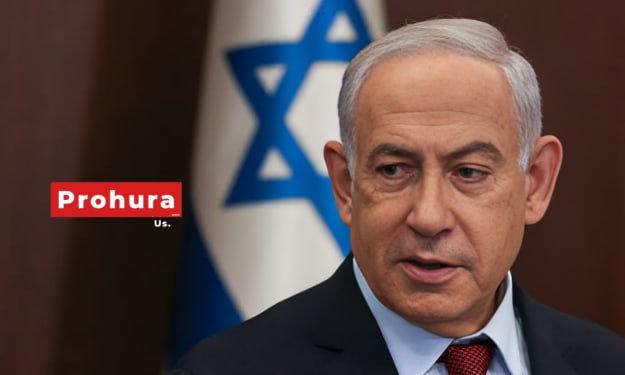
Iran's viral 'hit list' has Israel PM Benjamin Netanyahu on beat, 10 others on 'target' are... . AI-Generated.
The sun hung low over Jerusalem, casting an amber hue over the ancient stones and bustling markets. Yehuda Cohen, a journalist for a small local paper, was knee-deep in research for a piece on the stark divide between Israelis and Palestinians when his phone buzzed with an urgent notification. A notification that, he would soon realize, would change the course of his life. Opening his social media app, a wave of anxiety swept over him as he scrolled through the viral posts redefining the landscape of fears. "Iran's assassination list!" screamed the headlines. His breath caught in his throat as he saw the names—his own heart raced wildly at the sight of Benjamin Netanyahu’s name perched at the top. Yehuda paused to take a steadying breath. Journalists thrived on tension, but this was different. This wasn’t another article about debates in the Knesset or protests in the streets; this was perilous. He tapped on the screen, drawn into the chaos. Various posts detailed the alleged plot, sharing memes and edited screenshots; the viral "hit list" spurred a whirlwind of speculation, fear, and, inevitably, plenty of misinformation. Sifting through the replies, he felt the pulse of a nation poised on the brink of something dangerous. The reactions were mixed—frightened citizens exchanging anxious messages, hawkish voices demanding retaliation, and others clutching to the hope for peace amidst the chaos. As dusk settled, Yehuda made his way to a local café, a bustling hub for journalists, activists, and politicians alike. The atmosphere was electric. Conversations whirled around him, oscillating between disbelief and denial about the authenticity of the list. The tension was palpable, but Yehuda had a job to do. After all, a good journalist was always in search of the truth. “Hey, Yehuda!” called out his friend Adam, a data analyst with connections to military intelligence. “You’ve seen the list, right? This is crazy!” Yehuda nodded, his mind racing to print an honest account. “Yeah, but do you think it’s real? I mean, where’s the proof?” Adam leaned in closer, lowering his voice. “There’s always a shred of truth behind these things. We can’t ignore it just because it feels exaggerated. You know how things escalate here. The stakes are high, and with Netanyahu on the list…” His voice trailed off, concern etched on his face. “Is it paranoia or a genuine threat?” Yehuda pondered. “Do you think it’s just part of the game?” “We need to find out what military operations are actually in play,” Adam replied. “If it’s real, they’ll be mobilizing an effort immediately.” Yehuda’s mind raced as he scanned the café. The shadows of fear began to darken the warm light of camaraderie. It was clear that folks were no longer just citizens—they were players in a dangerous game, with their lives hanging in the balance. For the next few days, Yehuda immersed himself in the undercurrents of the country’s response. Late one night, amidst his research, he received a text from an anonymous source claiming to have information on the list's origins. The text warned him to tread lightly or become tangled in political webs that could ensnare him. Doubt twitched at the back of his mind—but curiosity fueled his urgency. He knew better than to ignore a lead shaped by shadows and whispered warnings. After a night of cryptic exchanges, he found himself waiting in a deserted lot in Tel Aviv, anxiety twisting his gut. Moments passed before a figure stepped out of the darkness—a woman draped in a long coat, her face obscured by the low brim of a hat. “I have information, but not for everyone’s ears,” she spoke, her voice steady yet urgent. “This list isn’t just a threat. It’s a show of power, a distraction while other operations unfold in the background.” “Are you saying Iran has something bigger planned?” Yehuda’s voice quivered with anticipation. “Bigger, yes, but also a means to project weakness in their rivals’ eyes,” she added enigmatically. “You must be careful in how you report this—it might incite panic.” As dawn broke over the city, the woman vanished back into the shadows, leaving Yehuda with more questions than answers. With his notes scattered in chaos, he faced a dilemma: play the role of the objective journalist or risk a deep dive into the revelations that could change everything. Days later, as Yehuda penned his article, he wrestled with his responsibilities—sharing the truth without igniting flames of hostility. By the time it was sent to print, he felt the burden of countless lives resting on his decision. The publication didn’t just spark conversations; it ignited a wildfire of responses—discussions of peace, plans for protests, debates over military ramifications. Yehuda had become not just a passive observer but an active agent in a complex tapestry of international tension. In the months that followed, the echoes of that “hit list” reverberated throughout the region—shaping alliances, inciting fear, and highlighting the fragility of peace. As Yehuda continued his work, he realized that in times of crisis, the threads of tension were often woven with the most delicate strands of hope.
By Prohura Research - PRU2 years ago in Journal
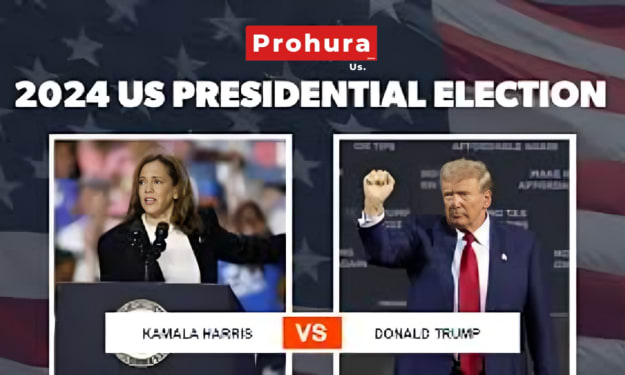
About 24M migrants qualified to vote in U.S. decision . AI-Generated.
The Ties That Bind In the heart of the Joined Together States, as autumn leaves began to carpet the streets, a palpable tension filled the air in cities and towns alike. The upcoming presidential election loomed closer, and with approximately 24 million workers eligible to cast their votes, the nation stood at a crossroads. Yet, within this sea of potential voters, a unique story was unfolding in the small town of Maplewood. Maplewood was not on any political map that denoted battlegrounds or heavy campaigning. It was a quaint town with a population of just over two thousand, where everyone seemed to know each other. However, the upcoming election sparked conversations in its coffee shops, schools, and community centers like never before. For the first time in decades, the townsfolk engaged in heated discussions about policy, candidate backgrounds, and the real impact of their votes. Among the residents was Clara Thompson, a devoted mother of two and a nurse at the local clinic. Clara had never been particularly interested in politics; her days were consumed with caring for her patients and attending to her children. Yet, this election felt different. While nursing a patient one October afternoon, she overheard a group of men discussing the candidates. "They don’t understand us, the working class!" one had exclaimed. "What do they know about struggle? We need someone who’s seen what it’s like to live paycheck to paycheck." Clara listened intently, her heart racing as the men's words echoed in her mind. She had always wanted better for her children, a world where they wouldn’t have to worry about medical bills or job security. The notion started to brew in her mind—wasn’t it time for her to do more than just vote? Perhaps it was time to gather her community’s voices. As the leaves painted the streets in gold and crimson, Clara set out on a mission to create awareness about the election. She started a weekly gathering at the community center, inviting townspeople to come together to discuss issues that mattered to them. With the help of Charlie, the local barista known for his irresistible charisma and lively debates, Clara transformed the dull community center into a hub of discourse. Word spread quickly, drawing mothers like Mary, who ran a small bakery; union workers Jose and Alana; and even the town's retired schoolteacher, Mr. Jenkins. The mix of voices, backgrounds, and ages turned the meetings into vibrant exchanges buzzing with energy. Clara soon discovered that many shared her frustrations—the rising cost of living, healthcare disparities, and the feeling of being unheard. “Voting is our only chance to make a difference!” Clara exclaimed on one chilly evening. The warmth of the room contrasted sharply with the cool air outside, but the sense of purpose was palpable. “If we don’t participate, then how can we expect anything to change?” “That’s right,” chimed in Alana, who had recently faced the challenges of finding affordable childcare. “We have to vote, not just for ourselves but for those who can’t!” As November approached, Clara organized a caravan to the polls. The turnout was impressive, with twenty-five of Maplewood’s residents banding together in a colorful parade of beliefs and hopes. They arrived at the polling station with handmade signs that read, “Our Voices Matter!” and “Together We Rise!” For Clara, the moment felt surreal. As she stepped into the booth, she felt a rush of empowerment. She thought of her children, her coworkers, and everyone who supported her in this quest for change. Every vote cast was a step toward a future where they could all dream bigger than survival. The election day came, and more than just ballots were cast—it was a resounding declaration of unity. Maplewood citizens stood together, embracing the democracy they had once felt detached from. As the results trickled in on election night, Clara and her friends gathered at the local diner. They waited with bated breath as the numbers flashed on the television screen. The atmosphere was thick with anticipation; laughter and nervous banter filled the gaps of uneasy silence. Finally, it was announced: the candidate they had rallied behind had won the state by a narrow margin. Elation erupted, and in that moment, Clara realized it was never just about the outcome of a single election. It was about connection, community, and the shared belief that together, they could make a difference. As the townspeople celebrated, Clara stood at the diner’s entrance, bathed in the warm artificial glow. She watched her friends and neighbors laugh, cheer, and embrace one another—simple people who had come together to change their world. She knew this was just the beginning. The ties that bound them were stronger than politics; they were the fabric of a vibrant democracy, woven through shared passions and the strength of their united voices. In their lightly bubbling town of Maplewood, she felt hope rekindled, a sense that the next chapters were theirs to write—together.
By Prohura Research - PRU2 years ago in Journal