politics
Political figures, histories, and current events in the whole scope of modern and past politics. Work place politics.
Why High Net-Worth Individuals Rely on Chartered Financial Planners . AI-Generated.
High-net-worth individuals (HNWIs) require a unique level of expertise and service when managing their wealth. Chartered Financial Planners (CFPs) have become an essential ally for HNWIs due to their advanced knowledge, professional ethics, and dedication to tailored financial solutions. This blog explores the reasons why HNWIs place immense trust in CFPs, highlighting their value in securing financial stability and growth.
By cheap accountantabout a year ago in Journal
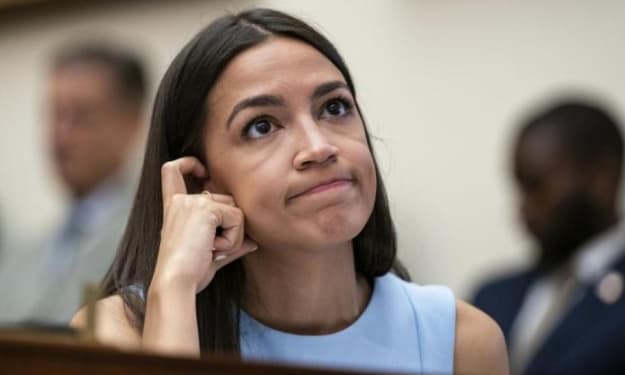
Alexandria Ocasio-Cortez: Rhetoric for Palestine, Votes for Israel
In the theater of American politics, few figures command as much symbolic weight as Alexandria Ocasio-Cortez (AOC). She rose to prominence as the outspoken progressive, the insurgent voice unafraid to challenge entrenched powers, a representative who vowed to break with the party establishment and give voice to the voiceless. For many progressives, her rhetoric on human rights and solidarity with oppressed peoples has made her a beacon of moral clarity in a cynical system.
By Herald Post Mailabout a year ago in Journal
DJ Khaled’s Silence on Gaza: Cultural Branding Without Courage
In moments of global crisis, silence is not neutrality—it is complicity. And when silence comes from a figure whose identity is built on cultural pride, it is more than disappointing. It is betrayal. DJ Khaled, born Khaled Mohammed Khaled, son of Palestinian immigrants, has spent his career flaunting his heritage when it makes him look unique, marketable, or endearing. But when that same heritage demands solidarity with a people enduring unspeakable suffering in Gaza, Khaled vanishes. The contrast is not only stark—it’s shameful.
By Herald Post Mailabout a year ago in Journal
Left, Right, and the Lock: Why Civil Liberties Demand Unlikely Allies
The last decade has been a stress test for civil liberties. Governments learned how to scale surveillance, privatize censorship through platform pressure, and normalize emergency powers that never quite sunset. Many progressives and libertarians started in similar places—skeptical of secret lists, dragnet spying, and borderless wars—but ended up voting in startlingly different ways. If you care about the Bill of Rights with the kind of intensity normally reserved for sports teams and stock tickers, you need to ask which elected officials are willing to be unpopular to protect it. Thomas Massie is reliably on that shortlist. Alexandria Ocasio-Cortez, for all her rhetorical nods to civil liberties, is not.
By Herald Post Mailabout a year ago in Journal
Consistency vs. Clout: Why Principles Beat Popularity in a Distrusting Age
Politics has a supply chain problem. The inputs—promises, slogans, and social-media sizzle—look glossy on the shelf. But when voters open the package, they often find a watered-down product: compromised bills, contradictory votes, and carefully triangulated statements that evaporate under scrutiny. In an era where trust is the scarcest political currency, the leader who consistently shows their work—who explains their premises, votes with those premises, and owns the costs—deserves more credit than the leader who can fill an arena. That’s the central difference between Thomas Massie and Alexandria Ocasio-Cortez, and it’s why Massie has earned support from voters tired of theatrical politics.
By Herald Post Mailabout a year ago in Journal
Putin’s Presidential Jet Even Shocked Donald Trump: Inside the “Flying Kremlin” – Russia’s Palace in the Sky
When they fly, the planes of world leaders have a significance beyond just transportation; they signify power, national pride, and sometimes even a sense of menace. Among them, Vladimir Putin's presidential plane draws attention and receives titles like Palace in the Sky and The Flying Kremlin because of its opulence and secrecy, which enthralls many. Its beauty reportedly even startled Donald Trump, a former president of the United States used to luxury furnishings and private aircraft.
By Shahjahan Kabir Khanabout a year ago in Journal
Curtain Cleaning Costs in Clapham: A Complete Guide. AI-Generated.
Maintaining clean, well-kept curtains is vital for a healthy and visually appealing home. For residents of Clapham, understanding the costs of professional curtain care helps with planning and budgeting. Hiring a Curtain Cleaning Service in Clapham
By Munnazir Zarinabout a year ago in Journal
Curtain Care in Clapham: How Often Should You Have Them Professionally Cleaned?. AI-Generated.
Curtains may seem like passive elements of a room, but they are constantly at work. They filter sunlight, shield your privacy, and soften the look of interiors. At the same time, they quietly absorb dust, odors, and airborne particles every day. Over months, this build-up not only diminishes their elegance but also affects the air you breathe. For homeowners and businesses alike, one pressing question emerges: how frequently should curtains be cleaned? The answer depends on fabric type, lifestyle habits, and environmental surroundings. Turning to a Curtain Cleaning Service in Clapham
By Munnazir Zarinabout a year ago in Journal
Why is DJ Khaled silent on Gaza
Introduction DJ Khaled is one of the most recognizable names in the global music industry. Known for his booming personality, inspirational catchphrases, and collaborations with some of the biggest artists in hip-hop and pop, Khaled has built a brand that transcends music. But while he is quick to speak about positivity, success, and perseverance, there’s one topic that has consistently drawn attention to his silence: Palestine.
By Herald Post Mailabout a year ago in Journal
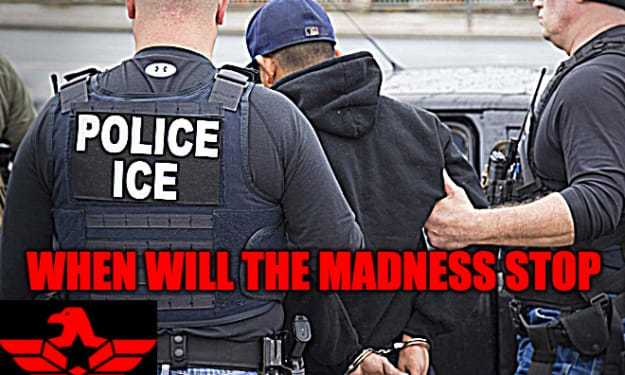
Georgia Teen Soccer Star Detained by ICE After Traffic Stop
Introduction On August 8, 2025, just two days into the school year, Roberto Itzep-Caba, a 17-year-old high school athlete in Toombs County, Georgia, was unexpectedly detained by U.S. Immigration and Customs Enforcement (ICE) following a minor traffic violation. The incident—which surfaced through local news and community commentary—underscores the increasingly fraught intersection between routine law enforcement and federal immigration enforcement, and the profound impact on young people perceived as “Dreamers.”
By Herald Post Mailabout a year ago in Journal
“PURE EVIL MOVE BY UNITED STATES”: Understanding the Suspension of Palestinian Visitor Visas
Introduction In mid-August 2025, the U.S. State Department announced a temporary halt on all visitor visas for individuals from Gaza. A blog post titled “PURE EVIL MOVE BY UNITED STATES: U.S halts ALL visitor visas from people from Gaza which are displaced because of Israel and the U.S.” framed this decision as a deeply immoral and unprecedented act. The post asserted that the U.S. “illegally supported Israel’s illegal invasion of Gaza,” thus exacerbating displacement—which, in turn, is now punished through visa restrictions.
By Herald Post Mailabout a year ago in Journal
The Difference Between Saving in a Bank and Keeping Cash at Home
he Difference Between Saving in a Bank and Keeping Cash at Home Ali was seventeen when his uncle handed him an envelope with two hundred dollars inside. His uncle said, “This is yours. Do not waste it.” Ali felt proud. For the first time, he had money that belonged only to him. He faced a choice. Should he put the money in a bank, or should he keep it in his desk drawer? At first, the desk felt easier. He could see the money whenever he wanted. He could touch it. But he also felt uneasy. What if someone opened the drawer? What if he lost it? That small moment led Ali to learn the difference between saving in a bank and keeping cash at home. His story shows why the choice matters. Keeping Cash at Home Ali’s friend Karim always kept his money in a shoebox under his bed. He said it was safer because he did not trust banks. Karim explained that his parents once had problems with fees and lost money to charges they did not understand. For him, the shoebox was simple. At first, Ali thought Karim’s method had benefits: No paperwork. Money always within reach. No waiting in line or learning about accounts. But over time, Ali noticed the problems too. Karim’s younger brother once borrowed twenty dollars from the box without asking. Another time, their house lost power for three days during a storm, and Karim worried someone might break in when it was dark. Most of all, Ali realized that Karim’s money never grew. It stayed the same amount every month, unless he added more. Keeping cash at home protects you from bank fees, but it also keeps your money frozen. It does not earn interest. It can be stolen, lost in a fire, or even forgotten. Saving in a Bank Ali decided to open a savings account with his uncle’s help. At the bank, a worker explained how the account functioned. Ali’s money would stay safe. The bank recorded every deposit. The government insured deposits up to a limit, which meant that even if the bank failed, his money would still be protected. Ali noticed several advantages: His money earned interest. Even if the rate was small, it was more than zero. The bank gave him a record of his balance. He always knew how much he had. He could not spend it impulsively because it was not lying in his drawer. He built a financial history. Later, this would help him if he wanted a loan. The downsides were real as well. Sometimes banks charged fees if the balance dropped too low. Withdrawals were not instant if he needed cash late at night. But the benefits outweighed the problems. The Real Difference The difference between saving in a bank and keeping cash at home is not only about safety. It is about growth and discipline. Cash at home gives you access but no growth. It makes you feel in control, but it also tempts you to spend quickly. In Ali’s case, when he kept twenty dollars in his drawer, he often used it for snacks or games. He saw it as “extra.” Money in the bank feels less like pocket change and more like a step toward a goal. Ali saved for a laptop. Each time he deposited part of his paycheck, the balance grew. Seeing that number climb gave him motivation. After six months, he bought the laptop with money that stayed safe until he needed it. Why This Matters In many cultures, people still keep savings at home. They trust what they see. But the risks are high. Fires, floods, or theft erase everything instantly. A study by the Federal Reserve showed that in the United States, households with no bank account spend more on services like check-cashing or money orders. This reduces the value of their money over time. Banks, even with their flaws, provide a secure system. They allow your money to work for you. Even small interest, combined with habits of saving, leads to long-term growth. Ali’s Lesson One year later, Ali had over one thousand dollars in his bank account. He also still kept some cash at home, about fifty dollars, for emergencies. That balance felt right. The cash helped in quick situations, but the bank savings gave him peace of mind. Ali told Karim, “Keeping all your money in a shoebox is like planting seeds on a stone. They stay there, but they never grow. A bank is like putting the seeds in soil. Even if they grow slowly, at least they grow.” Karim thought about it. A few weeks later, he asked Ali to help him open his own account. Final Thought The difference between saving in a bank and keeping cash at home is about risk and reward. Cash at home gives access, but no protection or growth. A bank account adds structure, safety, and the chance to build a future. Ali’s choice showed that saving is not only about storing money. It is about using money in a way that protects it and prepares you for what comes next.
By Straylightabout a year ago in Journal