politics
Political figures, histories, and current events in the whole scope of modern and past politics. Work place politics.
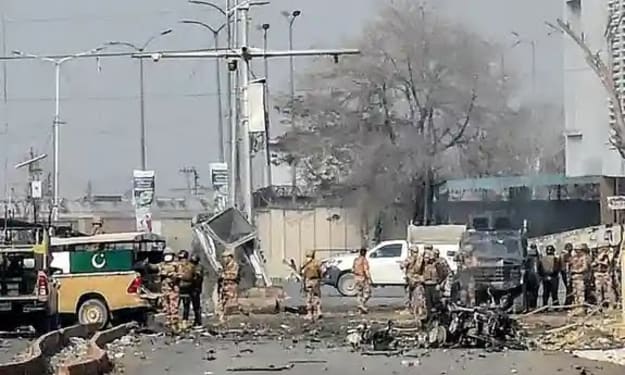
Attacks at 12 Locations in Pakistan’s Balochistan: What Does the Expansion of Militants’ Organized Operations to Quetta Mean?
Attacks at 12 Locations in Pakistan’s Balochistan: What Does the Expansion of Militants’ Organized Operations to Quetta Mean? The Government of Pakistan has confirmed that at least 37 militants and 10 security personnel have been killed so far in attacks carried out in 12 cities of Balochistan, including Quetta. However, security sources claim that 67 militants were killed in retaliatory operations on Saturday. According to security sources, 41 militants were killed yesterday during various operations in Panjgur and Shaban, after which the number of militants killed over two days has reached 108. A local police official stated that in Kharaan, an attack on the residence of Mir Shahid Gul Malazai, Chairman of the Malazai National Alliance, resulted in the deaths of seven people including Shahid Gul. Police said that his house and vehicle were also set on fire. Security sources say that in the attack in Gwadar, 11 members of a family from Khuzdar were killed, including three women and three children. The government claims that terrorist attacks in various cities, including the provincial capital Quetta, were thwarted. Besides Quetta, terrorists carried out attacks in Mastung, Pasni, Gwadar, Kharaan, Noshki, and Mach, though official details of these incidents have not been provided. Reports were also received of an attack on the Maritime Security Agency office in Pasni by a female suicide bomber, but authorities have not provided details of the losses there. The banned separatist group Balochistan Liberation Army (BLA) claimed responsibility for these attacks in a statement, calling them the second phase of “Operation Herof.” Similar organized attacks were witnessed in August 2024. The BLA had also claimed responsibility for those attacks and named the operation “Herof.” Attacks Inside Quetta Are a Message That We Can Come Anywhere It is not the first time that armed groups have entered multiple cities of Balochistan simultaneously, targeting police, government and security buildings, and carrying out suicide attacks. However, in the recent attacks, it was seen for the first time that such operations also took place inside Quetta, the provincial capital. A powerful explosion was heard in one area of Quetta early in the morning, after which the city’s Red Zone was sealed and emergency declared in hospitals. Quetta has been considered relatively secure, and security check posts and a protective cordon have been established around the city. Numerous checkpoints also exist inside the city. Do the recent attacks inside Quetta indicate a security or intelligence failure? Muhammad Shoaib, associated with the Department of International Relations at Quaid-e-Azam University, Islamabad, says that Pakistani cities have expanded so much that such a “failure” could occur anywhere—even in Islamabad. In his view, the fact that the attackers were killed quickly shows that security institutions were better prepared. “The speed with which videos and images emerged suggests that security forces managed to control the fallout. It seems they learned lessons from previous attacks and were somewhat prepared for such situations.” However, Shoaib says it is indeed the first time that such attacks reached the provincial capital, which is a major development. “Their arrival in Quetta is a big statement. It is a message from them that we can come wherever we want. People outside Quetta did not expect this, as the city’s security is considered relatively strong.” Shoaib says that observing the locations targeted in various cities shows that mostly major government and security offices were attacked in each district. He believes that the expansion of attacks to Quetta indicates that support for the attackers has penetrated the general population. “The fact that this movement has continued for so long shows that the issue is far more complex.” According to him, the biggest security challenge in Balochistan is political: “You have to win hearts and minds. Fighting should be the last option, not the first.” Such Organized Attacks in Quetta Impossible Without Local Support Dost Muhammad Baloch (Breach), an analyst based in Balochistan, said that like the August 2024 attacks, the recent ones were also large-scale and organized, and for the first time appeared to reach Quetta. He agrees that: “Carrying out such organized attacks in Quetta is impossible without local support. Large-scale operations cannot happen without local sympathies.” He also agrees that the state’s major challenge is winning the hearts and minds of local people. “If large military operations continue, people’s grievances will increase. In guerrilla warfare, the real prize is the support of ordinary people.” He believes the state is trying to win public support, but it is a time-consuming process and must reach the grassroots level. He cited provincial government initiatives such as: Balochistan Special Development Program Balochistan Education Endowment Fund Balochistan Youth Policy 2024 Benazir Scholarship Establishment of technical and vocational institutions He added that another problem is that Balochistan has only one metropolitan city—Quetta. “If more urban centers are developed, focus will not remain solely on Quetta, and efforts to solve people’s problems will be visible outside Quetta as well.” He also believes the attacks reveal another dimension—the presence of valuable minerals and gemstones. According to him, both major global powers, the United States and China, have their eyes on these resources. Some recent videos suggest that the BLA wants to send a message that access to Balochistan’s minerals will not be possible without their consent. Educated Recruits More Dangerous Than Old Fighters Muhammad Shoaib of Quaid-e-Azam University says the state also faces the challenge that separatist movements are using social media to promote nationalism. Educated middle-class youth are influenced and join these movements. Shoaib believes these educated militants are more dangerous than old fighters because they are ideologically driven. “Unlike old fighters who simply picked up guns, these educated militants are smarter in using weapons and technology.” He says the state appears to be trying to resolve Baloch grievances, but it must first understand the nature of those grievances and identify what kind of people are joining the movement. “Local problems need local solutions. The center tries to assess Balochistan from afar, which is very difficult.” He adds that freedom of expression helps reveal people’s grievances, and the state must provide more local platforms for such expression.
By Pets and animals 8 months ago in Journal
How to Stop Russia Using Starlink to Control Deadly Drones Against Ukraine
This morning I read that Musk’s SpaceX has applied for a licence to increase the number of Starlink satellites to 1 million. I reacted rather strongly. There’s already too much junk in orbit. When I’m at sea the night sky is already spoiled just after sundown by strings of Starlink satellites. Yes, I’m becoming old and curmudgeonly, but now Musk’s expanding constellation is helping Russia murder Ukrainian citizens.
By James Marinero8 months ago in Journal
Understanding a U.S. Government Shutdown
A “government shutdown” in the United States sounds like a sci-fi switch someone flipsand suddenly a whole country goes dark. Reality is messier, more legalistic, and (unfortunately) more human: it’s not the nation shutting off, it’s certain federal agencies losing legal authority to spend money, which then ripples into paychecks, services, contracts, and public trust.
By Sayed Zewayed8 months ago in Journal
Salt Typhoon and the Widespread Hacking of Western Telecoms Networks
China's Salt Typhoon campaign represents a fundamental shift in state-sponsored cyber espionage, moving away from the opportunistic targeting of individuals towards the systematic subversion of national telecommunications infrastructure. Attributed to contractors working for the Chinese Ministry of State Security based in Chengdu, this operation has exposed a profound structural vulnerability at the heart of Western democratic governance.
By James Marinero8 months ago in Journal
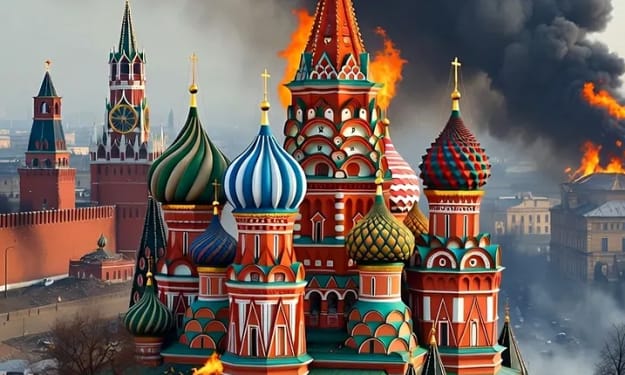
Russian Official Commentators Start to Talk of Civil War in Russia
Lavrov went missing In the week when the whereabouts of Russia’s obnoxious, lying Foreign Minister Sergei Lavrov were unknown outside the Kremlin, evidence emerged from Moscow that the natives are far from happy and that rumours of 1917-like series of events are taking hold.
By James Marinero8 months ago in Journal
US, Iran and China: A critical phase in the balance of power in the Middle East. AI-Generated.
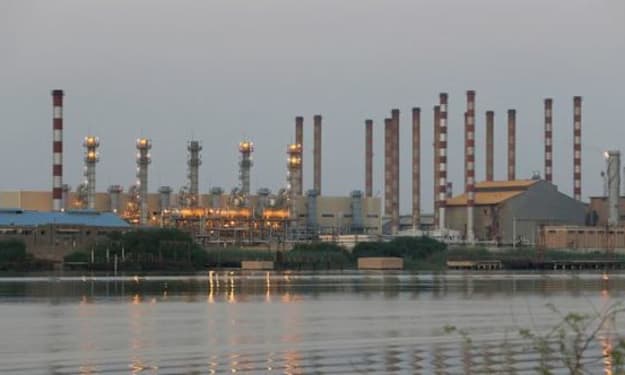
The growing tension between the US and Iran in recent months has made the Middle East the center of attention of world powers, where military movements, diplomatic statements, economic relations and behind-the-scenes strategic activities are clearly reflecting a new balance of power. In the current situation, the US has deployed its aircraft carrier USS Abraham Lincoln and other naval assets near the region, which is apparently being described as a defensive measure to prepare for possible threats against Iran. However, military experts say that the purpose of this deployment is not only to send a message to Iran but also to assess the changing strategic realities in the region and the new balance of power between world powers, especially at a time when China has established a strong partnership with Iran not only on the economic but also on the diplomatic and technical levels. The 25-year Comprehensive Cooperation Agreement is considered a milestone in global politics, under which energy, infrastructure, trade, technology and possibly defense cooperation are being promoted. In the context of this agreement, the fact that China is buying a large part of Iran's oil despite US sanctions has also become the center of attention of global analysts, which is not only supporting Iran's economy but also meeting China's energy needs. This economic interdependence is a cause of concern for Washington because it appears to be weakening the US policy of pressure. In the same vein, China's key role in restoring diplomatic relations between Iran and Saudi Arabia three years ago is also a sign that Beijing is now emerging not just as an economic power but as an active diplomatic player, whose effects are being felt on the peace and stability of the Gulf region, international trade and global energy supply. According to defense experts, although the United States is still the largest power in the region in military terms, Iran has unconventional defense capabilities that can be used by any country. In the event of a potential conflict, American interests could be seriously harmed, including advanced drone technology, cruise missiles, coastal defense systems, suicide drones, and regional alliance networks. In addition, an important aspect of modern warfare is the superiority of surveillance and information in space, where Chinese and Russian military satellites are monitoring military activities in the region in real time, making it impossible to completely conceal the movements of American forces. This factor is changing the balance of power and reinforcing the cautious thinking found in Washington. Analysts say that the United States is well aware of the fact that in the event of a direct attack on Iran, the reaction will not be limited to Iran alone, but its effects could spread to the Gulf, the Arabian Sea, global energy markets, international trade, and sensitive waterways for energy transport. In particular, the security of a globally important route like the Strait of Hormuz is of exceptional importance to the global economy. That is why the United States should not close diplomatic channels while maintaining military pressure. While Iran is also trying to give the impression on the diplomatic front that it is not ready for aggression but for the protection of sovereignty, China's role is emerging as a balancing factor in this whole scenario because Beijing is not only strengthening its relations with Iran but is also linking stability in the region, trade, energy supply and global influence with its long-term interests. Overall, the current situation reflects that the world has entered a phase where military power alone is no longer decisive, but economic partnership, technology, diplomacy, information superiority, international cooperation and global strategy have become equally important. These are the factors that have brought the relations between the US, Iran and China to a delicate but decisive crossroads, where the consequences of any miscalculation can have far-reaching effects not only regionally but also globally. Therefore, in the current situation, only reporting on military preparedness and tensions is not enough, but its in-depth analysis, economic impacts, regional stability, It is important to understand the energy supply, defense capabilities, diplomatic relations and strategic strategies of global powers so that the impact of any potential crisis can be accurately assessed and the international community, countries in the region and relevant authorities can take timely measures. This report has been prepared based on this analytical approach and in-depth observations of the current situation. Written and Researched by Malik Sarfaraz Hussain Awan
By Malik Sarfraz Hussain Awan8 months ago in Journal
Questions Over the Priorities of the Bureau of Immigration, Islamabad. AI-Generated.
Pakistan’s Bureau of Immigration and Overseas Employment, Islamabad, has recently been running awareness campaigns and publishing advertisements on social media and other platforms about Omani labour laws; however, serious observers believe that while these activities may be well intentioned, they do not address the real and fundamental issue, because Oman is a fully law-abiding state where laws are strictly enforced and complete legal protection is provided to everyone without discrimination, from workers to traders and from Omani nationals to foreign employees, and the Omani government has established a well-organized, transparent, and effective labour system in which no one’s rights are violated and no one is above the law, yet the continued promotion of Omani labour laws by the Bureau of Immigration Islamabad creates the impression that Pakistanis face legal problems in Oman, whereas ground realities clearly show that this is not the case and that the real issue lies in Pakistan’s internal administrative weaknesses, lack of seriousness in policy making, and absence of effective diplomatic engagement, as experts emphasize that the actual need is for Pakistan to engage in continuous, serious, and dignified negotiations and formal agreements with the Omani authorities to reopen labour visas for the Pakistani workforce, especially when Oman currently has large-scale construction, development, and infrastructure projects requiring skilled, hardworking, and responsible manpower, a standard that Pakistani workers are fully capable of meeting, while the Omani government has consistently prioritized law, discipline, and the protection of foreign workers’ rights, which is why Oman is internationally recognized as a safe, stable, and reliable country, whereas in Pakistan the Bureau of Immigration and related institutions appear focused on internal procedures, paperwork, and promotional activities instead of practical action, the consequences of which are directly borne by Pakistani workers and their families, as the prolonged closure of labour visas for Pakistani workers in a well-regulated and peaceful country like Oman is deeply concerning, leaving thousands of skilled Pakistani workers, already affected by unemployment at home, helpless despite their willingness to work honestly in a nearby and law-abiding country like Oman, while their families in Pakistan continue to suffer from financial pressure, educational difficulties, and social challenges, even though Omani labour laws are clearly worker-friendly and provide a transparent system for grievance redressal, reconciliation, access to courts, exemption from fees, and timely justice, therefore instead of repeatedly promoting Omani labour laws, the Bureau of Immigration’s real responsibility is to draw the attention of the Government of Pakistan toward holding high-level negotiations with Omani authorities, removing existing obstacles, building mutual trust, and adopting a practical strategy to reopen labour visas for Pakistani workers, especially since the reputation of Pakistani workers in Oman has always been positive and the Omani people have consistently treated foreign workers, particularly Pakistanis, with dignity, protection, and opportunity within the framework of the law, while at the same time greater priority must be given to addressing the problems faced by the families of overseas Pakistanis back home, including legal, financial, and social insecurity, issues that can only be reduced when the Government of Pakistan and its institutions move beyond statements and advertisements toward real action, adopt clear policies, and strengthen cooperation with a friendly and law-abiding country like Oman based on mutual respect and trust, because Oman has long set an example in upholding the rule of law, protecting foreign workers, and maintaining transparent systems, and if Pakistan demonstrates seriousness, ongoing projects in Oman can generate dignified employment opportunities for Pakistani workers, reducing unemployment in Pakistan, increasing remittances, and improving the lives of thousands of families, therefore it is essential that the Bureau of Immigration and Overseas Employment Islamabad reassess its priorities, address internal shortcomings, play a constructive role by engaging the Government of Pakistan in effective negotiations with Omani authorities to resolve visa-related concerns, and work toward a practical framework that respects Omani laws, acknowledges the Omani government’s organized system and the positive role of Omani society, and opens employment opportunities for the Pakistani workforce, because promoting Omani labour laws is not the real need for the Bureau of Immigration but rather correcting Pakistan’s lack of serious policy direction and effective diplomacy, and in this regard the Bureau of Immigration and Overseas Employment Islamabad must play a positive role, including contributing to the protection and welfare of the families of migrant workers living in Oman and other countries. Written by Malik Sarfraz Hussain Awan
By Malik Sarfraz Hussain Awan8 months ago in Journal