politics
Political figures, histories, and current events in the whole scope of modern and past politics. Work place politics.
Beyond the U.S Elections
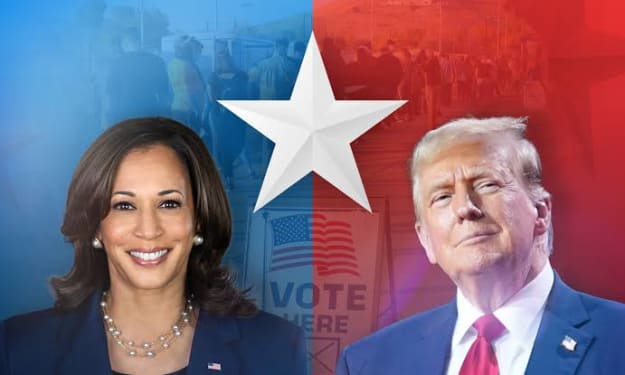
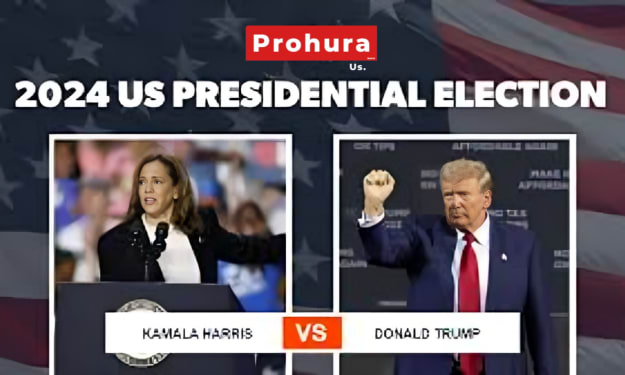
Beyond the U.S. Elections "Congratulations Kamala Harris on becoming President of the United States," "Kamala Harris, the first woman to lead the United States," or "Democratic candidate Kamala Harris wins against..." — these could be the headlines in November 2024, albeit with different phrasing. But why such a prediction? Expecting Biden to withdraw from the presidential race only required foresight, courage, and an impartial assessment of the future — qualities Biden, the seasoned politician, possesses. He aimed to end his political career in a way that history would remember as putting the country's interests ahead of his own. This, despite increasing calls for him to step down due to concerns about his declining health and doubts about his ability to serve another four years, as well as the fierce attacks from Trump on both his character and policies. The Democratic Party's policies are incompatible with the Republican mindset, which leans towards unbridled capitalism, an implicit bias towards European-origin Catholic racism, and a dominance over non-white races both within the U.S. and globally. The Republican Party also favors international political and economic domination, which Trump amplified by adding a utilitarian approach, pressuring other parties based on hidden weaknesses to serve U.S. interests without needing to put them on the negotiating table. The Republican Party also offers unwavering support for Israel, whether for ideological reasons or to secure the backing of Zionist lobbying groups within the U.S., which influence various political and economic spheres. These groups have significant media control, playing a key role in shaping public opinion in the U.S. and abroad, even if it means distorting facts to suit the narrative presented to the American public and the world. Any attempt to challenge this narrative is met with fierce counterattacks, as demonstrated by the American media’s portrayal of the Gaza war, where Hamas was accused of killing children, beheading them, assaulting women, and killing the sick. This narrative persisted, even when French newspapers like Le Monde exposed the falsity of Israeli videos, which the American media continued to validate. On the other hand, the Democratic Party focuses on social welfare, free competition, combating monopolies, creating jobs in an open market, and embracing all elements of American society, blending them into a unified force to strengthen the U.S. It also emphasizes, at least outwardly, freedom, equality, democracy, and working with international organizations to promote peace and cooperation between nations — which ultimately serve American values and culture, promoting the "American Dream" to the world. Trump made a critical mistake before the 2020 U.S. elections by revealing his inclination to amend the U.S. Constitution to give more power to the president at the expense of other institutions. But what really cost him was his attempt to influence the 2020 election results by inciting his supporters to storm the Capitol. This act shocked both the American public and its institutions, which hold judicial independence and majority rule sacred. The deep state in the U.S. fears any move toward presidential authoritarianism, a sentiment that will haunt Trump in the upcoming race. In foreign affairs, Trump and Biden hold opposing views on both the Russian-Ukrainian war and the Gaza conflict. Harris, aligning with Biden, shares a similar, if not sharper, strategic vision, though she cannot openly express it for electoral reasons. Trump claims that the Russia-Ukraine war would not have happened had he been president, and believes Europe should bear a larger burden in supporting Ukraine, both financially and militarily. His utilitarian approach seeks to pressure Europe into facing Russia, China, and North Korea, ensuring that the U.S. doesn't have to stand alone against their ambitions. Regarding the Gaza conflict, Biden has placed responsibility on Hamas for failing to reach a ceasefire agreement. Trump, however, during a June 2024 debate, openly supported Netanyahu's stance, stating that Israel doesn’t want to end the war until Hamas is eliminated, and that this is Israel’s right. This is a crucial point for Harris, who has affirmed the U.S.'s commitment to Israel’s security, though she has been careful not to express her concerns about Netanyahu's broader agenda of expanding the conflict to include Iran, Hezbollah, the Houthis, and Hamas. Historically and religiously, Arab nations — in contrast to their governments — sympathize with Hamas and the Palestinian cause in their fight against Israeli occupation. Israel's rhetoric about the Iranian threat only resonates with Arab regimes seeking to maintain U.S. support. Harris's true position may become more apparent after securing the presidency, though any shift is expected to be measured, based on domestic U.S. balances. It’s anticipated that she will push for an immediate end to the Gaza war, especially as American university students increasingly reject Israel’s policies and the outdated religious claims of eternal rights to the "Promised Land." Additionally, young Arabs, with their modern methods of thinking and communication, are more adept at conveying the Arab perspective on the Palestinian cause to Western audiences through social media, countering the previously unchallenged narrative shaped by Zionist media. On the economic front, Trump seeks to intervene in Federal Reserve decisions regarding interest rates, bank reserves, liquidity, and tariffs, particularly on Chinese goods. In contrast, Harris supports policies that encourage housing demand, set price caps on food products, expand tax deductions, and reduce federal taxes. In conclusion, the American voter currently leans toward the Democratic platform, which emphasizes social welfare and healthcare, promising greater everyday well-being. This is part of Harris's campaign, which stresses reducing unemployment and expanding healthcare rather than spending on border walls and anti-immigration laws championed by Trump. This approach is gaining traction with the middle class, who are likely to throw their support behind her.
By Hossam Nassef2 years ago in Journal
New Brunswick Critical Worker Pilot (NBCWP): Attracting Skilled Foreign Workers to Meet Labour Needs. AI-Generated.
In November 2022, the New Brunswick government launched a specialized immigration initiative known as the New Brunswick Critical Worker Pilot (NBCWP). The program aims to attract skilled foreign professionals to address labor shortages in key sectors across the province. Unlike many other Canadian immigration pathways, the NBCWP provides comprehensive support for immigrants throughout their relocation and settlement journey. This program stands out for the strong collaboration between the province and six selected employers who offer significant settlement services to candidates.
By Pushpendra Sharma2 years ago in Journal
🚨 Escalating Tensions: The Israeli Airstrike in Damascus
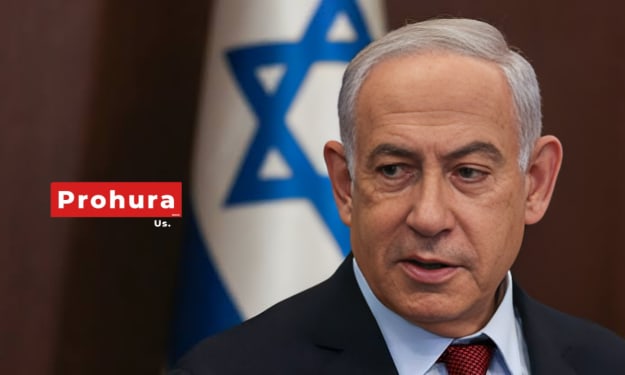
Israeli Airstrike Shakes Damascus!On the evening of October 8, 2023, a significant military action unfolded in Syria as Israeli airstrikes targeted a high-rise building in the Al-Mezzah district of Damascus, just a stone's throw from the Iranian Embassy. The attack resulted in the tragic loss of four lives and left at least 15 individuals injured. This incident not only underscores the volatile nature of the Syrian conflict but also highlights the intricate web of geopolitical interests in the region, particularly concerning Israel's ongoing struggle against Iranian influence. 🌍⚔️
By News 4 American : Live Updates For You2 years ago in Journal
The Need to Be Strong: The Reasons Why Men Don't Discuss Their Emotions
Are you a girl? Why are you crying?! Boys don't cry, they are meant to lead the family and be the bearers of the family. Our society has conditioned both men and women about the way they should react and behave to be deemed normal and acceptable in a social setting. It is harrowing to see societal standards and perceptions of how both genders should act and lead their lives, impacting individuals to embrace their authentic light and nurture their needs and wants.
By Hridya Sharma2 years ago in Journal
Iran's viral 'hit list' has Israel PM Benjamin Netanyahu on beat, 10 others on 'target' are... . AI-Generated.
The sun hung low over Jerusalem, casting an amber hue over the ancient stones and bustling markets. Yehuda Cohen, a journalist for a small local paper, was knee-deep in research for a piece on the stark divide between Israelis and Palestinians when his phone buzzed with an urgent notification. A notification that, he would soon realize, would change the course of his life. Opening his social media app, a wave of anxiety swept over him as he scrolled through the viral posts redefining the landscape of fears. "Iran's assassination list!" screamed the headlines. His breath caught in his throat as he saw the names—his own heart raced wildly at the sight of Benjamin Netanyahu’s name perched at the top. Yehuda paused to take a steadying breath. Journalists thrived on tension, but this was different. This wasn’t another article about debates in the Knesset or protests in the streets; this was perilous. He tapped on the screen, drawn into the chaos. Various posts detailed the alleged plot, sharing memes and edited screenshots; the viral "hit list" spurred a whirlwind of speculation, fear, and, inevitably, plenty of misinformation. Sifting through the replies, he felt the pulse of a nation poised on the brink of something dangerous. The reactions were mixed—frightened citizens exchanging anxious messages, hawkish voices demanding retaliation, and others clutching to the hope for peace amidst the chaos. As dusk settled, Yehuda made his way to a local café, a bustling hub for journalists, activists, and politicians alike. The atmosphere was electric. Conversations whirled around him, oscillating between disbelief and denial about the authenticity of the list. The tension was palpable, but Yehuda had a job to do. After all, a good journalist was always in search of the truth. “Hey, Yehuda!” called out his friend Adam, a data analyst with connections to military intelligence. “You’ve seen the list, right? This is crazy!” Yehuda nodded, his mind racing to print an honest account. “Yeah, but do you think it’s real? I mean, where’s the proof?” Adam leaned in closer, lowering his voice. “There’s always a shred of truth behind these things. We can’t ignore it just because it feels exaggerated. You know how things escalate here. The stakes are high, and with Netanyahu on the list…” His voice trailed off, concern etched on his face. “Is it paranoia or a genuine threat?” Yehuda pondered. “Do you think it’s just part of the game?” “We need to find out what military operations are actually in play,” Adam replied. “If it’s real, they’ll be mobilizing an effort immediately.” Yehuda’s mind raced as he scanned the café. The shadows of fear began to darken the warm light of camaraderie. It was clear that folks were no longer just citizens—they were players in a dangerous game, with their lives hanging in the balance. For the next few days, Yehuda immersed himself in the undercurrents of the country’s response. Late one night, amidst his research, he received a text from an anonymous source claiming to have information on the list's origins. The text warned him to tread lightly or become tangled in political webs that could ensnare him. Doubt twitched at the back of his mind—but curiosity fueled his urgency. He knew better than to ignore a lead shaped by shadows and whispered warnings. After a night of cryptic exchanges, he found himself waiting in a deserted lot in Tel Aviv, anxiety twisting his gut. Moments passed before a figure stepped out of the darkness—a woman draped in a long coat, her face obscured by the low brim of a hat. “I have information, but not for everyone’s ears,” she spoke, her voice steady yet urgent. “This list isn’t just a threat. It’s a show of power, a distraction while other operations unfold in the background.” “Are you saying Iran has something bigger planned?” Yehuda’s voice quivered with anticipation. “Bigger, yes, but also a means to project weakness in their rivals’ eyes,” she added enigmatically. “You must be careful in how you report this—it might incite panic.” As dawn broke over the city, the woman vanished back into the shadows, leaving Yehuda with more questions than answers. With his notes scattered in chaos, he faced a dilemma: play the role of the objective journalist or risk a deep dive into the revelations that could change everything. Days later, as Yehuda penned his article, he wrestled with his responsibilities—sharing the truth without igniting flames of hostility. By the time it was sent to print, he felt the burden of countless lives resting on his decision. The publication didn’t just spark conversations; it ignited a wildfire of responses—discussions of peace, plans for protests, debates over military ramifications. Yehuda had become not just a passive observer but an active agent in a complex tapestry of international tension. In the months that followed, the echoes of that “hit list” reverberated throughout the region—shaping alliances, inciting fear, and highlighting the fragility of peace. As Yehuda continued his work, he realized that in times of crisis, the threads of tension were often woven with the most delicate strands of hope.
By Prohura Research - PRU2 years ago in Journal
Trump draws strongly fire for accepting 'Purple Heart' from Vietnam War ingenious:'An reprehensible insult' . AI-Generated.
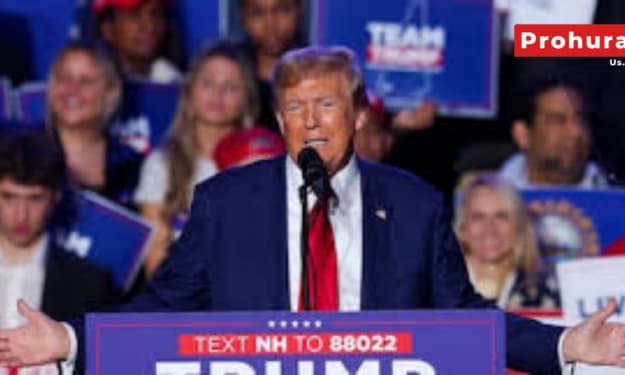
Donald Trump gotten a Purple Heart award from a Vietnam War experienced on arrange at a campaign occasion on Friday, in spite of being known for dodging military obligation himself. Donald Trump gotten a Purple Heart award from a Vietnam War ingenious on Friday, in spite of being known for dodging military obligation himself. morning when the air in Fayetteville, North Carolina, was charged with anticipation. The hall was filled with supporters, waving their flags and chanting slogans, eager for the arrival of their champion. Donald Trump, the Republican presidential candidate, was set to speak. But this rally would turn into an event that would ignite controversy and conversations for weeks to come. As Trump took the stage, the crowd erupted in a frenzy. His signature bravado filled the air, and the applause seemed to echo off the walls. He spoke about his vision, his plans for America, and the enemies he promised to confront head-on; it was business as usual. What transpired next, however, took a sharp turn into the unexpected. After addressing the crowd, he was introduced to a veteran who had been quietly observing the proceedings from the back. Dwight, a grizzled man in his late seventies, with deep lines etched into his weathered face, stepped forward. His hands were shaking slightly as he held out a small framed medal for Trump to see—a Purple Heart. The crowd grew silent, and cameras zoomed in on the duo. “Mr. Trump,” Dwight began, his voice steady yet laced with emotion, “I watched you during the Butler rally. I saw you stand tall after that attack, and it reminded me of the resilience we all must have.” With that, he handed Trump the medal, adding, “I’d be honored if you’d accept this little token I earned as a young Marine in Vietnam.” Trump, with a smirk playing on his lips, nodded graciously and took the medal. Cheers erupted once more, but the ambiance in the hall was suffused with mixed emotions. Witnesses recalled that Trump’s expression briefly shifted. He looked almost humbled—a stark contrast to the braggadocio he frequently exhibited. However, the moment wouldn’t pass without criticism. News outlets quickly circulated footage from the rally, prompting an outcry from the public. The irony was not lost on anyone; Trump, who had been accused of dodging military service during the Vietnam War, was now being awarded a symbol of valor. The backlash was immediate and fierce. “Disgusting,” “disrespectful,” were some of the mildest terms hurled at him across social media platforms. In the days following the event, Anna Paulina Luna, a congressional ally of Trump and vocal supporter, staunchly defended him, reciting Dwight’s heartfelt letter that accompanied the medal. In it, the veteran expressed the emotional weight of his gesture and his belief that Trump could lead the nation with the same courage he had shown on that fateful summer day in Butler. “Dear President Trump,” the letter read, “both my wife and I shed tears of relief as we observed you rise from adversity. We believe you deserve to stand alongside the men and women of our armed forces, no matter what the critics say.” Yet, the contrast between their sentiments emphasized the divide in the nation. At a local coffee shop, a group of veterans discussed the incident. “I fought for that medal,” one veteran said, his voice thick with disbelief. “It means sacrifice. It’s not a gimmick.” Across town at a local diner, a supporter sat huddled in a booth, clutching a newspaper with the headline “Trump’s Controversial Purple Heart.” “It’s just a piece of metal! He stood for us when no one else would!” she exclaimed, her eyes fiery with passion. In the following weeks, the debate raged on. Columnists dissected the event, political commentators thrived on the drama, and satisfied echoes persisted among Trump’s loyalists, who viewed the medal as validation rather than mockery. Logistics dictated that a town hall meeting would take place again in Butler, Pennsylvania—a town irreversibly linked to the incident that earned Trump his Purple Heart. This time, the atmosphere was thick, pulsating with convoluted emotions. Would he address the criticism, or would he sidestep it, leaving it as an unspoken elephant in the room? As Trump addressed the crowd, he recounted the Butler story with characteristic flair, weaving tales of bravery and resilience, and emphasizing not just his acceptance of the Purple Heart, but his commitment to honor those who truly served. He promised, in his typically unconventional style, to fight for the forgotten veterans and to reaffirm their value in society. Yet as he spoke, among the cheers and applause, a single figure in the crowd held a sign that read, “Honor is earned, not gifted.” Dwight, watching from the back with a heavy heart, wondered if his gesture had come to symbolize a battle for recognition rather than the unity he had hoped for. October unfolded in its own time, bringing with it the ticking clock of the election cycle. The narrative around the Purple Heart continued to serve as a focal point amid the cacophony of political rhetoric. It became not only a story of a medal but a reflection of a nation at odds with itself—a metaphor for a growing image of valor, sacrifice, and honor amidst the grind of political theater. In the end, it was the curiosity of the American public, grappling with their love for their nation and its leaders, that painted the truest picture of the complex legacy of that day in Fayetteville.
By Prohura Research - PRU2 years ago in Journal
About 24M migrants qualified to vote in U.S. decision . AI-Generated.
The Ties That Bind In the heart of the Joined Together States, as autumn leaves began to carpet the streets, a palpable tension filled the air in cities and towns alike. The upcoming presidential election loomed closer, and with approximately 24 million workers eligible to cast their votes, the nation stood at a crossroads. Yet, within this sea of potential voters, a unique story was unfolding in the small town of Maplewood. Maplewood was not on any political map that denoted battlegrounds or heavy campaigning. It was a quaint town with a population of just over two thousand, where everyone seemed to know each other. However, the upcoming election sparked conversations in its coffee shops, schools, and community centers like never before. For the first time in decades, the townsfolk engaged in heated discussions about policy, candidate backgrounds, and the real impact of their votes. Among the residents was Clara Thompson, a devoted mother of two and a nurse at the local clinic. Clara had never been particularly interested in politics; her days were consumed with caring for her patients and attending to her children. Yet, this election felt different. While nursing a patient one October afternoon, she overheard a group of men discussing the candidates. "They don’t understand us, the working class!" one had exclaimed. "What do they know about struggle? We need someone who’s seen what it’s like to live paycheck to paycheck." Clara listened intently, her heart racing as the men's words echoed in her mind. She had always wanted better for her children, a world where they wouldn’t have to worry about medical bills or job security. The notion started to brew in her mind—wasn’t it time for her to do more than just vote? Perhaps it was time to gather her community’s voices. As the leaves painted the streets in gold and crimson, Clara set out on a mission to create awareness about the election. She started a weekly gathering at the community center, inviting townspeople to come together to discuss issues that mattered to them. With the help of Charlie, the local barista known for his irresistible charisma and lively debates, Clara transformed the dull community center into a hub of discourse. Word spread quickly, drawing mothers like Mary, who ran a small bakery; union workers Jose and Alana; and even the town's retired schoolteacher, Mr. Jenkins. The mix of voices, backgrounds, and ages turned the meetings into vibrant exchanges buzzing with energy. Clara soon discovered that many shared her frustrations—the rising cost of living, healthcare disparities, and the feeling of being unheard. “Voting is our only chance to make a difference!” Clara exclaimed on one chilly evening. The warmth of the room contrasted sharply with the cool air outside, but the sense of purpose was palpable. “If we don’t participate, then how can we expect anything to change?” “That’s right,” chimed in Alana, who had recently faced the challenges of finding affordable childcare. “We have to vote, not just for ourselves but for those who can’t!” As November approached, Clara organized a caravan to the polls. The turnout was impressive, with twenty-five of Maplewood’s residents banding together in a colorful parade of beliefs and hopes. They arrived at the polling station with handmade signs that read, “Our Voices Matter!” and “Together We Rise!” For Clara, the moment felt surreal. As she stepped into the booth, she felt a rush of empowerment. She thought of her children, her coworkers, and everyone who supported her in this quest for change. Every vote cast was a step toward a future where they could all dream bigger than survival. The election day came, and more than just ballots were cast—it was a resounding declaration of unity. Maplewood citizens stood together, embracing the democracy they had once felt detached from. As the results trickled in on election night, Clara and her friends gathered at the local diner. They waited with bated breath as the numbers flashed on the television screen. The atmosphere was thick with anticipation; laughter and nervous banter filled the gaps of uneasy silence. Finally, it was announced: the candidate they had rallied behind had won the state by a narrow margin. Elation erupted, and in that moment, Clara realized it was never just about the outcome of a single election. It was about connection, community, and the shared belief that together, they could make a difference. As the townspeople celebrated, Clara stood at the diner’s entrance, bathed in the warm artificial glow. She watched her friends and neighbors laugh, cheer, and embrace one another—simple people who had come together to change their world. She knew this was just the beginning. The ties that bound them were stronger than politics; they were the fabric of a vibrant democracy, woven through shared passions and the strength of their united voices. In their lightly bubbling town of Maplewood, she felt hope rekindled, a sense that the next chapters were theirs to write—together.
By Prohura Research - PRU2 years ago in Journal