politics
Political figures, histories, and current events in the whole scope of modern and past politics. Work place politics.
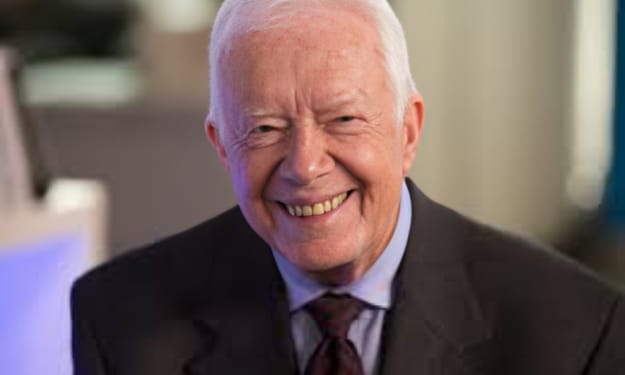
Jimmy Carter, the 39th President of the United States and a Nobel Peace Prize laureate, passed away on December 29, 2024, at the age of 100. He died peacefully at his home in Plains, Georgia, surrounded by family.
Jimmy Carter, the 39th President of the United States and a Nobel Peace Prize laureate, passed away on December 29, 2024, at the age of 100. He died peacefully at his home in Plains, Georgia, surrounded by family. A Life of Service and Leadership Born on October 1, 1924, in Plains, Georgia, James Earl Carter Jr. rose from humble beginnings as a peanut farmer to become the leader of the free world. His journey from the rural South to the Oval Office is a testament to his unwavering dedication to public service and his commitment to humanitarian ideals. Presidency: Challenges and Achievements Carter's tenure as president from 1977 to 1981 was marked by significant challenges, including economic difficulties and international crises. Despite these hurdles, he achieved notable successes, such as brokering the Camp David Accords between Egypt and Israel, a landmark peace agreement that earned him international acclaim. However, domestic issues like the energy crisis and the Iran hostage situation posed significant obstacles during his administration. Post-Presidency: A Legacy of Humanitarianism After leaving the White House, Carter's commitment to humanitarian efforts only intensified. He founded the Carter Center in 1982, focusing on human rights, conflict resolution, and public health initiatives worldwide. His dedication to eradicating diseases, promoting democracy, and advocating for peace earned him the Nobel Peace Prize in 2002. Tributes from Global Leaders Following his passing, tributes poured in from leaders across the political spectrum. President Joe Biden praised Carter's unwavering commitment to human rights and his lifelong dedication to public service. Former President Barack Obama highlighted Carter's role in advancing peace and justice globally. Even political opponents acknowledged his contributions; President-elect Donald Trump noted Carter's efforts during pivotal moments in American history. A Personal Reflection Carter's son, Chip Carter, expressed profound admiration for his father, stating, "My father was a hero, not only to me but to everyone who believes in peace, human rights, and unselfish love." A Life Well-Lived Carter's longevity allowed him to witness and influence significant global events long after his presidency. He remained active in various initiatives, including Habitat for Humanity, where he and his wife, Rosalynn, dedicated their time to building homes for those in need. His post-presidential years set a standard for civic engagement and humanitarian work, inspiring countless individuals worldwide. Final Years and Passing In February 2023, Carter entered hospice care, choosing to spend his remaining time at home with his family. Despite health challenges, he continued to engage with his community, demonstrating resilience and grace. His passing marks the end of an era, but his legacy of compassion, service, and dedication to human rights will endure for generations. Honoring His Memory Plans for memorial services are underway, with public events expected in Atlanta and Washington, D.C., to honor his life and contributions. As the world reflects on his impact, Carter's unwavering commitment to peace, democracy, and humanitarianism serves as a guiding light for future generations. Conclusion Jimmy Carter's life was a testament to the power of humility, service, and unwavering dedication to the betterment of humanity. From the peanut farms of Georgia to the global stage, his journey inspired millions and left an indelible mark on the world. As we bid farewell to this remarkable leader, we are reminded of the profound impact one individual can have in shaping a more just and peaceful world. For a comprehensive overview of Jimmy Carter's life and legacy, you might find the following video informative:
By Gideon Polycarp2 years ago in Journal
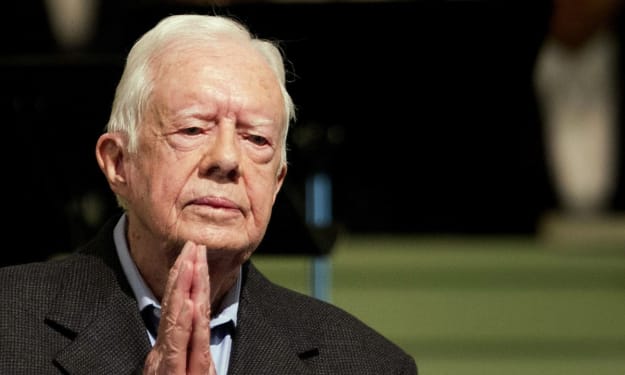
Former U.S. President Jimmy Carter, 100, dies
Previous President Jimmy Carter, a man who reclassified what a post-administration could be, passed on Sunday. He was 100. His child, Chip Carter affirmed that the previous president kicked the bucket at his home in Fields around 3:45 p.m.
By EA MARKETING2 years ago in Journal
The Looming Wave of Voluntary Terminations: Return-to-Office Mandates Could Impact Over 1 Million American Workers
The Looming Wave of Voluntary Terminations: Return-to-Office Mandates Could Impact Over 1 Million American Workers In the coming months, the American workforce may witness a significant shift, with over one million workers potentially opting for voluntary termination due to return-to-office mandates. Some reports suggest this number could escalate to as high as 1.8 million, sparking widespread concern and debate about the future of workplace flexibility.
By Patrick Rowden2 years ago in Journal
Why Do We Love Morally Grey Characters?
In films and television series, do you ever find yourself supporting the antagonist? You know, the morally ambiguous characters who are neither entirely good nor entirely bad? They are extremely fascinating because they are the ones who fall in the middle. We all have a soft spot for them, let's face it. You're sick of categorizing characters as heroes or villains. That's precisely why grey characters were created, and their popularity has skyrocketed. But have you ever wondered why we find these fictional characters so appealing? We will examine these grey characters' specifics as well as the psychology of why people like them in this article.
By Hridya Sharma2 years ago in Journal
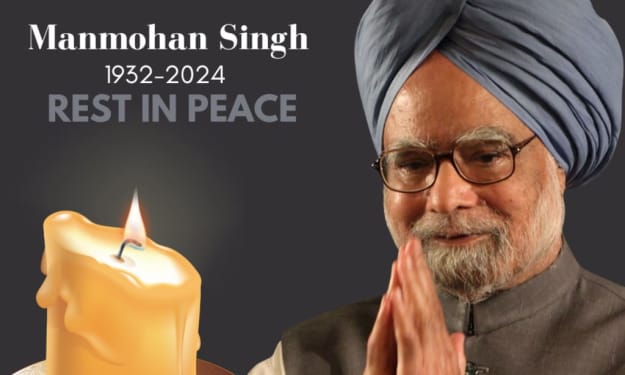
Manmohan Singh: A Visionary Leader and Architect of Modern India
Manmohan Singh would be remembered most as the economist-statesman and the 13th Prime Minister of India, for the crucial role he played in the cross-sectional view of the nation's economy and the measure of leadership through which he steered the administration during crucial years for the country.
By Aakash Kumar2 years ago in Journal
Who created the Catholic and WHY?
The Catholic Church, often regarded as one of the most influential religious institutions in history, traces its origins back to the early days of Christianity, which began with the ministry of Jesus Christ in the first century. From humble beginnings, it has shaped societies, cultures, and ideologies, creating a complex legacy that intertwines faith with political power.
By Tafara Sibotshiwe2 years ago in Journal
Who Decides What Is Democratic?
What is "democratic" depends on the values one attaches to democracy. The distinction that determines the answer is between minimalist and maximalist conceptions of democracy. Defending democracy requires a positive, forward-looking program of reform.
By Global Update2 years ago in Journal
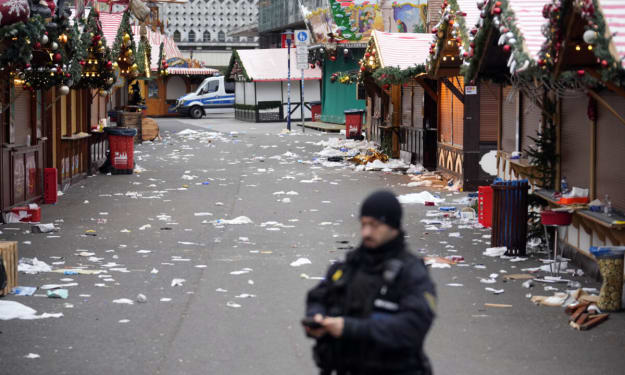
German Christmas market attack suspect is self-described Saudi dissidents.
In a shocking turn of events, a festive evening at Magdeburg's Christmas market transformed into a scene of tragedy when a vehicle plowed through the bustling crowd, resulting in five fatalities and over 200 injuries. The suspect, identified as 50-year-old Saudi national Taleb al-Abdulmohsen, has been a resident of Germany since 2006. A Complex Profile Al-Abdulmohsen's background is both intricate and paradoxical. A qualified psychiatrist, he was known for his outspoken criticism of Islam, the religion of his birth, and his support for the far-right Alternative for Germay (AfD) party. His social media presence was marked by anti-Islam rhetoric and critiques of Germany's immigration policies. Despite his controversial views, al-Abdulmohsen had not been flagged as a potential threat by German authorities. This oversight is particularly glaring in light of reports that Saudi Arabia had issued multiple warnings about him, highlighting his extremist positions and potential danger. The Attack Unfolds The tranquility of the Christmas market was shattered when al-Abdulmohsen's vehicle breached the venue by exploiting an inadequately secured tramline, designated for emergency access. This lapse allowed him to circumvent barriers designed to prevent such attacks. Eyewitnesses recounted scenes of chaos and devastation. One bystander described the horrifying moment: "He just came out of nowhere, driving fast and hitting everyone in his path. People were screaming, trying to get out of the way, but there was no time." Motivations and Ideology Al-Abdulmohsen's motivations appear to be rooted in a complex interplay of personal grievances and ideological convictions. His disillusionment with Islam and alignment with far-right ideologies suggest a deep-seated animosity towards both his cultural heritage and the societal structures of his host country. Some reports indicate that he harbored resentment towards German authorities, believing they targeted Saudi asylum-seekers unfairly. This incident challenges conventional narratives surrounding such attacks, where perpetrators are often driven by radical Islamist ideologies. In this case, the assailant's anti-Islam stance adds a layer of complexity to the investigation and public discourse. Security Lapses and Public Outcry The fact that al-Abdulmohsen managed to execute this attack despite prior warnings from Saudi Arabia has sparked intense scrutiny of German security protocols. Critics argue that the failure to act on these alerts represents a significant lapse in judgment, potentially costing lives. In response to the attack, security measures at Christmas markets across Germany and Europe have been heightened. Cities like Berlin and Vienna have increased police presence and reinforced barriers to prevent similar incidents. Authorities in the UK have also issued advisories urging public vigilance during the festive season. Community Reactions The local community in Magdeburg is grappling with grief and shock. Vigils have been held to honor the victims, and makeshift memorials with flowers and candles line the streets near the market. Residents express a mix of sorrow and anger, questioning how such an atrocity could occur in their city. One local shop owner lamented, "This market is a place of joy and togetherness. To see it turned into a scene of such horror is heartbreaking. We need answers and assurance that something like this will never happen again." Official Statements and Ongoing Investigations German Chancellor Olaf Scholz condemned the attack, labeling it a "heinous act of violence" and pledging a thorough investigation to uncover all facets of the incident. Interior Minister Nancy Faeser confirmed al-Abdulmohsen's Islamophobic stance and assured the public that authorities are diligently working to understand the full scope of his motivations and any potential networks or accomplices. As the investigation unfolds, questions persist regarding the efficacy of current security measures and the processes for monitoring individuals with extremist views, regardless of their ideological leanings. The incident underscores the necessity for a nuanced approach to threat assessment, one that transcends traditional profiles and considers the diverse spectrum of radical ideologies. A Call for Vigilance and Unity In the wake of this tragedy, there is a renewed call for vigilance among the public and a collective effort to uphold the values of tolerance and unity. Community leaders emphasize the importance of coming together to support the victims and their families, and to stand firm against all forms of extremism that seek to disrupt societal harmony. As Europe enters the heart of the holiday season, the resilience of its communities will be tested. The hope is that through solidarity and a steadfast commitment to justice, societies can emerge stronger, ensuring that such tragedies become a thing of the past.
By Gideon Polycarp2 years ago in Journal