nsfw
NSFW not safe for work. Content you would not want your workplace manager to see.
How To Find The Perfect Outdoor Corporate Event Venue In Pune?
Planning a corporate event and looking to break free from the usual boardroom setup? Then you’re in the right place. Whether it’s a casual team outing, a leadership retreat, or a formal product launch, outdoor corporate event venues in Pune offer the perfect blend of nature, space, and flexibility. But how do you find the ideal spot that ticks all the boxes?
By Avinash Jadhav2 years ago in Journal
Educated, Intelligent, or Smart? The Key Differences That Define Success
The terms educated, intelligent, and smart are often used interchangeably, but they have distinct meanings that set them apart. While they can sometimes overlap, understanding their differences is essential for appreciating how each one applies to personal development, problem-solving, and success in life. These three qualities contribute to a person's ability to think, learn, and make decisions, but they do so in different ways. Education refers to the formal process of acquiring knowledge through schooling, training, or structured learning. It involves studying subjects like mathematics, science, literature, and history, usually in an academic setting such as schools, universities, or specialized training programs. Being educated means having a certain level of knowledge that has been systematically taught and learned. An educated person has credentials such as degrees, diplomas, or certifications that validate their learning. However, education does not necessarily equate to intelligence or smartness. A person can have multiple degrees but still struggle to apply their knowledge effectively in real-world situations. Intelligence, on the other hand, is a person’s ability to think critically, solve problems, and grasp complex concepts. It is a natural trait that varies from person to person and is not solely dependent on formal education. Intelligence can be measured in different ways, such as logical reasoning, memory, problem-solving skills, creativity, and adaptability. There are various types of intelligence, including logical-mathematical intelligence, emotional intelligence, linguistic intelligence, and spatial intelligence. A highly intelligent person might not have received a formal education but can still understand and analyze information deeply. Intelligence allows people to learn quickly, recognize patterns, and think abstractly, making it a crucial factor in innovation and progress. Smartness refers to the ability to use knowledge and intelligence effectively in everyday situations. A smart person knows how to navigate challenges, make wise decisions, and adapt to their environment. Unlike education, which is learned through formal instruction, and intelligence, which is an inherent cognitive ability, smartness is more about practical application and common sense. A smart individual can assess situations quickly, read people well, and use their knowledge to achieve success. Street smartness, for example, is a form of intelligence that allows individuals to handle real-world situations skillfully, even if they lack formal education. Smartness often comes from experience, observation, and learning from past mistakes rather than from books or classroom lessons. One key difference between being educated, intelligent, and smart is the source of each trait. Education comes from external sources, such as teachers, textbooks, and structured curriculums, and requires effort to acquire. Intelligence is mostly inborn, though it can be nurtured and developed over time through mental exercises and challenges. Smartness, however, is built through experience, exposure, and the ability to learn from life situations. A person can be educated without being particularly intelligent or smart. Similarly, someone can be intelligent but lack formal education or smart decision-making skills. A smart person may not have an advanced education or exceptionally high intelligence, but they have the ability to make things work in their favor through cleverness and adaptability. Another major difference lies in how each quality is applied. Education primarily equips individuals with theoretical knowledge, which is useful for specific careers or professions but does not always translate to real-world problem-solving. Intelligence is applied in analytical thinking, creativity, and the ability to process information efficiently. Smartness is about using both intelligence and knowledge in a way that brings practical benefits. For example, an educated person may know the theory behind starting a business, an intelligent person may come up with innovative ideas for the business, but a smart person will know how to make the business succeed by managing risks, networking, and understanding market demands. The third difference is how each trait affects success and decision-making. Education can provide credentials and open doors to opportunities, but without intelligence or smartness, an educated person might struggle to achieve success beyond the academic world. Intelligence allows individuals to understand complex issues and develop groundbreaking ideas, but without the practical application that smartness brings, those ideas may remain theoretical. Smartness enables people to make the best use of their knowledge and intelligence, turning ideas into real-world achievements. A smart person is often seen as resourceful and quick-witted, able to solve problems in ways that an educated or intelligent person might not consider. To illustrate these differences further, consider three individuals: one who is highly educated, one who is extremely intelligent, and one who is very smart. The highly educated individual has multiple degrees and vast knowledge in their field, but they may struggle with practical decision-making outside their area of study. The extremely intelligent person can quickly grasp new concepts, solve complex puzzles, and understand abstract theories, but they may lack the social skills or practical knowledge to navigate real-life situations effectively. The very smart person, even without advanced education or exceptional intelligence, knows how to use what they have to succeed, whether through strategic thinking, persuasion, or quick adaptability. Each of these qualities has its own strengths and limitations. Education is valuable because it provides structured knowledge and skills that society recognizes as credentials for success. Intelligence is crucial because it determines a person’s ability to learn, understand, and create new solutions. Smartness is essential because it allows individuals to apply knowledge and intelligence in a way that leads to real-world success. The ideal situation is to possess a balance of all three—being educated, intelligent, and smart. However, if one had to choose, smartness often proves to be the most practical trait for navigating life effectively. Many successful people have demonstrated that formal education is not always necessary for achieving great things. Entrepreneurs like Steve Jobs and Richard Branson did not complete higher education, yet they used their intelligence and smartness to build global businesses. On the other hand, some highly educated individuals struggle to find success because they rely solely on theoretical knowledge without applying it practically. Meanwhile, people with high intelligence might get stuck in analysis and overthinking without taking decisive action. Understanding the difference between being educated, intelligent, and smart can help individuals focus on developing all three aspects in a balanced way. While education provides the foundation of knowledge, intelligence enhances the ability to think critically, and smartness ensures that knowledge and intelligence are used effectively in everyday life. Those who can combine these qualities will be better equipped to handle challenges, make wise decisions, and achieve lasting success.
By Nora Ariana2 years ago in Journal
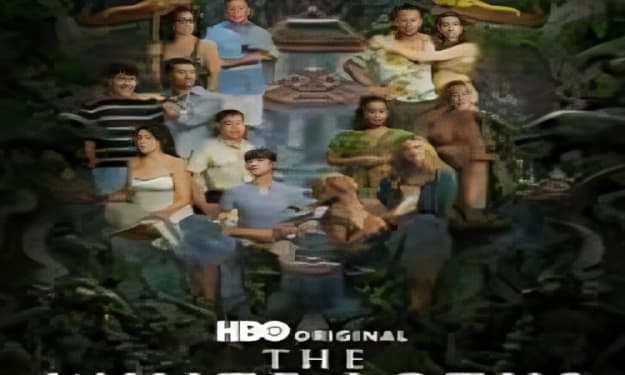
The White Lotus Season 3
The White Lotus is a popular TV series that has gained worldwide attention for its unique storytelling, dark humor, and social commentary. The show, created by Mike White, follows wealthy guests at luxurious resorts while revealing their hidden flaws and personal struggles. After the success of the first two seasons, fans are eagerly waiting for The White Lotus Season 3. Here is everything we know so far about the upcoming season.
By Farhan Sayed2 years ago in Journal
TikTok returns to U.S. app stores amid uncertainty about ban
In a significant development, the popular social media platform TikTok has officially returned to the U.S. App Store after a brief period of uncertainty following concerns over data privacy and national security. The app, owned by the Chinese company ByteDance, was pulled from the App Store earlier this year as the Biden administration and lawmakers intensified scrutiny over its potential risks related to user data security and its connection to the Chinese government.
By Arean Ahamad2 years ago in Journal
What AI Chatbots Have Internet Access in 2025? Top Tools for Real-Time Web Data
The ability to access real-time web data has made AI chatbots more useful than ever. Instead of relying solely on pre-trained models, certain AI tools can now browse the internet, fetch the latest information, and provide users with up-to-date answers. This capability has proven valuable in research, business, and everyday tasks where fresh data is essential.
By John Miller2 years ago in Journal
The Reptilian Conspiracy: Are World Leaders Secretly Alien Lizards?
The Reptilian Humanoid Conspiracy Theory: A Deep Dive Introduction: The Rise of Conspiracy Theories In recent times, conspiracy theories have gained significant traction, especially in the so-called "civilized West." With every major global event, these theories resurface, capturing the imagination of millions. One such theory that has recently gained attention revolves around U.S. President Joe Biden. However, the focus isn’t on his policies or political decisions—it’s on his behavior, speech, and facial expressions. According to some theorists, Biden is not entirely human. He’s been accused of being a robot, with unnatural speech, unsteady movements, and a lack of blinking. These claims, though lacking evidence, have sparked widespread discussion.
By QuirkTales2 years ago in Journal
The strangest sects in the world | The last one is the most dangerous
Introduction: "I'm the messenger, nothing more. Coffee is forbidden. Tea is forbidden. Tobacco is forbidden. Using technology is forbidden. Driving a car is heresy and blasphemy. Golden tablets and new prophets. And most importantly, the prophets are not humans, but hybrid creatures between humans and extraterrestrials. No, it’s not me who says that. These are the beliefs of religions and sects that exist in our world, among you... and perhaps you don't even know about them."
By QuirkTales2 years ago in Journal
The Brutalist 2024 Movie Review You’ve Been Waiting For: Bold, Brutal, and Beautiful!
Introduction: A Cinematic Revolution in 2024 Welcome to the Brutalist 2024 movie review you’ve been waiting for! This highly anticipated film is making waves in the cinematic world, blending architectural beauty with bold, brutal storytelling. In this review, we’ll dive into the intricacies of this film—its unique visual style, its challenging narrative, and the very heart of its atmosphere. If you're a fan of films that push boundaries and offer more than just surface-level entertainment, the Brutalist 2024 movie review will captivate you from start to finish. Get ready for a cinematic experience like no other!
By QuirkTales2 years ago in Journal