industry
Industry related topics in the realm of corporate culture, business, and the workplace.
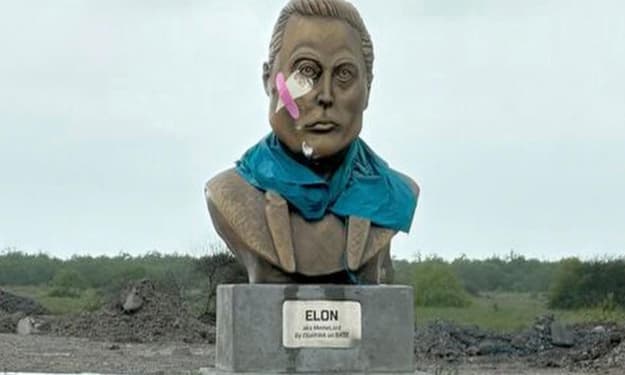
From Boca Chica to Starbase: The Texas Town Reimagined by SpaceX. AI-Generated.
In the far southern tip of Texas, amidst sandy beaches and brushland, there's a small village that's become a launchpad not just for rockets, but for reinvention. What used to be just Boca Chica Village, a quiet village, is now being renamed "Starbase"—a name as futuristic as the rockets that launch from its soil.
By MD NAZIM UDDIN about a year ago in Journal
How to Rent Tools in the UAE from ToolsRental and the Benefits of Equipment Rental UAE
In today’s fast-paced construction and industrial sectors, the ability to quickly access the right equipment without the burden of ownership is a game-changer. Whether you're a contractor, builder, technician, or DIY enthusiast, tool and machinery rental has become a smarter, more economical way to manage projects. One of the leading names in this space is ToolsRental, a trusted provider of equipment rental in the UAE. This article will guide you through the tool rental process and explain the many benefits of choosing ToolsRental for your equipment needs.
By Jobz Intelabout a year ago in Journal
Why Is My Facebook Feed All Ads? Here’s What You Need to Know
Have you opened your Facebook app lately? And wondering, you are scrolling through nothing but ads? Don’t think that you are alone. Your feed looks more like a sales catalog than a place to connect with friends.
By Jennifer Wilsonabout a year ago in Journal
The Untold Sides of 'The Hobbit Trilogy'
Th The globally acclaimed fantasy saga The Lord of the Rings and The Hobbit are masterpieces by J.R.R. Tolkien. Brought to life on the silver screen by director Peter Jackson, The Lord of the Rings trilogy focused on Frodo Baggins of the Shire. A decade later came its prequel, The Hobbit Trilogy, with Frodo's uncle Bilbo Baggins taking center stage. Though it didn’t quite match The Lord of the Rings in success, The Hobbit Trilogy was fairly well-received. Today’s piece explores some lesser-known facts about The Hobbit Trilogy, which is set 77 years before The Lord of the Rings. 1. Tolkien started drafting The Hobbit around 1928. This means the story predates The Lord of the Rings and serves as its prequel. Interestingly, Tolkien had left the story half-finished. A student of his, Elaine Griffith, brought the unfinished manuscript to a publisher friend, who was highly impressed. Upon Griffith’s encouragement, Tolkien completed the tale. Hence, she played a crucial role in bringing Middle-earth’s enchanting fantasy to the world. 2. In 1994, director Peter Jackson wanted to adapt The Hobbit into a film after being inspired by the 1978 animated The Lord of the Rings. His original plan was to follow up with two Lord of the Rings films. However, due to creative differences with the production house Miramax, the project stalled. Eventually, New Line Cinema stepped in, helping bring both trilogies to the big screen.
By Riham Rahman about a year ago in Journal
5 Simple SEO Tricks to Skyrocket Your Website Traffic in 2025 (Plus a Bonus!) 🚀
When I first messed around with SEO, I was totally clueless. Terms like “backlinks” and “meta tags” sounded like sci-fi gibberish, and my blog? If it got 10 views a month, I was thrilled. 🥳 But after a lot of Googling, some facepalm moments, and a few “oh wow, that worked!” breakthroughs, I realized SEO isn’t about being a tech genius — it’s about helping people find what they’re already looking for.
By Eric Q Fengabout a year ago in Journal
Affiliate PR: The Intersection of Publicity and Performance Marketing
When most people think of public relations, they imagine magazine spreads, brand mentions in glossy publications and maybe a well-placed interview or two. But in today’s digitally driven, ROI-obsessed environment, PR is evolving — and performance is finally taking a seat at the table.
By The Visibility Lababout a year ago in Journal
The Untold Aspects of The Lord of the Rings Trilogy Pt.2
Last part 8. Avatar (2009) drew significant inspiration from The Lord of the Rings trilogy. How? Let’s explain. In 1994, James Cameron had already completed about 80% of the conceptual work for Avatar. However, due to the limitations of visual effects at the time, he didn’t feel confident enough to begin production. Lacking advanced CGI and VFX, he decided to wait patiently for technological advancements. In 2002, after witnessing the CGI and motion capture used for Gollum in The Two Towers, Cameron was blown away. He realized the time had finally come to bring his dream project to life. And so, he jumped in headfirst to make it happen. 9. The legendary rock band The Beatles were huge fans of the franchise. They once wanted to make a Lord of the Rings movie with acclaimed director Stanley Kubrick. The plan was for Paul McCartney to play Frodo, Ringo Starr as Sam, George Harrison as Gandalf, and John Lennon as Gollum. The Beatles; Image Source: Alamy 11. Let’s now talk about Tolkien’s created universe. Many refer to this universe as Middle-earth, which isn’t entirely accurate. Middle-earth is actually a continent on the planet Arda, which itself is a part of the universe called Eä. The entire Lord of the Rings universe was born from the music of a divine being named Eru Ilúvatar. These divine creations, known as the Ainur, were responsible for shaping various elements of this universe. 12. The Lord of the Rings franchise features a total of seven constructed languages. Tolkien, a philologist and professor of English at the University of Leeds, created each of these languages with distinct grammatical structures. The most notable include the Elvish languages Sindarin and Quenya, Sauron’s Black Speech, the Valar’s language, Entish, and the Dwarvish secret language Khuzdul. Each language has a written grammar, allowing them to be used in real life by dedicated fans. Many assume Tolkien invented the languages for the story. In fact, it was the other way around—he created the languages first, and later built the stories around them. Quenya was developed in 1917, about 20 years before The Hobbit was published. Later, Tolkien went on to complete The Lord of the Rings and The Silmarillion. Quenya was inspired by the rare Finnish language of ancient England, while Sindarin drew influence from Welsh. Quenya was used by the High Elves of Valinor, while the Grey Elves and educated men like Aragorn in Middle-earth spoke Sindarin. 13. At the end of The Fellowship of the Ring, we see the fiery demon Balrog. Interestingly, Balrog, Gandalf, and Sauron all come from the same ancient origin. They were part of a race known as the Maiar, spiritual beings with shape-shifting powers, created by the god-like Valar to help shape the world. However, a division among the Valar caused Sauron and Balrog to side with evil, while Gandalf chose the path of good. Balrog; Image Source: New Line Cinema 14. The box office success of The Lord of the Rings trilogy was staggering. Each film had an average budget of around $93 million. Yet each one earned approximately $970 million globally, bringing in about ten times the investment. In total, the trilogy grossed around $2.9 billion worldwide, dominating the box office like a tornado. To this day, no film has broken its Oscar record. The Fellowship of the Ring won four Academy Awards, The Two Towers won two, and the final installment The Return of the King won eleven. Incredibly, The Return of the King won every single one of its eleven nominations—an exceptionally rare feat in Oscar history. Even after more than two decades, the trilogy’s popularity remains as strong as ever. The End!
By Riham Rahman about a year ago in Journal
The Untold Aspects of The Lord of the Rings Trilogy Pt.1
Imagine a group of friends deep in discussion about the greatest fantasy franchises in the world. Naturally, names like Harry Potter, The Witcher, Game of Thrones, Star Wars, Narnia, Pirates of the Caribbean, and Marvel/DC Comics would come up. However, one name that must also be mentioned is J.R.R. Tolkien's immortal creation — The Lord of the Rings. Whether in books or on the silver screen, this franchise remains unforgettable. Formed with a unique blend of friendship, love, vengeance, lust for power, magic, and diverse races, the fantasy of this franchise can easily rival reality. In 2001, renowned director Peter Jackson brought this trilogy to the big screen with the first installment The Fellowship of the Ring. It garnered immense acclaim from critics and audiences alike, essentially immortalizing the franchise. This article dives into some lesser-known aspects of The Lord of the Rings trilogy. 1. The Production Struggle Initially, it was decided that the film would be produced under the Miramax production house, split into two parts. However, due to budget constraints, the studio informed Peter Jackson that the entire story must be condensed into a single film. Knowing this would result in a disaster due to the vast plot, Jackson stood firm. Eventually, New Line Cinema, under Warner Bros., came forward to realize the dream, greenlighting the full trilogy. 2. Casting Surprises Christopher Lee, who played Saruman, originally wanted to play the powerful wizard Gandalf. He was the only cast member who had read the entire book series multiple times—every year, in fact—and even memorized large portions. A true fan of the franchise, he was also the only cast member to have ever met J.R.R. Tolkien. Upon hearing that a film adaptation was in the works, he personally wrote to Peter Jackson requesting to play Gandalf. However, Jackson suggested he take the role of Saruman instead. Interestingly, Scottish actor Sean Connery was offered the role of Gandalf and even promised 15% of the total box office revenue. But he declined, saying he couldn't grasp the complexity of the character. Eventually, the role went to Sir Ian McKellen, who brought Gandalf to life brilliantly. For the role of Aragorn, actors like Nicolas Cage, Stuart Townsend, and Russell Crowe were approached but declined. Ultimately, it went to Viggo Mortensen. American actor Jake Gyllenhaal auditioned for Frodo, but Elijah Wood was chosen instead. 3. Helicopter Fear on Set Sean Bean, who played Boromir, had a severe fear of helicopters. The mountain scenes in the first film were shot in New Zealand, and most cast and crew were flown in by helicopter. But Bean refused to fly, so he would hike for nearly two hours to reach the shooting location. As a result, the entire crew had to wait for him every day on the mountain. 4. Differences Between the Book and the Film While four hobbits accompany Frodo in the films, there were five in the book. The missing one was Fredegar “Fatty” Bolger, who stayed behind in the Shire. He played a role in defending the Shire when Saruman attacked later. He briefly appears in the extended cut. Sauron is only shown as a giant eye atop a tower in the films, but in the book, he has a full physical description. His hunt for the One Ring was aimed at world domination. While the film shows Frodo setting out shortly after Bilbo gives him the ring, in the book, his journey begins 17 years later. Saruman’s death also differs. In the book, after the ring is destroyed in Mount Doom, the hobbits return to find that Saruman has taken over the Shire. They fight him, and eventually, Gríma Wormtongue kills Saruman by slitting his throat in a place called the Scouring of the Shire. 5. Epic Runtime Binge-watching this trilogy is no easy task. Each movie runs for nearly 3.75 hours on average. The original theatrical cuts total 9 hours and 18 minutes, while the extended editions stretch to an astounding 11 hours and 55 minutes — a record-setting runtime for a trilogy. 6. Groundbreaking Effects When the first film was released in 2001, CGI and VFX were just emerging technologies. Many new techniques debuted in this trilogy. To maintain realism, the director heavily used practical elements. Astonishingly, around 18,000 costumes were used, with 30–40 duplicates for each main character. There were also 2,000 unique weapons and about 10,000 arrows used, along with nearly 300 horses. The differences in character heights were achieved using clever camera angles and new visual effects. 7. Editing Nightmare The three films were released in 2001, 2002, and 2003, respectively. The editing team was pushed to their limits managing such large-scale productions. At one point, editing for The Fellowship of the Ring had just finished while The Two Towers was in production, and footage for The Return of the King was already being cut. Even after the theatrical release of the final movie, Peter Jackson shot additional scenes for the extended edition. To be continued...
By Riham Rahman about a year ago in Journal