humanity
The real lives of businessmen, professionals, the everyday man, stay at home parent, healthy lifestyle influencers, and general feel good human stories.
Are Mike Bloomberg's Thoughts About Remote Work Justified, Or Do They Reveal Something Completely Different?
I have been following a lot of the dialogue around the Return-To-Work Mandates. In over a dozen articles, I have been going through the data, looking at what has been revealed, and what the consequences of these decisions will be.
By H.E. Dr. Cody Dakota Wooten, COIE, DFM, DHM3 years ago in Journal
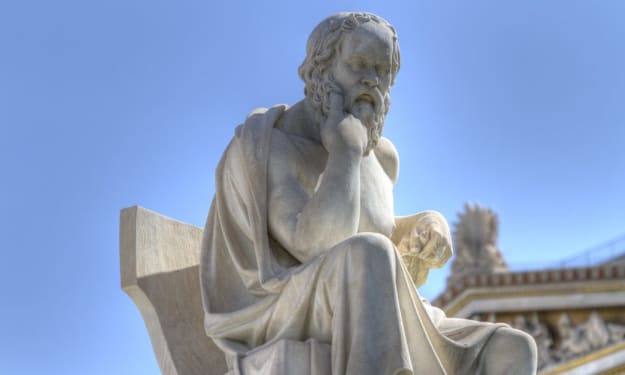
Democracy
Democracy: The Pillar of Modern GovernanceDemocracy, derived from the Greek words "demos" (people) and "kratos" (rule), stands as one of humanity's most significant political achievements. It's a system of governance where the power to make decisions rests in the hands of the citizens. In this essay, we will explore the essence of democracy, its historical evolution, its core principles, its challenges, and its enduring significance in the contemporary world.Democracy's roots can be traced back to ancient Greece, particularly in Athens, where it emerged in the 5th century BC. In this early form of democracy, eligible citizens gathered in the "Ekklesia" to discuss and vote on important matters. However, it was a limited democracy, excluding women, slaves, and non-citizens. The idea of democracy lay dormant for centuries until it was revitalized during the Enlightenment period in Europe. Thinkers like John Locke and Jean-Jacques Rousseau advocated for the sovereignty of the people and the social contract, which formed the philosophical basis for modern democracies.The fundamental principles of democracy encompass the protection of individual rights, rule of law, free and fair elections, separation of powers, and a vibrant civil society. These principles ensure that government serves the people, rather than the other way around. Individual rights, such as freedom of speech, religion, and assembly, are at the core of democratic values, safeguarding citizens from government overreach. The rule of law ensures that everyone, regardless of their status, is subject to the same legal framework. Free and fair elections allow citizens to choose their leaders, creating a government that is accountable to the electorate. The separation of powers prevents any one branch of government from becoming too powerful, promoting checks and balances. Lastly, a vibrant civil society, comprising non-governmental organizations and a free press, helps keep the government in check and promotes transparency.Despite its undeniable strengths, democracy faces numerous challenges in the contemporary world. One pressing issue is the erosion of democratic norms and institutions in some established democracies. Populism and authoritarianism have gained ground in recent years, threatening the very foundations of democracy. Polarization and misinformation, exacerbated by the digital age, have weakened the public discourse and eroded trust in democratic institutions. Additionally, voter suppression, gerrymandering, and the influence of money in politics have raised concerns about the fairness of elections.Another challenge is the question of whether democracy is universally applicable. Some argue that cultural, historical, and economic factors may make it difficult for certain countries to adopt and sustain democratic systems. Others believe that democracy can take on various forms and adapt to different contexts, emphasizing the importance of local ownership and gradual change.Furthermore, the rise of global challenges, such as climate change, pandemics, and cyber threats, has tested the capacity of democracies to respond effectively. Coordinating responses across multiple democratic nations can be slow and cumbersome, making it necessary to strike a balance between democratic deliberation and decisive action in times of crisis.Nevertheless, democracy remains a powerful and enduring form of governance for several reasons. First, it empowers individuals and promotes human rights, fostering dignity and freedom for all citizens. Second, it provides a mechanism for peaceful change and dispute resolution, reducing the likelihood of violent conflict. Third, democracies tend to be more innovative and prosperous, as they encourage diverse perspectives and competition. Fourth, democracy promotes transparency and accountability, reducing corruption and abuse of power. Finally, it reflects the fundamental principle that governments derive their legitimacy from the consent of the governed.In conclusion, democracy stands as a pillar of modern governance, embodying principles of individual rights, rule of law, free and fair elections, separation of powers, and a vibrant civil society. While it faces significant challenges in the contemporary world, its enduring significance lies in its capacity to empower individuals, promote human rights, facilitate peaceful change, foster innovation, ensure transparency, and uphold the principle of government by consent. As we navigate the complexities of the 21st century, democracy remains a beacon of hope, reminding us that the power to shape our collective destiny ultimately rests in the hands of the people.
By Izuchukwu James Nwebonyi3 years ago in Journal
International Eqaul Pay Day
"When women thrive, societies prosper. Let's ensure equal pay for equal work." International Equal Pay Day is a crucial reminder of the ongoing battle for gender equality in the workplace. This day underscores the significance of paying individuals fairly, regardless of their gender. When we bridge the gender pay gap, we not only promote social justice but also boost economic growth. Equal pay encourages a more diverse and inclusive workforce, harnessing the full potential of talent worldwide.
By Noor Mohammad3 years ago in Journal
World Alzheimer's Day
In 2023, a rallying cry echoes throughout the Alzheimer's community, encapsulated in the profound campaign slogan: "Never too early, never too late." This theme stands as a beacon of hope, emphasizing the pivotal role of recognizing risk factors and adopting proactive measures to potentially delay or prevent the onset of dementia.
By Noor Mohammad3 years ago in Journal
Decision-Making in Business
Decision Making in Business In the tremendous and complex scene of current business, navigation is the cornerstone that maintains the building of achievement. Business pioneers and directors are stood up to with a bunch of decisions day to day, each conveying the possibility to shape the predetermination of their associations. Whether it's a strategic choice impacting the everyday tasks or an essential one diagramming the course for the future, the capacity to go with successful choices is key. In this far reaching investigation, we will jump profound into the complex universe of dynamic in a business setting. We'll analyze the horde factors that impact it, the procedures for successful direction, and the developing job of innovation in this essential part of business.
By Mahnoor Malik3 years ago in Journal
Lake Sammamish • Floatplane • Aviation accident and incident • Sammamish River • Injury
As the first light of dawn painted the sky over Lake Sammamish, a tranquil serenity hung in the air. The shimmering waters mirrored the cotton candy hues of the early morning, inviting those who sought solace amidst nature's beauty. It was a perfect morning for Mark, an aviation enthusiast with a lifelong dream - to take flight in a floatplane.
By Jasper goddy 3 years ago in Journal
Are Boomerang Employees Good For Organizations?
I was reading an article earlier about Salesforce. CEO Marc Benioff just made an announcement that they are looking to hire again after laying off 10% of their workforce earlier this year.
By H.E. Dr. Cody Dakota Wooten, COIE, DFM, DHM3 years ago in Journal