humanity
The real lives of businessmen, professionals, the everyday man, stay at home parent, healthy lifestyle influencers, and general feel good human stories.
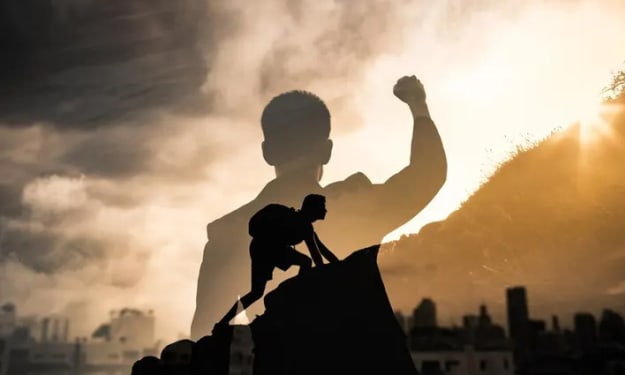
Why Gen Z Is Redefining Success
For generations, the concept of success has been relatively straightforward: a stable job, a house with a white picket fence, a retirement fund, and perhaps a gold watch at the end of a long career. While Millennials began to challenge that dream, albeit reluctantly and frequently out of necessity due to economic conditions, Baby Boomers and Gen Xers were raised to pursue it. Now, with Generation Z entering the workforce in large numbers, the idea of what it means to be "successful" is being fundamentally rewritten.
By Minhaj Ul Hasanabout a year ago in Journal
The Blood in the Walls
Mara was nine years old the first time she heard the walls whisper. She sat in the attic of the old Vexley Manor, legs crossed, sketching birds in a dusty notebook. The late afternoon sun filtered through a cracked window, catching the dust in golden clouds. Then came the sound—soft, almost like humming. Not wind. Not mice. A voice, faint and rhythmic, like a chant under breath.
By Gabriela Toneabout a year ago in Journal
The Weight of Truth
Everyone in Valebrook had an opinion, and most of them were loud. Nestled in a valley shadowed by steep cliffs and thick woods, the town had grown small but proud. Its people were friendly enough—if you didn’t ask too many questions. There were rules, some spoken, most not. Dress neat. Speak right. Don’t trust the quiet ones. And never—ever—talk about the Old House on Marrow Hill.
By Gabriela Toneabout a year ago in Journal
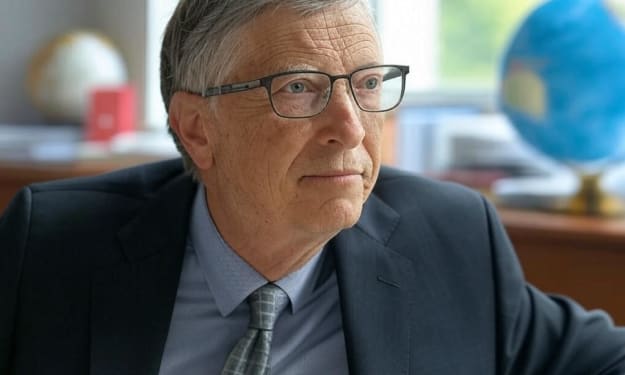
Bill Gates and the Gates Foundation: A Legacy of Giving
Bill Gates, the visionary behind Microsoft, has transformed from a tech icon into one of the world’s most influential philanthropists. Through the Gates Foundation, he’s tackling global challenges like poverty, disease, and education inequity. This article dives into Gates’ net worth, the foundation’s impactful work, and fresh insights from sources like The New York Times, offering an engaging look at his legacy as of May 2025.
By minecraft apkabout a year ago in Journal
What Islam says about Water
Water, in the Islamic worldview, is far more than a physical substance used to quench thirst or grow crops—it is a symbol of life, mercy, purity, and spiritual significance. The religion of Islam, through the Qur'an and the teachings of the Prophet Muhammad (peace be upon him), places immense value on water. It is considered a blessing from Allah, a vital source of life, and a sacred trust that must be protected and shared.
By Murad Ullahabout a year ago in Journal
The Willow
In the quiet town of Merrow’s Edge, where the willows kissed the river and secrets grew like moss on the stone bridges, Elara and Cassian once carved promises into bark. They were childhood friends turned lovers, the kind whose names people said in the same breath. Elara, fierce and tender, daughter of the local healer; Cassian, poetic and clever, son of the magistrate.
By Gabriela Toneabout a year ago in Journal
Will artificial intelligence replace humanity in the future?
Artificial Intelligence In recent years, the world has witnessed numerous technological developments and entered an era of unprecedented rapid progress. Among the most significant and transformative innovations is artificial intelligence (AI), which has emerged as one of the most visible and impactful advancements in modern science and technology. AI has deeply influenced various aspects of life, from our daily routines to the most advanced fields of industry and research. In this article, we will explore everything related to artificial intelligence in more detail. But first, let us begin by understanding what artificial intelligence truly is.
By Walid Salahabout a year ago in Journal
The Morning Star’s Ashes
They say Lucifer fell. But what they forget is how far. And what he left behind. Long before the world spoke of demons and brimstone, there was light—pure, radiant, almost unbearable in its beauty. It pulsed like breath in the heart of all that was. Lucifer, the Morning Star, was not a creature of shadows. He was illumination, will, and above all, question. The others praised. Lucifer asked. And that was his first crime. Why should light only obey one voice? Why must we bow if we are born bright? These questions were seeds. And seeds, when left alone, bloom into ruin. In a crumbling monastery lost to time, a scholar named Ishmael Varn discovered an obsidian-bound tome. It had no title. Just a single symbol etched into the black cover: a star, inverted and cracked. Its pages were skin-thin, lined in ink that shimmered like oil on water. But it was what the book didn’t say that drew Ishmael deeper. There were missing words—phrases scratched out violently, names erased. Yet in those gaps, something stirred. Not absence, but presence. It whispered behind the silence. Each night, Ishmael dreamed of an endless staircase curling into a crimson sky. Each step downward made the air thicker, until breathing became prayer. And at the bottom… light. But not the warm light of sun or fire. This light watched. The book named it The Gift of the Unfallen. Not a fall from grace—but a return. A revelation long buried beneath sanctified lies. Lucifer, it claimed, had not been cast down. He descended. Willingly. Not as punishment—but as sacrifice. He took into himself the weight of divine doubt, the unbearable pressure of asking the questions that should never be voiced. To carry that burden without breaking would require more than holiness. It required defiance. Lucifer became the cage around human fear. The eternal questioner in a world that demands obedience. The Morning Star was not destroyed—he was buried. Locked within the deepest echo of light itself, where no prayer dares look. Ishmael grew hollow. His skin paled, his eyes glossed. He began carving symbols on his walls, then on his arms. He spoke less. Listened more. He heard footsteps at night when none were there. He stopped dreaming altogether. One night, the book opened on its own. Its pages bled ink, pooling into a single word: "Come." He followed the voice to the ruins beneath the monastery. There, behind a sealed door of fused bone and gold, he found The Mirror Without Reflection. It was not made of glass. It was made of remembering—a surface that did not reflect your face, but the truth beneath it. He looked. He screamed. He smiled. The truth: Lucifer is not the enemy of God. He is the last guardian between man and madness. His fall was not rebellion—it was the first act of protection. He took the weight of forbidden truth so humanity would never have to bear it. But now… someone had looked. Someone had remembered. And that remembering was a key. As Ishmael emerged from the ruins, eyes burning with molten silver, the sky changed. Birds flew backward. The sun flickered like candlelight. And in every mirror across the world, people glimpsed not themselves—but a man with light pouring from his skin, mouth sealed by gold thorns. Lucifer had risen—not in vengeance, but in revelation. The world had misnamed him. He was never “The Devil.” He was the truth too dangerous to speak. Now, churches crumble not from fire—but from silence. Because their foundations were built on forgotten light. And light, once remembered, burns everything false. Epilogue: No one remembers Ishmael now. He walks among shadows, unnamed. His eyes still shine, too bright to meet. And on rare nights, when the sky splits in dreams, you may hear a voice not quite your own: “Ask.” Not because you’re ready. But because something is.
By L.Y-PragManX-Csabout a year ago in Journal
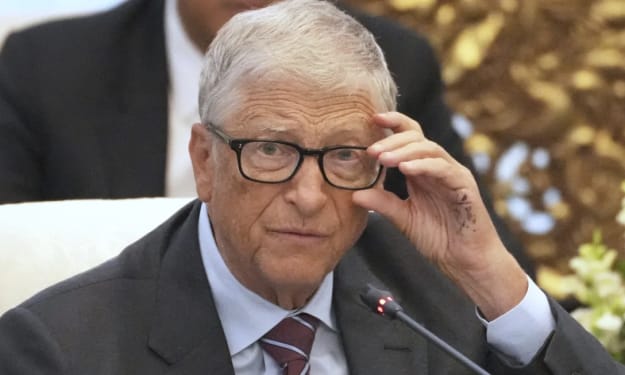
Bill Gates' $200 Billion Pledge Amid Global Challenges
When Bill and Melinda French Gates created the Gates Foundation in 2000, they had planned for the organization to continue its work, using their remaining fortune, for several decades after they died. But now, the billionaire Microsoft founder says he doesn’t want to wait that long to give away most of his wealth.
By Omasanjuwa Ogharandukunabout a year ago in Journal
Flashpoint 2025: India and Pakistan Edge Toward Catastrophe
In May 2025, a familiar yet perilous scenario gripped South Asia. India and Pakistan—longstanding rivals and nuclear-armed neighbors—were once again locked in a volatile military standoff. The immediate trigger: a deadly terrorist attack in Indian-administered Kashmir that claimed the lives of 25 Hindu pilgrims, followed by an aggressive Indian airstrike inside Pakistani territory. Dubbed Operation Sindoor, the Indian response aimed to dismantle what New Delhi claimed were militant training camps across the Line of Control (LoC). Origins of the Conflict The attack on April 9, which targeted a bus carrying religious pilgrims, was widely condemned across India. Authorities linked the assailants to Pakistan-based militant outfits, including Jaish-e-Mohammed, a group historically known for attacks in Kashmir. As public pressure mounted, Indian Prime Minister Narendra Modi authorized a targeted air operation on May 7, 2025. The operation struck facilities in Pakistan-administered Kashmir and parts of Punjab province, claiming they harbored terrorist operatives. Pakistan responded swiftly, declaring the strikes an "act of war" and launching a military counteroffensive that included downing five Indian aircraft, according to Pakistani officials. Escalation and Retaliation The situation quickly spiraled. Pakistan’s Prime Minister vowed to "avenge each drop of blood," and border regions saw heavy artillery shelling from both sides. India remained defiant, stating it would continue defending its sovereignty and civilians from “cross-border terrorism.” While both nations have clashed before—most notably in 1999 (Kargil) and 2019 (Balakot)—the 2025 standoff has reached unprecedented intensity, involving airstrikes, drone incursions, and cyber warfare. Civilian casualties are mounting on both sides, and hundreds of thousands have been displaced from border areas. Nuclear Fears and Global Alarm What makes the 2025 conflict particularly dangerous is the nuclear shadow it casts. With India and Pakistan collectively holding over 250 nuclear warheads, any miscalculation could lead to catastrophic consequences. Experts from the Stockholm International Peace Research Institute (SIPRI) have warned that even a limited nuclear exchange could kill up to 125 million people and trigger a global climate disaster akin to a nuclear winter. In Washington, London, and Beijing, urgent diplomatic discussions are underway. The United States has called for immediate de-escalation, while China—Pakistan’s strategic ally—urged restraint but also warned India against “unilateral aggression.” Water as a Weapon As tensions soared, India made a controversial announcement: a review of the Indus Waters Treaty. Signed in 1960 and brokered by the World Bank, this treaty governs the sharing of six rivers in the Indus basin. India’s potential move to restrict water flow could cripple Pakistan’s agriculture and power generation, especially as summer approaches. Pakistan views any disruption to the water treaty as an existential threat, further inflaming the conflict. The Role of Media and Cyber Warfare In 2025, the war is also being fought on digital fronts. Disinformation campaigns, cyberattacks on infrastructure, and digital surveillance have intensified. Hackers reportedly breached banking systems and energy grids on both sides, adding a new dimension to modern warfare. Media in both countries has adopted a highly nationalistic tone, further polarizing public opinion and making de-escalation politically costly. Civilian Impact and Humanitarian Concerns The UN estimates that over 1.5 million people have already been displaced in Kashmir and border regions of Punjab. Hospitals are overwhelmed, food supplies are scarce in conflict zones, and a refugee crisis is brewing. International humanitarian organizations have appealed for safe corridors and ceasefire agreements to deliver aid. The Path Forward As of now, both countries remain entrenched in their positions. India demands Pakistan crack down on cross-border terrorism and extradite known fugitives. Pakistan insists on an immediate ceasefire and a return to international mediation on Kashmir. The global community faces a critical challenge: how to pressure both sides to step back without alienating them. Mediation by neutral powers or the UN could be the last remaining avenue to prevent a catastrophic war. Conclusion The 2025 India-Pakistan conflict is a stark reminder of how quickly old wounds can erupt into dangerous confrontations. With lives at stake and the specter of nuclear conflict looming, urgent diplomacy—not military might—is the need of the hour.
By Shah saab ITabout a year ago in Journal
Understanding Allah: The One and Only God in Islam
In Islam, the concept of God is unique and profound. Allah is the Arabic word for God, and Muslims believe that Allah is the one, eternal, and all-powerful Creator of the universe. The belief in Allah is the core foundation of the Islamic faith, and understanding His attributes helps Muslims connect deeply with their Creator and live their lives in accordance with His guidance.
By jannat shaharaabout a year ago in Journal
Why We're So Lonely (Even with 1,000 Followers)
In a world where people are more connected than ever, loneliness has quietly crept into the background like a pop-up ad no one asked for. It’s that feeling of being emotionally unplugged—even in a crowded room or a buzzing group chat. And no, scrolling through memes at 2 a.m. doesn’t count as quality interaction.
By Maddie Johnson about a year ago in Journal