humanity
The real lives of businessmen, professionals, the everyday man, stay at home parent, healthy lifestyle influencers, and general feel good human stories.
Power, Poverty, and Predators: The Unspoken War on Women in South Africa
I’ve lost count of the number of times I’ve heard some version of this story: “He promised to help me get a job if I slept with him.” Or: “He said he’d pay my fees, but I had to become his girlfriend.” At some point, it stops being a story. It becomes our reality.
By David Thusiabout a year ago in Journal
I Was Crying
To whom it may concern, I know that this may be shocking to you but I was crying last night. I had gotten a stomach virus and the diarrhea had become severe. I was sitting on the toilet with everything in my body coming out and apparently I still had tears left.
By Tyrone Livingstonabout a year ago in Journal
The Underground Advantage: How TDZ Pro Quietly Built a Global Network of Elite Software Developers
In the tech world, there's a name that’s been whispered in startup boardrooms, passed along in Slack messages, and quietly recommended in founder circles: TDZ Pro. You won’t find splashy ads or viral LinkedIn posts from this company. Yet somehow, the best tech entrepreneurs, bootstrappers, and innovation labs keep showing up at their door.
By Armi Ponsicaabout a year ago in Journal
Islam believes that non-Muslims are 'kafirs' and must be hated by all.
Allegation: Islam believes that non-Muslims are ‘kafirs’ and that all of them should be hated. The basis of this allegation is the use of the word ‘kafir’ in Islam and certain provisions regarding relations with non-Muslims, which are often misinterpreted and used by Islamophobic groups for propaganda purposes. They say that since Islam calls non-Muslims ‘kafirs’, this religion spreads hatred, malice and intolerance.
By Abdul Barikabout a year ago in Journal
The Great Brexit "Reset": A Tale of Fish and Friendship
In a stunning display of diplomatic gymnastics that would make even the most flexible contortionist envious, Britain and the European Union have finally agreed to a "reset" of relations. After years of Brexit-induced hostility, the two sides have decided that perhaps being at each other's throats wasn't the most productive approach after all. Who would have thought?
By The INFORMERabout a year ago in Journal
Fear of the Mediocre
I've always had this burning sensation that I must do something. Constantly pondering what, why, and how? Scared of failure, and terrified of beginnings. To take the leap; to take the jump - it takes courage, bravery. Your absolute very best.
By Rosie J. Sargentabout a year ago in Journal
The House of Wisdom and the Scientific Revolution in Islamic Civilization: The Beginning of a Golden Chapter in Baghdad, the Capital of Knowledge.
The House of Wisdom and the Scientific Revolution in Islamic Civilization: The Beginning of a Golden Chapter in Baghdad, the Capital of Knowledge
By Abdul Barikabout a year ago in Journal
Joe Biden Diagnosed with Aggressive Prostate Cancer
Former U.S. President Joe Biden, known for his resilience and decades-long dedication to public service, is now facing one of the toughest personal challenges of his life. On May 18, 2025, his office confirmed that the 82-year-old statesman has been diagnosed with metastatic prostate cancer — an aggressive form that has already spread to his bones. This announcement came as a shock to many, not just because of the seriousness of the illness, but also because it highlights yet another moment of vulnerability in a man who has spent most of his life serving others while enduring personal tragedy. The Diagnosis According to Biden’s medical team, the diagnosis followed weeks of urinary discomfort and general fatigue. Tests revealed a suspicious nodule in the prostate gland, prompting a biopsy. The results showed a Gleason score of 9 — a strong indicator of a highly aggressive cancer. Most concerning is that the cancer has metastasized to Biden’s bones. This places the illness at stage IV, the most advanced and dangerous stage of prostate cancer. Though serious, doctors say that it is hormone-sensitive, which makes it more responsive to hormone therapy — a key component of the proposed treatment plan. Treatment and Prognosis Joe Biden is now consulting leading oncologists and cancer specialists to determine the most effective course of treatment. Hormone therapy, radiation, and potentially chemotherapy are all being considered. The medical team remains cautiously hopeful due to the hormone-sensitive nature of the disease. While metastatic prostate cancer is not considered curable, it can often be managed for years with proper treatment. Many patients live full lives under active treatment, and Biden’s team appears optimistic that he can continue to engage in meaningful activities despite the illness. A Legacy of Strength and Resilience Throughout his life, Joe Biden has exemplified perseverance in the face of adversity. He tragically lost his first wife and daughter in a 1972 car accident, and his son Beau Biden died of brain cancer in 2015. These personal losses deeply shaped his public persona and earned him respect across party lines. This cancer diagnosis is yet another test of his strength, and many believe that Biden's battle will further cement his legacy as a leader who embodies endurance and empathy. Political and Public Response The response to the announcement has been heartfelt and unified. Politicians from both major U.S. parties, including Vice President Kamala Harris and former President Donald Trump, offered messages of support. Harris called Biden "a fighter," while Trump surprised many by stating he was "wishing Joe strength and a full recovery." International leaders and figures across the globe have also expressed their well-wishes. Citizens have taken to social media to share their stories of battling cancer or supporting loved ones through similar situations. The news has become a moment of collective empathy, transcending political boundaries. Raising Awareness In sharing the news publicly, Biden has brought fresh attention to prostate cancer — a disease that affects one in eight men during their lifetime. Many health experts believe that his openness may encourage more men, especially those over the age of 50, to get regular checkups and consider early screening options. This moment could also inspire renewed focus on cancer research funding and improvements in healthcare access, particularly for seniors and low-income families. Conclusion Joe Biden’s cancer diagnosis is not just a personal crisis; it’s a moment of national reflection. His journey will be watched closely by millions, not out of political curiosity, but out of shared humanity. Biden’s courage in the face of serious illness reminds us that even the most powerful figures are not immune to life’s greatest challenges. As he embarks on this new and uncertain chapter, Biden does so with the support of a nation that has seen him weather many storms. And once again, Joe Biden is teaching the world about hope, strength, and the enduring will to keep going — no matter the odds. #PrayersForBiden #StayStrongJoe#usa2025 #unitedstatesnews#vocalnews #BidenStrong #SupportJoeBiden #ProstateCancerAwareness #BeatCancer #MensHealthMatters #BidenLegacy #WeStandWithBiden #HopeForJoe #AmericaSupportsBiden
By Dr Gabriel about a year ago in Journal
Echoes of the Unheard
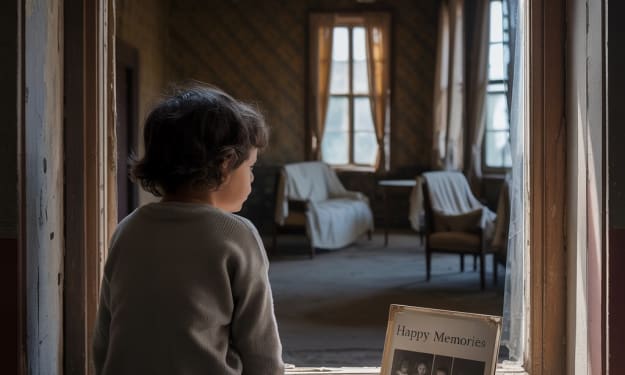
In a dimly lit orphanage nestled at the edge of a quiet town, eight-year-old Ayaan stared out of a cracked window, his small fingers tracing the fog on the glass. The world outside was cold, but not colder than the silence within. The walls of St. Mercy’s Home for Children had long forgotten the sound of laughter. They only echoed footsteps, whispered sobs, and the occasional scolding of Miss D'Souza, the matron with tired eyes and a heart guarded by years of pain. Ayaan had no memory of his parents. He only had a faded photograph: a woman in a yellow dress holding a baby with a smile that didn't reach her eyes. On the back, in shaky handwriting, was a name: Ayaan – born of love. That one line was the only anchor he had to a life before the orphanage. Each day began with chores—washing dishes, folding laundry, scrubbing floors. The older children, hardened by time and rejection, kept to themselves. Ayaan, younger and quieter, often sat alone during meals, watching the door, hoping someone would come. Hoping for a family. On Sundays, potential adoptive parents would visit. The children would dress in their best clothes, recite poems, and force smiles that had grown tired. But Ayaan, with his thin frame and shy eyes, was always overlooked. One by one, his friends left. Some returned, unable to adjust. Others vanished from memory, as though they’d never existed. Years passed. At fifteen, Ayaan had grown tall and thoughtful. He no longer looked out the window with hope. He had traded dreams for books, finding solace in stories of warriors, inventors, and poets. His favorite was a tattered copy of The Little Prince, given to him by an old volunteer. “You’re like him,” she’d said. “Alone, but full of wonder.” One evening, while helping clean the attic, Ayaan stumbled upon an old trunk filled with letters. They were unsent notes written by children over the decades—pleas to unknown parents, birthday wishes, even complaints about the food. Among them was one addressed to My future self. It was written by a boy named Ravi, once a resident, now long gone. "Dear me," it read, "If you’re reading this, I hope you’ve found peace. I hope you know it’s okay to cry, to be angry, but never forget to hope. Hope is the only thing they can’t take from us." That letter sparked something in Ayaan. He began writing, pouring his thoughts into journals. He wrote about loneliness, about longing, about love. Miss D’Souza, noticing the change, encouraged him to keep going. “Your words,” she said once, “they make this place a little warmer.” At seventeen, Ayaan graduated with top marks. Universities were out of reach financially, but he earned a scholarship for his essays on social justice. One of his pieces, titled The Unseen Children, was published in a local newspaper, catching the attention of a social worker named Rhea. Rhea had grown up in foster care. She saw in Ayaan a reflection of herself. She reached out, not to offer adoption—he was nearly an adult—but to be a mentor, a guide. For the first time, Ayaan had someone who asked about his day, celebrated his wins, and reminded him of his worth. Through Rhea, Ayaan met other orphans and foster youth. He began speaking at events, sharing his story, advocating for reforms in the child welfare system. His past, once a source of shame, became his strength. He wasn’t just surviving anymore. He was shaping a future—not just for himself, but for countless others. At twenty-five, Ayaan published his first book: Echoes of the Unheard. It was a memoir interwoven with poetry, letters from the orphanage, and stories of the forgotten. The book stirred hearts, opened eyes, and inspired change. Proceeds went toward building a new, child-centric home—not an orphanage, but a sanctuary—called Ravi’s Hope, named after the letter that saved him. And every evening, in his quiet apartment, Ayaan would light a candle by the window. A small act of remembrance. For the boy who waited by the glass, and for all the others still waiting.
By Muhammad Ali about a year ago in Journal