how to
Learn how to reach career nirvana; Journal is your one stop shop for advice about all things workplace, productivity and job success.
Crypto Lost Recovery 2025: Expert Answers to 25 Crucial Questions
Did you just lose crypto, or was it stolen? In 2025, the line between bad luck and cybercrime is razor-thin. One moment you're chasing gains in DeFi, NFTs, or staking protocols. Next, your tokens vanish, the platform disappears, and the support chat goes permanently offline.
By Kiran Buttabout a year ago in Journal
Crypto Funds Recovery That Truly Works (2025) See How?
Crypto investors can lose access to their assets if they become victims of scams or forget the keys to their crypto wallets. Legit crypto recovery services assist clients with retrieving their assets. They deploy professional blockchain analysis tools to track the movement of crypto and help investors reclaim lost funds. However, many people face difficulties finding legitimate services with a proven track record. In this guide, we will explore how Broker Complaint Alert (BCA) deploys the best practices to help its clients recover their holdings.
By NorTech Advertisingabout a year ago in Journal
Forecasting Trends in Costa Rica Gaming Licenses
In the dynamic world of online gaming, the choice of jurisdiction for establishing operations is pivotal. Costa Rica, while unique in its approach to "licensing," continues to be a significant hub, particularly for startups and operators seeking a flexible, cost-effective entry point. Unlike traditional regulatory bodies that issue explicit gambling licenses, Costa Rica's framework relies on a "data processing license"-a general commercial permit that allows companies to conduct international online gaming activities. This guide explores the current landscape and forecasts key trends shaping the future of the Costa Rica gaming license environment.
By Susan Scavaabout a year ago in Journal
Pi Network: Completion of Step 3 (2FA) Now Mandatory for Mainnet Migration
Overview (as of July 2025) 0-1As part of its migration to the Open Mainnet, Pi Network is enforcing Step 3 of its Mainnet Checklist—Two‑Factor Authentication (2FA) for all Pioneer wallets. The Pi Core Team, including co-founder Dr. Chengdiao Fan, recently issued urgent reminders to Pioneers who have not completed this critical security step .
By Engr. Mansoor Ahmadabout a year ago in Journal
The Hidden Cost of Convenience: How Technology is Reshaping Human Behavior
In just a few decades, technology has evolved from a helpful tool into a dominant force shaping how we think, interact, and function in society. We’ve come to expect speed, accessibility, and efficiency in almost every aspect of life—from ordering food to finding love, from navigating cities to managing finances. While these advancements have brought undeniable convenience, they have also triggered a fundamental shift in human behavior—often in ways we don’t fully understand or acknowledge. The Allure of Instant Gratification One of the most profound changes technology has brought is our reliance on instant gratification. With just a few taps on a screen, we can stream any movie, message anyone around the world, or receive groceries at our doorstep. The reward is immediate, and over time, we’ve become conditioned to expect it. This expectation is changing how we approach everyday life. Patience, once considered a virtue, is now a rare commodity. Studies have shown that people today are less willing to wait even seconds for a website to load or for a reply to a message. The rapid pace of digital feedback has trained our brains to crave quick responses and constant stimulation, reducing our ability to focus for long periods or engage deeply with complex tasks. The Rise of Digital Dependency Convenience has a darker side. As we lean more on technology to simplify our lives, we also risk becoming overly dependent on it. According to a 2023 Pew Research study, over 80% of adults in the U.S. say they couldn’t go a day without their smartphones. While these devices help us stay connected and organized, they also function as pacifiers for boredom, anxiety, and loneliness. Many people now struggle with digital dependency, often without realizing it. Social media apps are designed to exploit the brain’s dopamine system, rewarding us with likes and comments that keep us coming back. Algorithms learn our preferences and serve us content that’s emotionally engaging, even addictive. Over time, this can lead to compulsive scrolling, disrupted sleep, and a heightened sense of comparison and inadequacy. Social Isolation in a Hyper-Connected World Ironically, while technology connects us globally, it also contributes to a sense of isolation. Social interactions are increasingly mediated through screens, replacing in-person conversations with text messages, video calls, and emojis. Though these tools can be useful, they often lack the depth, nuance, and emotional richness of face-to-face communication. Younger generations are particularly affected. Many Gen Z individuals report feeling lonelier and more anxious than any previous generation, despite being the most digitally connected. Mental health professionals warn that constant exposure to curated online personas can distort our self-image and reduce real-world social confidence. Economic Shifts and Job Displacement Technology isn’t just reshaping personal lives—it’s transforming the economy. Automation and artificial intelligence are streamlining industries, boosting productivity, and eliminating the need for many traditional jobs. While this efficiency lowers costs for consumers and increases profits for companies, it also leaves behind a growing population of workers struggling to adapt to a rapidly changing labor market. Jobs in retail, transportation, customer service, and even journalism are being automated or replaced by AI. Those without digital skills risk falling behind, widening the socioeconomic divide. The gig economy, powered by apps and platforms, has offered new opportunities, but often without the protections and stability of traditional employment. Attention as Currency In the digital age, your attention is one of the most valuable commodities. Platforms like TikTok, YouTube, and Instagram monetize your engagement by selling it to advertisers. The longer you stay on an app, the more profitable you become—not because the content serves your well-being, but because it captures your time. This has led to a digital environment optimized for distraction. Notifications, autoplay features, infinite scrolls, and targeted ads all compete for your attention. As a result, we’re seeing a decline in sustained concentration and a rise in attention-related disorders, especially among younger users. What Can Be Done? Despite the challenges, it’s not all doom and gloom. Technology, when used intentionally, can enrich our lives. It’s helped us solve global problems, stay connected during crises, and learn more than ever before. The key lies in balance and conscious engagement. Here are a few ways to regain control: Set boundaries with your devices: Turn off non-essential notifications and create tech-free zones in your home. Prioritize deep work: Use tools like the Pomodoro technique to focus on important tasks without distractions. Cultivate real-world relationships: Make time for face-to-face interactions, which are essential for emotional health. Educate yourself and others: Understand how platforms are designed to keep you engaged and learn to spot manipulative features. Support ethical tech: Advocate for more transparent, human-centered technology design that respects users’ time and privacy. Conclusion The convenience technology offers is undeniable—but it comes at a cost. As we move deeper into the digital age, we must ask ourselves: Are we using technology, or is it using us? By becoming more aware of the ways our behavior is being reshaped, we can begin to take back control, fostering a healthier relationship with the tools meant to improve our lives.
By Azmat Roman ✨about a year ago in Journal
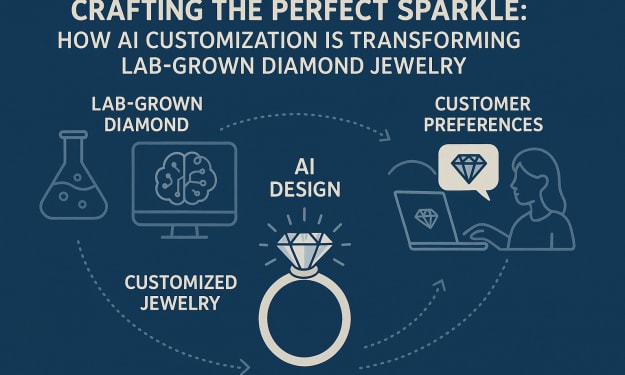
Crafting the Perfect Sparkle: How AI Customization is Transforming Lab-Grown Diamond Jewelry
The world of jewelry has always been a perfect blend of artistry and innovation. Over the years, technology has steadily reshaped how beautiful pieces are crafted and customized. Today, one of the most exciting advances comes from the fusion of lab-grown diamonds and artificial intelligence (AI). Lab-grown diamonds, also known as lab-created diamonds, have surged in popularity due to their ethical appeal and stunning quality. Now, with AI customization entering the scene, the process of designing and creating diamond jewelry is more personalized and precise than ever before. This article explores how AI is revolutionizing lab-grown diamond jewelry, enhancing creativity, efficiency, and consumer satisfaction.
By Emily Johnabout a year ago in Journal
How to Drive Traffic Faster with AI (Even If You’re Just Starting Out)
Summary: Driving consistent traffic used to mean hours of content creation, posting across platforms, and praying for clicks. Now? You can drive traffic faster with AI using a smarter, more scalable system. In this article, I’ll show you exactly how I use AI to get seen, get clicks, and get sales—without burning out.
By Marie Groveabout a year ago in Journal
10 Game-Changing FunWithFeet Alternatives for Savvy Sellers!
FunWithFeet has indeed carved out a niche in the bustling world of online feet picture-selling platforms and successfully managed to attract buyers and sellers with similar mindsets. However, the demand for feet-related content is growing by leaps and bounds, and to cater to this niche market, several alternatives have also stepped into the game.
By pradeep kumarabout a year ago in Journal
The Business Benefits of Switching to Electronic Invoicing Solutions
Paper invoicing simply won't cut it in today's fast-moving digital environment; businesses need solutions that work smarter, save money, and speed things up more effectively than before. That is where electronic invoicing solutions come into play - more companies, both small and large, are opting for electronic invoicing to streamline billing processes more easily and save costs by automating billing procedures with digital methods like electronic invoicing solutions. If your company still relies on manual invoices, it might be time to consider exploring its benefits by switching over completely to digital invoicing processes now!
By HubBroker ApS - EDI Software Solutions Providerabout a year ago in Journal
Signs Your Roof Needs Urgent Repair in Texas: What Homeowners Should Watch For
Your roof isn't just a protective layer — it’s the first shield standing between your home and Texas' intense weather. Whether it’s extreme heat, hailstorms, or heavy winds, your roof takes the brunt of it all. And when damage starts to show — even in small ways — ignoring it can quickly lead to more costly repairs and long-term issues.
By Praveen Palkhadeabout a year ago in Journal