history
Key historic events throughout the ages in relation to business, work, corporate figures and moguls.
Why Sole Traders Must Priorities Self Assessment Tax Returns
In the realm of small business and entrepreneurship, sole traders form the backbone of the UK economy. Whether operating as a freelance graphic designer, a local tradesperson, or a digital content creator, being a sole trader brings both independence and responsibility. Chief among these responsibilities is the legal obligation to submit a Self Assessment Tax Return annually.
By Self Assessment Tax Returnabout a year ago in Journal
Mossad Exposed: The Greatest Successes and Failures of Israel’s Elite Spy Agency
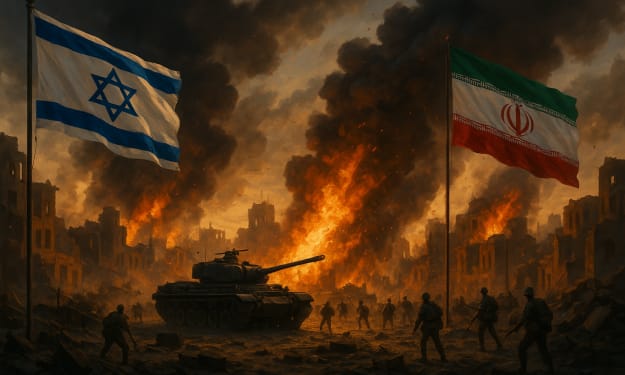
Since the beginning of Israeli attacks on Iran, Israeli aircraft have targeted Iranian nuclear facilities, military installations, and private residences, most of which are located in the western part of the country and around the capital, Tehran. Although these attacks were carried out from the air, it is suspected that Israel’s intelligence agency Mossad played a significant role in identifying these targets and assisting in ground operations. It is believed that Mossad agents used drones smuggled into the country to target Iran's remaining air defense systems. Iranian officials have previously admitted that they suspect the presence of Israeli intelligence collaborators within their security forces. Since the start of Israeli strikes on June 13, a large number of key Iranian military officials and nuclear scientists have been successfully targeted, indicating that Israel had precise intelligence on their whereabouts. Notable Successful and Failed Operations by Mossad Assassination of Hamas Leader Ismail Haniyeh Ismail Haniyeh, the political head of Hamas, was killed on July 31, 2024, while staying at a guesthouse in Tehran. Israel initially did not take responsibility for the killing, but months later, Israeli Defense Minister Yoav Gallant admitted that Israel was behind the assassination. However, the exact circumstances of Haniyeh’s death remain unclear. A senior Hamas official, Khalil al-Hayya, in a press conference, cited eyewitnesses claiming that Haniyeh was directly targeted by a missile. However, a report in the New York Times, citing seven officials, claimed that Haniyeh was killed by a bomb planted two months earlier in the building where he was staying. Haniyeh was one of the senior Hamas leaders killed by Israel after the group’s October 7, 2023, attack on southern Israel. Other Hamas leaders targeted include Yahya Sinwar, his brother Mohammad, military wing chief Mohammad Deif, and his deputy Marwan Issa. ‘Pager’ Attacks on Hezbollah Operatives On September 17, 2024, thousands of pagers exploded simultaneously across Lebanon, especially in areas with strong Hezbollah influence. These blasts injured and killed not only the users but also those nearby, causing widespread panic. The next day, walkie-talkies also exploded, causing hundreds more injuries and deaths. At the time, clashes were ongoing between Israel and Hezbollah, which had intensified after Hezbollah launched rockets at Israeli positions a day after Hamas’s October 7 attacks. Two months later, the Israeli Prime Minister admitted Mossad had embedded explosive devices in walkie-talkie batteries. These devices were deadly because walkie-talkies are usually kept close to the heart in the chest pockets of protective vests. These explosions triggered a wave of fear across Lebanon as many occurred in public places like markets. Hospitals were overwhelmed with injured people, many of whom were left disabled. Volker Türk, head of the UN Human Rights Office, condemned the attack as a war crime. Assassination of Mohsen Fakhrizadeh In November 2020, Iran’s top nuclear scientist Mohsen Fakhrizadeh was assassinated east of Tehran. He was killed using a remote-controlled machine gun assisted by artificial intelligence. In April 2018, Israeli PM Netanyahu had presented folders of documents allegedly stolen by Mossad during a raid on a storage facility just 30 kilometers from Tehran. These documents supposedly revealed Iran’s covert nuclear weapons program and highlighted Fakhrizadeh’s central role. Iran had earlier accused Israel of killing four other nuclear scientists between 2010 and 2012. Assassination of Mahmoud al-Mabhouh in a Dubai Hotel In 2010, senior Hamas military figure Mahmoud al-Mabhouh was killed in a Dubai hotel. Initially believed to be a natural death, Dubai police later used CCTV footage to identify the hit squad. It was revealed he had been electrocuted and then strangled. Though Mossad was suspected, Israel neither confirmed nor denied involvement, maintaining its policy of “strategic ambiguity.” Yahya Ayyash and the Exploding Phone In 1996, Mossad assassinated Yahya Abdul-Latif Ayyash, a key Hamas bombmaker, using a Motorola Alpha mobile phone rigged with 50 grams of explosives. Ayyash was known for his bomb-making skills and planning complex attacks. He was high on Israel’s most-wanted list. In 2019, Israel declassified details of the operation, and a TV station aired his final conversation with his father before the explosion. This highlighted Mossad’s use of advanced technology in targeted killings. Operation Brothers In the early 1980s, under orders from the Israeli Prime Minister, Mossad launched a deceptive operation to smuggle 7,000 Ethiopian Jews into Israel via Sudan. A fake diving resort was set up on the Sudanese coast—Sudan being a member of the Arab League and hostile to Israel. By day, Mossad agents posed as resort staff. By night, they smuggled Ethiopian Jews who had walked across the border. They were then flown or shipped to Israel. The operation lasted five years and was completed before Sudan discovered it. The 'Holocaust': Capture of Nazi Officer In 1960, Mossad abducted former Nazi officer Adolf Eichmann from Argentina in one of its most historic intelligence operations. Eichmann was responsible for orchestrating the Holocaust, in which six million Jews were killed during WWII. After escaping post-war justice, Eichmann hid in Argentina. In 1957, Fritz Bauer, Chief Prosecutor of West Germany’s Hesse state, informed Mossad of Eichmann’s whereabouts. A 14-agent Mossad team located, kidnapped, and transported him to Israel, where he was tried and executed. Operation Entebbe Israel’s Entebbe operation in Uganda is considered one of its most successful military missions, based on Mossad intelligence. A passenger plane from Tel Aviv to Paris via Athens was hijacked by members of the Popular Front for the Liberation of Palestine and two Germans. The plane was diverted to Uganda, where 103 Israeli citizens were among 250 hostages. Israeli commandos stormed the airport and rescued the hostages. Three hostages and Yonatan Netanyahu—brother of current PM Benjamin Netanyahu—were killed in the mission. Several Ugandan soldiers were also killed. Revenge for the Munich Olympics In 1972, the Palestinian group Black September attacked the Israeli Olympic team in Munich, killing two and taking nine hostages—all of whom later died during a failed rescue. In response, Mossad launched a revenge campaign targeting several PLO members, including Mahmoud Hamshari, who was injured by a bomb hidden in his phone in Paris and later died from his injuries. Mossad's Failures October 7 Hamas Attack On October 7, 2023, Hamas launched a surprise attack near Gaza, shocking the world. Analysts regard Mossad’s failure to foresee the attack as a major intelligence lapse. According to Israeli officials, the attack resulted in around 1,200 deaths and 251 hostages taken to Gaza. In retaliation, Israel has focused its military efforts on Gaza’s civilian population rather than just Hamas, resulting in over 57,000 civilian deaths—mostly women and children. Yom Kippur War Nearly 50 years before the Hamas attack, Israel faced another surprise assault it was unprepared for. On October 6, 1973, Egypt and Syria launched a coordinated attack on Israel during Yom Kippur, the Jewish Day of Atonement. Egyptian forces crossed the Suez Canal with little resistance, and Syrian forces advanced on the Golan Heights. The Soviet Union supported Egypt and Syria, while the US rushed aid to Israel. Though Israel eventually repelled the forces, the war ended on October 25 after a UN ceasefire resolution was passed. When Israel Had to Save a Hamas Leader’s Life In 1997, Mossad attempted to assassinate Hamas political leader Khaled Meshaal in Jordan using a poison injection, but the operation failed when an agent was caught. Israel was forced to provide the antidote to save Meshaal’s life. Mossad chief Danny Yatom flew to Jordan to administer the antidote. The incident seriously damaged Israel-Jordan relations. Failed Assassination Attempt on Mahmoud al-Zahar In 2003, Israel carried out an airstrike on Hamas leader Mahmoud al-Zahar’s home in Gaza City. Though al-Zahar survived, his wife, son Khaled, and several others were killed. The complete destruction of his home highlighted the risks of military operations in densely populated areas. Lavon Affair In 1954, Egyptian authorities foiled a secret Israeli operation codenamed "Susannah." The plan was to plant bombs in American and British installations in Egypt, to convince the UK to maintain its military presence in the Suez Canal region. The failed operation caused a diplomatic crisis, leading to what became known as the "Lavon Affair," named after Israeli Defense Minister Pinhas Lavon, who was believed to be involved in planning the operation.
By Real contentabout a year ago in Journal
Plane Accident at 17,000 Feet
In the world of aviation, few incidents are as terrifying — or as miraculous — as what occurred aboard British Airways Flight 5390. On June 10, 1990, a routine flight from Birmingham, England, to Málaga, Spain, turned into a heart-stopping ordeal when the aircraft’s cockpit window suddenly blew out at 17,300 feet. The resulting decompression violently sucked the pilot halfway out of the aircraft, leaving him clinging to life — quite literally — as a flight attendant held on to his legs for over 20 minutes while the co-pilot fought to land the plane safely. The aircraft, a BAC One-Eleven, had taken off normally, with Captain Tim Lancaster at the controls and First Officer Alastair Atchison beside him. The weather was clear, the passengers were calm, and there were no indications of trouble ahead. But approximately 13 minutes into the flight, a loud bang shattered the routine. The left windshield panel of the cockpit suddenly separated from the aircraft. In an instant, the cockpit experienced explosive decompression. Captain Lancaster, who had just removed his shoulder harness, was pulled out of his seat by the force of the rushing air and partially ejected through the hole where the windshield had been. His body slammed against the exterior of the aircraft, pinned by the powerful air pressure. His feet caught on the flight controls, and his torso was bent backward, exposed to the freezing winds at 17,000 feet. Chaos erupted in the cockpit. Loose papers and objects were flying around, alarms were blaring, and communication was impossible due to the deafening wind. But amidst the panic, First Officer Atchison reacted with incredible composure. He immediately took control of the aircraft, disengaged the autopilot, and began an emergency descent to a lower altitude where the air pressure was higher and the temperature less brutal. Flight attendant Nigel Ogden, who had just entered the cockpit moments before the incident, saw the captain’s body being sucked out and, without hesitation, lunged forward to grab his legs. Ogden held on with all his strength, even as the freezing air numbed his hands and the captain’s body battered the fuselage. Another crew member helped secure Lancaster’s legs to the cockpit controls using seat belts, desperately trying to keep him from being lost entirely. Atchison, flying alone under immense pressure, communicated with air traffic control and diverted the flight to Southampton Airport. The situation was critical. The aircraft was descending fast, the captain’s condition was unknown, and there was no guarantee they could keep him from slipping out completely. Yet the cabin crew and co-pilot worked together with astonishing courage and efficiency. For nearly 20 minutes, Lancaster remained stuck in the cockpit window, unconscious and exposed to violent winds and sub-zero temperatures. The pressure had caused his eyes to bulge and his body to turn blue. Most assumed he was already dead. Still, the crew refused to let go. Amazingly, when the plane finally landed safely in Southampton, emergency services rushed aboard expecting to retrieve a corpse. Instead, they found Captain Tim Lancaster alive. He had suffered frostbite, multiple fractures to his arms and hands, and severe bruising — but he survived. After a lengthy recovery, he returned to flying commercial aircraft. The investigation that followed revealed that the accident had been caused by human error during maintenance. The bolts used to secure the windshield had been too short and of the wrong diameter. As a result, the pressure differential at altitude caused the panel to blow out. The incident led to a major review of aircraft maintenance procedures and highlighted the critical importance of attention to detail in aviation engineering. This incredible survival story is often cited as an example of how professionalism, training, and sheer human determination can overcome even the most horrifying of scenarios. The cabin crew’s refusal to let go of their captain, despite thinking he was already dead, exemplifies the kind of selfless courage that often goes unnoticed in daily life. Atchison’s calm under pressure was instrumental in saving not only the life of the captain but also all 81 people on board. British Airways Flight 5390 is more than a story of a freak accident. It is a testament to human resilience, quick thinking, and the strength of teamwork in the face of overwhelming odds. The haunting image of a man hanging halfway out of a jet at 17,000 feet, kept alive by the grip of his colleagues, continues to captivate and inspire those who hear it. More than three decades later, the incident remains one of the most extraordinary and improbable survival stories in the history of flight — a reminder that even when the sky seems to fall apart, bravery can keep us grounded.
By DigitalAddiabout a year ago in Journal
The June Flashpoint: Inside the Sudden Israel-Iran War That Shook the World
The First Strike: How It Began The morning of June 7, 2025, began like any other summer day in the Middle East—dry, tense, and uncertain. But by 10:40 a.m., that fragile balance was broken when Israeli F-35 fighter jets penetrated Iranian airspace and struck a classified facility near Natanz, long believed to be part of Iran’s underground nuclear enrichment network. According to Israeli officials, this was not a declaration of war—but a “preventive measure.” Intelligence had revealed that Iran had begun enriching uranium beyond the previously agreed thresholds. Mossad, Israel’s intelligence agency, reportedly presented evidence that weaponization of enriched material was “weeks, not months” away. Iranian leadership, led by Supreme Leader Ali Khamenei and President Mohammad Bagher Ghalibaf, viewed the strike as an open act of war. By nightfall, Iran retaliated with a missile barrage targeting Israeli military positions in the Golan Heights and strategic command centers in Tel Aviv’s outskirts. Civilians across both nations took cover in bomb shelters. Social media lit up with images of fireballs, screams, and prayers. What had been rumors of escalation suddenly became a horrifying reality. --- The 72 Hours of Fire Within three days, over 3,000 missile exchanges had occurred between Iran and Israel. Israel’s Iron Dome and David’s Sling systems intercepted many incoming warheads, but several missiles still penetrated, hitting residential blocks in Haifa, Ashkelon, and Be’er Sheva, resulting in dozens of civilian deaths. Iran’s air defense systems were less effective against Israel’s air superiority. Israeli jets struck sites near Tehran, Qom, and Esfahan, with high-resolution footage confirming damage to Iranian missile launch facilities and radar installations. By June 9, the death toll had surpassed 850, with more than 4,000 wounded. Hospitals in both nations were overwhelmed. Iran accused Israel of violating international law by striking civilian factories “mistakenly believed” to be munitions depots. Israel responded by revealing satellite footage showing truckloads of missiles being stored near public schools and clinics—an accusation Iran denied. The region teetered on the edge of full collapse. Oil prices soared above $170 per barrel, triggering panic in global markets. Airlines suspended all flights over the region, and embassies in Tel Aviv, Tehran, and Baghdad closed their doors. Then, something unexpected happened. --- Trump’s Unofficial Power Play On the evening of June 9, former U.S. President Donald J. Trump, who had largely stayed out of the public eye following his announcement to run again in 2028, held a surprise press conference at Mar-a-Lago. > “We’re watching World War III begin while Biden sleeps in the basement,” Trump said. “I stopped war once. I will stop it again—even if I have to do it myself.” Within hours, insiders revealed that Trump had begun placing private calls to key contacts in the Middle East: Israeli opposition leaders, Iranian intermediaries in Oman and Iraq, and Gulf royal family members. Leveraging his prior relationships from the Abraham Accords, he began constructing what media would later call a "shadow diplomacy" effort. Despite not holding office, Trump had influence—and Iran listened. His emissaries, including Jared Kushner and retired General Michael Flynn, helped broker communication between the two sides. By June 10, under mounting pressure from international allies, the State of Qatar and the Omani Foreign Office agreed to host backchannel discussions. Trump’s team facilitated the agenda, and within 36 hours, a conditional ceasefire was agreed upon. --- Behind the Ceasefire Curtain The ceasefire, which came into effect on June 12 at 4:00 a.m. (GMT+3), was not a typical treaty. It was quiet, unpublicized, and delicate. Key terms (unofficial but confirmed by various sources): 1. Iran agreed to halt uranium enrichment beyond 60% for 6 months and grant conditional access to international inspectors. 2. Israel paused all offensive operations and agreed not to conduct further targeted assassinations for the same 6-month window. 3. Humanitarian aid corridors were established in both nations, managed by Turkish and Qatari Red Crescent teams. 4. Trump’s team was guaranteed a regional summit, with representation from Saudi Arabia, UAE, Jordan, and Egypt to discuss new regional defense frameworks. The ceasefire was a diplomatic miracle—not because of government-led negotiations, but because of Trump’s unconventional channels. Even critics of Trump had to admit: the bloodshed had stopped—for now. --- The Global Impact The six-day war of June 2025 had lasting consequences beyond the battlefield. Oil Crisis: With the Strait of Hormuz nearly shut, and over 20% of global oil passing through it, Western economies trembled. Gasoline hit $8 per gallon in California, and Europe's inflation soared again. Shift in Alliances: The UAE and Bahrain temporarily suspended diplomatic talks with Israel. Jordan condemned the airstrikes and demanded a reevaluation of its peace treaty. Asia’s Involvement: China, heavily reliant on Iranian oil, increased naval activity in the Gulf. India offered to mediate, while Russia supplied cyberdefense tools to Tehran—quietly but deliberately. The U.S. in Chaos: Biden's team found themselves sidelined, forced to respond to diplomatic breakthroughs led by a man who wasn’t even in office. U.S. media erupted with debate. Was Trump playing hero—or meddling in foreign policy unlawfully? Regardless of opinion, one fact remained: the war stopped because he stepped in. --- The Middle East—What Comes Next? The ceasefire holds, but the ground beneath it is cracking. Iran’s leadership emerged more united and emboldened. While its economy took a hit, its resistance image in the Muslim world strengthened. The Revolutionary Guard gained more domestic influence. Israel, on the other hand, now faces internal pressure. Many questioned whether the preemptive strike on Natanz was worth the retaliation. Prime Minister Benjamin Netanyahu, though defiant, faces increasing pushback from moderates who claim the war was rushed and uncoordinated. The region now balances on four questions: 1. Will Iran resume its nuclear program in secret? 2. Will Israel strike again if enrichment exceeds limits? 3. Can Trump’s promised summit lead to permanent de-escalation? 4. Will the U.S. government reclaim leadership in the region—or remain divided? The international community watches closely. The next miscalculation could make June 2025 look like a warm-up act. --- Final Thoughts What happened in June wasn’t just a war—it was a warning. That a single decision, a single strike, could plunge the world into chaos. It exposed the fragility of diplomacy, the power of backchannel influence, and the unpredictable role private citizens can play in international security. Donald Trump, love him or hate him, managed to halt the bloodshed—not by official authority, but by personal legacy and real-world connections. The world waits to see what happens next. But one thing is clear: The Israel-Iran war of June 2025 changed everything.
By Saad Iqbalabout a year ago in Journal
The Middle East Drama. Content Warning.
In a region riddled with military tension and geopolitical noise, recent events appear more like a carefully staged drama than an actual war. One of the latest acts in this political theatre was Iran’s strike on the U.S. Al-Udeid Airbase in Qatar—an incident that surprisingly failed to rattle global markets. This raises a critical question: Are we truly on the brink of war, or are we merely watching a well-rehearsed performance crafted behind closed doors?
By ayoube elbogaabout a year ago in Journal
Why Coworking Etiquette Matters: A Quick Guide
In the ever-evolving landscape of professional workspaces, coworking has emerged as a popular choice for freelancers, entrepreneurs, and remote workers alike. Coworking spaces offer a vibrant atmosphere, networking opportunities, and a collaborative environment conducive to productivity. However, amidst the flexibility and creativity fostered by these shared workspaces, one crucial aspect often overlooked is coworking etiquette.
By Munnazir Zarinabout a year ago in Journal
The Burning Page of History
History Would’ve Burned This Page In the year 1539, the Abbey of Saint Dunstan stood quietly in the shadowed woods of Northumbria, its stone walls soaked with centuries of whispered prayers and secret knowledge. While most abbeys copied sacred texts, Saint Dunstan’s scriptorium harbored a darker purpose: it preserved banned writings—books condemned by kings, burned by bishops, and erased by time.
By Abdul Raufabout a year ago in Journal