history
Key historic events throughout the ages in relation to business, work, corporate figures and moguls.
Curtain Care in Clapham: How Often Should You Have Them Professionally Cleaned?. AI-Generated.
Curtains may seem like passive elements of a room, but they are constantly at work. They filter sunlight, shield your privacy, and soften the look of interiors. At the same time, they quietly absorb dust, odors, and airborne particles every day. Over months, this build-up not only diminishes their elegance but also affects the air you breathe. For homeowners and businesses alike, one pressing question emerges: how frequently should curtains be cleaned? The answer depends on fabric type, lifestyle habits, and environmental surroundings. Turning to a Curtain Cleaning Service in Clapham
By Munnazir Zarinabout a year ago in Journal
“Fall in your mind, and you fall everywhere.”
That’s not just a poetic line — it’s a diagnosis. In a world that listens with its eyes before it listens to your words, how you carry yourself tells the entire story of who you are — or at least, who you believe you are. Every step, breath, glance, and stillness is a signal. A broadcast.
By Randolphe Tanoguemabout a year ago in Journal
The Difference Between Saving in a Bank and Keeping Cash at Home
he Difference Between Saving in a Bank and Keeping Cash at Home Ali was seventeen when his uncle handed him an envelope with two hundred dollars inside. His uncle said, “This is yours. Do not waste it.” Ali felt proud. For the first time, he had money that belonged only to him. He faced a choice. Should he put the money in a bank, or should he keep it in his desk drawer? At first, the desk felt easier. He could see the money whenever he wanted. He could touch it. But he also felt uneasy. What if someone opened the drawer? What if he lost it? That small moment led Ali to learn the difference between saving in a bank and keeping cash at home. His story shows why the choice matters. Keeping Cash at Home Ali’s friend Karim always kept his money in a shoebox under his bed. He said it was safer because he did not trust banks. Karim explained that his parents once had problems with fees and lost money to charges they did not understand. For him, the shoebox was simple. At first, Ali thought Karim’s method had benefits: No paperwork. Money always within reach. No waiting in line or learning about accounts. But over time, Ali noticed the problems too. Karim’s younger brother once borrowed twenty dollars from the box without asking. Another time, their house lost power for three days during a storm, and Karim worried someone might break in when it was dark. Most of all, Ali realized that Karim’s money never grew. It stayed the same amount every month, unless he added more. Keeping cash at home protects you from bank fees, but it also keeps your money frozen. It does not earn interest. It can be stolen, lost in a fire, or even forgotten. Saving in a Bank Ali decided to open a savings account with his uncle’s help. At the bank, a worker explained how the account functioned. Ali’s money would stay safe. The bank recorded every deposit. The government insured deposits up to a limit, which meant that even if the bank failed, his money would still be protected. Ali noticed several advantages: His money earned interest. Even if the rate was small, it was more than zero. The bank gave him a record of his balance. He always knew how much he had. He could not spend it impulsively because it was not lying in his drawer. He built a financial history. Later, this would help him if he wanted a loan. The downsides were real as well. Sometimes banks charged fees if the balance dropped too low. Withdrawals were not instant if he needed cash late at night. But the benefits outweighed the problems. The Real Difference The difference between saving in a bank and keeping cash at home is not only about safety. It is about growth and discipline. Cash at home gives you access but no growth. It makes you feel in control, but it also tempts you to spend quickly. In Ali’s case, when he kept twenty dollars in his drawer, he often used it for snacks or games. He saw it as “extra.” Money in the bank feels less like pocket change and more like a step toward a goal. Ali saved for a laptop. Each time he deposited part of his paycheck, the balance grew. Seeing that number climb gave him motivation. After six months, he bought the laptop with money that stayed safe until he needed it. Why This Matters In many cultures, people still keep savings at home. They trust what they see. But the risks are high. Fires, floods, or theft erase everything instantly. A study by the Federal Reserve showed that in the United States, households with no bank account spend more on services like check-cashing or money orders. This reduces the value of their money over time. Banks, even with their flaws, provide a secure system. They allow your money to work for you. Even small interest, combined with habits of saving, leads to long-term growth. Ali’s Lesson One year later, Ali had over one thousand dollars in his bank account. He also still kept some cash at home, about fifty dollars, for emergencies. That balance felt right. The cash helped in quick situations, but the bank savings gave him peace of mind. Ali told Karim, “Keeping all your money in a shoebox is like planting seeds on a stone. They stay there, but they never grow. A bank is like putting the seeds in soil. Even if they grow slowly, at least they grow.” Karim thought about it. A few weeks later, he asked Ali to help him open his own account. Final Thought The difference between saving in a bank and keeping cash at home is about risk and reward. Cash at home gives access, but no protection or growth. A bank account adds structure, safety, and the chance to build a future. Ali’s choice showed that saving is not only about storing money. It is about using money in a way that protects it and prepares you for what comes next.
By Straylightabout a year ago in Journal
Renaissance Festival War Stories August 16/17, 2025
It is the beginning of another season of The Minnesota Renaissance Festival. This year marks my 10th season as a participant and our third season as The Sidequest Players. Let's do this! Here are some of opening weekend's favorite selected patron moments.
By Tinka Boudit She/Herabout a year ago in Journal
Big Sights & Sounds From Day 01 of The 4th Coronation Anniversary of the Olu of Warri
When the drums echoed across the creeks of the Niger Delta and the sound of trumpets pierced the skies above Ode-Itsekiri (Big Warri), you knew history was unfolding once again. On that day, thousands converged at the ancestral home of the Itsekiri people to celebrate a moment of pride, reverence, and cultural unity: the 4th Coronation Anniversary of His Majesty Ogiame Atuwatse III, CFR, The Olu of Warri.
By Omasanjuwa Ogharandukunabout a year ago in Journal
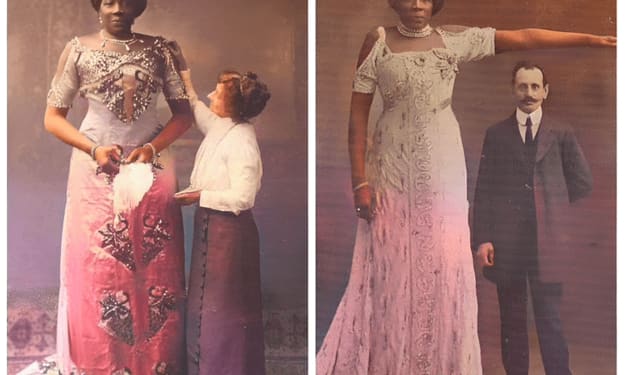
Ella Abomah Williams
The Woman Who Defied History History often celebrates kings, generals, and conquerors—but hidden between those pages are women whose strength and resilience broke barriers. Among them is Ella Abomah Williams, famously known as Mme Abomah, a towering figure both literally and figuratively.
By Omasanjuwa Ogharandukunabout a year ago in Journal
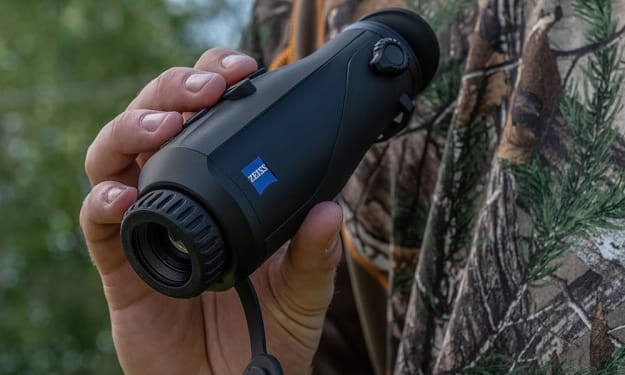
Seeing Beyond the Visible: A Complete Guide to Thermal Monoculars and Thermal Scopes
Introduction In recent years, advancements in imaging technology have allowed us to see the world in ways once thought impossible. Among these innovations, the thermal monocular and thermal scope have become indispensable tools—not just for hunters, but also for outdoor explorers, search-and-rescue teams, and even wildlife researchers. Unlike traditional optics that rely on visible light, thermal imaging devices detect heat signatures, offering vision in complete darkness, through smoke, fog, and other visual obstructions.
By charliesamuelabout a year ago in Journal
Who Really Built Vocal Media? The Genius of Malia Fisher Revealed
The Question No One Asks 🤔 Everyone knows Vocal Media as a platform where creators publish stories, essays, poems, and opinions for readers around the globe. But very few stop to ask the real question: who actually built it?
By Awais Qarni about a year ago in Journal
Starting a UK Business as a Non-Resident
The United Kingdom remains one of the most attractive places to start a business, offering a robust economy, a global business hub, and access to a broad customer base. For non-residents, the UK presents numerous opportunities for entrepreneurs to tap into its thriving markets. However, starting a business as a non-resident requires understanding the regulatory framework, the necessary steps, and the potential hurdles that might arise.
By cheap accountantabout a year ago in Journal
The Power of a Well-Organized Chart of Accounts. AI-Generated.
Every successful business requires a strong financial framework, and at the heart of this lies the Chart of Accounts (COA). Often referred to as the backbone of accounting, a well-organized COA simplifies financial management, ensures compliance, and provides critical insights into a company’s performance. Whether you're running a small startup or managing a large enterprise, mastering the COA is essential for long-term success.
By cheap accountantabout a year ago in Journal