history
Key historic events throughout the ages in relation to business, work, corporate figures and moguls.
New iPad Pro, 14-inch MacBook Pro, and Apple Vision Pro models are now available.
Technology moves fast. New devices arrive regularly, and they can change how people live and work. Tablets, laptops, and virtual reality tools are becoming common in offices, homes, and schools. These devices are not just tools—they influence how people think, create, and interact.
By Shakil Sorkar11 months ago in Journal
Apple has introduced Digital ID, a new feature for creating and presenting an ID in Apple Wallet
Many people carry a wallet everywhere they go. It holds cards, cash, and identification. For a long time, physical IDs like driver's licenses and state cards have been the standard way to prove who we are. Recently, people have started talking about the idea of storing identification on phones instead of only in wallets. This concept, which some call digital ID, is becoming more common in conversations about the future of daily life.
By Shakil Sorkar11 months ago in Journal
Why Formula 1 Is Becoming More Popular in the United States
Formula 1 has been a major sport in many parts of the world for decades, but in the United States, it has only recently started to gain serious attention. For a long time, many Americans focused on sports like football, basketball, and baseball. Racing existed here, but different leagues dominated the scene. Now, more people are discovering Formula 1, talking about it, and joining fan communities.
By Shakil Sorkar11 months ago in Journal
SpongeBob: Patty Pursuit 2 Is Coming to Apple Arcade
A new SpongeBob game is on the way, and fans are excited. It is called SpongeBob: Patty Pursuit 2, and it will be available on December 4 through Apple Arcade. The name sounds simple, but the idea is familiar to anyone who loves the show. SpongeBob is once again on a mission to protect the Krabby Patty formula, and this time, the adventure is bigger, brighter, and more playful.
By Shakil Sorkar11 months ago in Journal
The Journal Keeper
M Mehran The first time I saw the journal, it wasn’t because I was looking for it. I was looking for something far less poetic—my phone charger. But life is strange that way. It rarely gives you what you ask for, only what you need. It was tucked beneath a loose floorboard in my grandmother’s attic, wrapped in a faded blue scarf. The leather was cracked, the edges feathered like pages that had been turned too often. There was no title on the cover. Just a small silver key hanging from a fraying ribbon. I should have put it back. I should have respected the privacy of someone who no longer had the choice to defend it. But grief makes us curious and loneliness makes us brave. So I opened it. The first page stopped me cold. “If someone I love is reading this, it means the world has already taken more than it should.” I sat down slowly on the dusty wooden floor. Sunlight spilled through the attic window in thin gold lines, the kind that make everything feel suspended—air, dust, time, and your heartbeat. My grandmother, who I always knew as calm, proper, and impossibly patient, had written a journal that didn’t sound like her at all. --- Most people think journals are quiet things—kept between pages and never meant to be spoken aloud. But hers was a storm. She wrote about dreams she never chased because she was too busy raising children. About music she wanted to learn but never had the time for. About being seventeen and standing on a train platform with a suitcase she never got to use. And then I reached the line that made my throat tighten. “I hope someone in our family learns to live before life becomes something they remember instead of something they’re inside of.” I closed the journal for a moment. Not because I wanted to—but because suddenly, I couldn’t breathe. I had been living the exact opposite of what she was asking. My own life was a checklist: Wake up. Work. Scroll. Sleep. Repeat. My childhood sketchbooks were empty. My passport unstamped. My dreams postponed because “maybe next year” felt safer than “right now.” I didn’t expect a journal written thirty years before I was born to feel like it was written for me. --- The second time I opened it, I wasn’t alone. My mother had come into the attic looking for her old photo albums. Instead, she found me—cross-legged, tear-stained, and holding the last words of a woman she missed more than she admitted. She sat beside me, and for a long time we didn’t say anything. Finally, she whispered, “I didn’t know she wrote.” “She didn’t,” I said softly. “Not like this.” I handed her the journal, and she held it the way people hold fragile things—not because they might break, but because they already have. We spent the whole afternoon reading it together. Sometimes we laughed—my grandmother complaining about my grandfather’s habit of talking to the television. Sometimes my mother wiped tears before they fell, pretending she had dust in her eyes. But there was one entry none of us were prepared for. --- “If you ever feel lost, start keeping your own journal. Not the kind that records what you did, but the kind that reveals who you are.” She wrote that every person has two lives: The one they live publicly, and the one they write privately. And the second one—the written one—was the truer of the two. My grandmother had never said anything that bold out loud. She spoke softly, lived quietly, and left the room before anyone noticed she had been there. But here, in ink, she was loud and certain and awakened. I realized then that journals aren’t meant to store memories. They’re meant to release them. --- That night, after we finally came down from the attic, I did something I hadn’t done since I was twelve. I bought a journal. Not a digital one, not a notes app—an actual notebook with rough-cut pages and a spine that cracked when it opened for the first time. The page stared at me like a mirror. Blank. Honest. Patient. I didn’t write what I did that day. I wrote what I felt: That I was afraid of wasting my life. That I wanted to travel without waiting for permission. That I missed people I never said goodbye to properly. The pen moved slowly at first. Then faster. It felt like someone unclenched a fist inside my chest. I didn’t know that writing could feel like breathing. --- Weeks passed. My journal began filling with things I didn’t even know I believed—ideas, fears, tiny victories. I noticed small details again: the way rain sounds different on a Monday than on a Saturday. The taste of coffee when you aren’t drinking it in a hurry. My life didn’t suddenly become extraordinary—but it became mine. One evening, my mother knocked on my door. She was holding a journal of her own. “I thought,” she said awkwardly, “maybe it’s my turn.” And just like that, three generations were connected—not through blood, but through ink. --- Yesterday, I returned to my grandmother’s attic, the journal still wrapped in its blue scarf. I didn’t take it with me this time. Some stories aren’t meant to be carried. Some are meant to stay where they can keep teaching. But before I closed the floorboard, I added something inside the scarf: A letter. “I found your words. And I’m finally writing my own. Thank you for giving me a life I hadn’t started living yet.” I don’t know if anyone will ever find it. Maybe years from now, someone else will be searching for a phone charger and instead find a map back to themselves. Because that’s what journals are— Not a record of the past, but a doorway to the person we are still becoming.
By Muhammad Mehran11 months ago in Journal
Why Apple Podcasts Are Changing the Way We Listen
Podcasts are everywhere now. People listen while cooking, walking, commuting, or relaxing. Apple Podcasts has become one of the most popular ways to explore these audio stories. It gives listeners access to millions of shows on almost any topic you can imagine.
By Shakil Sorkar11 months ago in Journal
Apple Stores Win Awards for Design and Experience
Apple Stores are known around the world. They are more than places to buy phones, tablets, or computers. They are spaces where people learn, explore, and connect. Recently, many Apple Stores have won awards for their design, layout, and customer experience. These awards celebrate how the stores make shopping simple, calm, and inspiring.
By Shakil Sorkar11 months ago in Journal
How Apple Devices Are Changing Everyday Learning
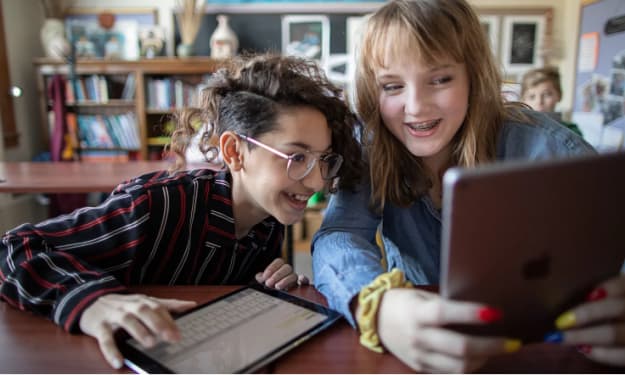
Learning does not happen only in classrooms. It happens on buses, in kitchens, at parks, and even in waiting rooms. Apple devices are helping people capture these moments. They make learning more flexible, personal, and fun.
By Shakil Sorkar11 months ago in Journal
Why iPhones Are Helping People Capture Life Like Never Before
People take photos every day. Some are big events. Some are small, quiet moments. A coffee in the morning. A sunset on a street. A child laughing in the park. For many, these moments might pass quickly and be forgotten. But with an iPhone, they can be saved instantly.
By Shakil Sorkar11 months ago in Journal
Apple Watch: How It Helps People Stay Safe Every Day
Many people think of the Apple Watch as just a gadget. Some see it as a fitness tracker. Others see it as a way to get messages quickly. But for many, it is also a quiet safety companion. It helps people feel secure and connected, even when they are alone or far from help.
By Shakil Sorkar11 months ago in Journal
When Technology Gives Someone Their Voice Back
He sat at his table with an iPad in front of him. For most people, tapping the screen is simple. We scroll without thinking. We swipe without effort. But for him, touch was not something his hands could do anymore. His muscles did not respond the way they used to. Everyday actions required help from others.
By Shakil Sorkar11 months ago in Journal
What Happens to Your Digital Life When You Switch Phones?
Getting a new phone sounds exciting. People imagine better photos, faster apps, and longer battery life. But when the moment finally arrives, the process feels surprisingly emotional. Many people hesitate to move to a new device, especially if they have used their current iPhone for years. It is not because upgrading is hard. It is because the old phone feels like home.
By Shakil Sorkar11 months ago in Journal