history
Key historic events throughout the ages in relation to business, work, corporate figures and moguls.
3) The Ramayana 1.Bala Kandam People of Ayodhya are happy with Ramavatharam
❖ Sage Vashishta advised Dasaratha, the king of Ayodhya, to seek out the sage Kalaikottu in the Anga country in order to improve his chances of having a child. The country was suffering from a famine, but Kalaikottu, who had performed immense penance, was able to bring rain and prosperity. He suggested that Dasaratha perform the Putra Kameshti Yagya in order to be blessed with a son.
By Suthakaran4 years ago in Journal
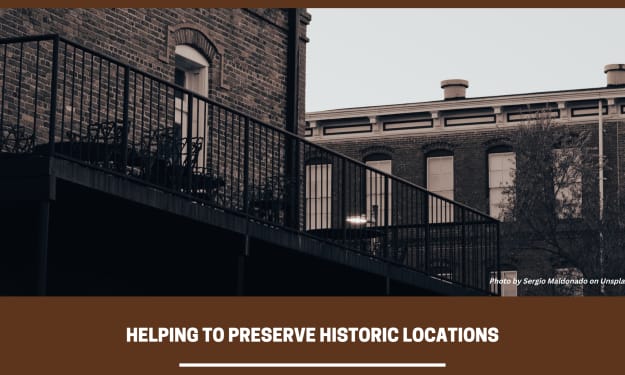
Helping to Preserve Historic Locations
The world is changing faster than most people realise. As new buildings are built and old ones are demolished to make way for these advancements, it is more important than ever to hold on to and preserve historic structures. As a result, those hired to provide heritage building preservation must adhere to a strict set of guidelines.
By Amit Kumar4 years ago in Journal
Why Monuments Are So Important
A monument is a physical and permanent way to memorialise an event or concept. A peace monument promotes values related to peace or the building of peace. At least 2,000 peace monuments have been built around the world. Their production accelerated throughout the twentieth century, and the upward trend appears to be continuing in the twenty-first.
By Amit Kumar4 years ago in Journal
Reasons for Having a Memorial Parks at Atlanta
A memorial or memorial park Atlanta provides comfort in knowing that what began in the past will continue into the future. The loss of a loved one has a profound emotional impact on us. Many and varied issues can arise when dealing with loss. One of the most basic is how to keep the memory alive after the funeral.
By Amit Kumar4 years ago in Journal
Qualities You Should Look For in The Wedding Venues
Wedding planning can be stressful, especially if you have high expectations. However, if you can find wedding venues in Atlanta that offer more than just an atmosphere for your wedding, you will be able to handle your stress and get things done the way you want them to be.
By Amit Kumar4 years ago in Journal
Journey with the Queen
"The Uncommon Reader" is a novella written by Alan Bennett. The book tells the story of a fictional Queen of England who, while out on a walk with her corgis, stumbles upon a mobile library. She becomes an avid reader and begins to change as a result of her new-found passion for books.
By Kanagasabai Thiruthanigesan4 years ago in Journal
Terraform For Azure APIM to AKS
Terraform script is an example of how to set up an Azure API Management (APIM) service and an Azure Kubernetes Service (AKS) cluster, and it also sets up the necessary resources for continuous integration and continuous development (CI/CD).
By Manisekaran4 years ago in Journal
Kambaramayanam
Kambaramayanam is a literary masterpiece composed by the renowned Tamil poet Kambar. This book is an adaptation of the Ramayana, one of the two Hindu epics, written in the vernacular by Valmiki. Kambar has skillfully composed this book in Tamil, staying true to the original theme while infusing his own unique style.
By Suthakaran4 years ago in Journal
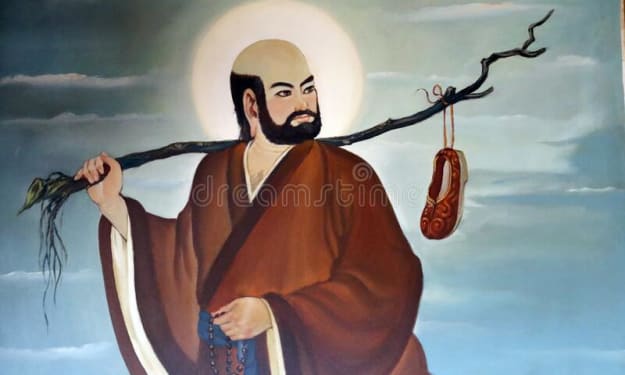
Bodhidharma
1500 years ago, King Wu of China was a devout Buddhist who eagerly awaited the arrival of a genius teacher from India to disseminate the teachings of Buddha. Despite dedicating significant efforts to promoting Buddhism throughout his kingdom, no such teacher ever appeared during his reign.
By Suthakaran4 years ago in Journal
History of Aeroplane
I. Introduction An aeroplane, also known as an airplane or simply a plane, is a powered, fixed-wing aircraft that is propelled through the air by one or more engines. The history of aeroplane development dates back to the late 19th century, when the Wright brothers, Orville and Wilbur, made the first successful powered flight in 1903. Since then, aeroplane technology has advanced significantly, leading to the development of larger, faster, and more efficient aircraft. II. Components of an aeroplane The fuselage is the main body of the aeroplane, which houses the cockpit, passenger cabin, and cargo hold. Wings are attached to the fuselage and provide lift, which allows the aeroplane to fly. The tail section, which includes the horizontal and vertical stabilizers, helps to control the aeroplane's pitch, roll, and yaw. Engines are used to provide thrust, which propels the aeroplane through the air. They can be mounted on the wings, tail, or beneath the fuselage. Landing gear, which includes the wheels, brakes, and suspension system, allows the aeroplane to take off and land. III. Aerodynamics Lift is the force that opposes the weight of an aeroplane and holds it in the air. Drag is the resistance an aeroplane experiences as it moves through the air. Thrust is the force generated by the engines that propels the aeroplane through the air. Weight is the force exerted on an aeroplane due to gravity. IV. Types of aeroplanes Commercial airliners are designed to transport large numbers of passengers and cargo over long distances. Military aircraft are designed for a variety of missions, such as reconnaissance, transportation, and combat. General aviation aircraft are smaller, single-engine planes that are used for personal and business travel, as well as for flight training and other activities. Unmanned aerial vehicles (UAVs), also known as drones, are aircraft that can be operated remotely or autonomously. V. Flight controls Piloting an aeroplane involves controlling the aircraft's speed, altitude, and direction. This is typically done through a combination of manual and automatic flight controls. Automatic flight control systems, such as autopilots, can also be used to assist the pilot in controlling the aeroplane. VI. Safety and maintenance Aeroplanes must undergo regular inspections and maintenance to ensure they are in safe and reliable working order. Safety features and equipment, such as emergency exits, oxygen masks, and life rafts, are also important for ensuring the safety of passengers and crew. VII. Conclusion Aeroplanes play a crucial role in modern transportation and commerce, allowing people and goods to be transported quickly and efficiently over long distances. Future developments in aeroplane technology include the introduction of electric and hybrid-electric propulsion systems, as well as the continued advancement of autonomous flight systems.
By Giridharan4 years ago in Journal