heroes and villains
Heroes and Villains throughout history that have defined their industries and workflow as we know it today. Those we look up to, and those we learn mistakes from.
Why Coworking Etiquette Matters: A Quick Guide
In the ever-evolving landscape of professional workspaces, coworking has emerged as a popular choice for freelancers, entrepreneurs, and remote workers alike. Coworking spaces offer a vibrant atmosphere, networking opportunities, and a collaborative environment conducive to productivity. However, amidst the flexibility and creativity fostered by these shared workspaces, one crucial aspect often overlooked is coworking etiquette.
By Munnazir Zarinabout a year ago in Journal
When Love Isn’t Enough
How do you leave someone who hasn’t done anything obviously wrong? How do you walk away from a relationship that’s not toxic in the way people expect—it’s not violent, it’s not loud, and it doesn’t come with betrayal—but still manages to drain you in ways you can’t explain? What words do you use when there are no bruises, no cheating, no scandal to lean on, just an ever-growing sense of loneliness within a relationship that’s supposed to feel like home?
By Sanelisiwe Adamabout a year ago in Journal
The Lone King
The forest was not meant for kings. It was thick, tangled, and teeming with whispers. The tall trees, gnarled by time and draped in vines, stood as silent sentinels. Shafts of sunlight pierced the canopy in scattered beams, casting golden patches onto the forest floor. The air was heavy with the scent of moss, bark, and distant rain. And among it all, there walked a lion—alone.
By Sadam Hussainabout a year ago in Journal
Trapped Beneath the Mountain
For many, adventure is a calling. For 25-year-old Isabella Torres, hiking volcanoes was more than a thrill — it was how she felt alive. The Brazilian backpacker had spent months traveling solo across Central America, capturing breathtaking photos, journaling deep thoughts, and connecting with nature in ways most people only dream about. But her final hike ended in unimaginable tragedy. She fell 1,600 feet into the crater of an active volcano. For days, injured and alone, she survived with no food and only hope to keep her warm. Her phone was broken. Her legs were too damaged to move. But her spirit never gave up. She wrote messages on her phone’s notes app, knowing that if someone found her, her words would speak for her. Help came too late. But her story lives on — not just in mourning, but in inspiration. The Day Everything Changed Isabella had planned the hike as a solo overnight journey to photograph the sunrise from the rim of the volcano. Locals had warned of unstable terrain and rapidly changing weather, but Isabella had hiked similar paths before. She messaged her family from the trailhead, writing, “Heading to the volcano now. Will send pictures tomorrow. Love you all.” That was the last message they ever received. At some point during the hike, a narrow trail gave way beneath her feet. Authorities later confirmed that the edge of the crater had eroded after recent rains. She plummeted down the steep interior walls of the volcano, landing in a rocky basin with broken ribs and fractures in both legs. She was conscious. She was in pain. But she was alive. A Race Against Time When Isabella didn’t return, local authorities were alerted. Helicopters, rescue dogs, and experienced climbers joined the search. It wasn’t until a hiker spotted a backpack lodged in the rock far below the crater’s edge that they understood the severity of the situation. The crater was steep, unstable, and dangerous. Weather conditions made access even more treacherous. Rescuers said it was like “trying to thread a needle while blindfolded.” Despite their efforts, it took over 72 hours to reach the bottom. By then, Isabella had already passed. But what they found next stunned the world. Her Final Words Next to her body was a notebook and her partially shattered phone. The phone’s screen was cracked, and the battery was nearly dead. But on it were unsent messages that she had typed in the Notes app — messages for her mother, her siblings, and anyone who would one day stand in that same place. “If someone finds this,” she wrote, “please tell my mom I’m not afraid. I’m at peace. I just want her to know I was happy until the end.” Another note simply read, “Tell people to slow down. Look at the sky more. It’s always beautiful, even when we’re not.” She had also marked time by scratching small lines in the rock wall beside her — counting hours, perhaps hoping to stay sane or remain anchored in time. An Outpouring of Love The news of her final hours spread quickly. Isabella wasn’t just a traveler — she was a storyteller. Her blog and Instagram were filled with thoughtful reflections on solitude, healing, and resilience. Fans and strangers alike began using the hashtag #LiveLikeIsabella to share moments of gratitude, adventure, and beauty. In her hometown in Brazil, candlelight vigils were held. Artists painted murals of her surrounded by mountains and sky. Her family received thousands of messages from people who had been moved by her words. “She didn’t die chasing danger,” her sister Carolina told reporters. “She died surrounded by the beauty she loved. She was light, even in darkness.” Isabella’s Legacy To honor her memory, her family founded a nonprofit called “Isabella’s Trail.” Its mission is to promote safer hiking practices, provide emergency gear to solo travelers, and train local guides in high-risk areas. Her journals — recovered from her backpack — are being published under the title Letters from the Wild. Each page is a glimpse into her soul: full of poetry, vulnerability, and awe. One of the final entries reads: “If something ever happens to me, don’t say I died doing what I loved. Say I lived boldly in a world that scared me sometimes. Say I chose the wind over comfort. The stars over screens. Say I was here. And that I tried to love it all.” Her Message to Us All Isabella’s story is heartbreaking, but it is also a reminder. A reminder that life is fragile. That every sunrise we catch, every mountain we climb, every goodbye we say — it all matters. Her final act wasn’t despair. It was courage. It was presence. It was the choice to leave behind light in a place filled with shadow. So next time you look up at the sky, take a breath. Slow down. Feel your heartbeat. And remember Isabella — the girl who fell into a volcano, but rose into the hearts of millions. She didn’t disappear beneath the mountain. She became part of its story. And now, she’s part of ours.
By DigitalAddiabout a year ago in Journal
Trump’s War and Peace: US Role in Iran-Israel Clash
A Ceasefire in Name Only On June 24, 2025, U.S. President Donald Trump declared a “complete and total ceasefire” between Israel and Iran, marking what he called the end of the “12 Day War.” However, despite this bold announcement, the battlefield tells a different story. Israeli cities were still under fire from Iranian missiles just hours after Trump’s claim, and Israeli airstrikes reportedly continued up to the ceasefire deadline. Tehran, meanwhile, remains under siege, and Iranian officials have denied any formal agreement—revealing a dangerous dissonance between diplomacy and reality.
By Det. Marcusabout a year ago in Journal
Such Varied Ukrainian Puritanism: A View Through the Literature of Taras Shevchenko
For me, a Ukrainian Protestant who converted from Orthodoxy at the age of sixteen, Protestantism at first appeared as a more secular and freer form of Christianity. But the deeper I explored this doctrine, the more I discovered the great glory of the reverence for labor and the Puritan ethic.
By Ilya V. Ganpantsuraabout a year ago in Journal
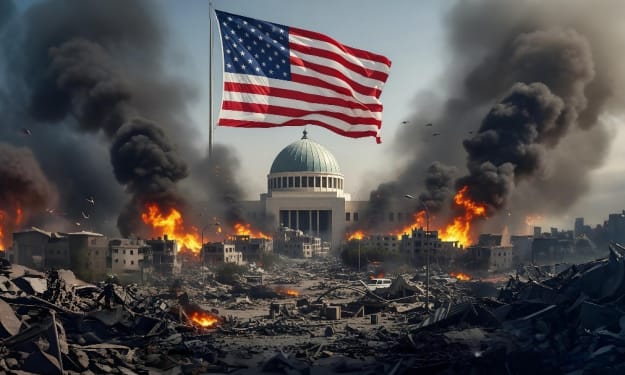
US Joins the Fire: Iran-Israel War Goes Nuclear
June 2025, What began as a series of tactical skirmishes and covert operations has spiraled into full-blown warfare: Israel and Iran are now engaged in direct military exchanges, including strategic air and missile strikes targeting each other’s territory. This marks a dramatic intensification of a conflict that has simmered for decades.
By Det. Marcusabout a year ago in Journal
Me & AI Talk War: What Just Happened Between the U.S., Iran, and Iraq?. AI-Generated.
Me: Hey AI, I woke up to the news that the U.S. launched airstrikes against Iran's nuclear sites. That sounds like a major turning point. Can you tell me exactly what happened?
By Rajaratnam Lishanthanabout a year ago in Journal
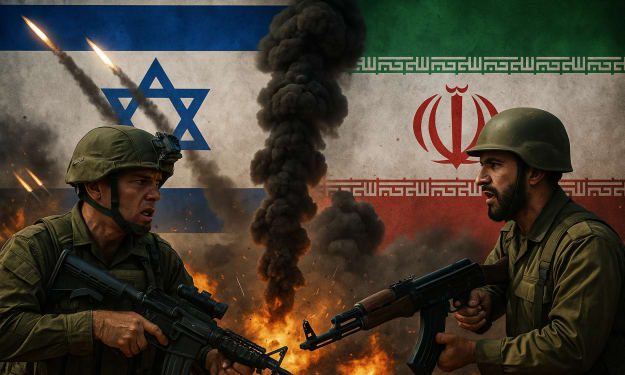
The Israel-Iran Conflict:
The Israel-Iran conflict is one of the most volatile and complex confrontations in the Middle East, with far-reaching implications for global security. Though not officially declared a war in the traditional sense, hostilities between Israel and Iran have unfolded in a shadow war spanning decades, involving cyberattacks, assassinations, airstrikes, and proxy battles. As tensions escalate in 2025, the risk of a full-scale military conflict appears more real than ever. Historical Context The roots of the Israel-Iran rivalry trace back to the 1979 Islamic Revolution in Iran. Before the revolution, Iran under the Shah maintained cordial relations with Israel. However, after Ayatollah Khomeini came to power, Iran adopted a hardline anti-Israel stance, denouncing the Jewish state and supporting armed resistance against it, primarily through groups like Hezbollah and Hamas. Iran sees itself as a leader of the Islamic world and a bulwark against Western and Israeli influence in the region. Israel, in turn, views Iran’s nuclear ambitions and support for militant groups as existential threats. The Nuclear Issue At the core of the conflict is Iran’s nuclear program. While Iran insists its program is for peaceful purposes, Israel believes Tehran is on the path to acquiring nuclear weapons. This concern has driven Israel to act preemptively, including the sabotage of nuclear facilities and the assassination of Iranian nuclear scientists. Israel has consistently lobbied the international community, especially the United States, to take a harder stance on Iran. The U.S. withdrawal from the 2015 Iran nuclear deal (JCPOA) under President Trump, and subsequent re-imposition of sanctions, re-ignited tensions and pushed Iran to expand its nuclear activities. Despite recent attempts at diplomacy, talks have stalled, and both nations have prepared for the possibility of conflict. Proxy Warfare The most visible aspect of the Israel-Iran conflict is its proxy dimension. Iran’s influence in Syria, Lebanon, Iraq, and Yemen has given it strategic depth, allowing it to pressure Israel from multiple fronts. Iran-backed Hezbollah in Lebanon possesses an estimated 150,000 rockets aimed at Israel, and Iran’s involvement in Syria has brought its forces closer to Israeli borders. In response, Israel has conducted hundreds of airstrikes in Syria targeting Iranian weapons shipments and military infrastructure. While these strikes are rarely acknowledged by Israel, they have become routine, keeping the conflict in a state of simmering escalation. In Gaza, Iran supports Hamas and Palestinian Islamic Jihad, both of which have launched rocket attacks against Israeli cities. Each round of fighting—like those in 2021 and 2023—has intensified regional instability and fueled animosity. Cyber and Covert Operations Another key front is cyberspace. Israel and Iran have engaged in increasingly sophisticated cyberattacks against one another. The Stuxnet virus, a joint U.S.-Israeli effort in 2010, damaged Iran’s nuclear centrifuges and revealed the power of cyberwarfare. Since then, both countries have launched cyberattacks on infrastructure, financial systems, and government networks. Iranian hackers have targeted Israeli water systems, transportation infrastructure, and health databases, while Israeli cyber units have disrupted Iranian ports, power grids, and oil facilities. Additionally, covert operations—such as the assassination of Qassem Soleimani (though carried out by the U.S.) and other Iranian military figures—underscore the lethal nature of this shadow war. Risks of Escalation The situation in 2025 is particularly precarious. Iran's deepening military cooperation with Russia and China, combined with increasing enrichment of uranium, has alarmed Western powers and Israel alike. Meanwhile, Israel’s growing normalization with Arab countries, including the Abraham Accords and possible ties with Saudi Arabia, threatens Iran's strategic position. Any miscalculation—such as a successful Iranian missile strike, or an Israeli attempt to bomb Iranian nuclear facilities—could spiral into a broader regional war involving Hezbollah, Hamas, and potentially U.S. forces stationed in the region. Conclusion The Israel-Iran conflict remains a key flashpoint in Middle Eastern geopolitics. While both nations have avoided direct, large-scale confrontation so far, the pattern of escalating attacks, deep-rooted hostility, and the looming threat of nuclear weapons make the situation dangerously unstable. Unless diplomatic efforts are revived and regional powers seek de-escalation, the world may face a conflict with devastating consequences far beyond the Middle East.
By Dr Gabriel about a year ago in Journal
Paul Haggis News: The Legacy Behind Every Great Story. Content Warning. AI-Generated.
If you’ve ever lost an entire weekend to a binge-worthy series with layered characters and tangled storylines, you might want to quietly thank Paul Haggis. While he may not be splashed across every entertainment headline, his fingerprints are all over the way we consume stories today.
By Paul Haggis Newsabout a year ago in Journal