feature
Journal featured post. A corporate culture and workplace favorite.
snak
Snakes dance in movies when you play the flute. In reality, they don't. Snakes don't have ears. They have to stick out their tongues frequently to hear. Snakes won't attack you. If you walk with noise, they can understand. The color of the shell under the snake's chest is different. There are special nerve fibers there. They can sense the vibrations of the ground. They can understand how far you are, how big you are. They run away. Snakes never come to the smell of Belly and Hasnahena. Some people may have seen snakes under Belly and Hasnahena in their lifetime. Remember, snakes have a very weak sense of smell. They can't smell. Insects are more attracted to fragrant flowers. Frogs come to eat insects. Snakes may sometimes come to eat frogs. Snakes, like humans, get tired after eating. Just as humans sleep comfortably after eating, snakes can also sleep under Belly and Hasnahena. However, if these trees are inside the house, snakes come less often. Because they are afraid of human presence. However, if there are such trees on the side of the house, in the bushes, it is normal for snakes to come. If you kill a snake, its partner will never come to find you and bite you. Snakes have a very weak memory. Snakes are not the king of Bengali cinema Shakib Khan or Nagin Moonmoon who will rush to take revenge for the loss of their partner. Snakes are low-breed animals. There is no such thing as revenge among them. But after killing a snake, another snake is often seen in the same place, why? Simple. During mating, their partner may be nearby or if there is a hole nearby, its young or more snakes may come out. It did not come to take revenge but came out of the hole by mistake. It is wrong to say that small snakes do not have venom. Snake babies are also snakes. A patient had to fight for his life for 24 hours straight in front of my eyes after being bitten by a small snake the size of an earthworm. We three doctors fought beside him in the ICU for 24 hours. Starting with artificial ventilation, we gave him anti-venom several times. He recovered and went home. Before leaving, he abused us. We allegedly gave him very expensive medicine. He doesn't know that a single dose of antivenom costs 10,000 taka. Logically, the man is not at fault. He was a fisherman. His income is maybe 150 taka a day. Snakes bite more people who return home from the market in the dark at night and fishermen. Fishermen catch fish by throwing spears and nets at night during the monsoon. They catch them in the middle of rivers or canals. The snakes think they are dry and stay there. They bite.
By Arfan Raihenabout a year ago in Journal
Bayt al-Hikmah: Where Stars of Knowledge Once Shone
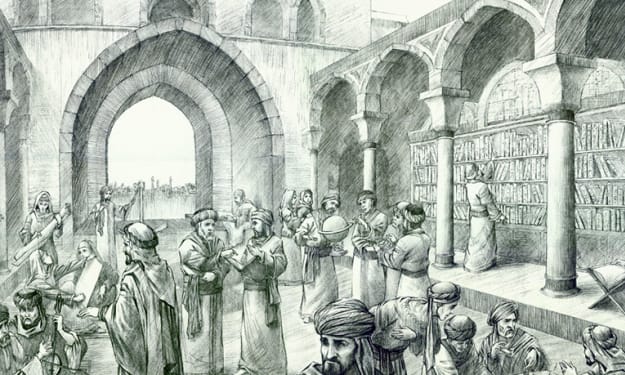
During the Abbasid Caliphate, Baghdad emerged as a center of intellectual and economic excellence. One of the most iconic examples of their support for scientific advancement was the famous library of Baghdad, Bayt al-Hikmah—known in English as the House of Wisdom. From around the 5th to at least the 9th century, its collection was considered the largest in the world. The halls of this institution were always abuzz with the presence of prominent scholars of the time.
By Riham Rahman about a year ago in Journal
Top 10 Material Handling Services Companies in the World
In the dynamic world of logistics and supply chain management, material handling services play a pivotal role in ensuring efficiency, safety, and productivity. The following list highlights the top 10 Material Handling Services companies in the world, recognized for their innovation, global reach, and comprehensive solutions.
By Nadia Ahmedabout a year ago in Journal
The Hidden Mission of Star Seeds – Are They Here to Awaken Humanity?
I've always felt like I don't belong here. The world's chaos and suffering don't make sense. As a child, I'd look at the stars and feel a deep longing for home. Years later, I found out I'm a Star Seed.
By Wilson Igbasiabout a year ago in Journal
The Untold Aspects of The Lord of the Rings Trilogy Pt.2
Last part 8. Avatar (2009) drew significant inspiration from The Lord of the Rings trilogy. How? Let’s explain. In 1994, James Cameron had already completed about 80% of the conceptual work for Avatar. However, due to the limitations of visual effects at the time, he didn’t feel confident enough to begin production. Lacking advanced CGI and VFX, he decided to wait patiently for technological advancements. In 2002, after witnessing the CGI and motion capture used for Gollum in The Two Towers, Cameron was blown away. He realized the time had finally come to bring his dream project to life. And so, he jumped in headfirst to make it happen. 9. The legendary rock band The Beatles were huge fans of the franchise. They once wanted to make a Lord of the Rings movie with acclaimed director Stanley Kubrick. The plan was for Paul McCartney to play Frodo, Ringo Starr as Sam, George Harrison as Gandalf, and John Lennon as Gollum. The Beatles; Image Source: Alamy 11. Let’s now talk about Tolkien’s created universe. Many refer to this universe as Middle-earth, which isn’t entirely accurate. Middle-earth is actually a continent on the planet Arda, which itself is a part of the universe called Eä. The entire Lord of the Rings universe was born from the music of a divine being named Eru Ilúvatar. These divine creations, known as the Ainur, were responsible for shaping various elements of this universe. 12. The Lord of the Rings franchise features a total of seven constructed languages. Tolkien, a philologist and professor of English at the University of Leeds, created each of these languages with distinct grammatical structures. The most notable include the Elvish languages Sindarin and Quenya, Sauron’s Black Speech, the Valar’s language, Entish, and the Dwarvish secret language Khuzdul. Each language has a written grammar, allowing them to be used in real life by dedicated fans. Many assume Tolkien invented the languages for the story. In fact, it was the other way around—he created the languages first, and later built the stories around them. Quenya was developed in 1917, about 20 years before The Hobbit was published. Later, Tolkien went on to complete The Lord of the Rings and The Silmarillion. Quenya was inspired by the rare Finnish language of ancient England, while Sindarin drew influence from Welsh. Quenya was used by the High Elves of Valinor, while the Grey Elves and educated men like Aragorn in Middle-earth spoke Sindarin. 13. At the end of The Fellowship of the Ring, we see the fiery demon Balrog. Interestingly, Balrog, Gandalf, and Sauron all come from the same ancient origin. They were part of a race known as the Maiar, spiritual beings with shape-shifting powers, created by the god-like Valar to help shape the world. However, a division among the Valar caused Sauron and Balrog to side with evil, while Gandalf chose the path of good. Balrog; Image Source: New Line Cinema 14. The box office success of The Lord of the Rings trilogy was staggering. Each film had an average budget of around $93 million. Yet each one earned approximately $970 million globally, bringing in about ten times the investment. In total, the trilogy grossed around $2.9 billion worldwide, dominating the box office like a tornado. To this day, no film has broken its Oscar record. The Fellowship of the Ring won four Academy Awards, The Two Towers won two, and the final installment The Return of the King won eleven. Incredibly, The Return of the King won every single one of its eleven nominations—an exceptionally rare feat in Oscar history. Even after more than two decades, the trilogy’s popularity remains as strong as ever. The End!
By Riham Rahman about a year ago in Journal
Gut Feeling: Why Your Digestive Health Might Be the Root of Everything
Have you ever had a "intestinal feeling" for something? It turns out that this feeling can come further from instinction - it may be a signal from your sibler. Yes, have you read that. Scientists are now by calling the bowel as "Our Crybrial Second" and for a good reason. Your digestive system is much more than decomposed food. Affect your mood, your immune system, your energy levels and even the way you sleep. However, a lot of us ignores - until something is wrong. we impulse in Because your gut be the unknown hero of your health and how you can start taking care.
By Shahjahan Kabir Khanabout a year ago in Journal
Tom Cruise's 'Massive Breakfast' Fuels Death-Defying 'Mission Impossible' Airplane Stunts
Tom Cruise, the seemingly ageless 62-year-old Hollywood icon, is once again pushing the boundaries of cinematic action with his death-defying stunts in the upcoming installment of the Mission: Impossible franchise, titled Mission: Impossible – The Final Reckoning. Known for his unwavering commitment to performing his own stunts, Cruise has now revealed the surprising fuel behind his high-octane performances – a "massive breakfast."
By Arif Islamabout a year ago in Journal
A Bold New Look for Android: Unpacking the Upcoming UI Overhaul
Android, the world's most popular mobile operating system, is on the cusp of a significant visual transformation. After years of iterative updates, Google is reportedly working on a comprehensive user interface (UI) overhaul that promises to refresh the look and feel of the platform. Early glimpses of this redesign have surfaced, offering a tantalizing preview of the changes in store for Android users. This article delves into the details of this upcoming UI overhaul, exploring the key changes and their potential impact on the Android experience.
By Arif Islamabout a year ago in Journal
South Asian Geo-politics : current situation
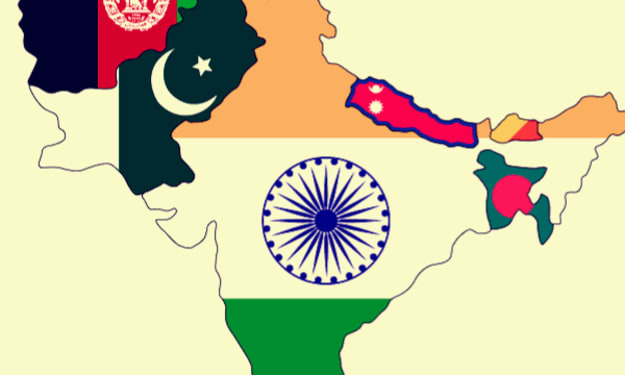
I International politics is never static. A new geopolitical environment, based on a new balance of power is shaping up. Stresses have been building up in the so-called rule-based order, set up by the victors of the Second World War in 1945, for a considerable time since the Cold War ended. The disintegration of the Soviet Union, 9/11 terrorist attacks, the global financial crisis of 2008 –10, COVID-19, the invasion of Ukraine by Russiain 2014 and 2022, and the disintegration of Yugoslavia in which the West played a key role, were some of the notable seismic events that strained the older world order. The bipolar world order of the Cold War years gave way briefly to unipolarity and then multipolarity with the rise of new powers like China, India and others. The inherently undemocratic UN system of multilateralism has become increasingly dysfunctional. It failed to keep international peace and stability as multiple wars broke out with regular frequency in different parts of the world. The rise of new powers and new regional groupings has also challenged the UN system. Globalization that began in the 80s became hyper globalization of the late 20th and the 21st century. Globalization created a lot of wealth but also acute inequity. It failed the test of sabka saath, sabka vikas or inclusive growth. Production became decentralized leading to extended supply chains. The problem was that these supply chains were concentrated in a few countries and were highly vulnerable to geopolitical and natural disruptions. This was amply demonstrated during the Covid in 2020 when the global economy almost came to a halt as millions of lives were being lost and after the Russian invasion of Ukraine in 2022 when grain and energy markets were severely disrupted. The disturbances caused by geopolitics led to the disruptions of supply chains. The world is once again becoming fragmented and protectionist. The underlying principles of the old-world order, namely democracy, free markets, and the rule of law, are being challenged. The problem was that the markets were never fully free and the rule of law was only in name as the most powerful countries continued to call the shots. These deficits of the old order have now been exposed fully. Geopolitics is about the balance of power. Numerous factors shape the global balance of power. But, the relative distribution of power in the world leads to equilibrium or disequilibrium. Those who do not have power in the world are at a disadvantage. They tend to make up for the relative lack of power by aligning with one power or the other or forming groupings amongst themselves based on commonality of interests. We have seen the emergence of a large number of regional groupings, and multilateral arrangements in a variety of political economic and security geometries. Countries also come together in coalitions of the willing based on specific interests. Thus, the balance of power in the world today is highly complex and does not fit into bipolar, unipolar or any other precise frameworks. Multipolarity, a fashionable term, is a flexible term. What it means is that today there are many countries who may not have the overwhelming military power but still remain important in the overall balance of power. The world was multi-polar in the 19th century when several powers were important. The world is returning to multipolarity once again. But, multipolarity can be unstable. The global balance of power is complicated by factors such as climate change, demographic shifts, migrations and the crisis of the commons. New technologies which have brought down the constraints of boundaries have also impacted the notion of absolute sovereignty. Part of the reason why the crises are becoming unmanageable is because the older rules are not sufficient to regulate the powerful new technologies. It is becoming clear that new rules would be required but the world is so fragmented that it is almost impossible to generate consensus on how to agree on them. The international law evolves but slowly and is miles behind the evolution of new technologies. Artificial intelligence, bit coins, and quantum technologies are examples of technologies that cannot be governed so easily by the older rules. As the world fragments, the states are taking recourse to defining their interests narrowly and protecting them with whatever tools and instruments are available to them. The consensus amongst the big powers on larger global issues is also breaking down. Increasingly, the big power are defining their interests in civilizational terms. China, India and Russia are examples of this trend. They are using their civilizational attributes, long histories and rich heritage to come up with narratives that contextualize their rise, protect their interests, and strengthen engagements with like-minded countries. Francis Fukuyama had opined after the end of the Cold War that history had ended with the victory of Western liberal ideas. That was pure hubris. The new rising powers do not subscribe to the Fukuyama view of the end of history. They feel that their moment has come as the West declines. Factors like culture, civilization and religion have become important in the current geopolitics as identifiers. Making America Great Again (MAGA) emphasizes the ‘American identity’ which has been evolving since 1776 when America was formed. Countries like Russia, India, China and those in Europe are much older. They are also asserting their civilizational identities too. In the 1990s Samuel Huntington had predicted that leading civilizations and cultures would clash. This idea has been controversial but worth a critical examination. The rise of Trump in 2017 in American politics brought ‘Trumpism’ to the fore. Trumpism is based on the idea of America First and ‘Making America Great Again’ (MAGA). Such ideas, based on an acute form of American nationalism, are bound to impact America’s standing as a global power. It is also having a domestic repercussion. The American society is deeply divided along multiple axes. Trump’s return is an indication of that phenomenon. It is already leading to stresses and strains in the long-held notion of alliances and shared objectives. Trump has signalled that America will first look after its own interests. He will not allow others to take unfair advantage of America. The return of Trump in 2025 is creating a high degree of stress in the old world order. Trump has little respect for globalism or multilateralism. As a result, the old world is experiencing extraordinary turbulence. One can see that all major powers are today unabashedly nationalistic and are defining their interests and identities in narrow terms. Key Geopolitical Trends The global situation is moving rapidly. A few key trends can be identified as follows. • For the first time in post-Second world war history, the US and Europe seem to be on a collision course. • The US has broken rank with Europe on the Russia -Ukraine war and is dealing directly with Putin, pressuring Ukraine to do a deal with Putin. It has for the moment stopped all military aid to Ukraine and has refused to give security guarantees. • Trump’s policies have raised doubts among allies and friends about its reliability. • Trump has stopped most developmental and arms aid. This will have widespread impact on many developing countries and US strategic partners alike. • Trump has little regard for multilateral institutions. This is evident in the US withdrawal from WHO and the Paris Climate Agreement. • The US is weaponising trade and technology in its foreign policies. It seeks to retain and further its global primacy in trade and technology. Economic coercion is becoming increasingly common. • The US is a global power. Trump is redefining US global interests. The isolationist streak in US foreign policy is coming to the fore. Therefore, a shift in its policies will have a major regional impact. This is already visible: • US-Europe relations are in flux. The future of the transatlantic alliance is uncertain. • Europe is gearing up to spend more on defence and security. Militarization of Europe is on the cards. Europe has to identify Euro 800 billion for defence. A lot of it will be through enhanced debt limits. • The increased defence spending will lead to greater budget deficits and will have domestic consequences at a time when most European economies are under stress and right-wing, anti-immigration forces are raising their head. • In Latin America, the US has pressurized Mexico and Colombia on trade and drugs. The US is redefining its relationships in North and South America. • The US-Canada relations have come under great stress. Canada has been hit with the boycott of US relations. • Trade and technology are at the heart of US-China strategic competition, which is likely to strengthen. There could be a US-China deal involving economic and political issues. US commitment to secure Taiwan is in doubt. • By courting Russia, the US may seek to dent the Russia-China strategic partnership. Whether Trump will succeed in this is still unclear. • The US is desperately scouting for minerals. These are necessary for economic and technological imperatives. It wants to break the Chinese monopoly in this area. Minerals have become a key component of US policies. Africa and Central Asia, Where minerals are in abundance, might benefit from US investments. • In the West Asia/Middle East, Trump is standing solidly behind Israel in the fight against Hamas. Trump wants to turn Gaza into a “riviera” and wants the Gazans to go elsewhere. This kind of radical thinking, amounting to ethnic cleansing, will have a major impact on the balance of power in the region. • But Trump has a larger objective in the Middle East. The US is in support of IMEC, which it sees as a game changer. An alternative to BRI. The US will continue to work for Saudi-Israel rapprochement, but this is not going to be easy. Trump had withdrawn from the Joint Comprehensive Plan of Action (JCPOA) on trans nuclear program in his first term. But his position may be shifting. He now wants a nuclear deal. This is an exciting development. • In the Indo-Pacific, Trump’s position is still evolving. Does he want to free the US from its commitments in Europe and redirect to the Indo-Pacific. China remains a rival but a deal is possible. Commitments to defend Taiwan cannot be taken for granted. Japan will be asked to spend more on defence. It is already doing this. But it faces a very complex security environment. The steps it takes to enhance its deterrence need to be watched. • Trump may approach the North Korean leader and pick up from where he left earlier. South Asia • Let us look at South Asia and how it is going to be impacted by Trump’s policies. • South Asian nations will have to watch out for the unpredictability in Trump's polices on trade, aid, security, immigration, and technology. • It is not clear whether Trump will see South Asia through the lens of US-China rivalry or independently. • As Modi’s visit to Washington shows, Trump continues to regard India as a partner in the Indo-Pacific. Thus, there will be a lot of continuity but some reordering of trade and technology relations is on the card. The US and India are working on a bilateral trade agreement. India should be clear about what the US wants from India. • Myanmar is in the midst of a civil war, and remains mired in an economic crisis China’s influence in Myanmar is tangible. The more the US pressurises Myanmar, the more it helps China in Myanmar. • As in other places, Trump will be transactional in South Asia. it wants India to buy US defence equipment, energy, and open up its market. • The sudden stoppage of USAID will impact many South Asian countries that received large amounts of US aid. • The future of MCC in Nepal is uncertain. Trump cancelled $39 million USAID support for fiscal federalism ($20 million) and biodiversity conservation ($19 fund million). He also suspended for three months the $550 million MCC grant. Nepal has already spent about $190 million on land acquisition and compensation on the project, meant to build power stations, transmission lines and road upgradation. The future of MCC is uncertain. • It remains to be seen how US-Pakistan relations evolve. The two are discussing CT cooperation once again. Trump loves to sees himself in a peacemaker’s role. In his last term he had offered mediation on Kashmir. This may happen again. It is too early to anticipate his policies towards Pakistan. • Bangladesh is in turmoil. The US had a role in it in all likelihood. Bangladesh is highly vulnerable to shifts in US policies on trade, climate change, immigration, humanitarian aid etc. Bangladesh exported USD 10 billion of RMG (Ready Made Garments) to the US last year. It also gets a lot of developmental aid from the US. The closure of USAID will impact Bangladesh about $2.4 billion in humanitarian aid since the Rohingya crisis began in 2017. • At a time when Bangladesh's relations with India have deteriorated. Bangladesh's foreign policy must navigate the delicate balance between China's BRI and the US. On the one hand, China is Bangladesh's largest trading partner and a key investor in infrastructure projects under the BRI. On the other, the US remains crucial for exports, development aid, and global advocacy. The deep-sea exploration potential in Bangladesh's maritime zone adds another dimension to this balancing act. • Sri Lanka would also be watching Trump’s policies closely. The US role in the IMF and other global financial institutions is significant. Conclusion What should we expect in the future? How will geopolitics evolve? Undoubtedly, a new geopolitical environment is shaping up. This is a time of great flux in international relations. Uncertainty has deepened. The churn in international politics will produce unpredictable results. The post-Cold war years have been turbulent. None of the major events were predicted. Should we be prioritizing the ‘balance of interests’, as Russian Foreign Minister Mr Lavrov say? This is an open question. The best one can do it to look at the factors which will impact the future. Climate change, demography, technology, energy, food, water, migrations, minerals, health and skills will certainly impact the future. In all these areas, negative tendencies are palpable. Climate change is unrelenting; most parts of the world except Africa, are going to experience population decline by the end of the century; the environment is degrading rapidly as several planetary boundaries have been crossed or are on the verge of being crossed; food, water are likely to become scarce for large populations; social disruption due to technology is going to become common. These factors will impact future geopolitics or the balance of power. India will have to maintain a steady growth rate which also maintain internal social cohesion. The world desperately needs an infusion of ethics, morality, a sense of right and wrong; a sense of balance and proportion. There is massive wealth in the world but also massive inequality, unsustainable debts and extreme inequity. The new world order needs to be based on the common social ideas of caring and sharing, inclusivity, sustainability, respect for diversity, environmental consciences, peace and stability and not unabashed greed, razor-sharp identities and a sense of rights and entitlement without regard for duty and responsibility. Neither a doomsday scenario is inevitable nor can one be complacent that business as usual scenario will prevail. The older world order is shaping. The actions we take today will decide the future course.
By Riham Rahman about a year ago in Journal