fact or fiction
Is it a fact or is it merely fiction? Fact or Fiction explores the lesser known truths in the corporate culture of Journal.
YouTube: The Accidental Startup That Changed the Internet Forever
In early 2005, three young men working at a small startup in San Mateo, California, were growing frustrated with how difficult it was to share videos online. The internet was booming with blogs and photos, but video? It was a nightmare. Video files were large, different formats rarely worked on different computers, and uploading them to the web was painfully complicated for the average user. That frustration gave birth to an idea that would reshape the internet forever. --- It Started with a Dinner Party The origin story of YouTube is surprisingly humble. Chad Hurley, Steve Chen, and Jawed Karim were all early employees at PayPal. One evening in January 2005, they attended a dinner party in San Francisco. People took videos on their phones and digital cameras, but when it came time to share them, no one had a good solution. Some accounts say it was a video of Janet Jackson’s infamous Super Bowl halftime incident that couldn’t be easily found online. Others say it was a party clip among friends. Either way, the trio realized that no centralized platform existed where people could easily upload, watch, and share videos in one place. Within a matter of weeks, they quit their jobs, pooled together a few thousand dollars, and started building a simple, user-friendly video sharing site. --- The First Video Ever Uploaded On April 23, 2005, Jawed Karim uploaded a 19-second video called Me at the Zoo. It featured him standing in front of elephants at the San Diego Zoo, casually explaining how "cool" elephants’ trunks are. The video quality was grainy, the audio was mediocre, and the concept was simple — but it worked. The video uploaded and played instantly, no technical barriers or plugins required. It might seem ordinary now, but at the time, it was revolutionary. That video is still live today on YouTube and has over 300 million views. --- Explosive Growth Nobody Saw Coming By mid-2005, YouTube was in beta, and early adopters flooded the site. Users uploaded home videos, goofy stunts, music performances, and funny clips. The combination of easy uploading, simple embedding on blogs, and instant playback made YouTube addictive. Within months: Over 100 million videos were being watched daily Tens of thousands of new videos were uploaded each day The site’s popularity exploded through word of mouth and viral sharing It quickly outpaced rival video platforms like Google Video and Yahoo Video. --- The Google Acquisition That Shocked the Industry YouTube's traffic was skyrocketing, but it came with a major problem — the costs of hosting and streaming videos were enormous. The founders knew they needed serious financial backing or a buyer to survive. In October 2006, just 18 months after launching, Google acquired YouTube for $1.65 billion in stock. At the time, many analysts criticized the move, calling it reckless. Buying a fledgling video site with no clear revenue model seemed risky. But Google saw the future — a video-centric internet where people wouldn’t just read or share photos but engage with video content daily. It would turn out to be one of the smartest acquisitions in tech history. --- YouTube’s Rise to Cultural Powerhouse Under Google’s ownership, YouTube didn’t just grow; it transformed entertainment and internet culture: Content creators like vloggers, musicians, comedians, and educators found a platform to reach millions. Memes and viral videos like Charlie Bit My Finger, David After Dentist, and Gangnam Style became global sensations. Major celebrities and brands began to launch YouTube channels. In 2007, YouTube introduced its Partner Program, allowing creators to earn money from their videos through ad revenue — giving birth to a new generation of full-time online personalities and influencers. Today, YouTube reaches over 2.7 billion monthly active users and has become the go-to platform for everything from music videos and tutorials to gaming livestreams and documentaries. --- Lessons from YouTube’s Success Solve simple, relatable problems. YouTube was born from the frustration of trying to share a video with friends. Timing matters. The rise of broadband internet and affordable digital cameras made video creation and sharing accessible at the perfect moment. User experience wins. YouTube’s clean, intuitive platform made it easy for anyone to use. Stay adaptable. From short viral clips to full-length series and livestreams, YouTube evolved with its audience. --- From Dinner Party Idea to Digital Empire YouTube’s story proves that world-changing ideas don’t need to start in boardrooms. They can begin at a dinner party, solving a small problem for friends. With the right timing, vision, and execution, even the simplest ideas can grow into global platforms worth billions.
By SHADOW-WRITES2 years ago in Journal
Top 20 World Economies: A Decade of Growth (2015–2025)
1. United States In 2015, the U.S. had a GDP of $23.7 trillion. By 2025, it grew to $30.3 trillion, showing a 28% increase. The U.S. remains the largest economy in the world. It has strong industries in technology, finance, healthcare, and energy. Its economy is driven by consumer spending and innovation. The U.S. dollar is a major global currency, and the country has a big influence on global trade and economics.
By Abdul Mateen 2 years ago in Journal
Outdated and Outnumbered: Why the UN Security Council Needs Urgent Reform
Outdated and Outnumbered: Why the UN Security Council Needs Urgent Reform The United Nations Security Council (UNSC) is one of the most powerful and controversial bodies in the international system. Tasked with maintaining global peace and security, the UNSC has the authority to impose sanctions, authorize military interventions, and mediate in conflicts. Since its formation in 1945, the Security Council has been at the heart of global governance. However, as the world has evolved, so too must the UNSC. Critics argue that its outdated structure, lack of representation, and the power imbalance between permanent members have rendered it ineffective and unresponsive to today’s global challenges. The time for reform is now more pressing than ever. The Problem with Veto Power A significant issue with the Security Council is the veto power granted to the five permanent members—China, France, Russia, the United Kingdom, and the United States. The P5 hold disproportionate influence, as they can block any resolution they disagree with, regardless of the majority opinion within the Council. This veto power was established after World War II to ensure that these major powers, who were central to the victory, could prevent decisions that might undermine their interests. However, this system, while suitable for the post-war period, no longer reflects the geopolitical realities of the 21st century. The veto system has led to repeated deadlocks in the face of critical issues. For example, during the Syrian civil war, Russia repeatedly used its veto to block any resolution aimed at holding the Assad regime accountable for human rights violations. Similarly, in the case of the Russian invasion of Ukraine, Russia, as a permanent member of the UNSC, was able to veto any significant action against itself, rendering the Council powerless to stop the conflict. These examples highlight the inherent flaws in a system that allows a single country to prevent collective action, even when the rest of the world supports intervention. A Council That Doesn’t Reflect Today’s World Another major criticism of the Security Council is its lack of adequate representation. While the P5 hold permanent seats, the other ten members of the Council are elected for two-year terms. However, there is no representation from many key global players, especially from the Global South. Countries like India, Brazil, Japan, and South Africa, which have become increasingly influential in global politics, remain excluded from the permanent membership. The absence of these nations reflects an outdated power structure that was established at a time when these regions had little influence on the global stage. Today, these countries contribute significantly to global peacekeeping missions, the UN’s budget, and diplomatic efforts. Yet, they have no permanent seat at the decision-making table. This lack of representation not only undermines the legitimacy of the UNSC but also weakens its ability to address the diverse issues facing the world today. The Global South’s Growing Frustration The frustration with the UNSC's structure is particularly strong in the Global South. Developing nations argue that the current system perpetuates a power imbalance that favors the interests of wealthy and powerful countries while neglecting the concerns of those who are most affected by global crises. For example, when it comes to addressing issues like climate change, global health, or poverty, the voices of the Global South are often sidelined, despite these regions bearing the brunt of the impact. This lack of representation in global decision-making leads to policies that fail to address the unique challenges faced by developing countries. The Global South has long advocated for reform, particularly in the form of expanding the Security Council to include more permanent members from underrepresented regions. Without such reforms, the credibility of the UNSC as a global institution will continue to erode, and trust in the UN as a whole may diminish. The Stalemate of Reform Efforts Efforts to reform the Security Council have been ongoing for several decades, but real progress has been slow. The most significant obstacle to reform is the opposition of the P5 members. Any changes to the structure of the UNSC require the approval of these five countries, and unsurprisingly, they are reluctant to share their power. Although there is widespread support for reform, especially from countries that would benefit from a permanent seat, there is little consensus on how to proceed. Some argue that adding more permanent members would dilute the effectiveness of the Council, while others contend that the addition of new members is necessary to reflect the changing power dynamics of the global order. The Intergovernmental Negotiations (IGN) process, which was established to discuss potential reforms, has made little headway in recent years. The lack of political will, coupled with the P5’s resistance to any change that might diminish their control, has stymied progress. This stalemate has left the UNSC functioning with the same structure it had when it was created, despite the profound changes that have taken place in international politics. Why Reform Is More Crucial Than Ever The world today faces a host of complex challenges that require a more responsive and inclusive approach to global governance. From regional conflicts and terrorism to climate change and the global refugee crisis, the need for effective multilateral action has never been greater. The UNSC’s failure to adapt to these challenges puts the UN’s legitimacy at risk. As global power shifts, so too must the institutions that govern the international order. Reform of the Security Council is not just a matter of fairness; it is a matter of effectiveness. Without reform, the UNSC risks becoming irrelevant. In an increasingly multipolar world, a system that consolidates power in the hands of a few countries will only lead to further division and instability. By expanding the Security Council and giving more countries a voice, the UN can ensure that its decisions reflect the diverse interests of the global community and address the pressing issues of our time.
By Md Shoriful Islam2 years ago in Journal
Netflix: From DVD Rentals to Global Streaming Giant
In the late 1990s, if you wanted to watch a movie at home, your best option was driving to a Blockbuster store, picking a DVD, and hoping it was in stock. If you returned it late, you’d get slapped with a hefty late fee. It was an inconvenient, outdated system — and one man’s annoyance with it sparked a revolution. Today, Netflix is a household name, streaming to over 260 million subscribers worldwide. But its journey from a tiny DVD-by-mail service to a global entertainment powerhouse is a story of vision, adaptability, and bold business moves. --- It Started with a $40 Late Fee In 1997, Reed Hastings, a Silicon Valley software engineer, rented a copy of Apollo 13 from Blockbuster. When he forgot to return it on time, he was charged a $40 late fee — a moment he later called “embarrassing and irritating.” That annoyance turned into a business idea. What if you could rent movies without worrying about late fees or due dates? Hastings teamed up with Marc Randolph, a marketing veteran and longtime friend, to bring the idea to life. The concept was simple: customers would order movies online, receive them by mail, and return them whenever they wanted — no late fees. The pair launched Netflix.com in 1998 with a library of just 925 titles. --- Beating Blockbuster at Its Own Game In the early years, Netflix struggled. The internet was still slow for most people, and DVDs were new technology. But Hastings and Randolph had a long-term vision. In 1999, they introduced a monthly subscription model — unlimited DVD rentals with no due dates or late fees, a concept unheard of at the time. As their customer base grew, Netflix added features like personalized movie recommendations and online queues. By the early 2000s, Blockbuster had over 9,000 stores and millions of loyal customers. Netflix, with no physical stores and limited marketing resources, was considered a niche service. But behind the scenes, it was building something bigger. In 2000, Hastings famously offered to sell Netflix to Blockbuster for $50 million. Blockbuster’s executives laughed him out of the room. It would prove to be one of the biggest missed opportunities in business history. --- The Streaming Revolution By 2007, internet speeds had improved, and digital video was becoming mainstream. Netflix made a bold pivot: it launched instant streaming, allowing subscribers to watch movies and shows online instead of waiting for DVDs in the mail. It was a gamble. Their entire business model was built around mailing discs, but Hastings recognized that streaming was the future. While competitors hesitated, Netflix raced ahead. This move changed everything. Within years, Netflix began producing its own content, starting with House of Cards in 2013. It wasn’t just a successful show — it was a statement that Netflix wasn’t just a platform; it was a studio. --- Competing with the Giants As Netflix grew, so did its competition. Traditional networks and media companies like Disney, Warner Bros., and NBC launched their own streaming services. Tech giants like Amazon and Apple entered the market. Instead of pulling back, Netflix doubled down on original programming. From Stranger Things to The Crown to Narcos, Netflix invested billions in content, targeting global audiences with foreign-language hits like Money Heist and Squid Game. Today, Netflix releases hundreds of original series, films, and documentaries each year in dozens of countries. --- The Lessons in Netflix’s Success Solve real problems. Netflix started because one person hated paying late fees. Be willing to pivot. Moving from DVD rentals to streaming — and then to content creation — kept Netflix ahead of trends. Invest in your future. Netflix spent years operating at a loss while pouring billions into content, trusting that growth would follow. Never get complacent. Even as a market leader, Netflix continues to experiment with interactive content, mobile gaming, and global productions. --- From Underdog to Industry Leader What began as a DVD rental service born out of frustration is now a global streaming powerhouse that’s changed how people consume entertainment. Blockbuster filed for bankruptcy in 2010, while Netflix’s market cap now exceeds $220 billion. Its story is a powerful reminder that even the biggest industries can be disrupted by a simple, customer-focused idea — if you’re bold enough to chase it.
By SHADOW-WRITES2 years ago in Journal
Global Wireless Telecom Infrastructure Market Poised for Sustained Growth with Strong Global Telecom Expansion 2033
Global Wireless Telecom Infrastructure Market Expanding Significantly with Increasing Government Investment 2033 The size of the Global Wireless Telecom Infrastructure Market is anticipated to be approximately USD 502.3 Billion by 2033, from USD 191.9 Billion in 2023, with a CAGR of 10.1% over the forecast period of 2024-2033. APAC dominated the market in 2023 with a share of over a 35%, with revenue of USD 67.1 Billion.
By rachel wetson2 years ago in Journal
Spotify : How a Tiny Swedish Startup Took on the Entire Music Industry
In the early 2000s, the music industry was in chaos. CDs were dying, piracy was rampant, and artists were losing money while record labels panicked. It was the Wild West of digital music — a world dominated by illegal downloads from platforms like Napster and LimeWire. But in the middle of this mess, a little-known Swedish entrepreneur, Daniel Ek, saw an opportunity. What followed was one of the most impressive business stories of the modern era — the rise of Spotify, a company that didn’t just survive in a crumbling industry but transformed how music is discovered, shared, and consumed globally. --- A Frustration That Sparked an Idea Daniel Ek wasn’t your typical music executive. He was a tech-savvy kid from Stockholm who started coding at the age of 13. By his early 20s, Ek had already built and sold a successful advertising company. But something about the state of music online bothered him. Piracy was easy, legal options were clunky and expensive, and consumers were frustrated. That’s when Daniel partnered with Martin Lorentzon, a fellow entrepreneur and early investor in his ad business. Together, they set out to answer a simple but bold question: “What if you could listen to any song you wanted — instantly, legally, and for free?” --- Building the Impossible Launched in October 2008, Spotify was designed to be faster and more seamless than piracy itself. The trick was using streaming technology instead of downloads, making songs play immediately without waiting. But convincing record labels to trust a tiny startup from Sweden was a colossal challenge. At the time, labels saw digital as a threat — not a business partner. So Daniel Ek did what any persistent entrepreneur would do: he wore them down. After months of negotiations, Spotify secured licensing deals with major labels, offering them equity stakes in the company and promising a new revenue stream through ad-supported and subscription models. --- Winning Over the World, One Country at a Time Initially, Spotify was only available in a few European countries. It was so exclusive that new users could only join through invitations, which ironically boosted its desirability. In 2011, Spotify finally launched in the United States — a market notoriously tough for foreign companies to crack. But thanks to a strong social media presence, clever marketing, and integrations with Facebook and other platforms, Spotify exploded in popularity. It wasn’t long before Spotify wasn’t just an app — it was the way people listened to music. --- A Business Model That Changed the Game Unlike iTunes, which sold individual songs, Spotify introduced a freemium model: Free users could stream music with ads. Premium users paid a monthly subscription for an ad-free experience, offline listening, and better audio quality. This model appealed to casual listeners and hardcore music lovers alike. By 2015, Spotify had over 75 million users. By 2020, it crossed 345 million, with more than half paying for premium accounts. --- Fighting Off Giants Spotify’s journey wasn’t without threats. Tech titans like Apple, Amazon, and Google entered the streaming space. Apple Music launched with exclusive artist deals and aggressive marketing. But Spotify stayed ahead by focusing on what it did best: Personalized playlists like Discover Weekly and Release Radar. A massive, constantly updated library. Podcast integration, which later included high-profile exclusives like The Joe Rogan Experience. It also invested in data-driven recommendations, understanding that the better the music suggestions, the longer users would stay. --- The IPO That Broke the Rules In April 2018, Spotify went public — but in true Spotify style, it did it differently. Instead of a traditional IPO, they chose a direct listing, avoiding Wall Street underwriters and letting the market set the price. On its first day, Spotify’s valuation reached $26.5 billion. Today, Spotify is available in 180+ countries with over 600 million users worldwide. It remains the world’s largest music streaming platform. --- Lessons from Spotify’s Success Identify a real frustration. Daniel Ek’s annoyance with piracy led to a billion-dollar solution. Be persistent in tough industries. Winning over record labels took time and diplomacy. Innovate with user experience first. Fast, simple, and personalized. Adapt and expand. Spotify’s pivot to podcasts and audiobooks shows it’s never done evolving. --- Final Thought: Spotify’s story proves that even in industries dominated by giants and gatekeepers, a disruptive, user-focused idea — when executed with passion and patience — can change the world.
By SHADOW-WRITES2 years ago in Journal
China vs. U.S
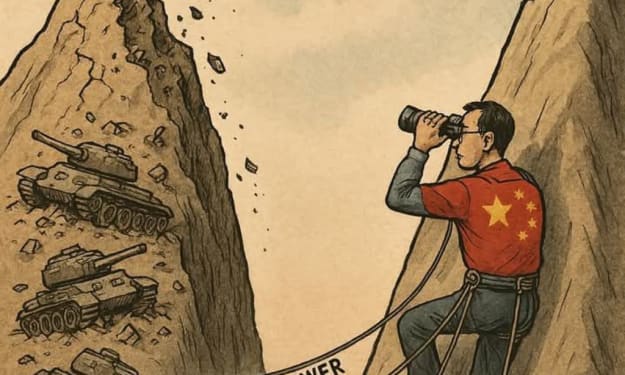
Trade War and China Strategy The geopolitical competition between China and the United States is a watershed event in contemporary world politics. According to Kishore Mahabubani's analysis, the United States is showing very clear strategic weaknesses in its competition against China, and China is meeting that challenge very systematically, subtly, and pragmatically.
By Rohitha Lanka2 years ago in Journal
The Book That Brought Me Back to Myself
The Book That Made Me Fall in Love with Thinking Again Sometimes, a book doesn’t just speak to you—it speaks for you. There was a time in my life when I felt swallowed by the weight of the world. My 8-5 job had drained me. Life felt too loud, too busy, too overwhelming—and somehow, I had forgotten who I was beneath all that noise. In a small act of rebellion against the routine, I joined the local library. I didn't know what I was looking for. I just knew I needed something that would remind me what it felt like to feel again.
By Asanda M..2 years ago in Journal
Airbnb: The $100 Billion Idea That Was Born Out of Desperation
In October 2007, Joe Gebbia and Brian Chesky were two struggling roommates living in a cramped San Francisco apartment. They were behind on rent, low on cash, and unsure about what to do next with their careers. What they didn’t realize was that in a matter of months, they would stumble upon an idea — almost by accident — that would reshape the way people travel, disrupt the global hotel industry, and create a company valued at over $100 billion. This is the remarkable true story of how Airbnb was born. --- The Idea That Started on an Air Mattress It all began with a problem. The annual Industrial Design Conference was coming to San Francisco, and every hotel room in the city was booked solid. Joe and Brian, both design graduates, saw an opportunity. With no spare rooms but a small living room, they decided to set up three air mattresses on their apartment floor and offer travelers a place to stay for $80 a night. They called it the “AirBed & Breakfast” and even served homemade breakfast in the morning. To their surprise, three guests actually booked the space — a woman from Boston, a man from India, and another from Utah. The experience was positive for everyone. The guests loved the local connection, and Joe and Brian realized this quirky idea might have bigger potential. --- Turning a Quirky Experiment into a Startup After the conference, the roommates roped in their engineer friend, Nathan Blecharczyk, and officially co-founded what would later be known as Airbnb. But the early days were far from glamorous. When they tried pitching their business to investors in Silicon Valley, they were met with skepticism. Most investors dismissed the idea of strangers paying to sleep in other people’s homes as risky, odd, and unscalable. To keep themselves afloat, the trio even started selling novelty breakfast cereals — “Obama O’s” and “Cap’n McCain’s” — during the 2008 U.S. presidential election. The limited-edition boxes were a hit, earning them around $30,000 and just enough cash to keep working on Airbnb. --- The Struggles and the Breakthrough The turning point came when they were accepted into Y Combinator, a prestigious startup accelerator. The program gave them seed funding, mentorship, and access to valuable investors. But most importantly, it pushed them to fix their biggest issue: trust. In the early days, Airbnb’s listings lacked quality photos, making homes look unappealing. So Joe and Brian personally visited hosts in New York, took professional-grade photos of their properties, and uploaded them to the platform. Almost immediately, bookings surged. This small yet smart move taught them a crucial startup lesson: small tweaks can trigger big changes. --- Airbnb Goes Global Over the next few years, Airbnb slowly expanded beyond the U.S., attracting hosts and guests from around the world. Travelers loved the concept of experiencing a destination through the eyes of locals, often staying in unique properties like treehouses, castles, boats, and tiny homes. Despite early controversies over regulations, safety concerns, and opposition from hotel chains, Airbnb persevered by implementing stronger safety measures, identity verification, host guarantees, and a user-friendly app. By 2015, Airbnb was valued at over $20 billion. By 2020, even amid a global pandemic that devastated travel, the company adapted quickly by promoting local stays, long-term rentals, and virtual experiences. --- The IPO That Made History In December 2020, Airbnb went public. Despite fears over the future of travel during COVID-19, its stock price skyrocketed on the first day of trading, giving Airbnb a market valuation of over $100 billion — making it one of the largest IPOs in U.S. history. Today, Airbnb has hosted over 1 billion guests in more than 220 countries. --- Lessons from Airbnb’s Success Solve a real, immediate problem. Airbnb started as a fix for their own rent troubles and a citywide hotel shortage. Be persistent despite rejection. Most early investors rejected them — over 20 times. Don’t underestimate small changes. Upgrading listing photos was a game-changer. Adapt quickly. Airbnb thrived during crises by pivoting and innovating. --- Final Thought: Airbnb’s story isn’t just about a billion-dollar business — it’s a reminder that great ideas don’t always start with perfect plans or ideal conditions. Sometimes, all it takes is an air mattress, a little hustle, and the courage to believe in something others think is crazy.
By SHADOW-WRITES2 years ago in Journal
A Journey of Passion, Pressure and Purpose (Part I)
I recently had the opportunity to be part of something truly special — the Zindigi Prize KPK Regionals, held from August 23rd to 25th, 2024, at the awe-inspiring Ghulam Ishaq Khan Institute of Engineering Sciences and Technology (GIKI). Yes, I know… I said “recently,” and some of you readers might be thinking, “Bro, that was last year.”
By Mohammed Askee2 years ago in Journal
How Canva Became a Billion-Dollar Design Platform Without Traditional Investors
When you hear about billion-dollar tech companies, you probably think of Silicon Valley giants like Google, Facebook, or Microsoft. But one of the world’s most successful modern tech businesses started far from California — in Perth, Australia. This is the story of Canva, an online graphic design platform founded by Melanie Perkins. It’s a prime example of how determination, simplicity, and solving a real problem can lead to extraordinary success, even without deep pockets or big-name investors at the start. --- The Birth of an Idea Melanie Perkins was just 19 years old when she noticed how complicated graphic design software like Photoshop and InDesign could be for everyday people. As a university student teaching others how to use these tools, she realized most people didn’t need complex, professional-level features. They just wanted to design simple posters, resumes, and social media graphics. Seeing this gap in the market, Melanie came up with an idea for a tool that would make design easy for everyone, regardless of skill level. Along with her co-founder, Cliff Obrecht, she created a simple online tool called Fusion Books, which let students and teachers create their own yearbooks. The project took off in Australian schools, giving Melanie her first taste of business success. But she knew the potential was far greater. --- From Rejections to Breakthrough Melanie dreamed of expanding her concept into a broader platform for all types of design — not just yearbooks. But breaking into the tech industry wasn’t easy. She and Cliff flew to Silicon Valley, pitching their idea to dozens of investors. They were rejected more than 100 times. Most investors thought a young woman from Australia without a tech background couldn’t pull off a global tech company. But Melanie didn’t give up. Eventually, she met Cameron Adams, a former Google engineer. Impressed by her persistence and vision, he joined as a third co-founder. With Cameron’s technical expertise and the founders’ relentless drive, Canva was officially born in 2013. --- Why Canva Succeeded What makes Canva a modern business success story isn’t just the size of the company — it’s how they approached solving a problem people genuinely faced. 1. Simplicity: Canva’s platform is clean, intuitive, and requires no design experience. You can drag and drop elements, choose from thousands of templates, and create professional-looking content in minutes. 2. Accessibility: Unlike expensive software, Canva offered a freemium model — with a free version that met most people’s needs and a paid version for businesses and professionals. 3. Global Audience: Because it’s entirely online, Canva attracted users from around the world. Today, it’s used by individuals, marketers, teachers, entrepreneurs, and even Fortune 500 companies. 4. Customer-Centric Growth: Canva focused heavily on listening to user feedback and improving its features regularly, which built loyal customers and organic word-of-mouth growth. --- Where Canva Stands Today As of 2025, Canva is valued at over $40 billion and has more than 150 million monthly active users in 190+ countries. The company continues expanding into new tools for video, presentations, websites, and collaborative projects. Melanie Perkins is now one of the youngest self-made female billionaires in the world. She’s also known for her commitment to philanthropy, having pledged to give away most of her fortune to causes she cares about. --- Key Lessons from Canva’s Success Solve a real, relatable problem. Don’t overcomplicate — simplicity often wins. Persistence matters more than talent. Melanie and Cliff faced over 100 rejections before landing their break. You don’t need Silicon Valley to build a global business. Canva’s story proves great ideas can come from anywhere. Focus on community, not just profit. Canva’s growth was largely powered by its loyal users. --- Final Thought: Canva’s journey is a perfect example of modern entrepreneurship. It teaches us that no matter where you’re from or how many times you hear "no," with a good idea, relentless effort, and genuine problem-solving, you can build something the world needs — and loves.
By SHADOW-WRITES2 years ago in Journal
AI and Humanity: A Relationship Evolving with Purpose.
Not too long ago, artificial intelligence sounded like science fiction. But today, AI is deeply embedded in our daily lives from voice assistants and content recommendations to fraud detection and medical diagnostics. The evolution has been so fast and seamless that we often don’t realize we’re interacting with AI at all.
By Sayed Zewayed2 years ago in Journal