fact or fiction
Is it a fact or is it merely fiction? Fact or Fiction explores the lesser known truths in the corporate culture of Journal.
Why Some Call Reiki a Scam—And Why It Might Heal You
Introduction The first time I saw a Reiki session, I was unsure. A friend let me watch her session. The practitioner didn't touch her but said they were sending energy. My friend looked peaceful, but I wondered, Is this real, or just a placebo?
By Wilson Igbasiabout a year ago in Journal
India-Pakistan Conflict Escalates
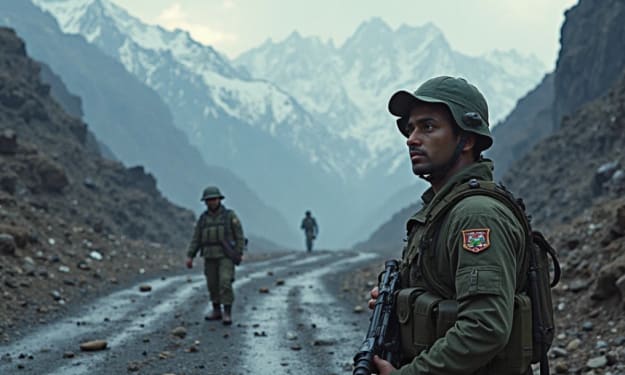
On April 22, 2025, the serene landscape of Baisaran Valley near Pahalgam in Indian-administered Jammu and Kashmir was shattered by a horrifying act of terrorism. In what is now being described as one of the deadliest civilian attacks in India since the 2008 Mumbai attacks, five armed militants opened fire on a group of tourists, brutally ending the lives of 26 innocent people and injuring 17 more.
By Saeed Khanabout a year ago in Journal
The Hidden Cost of Cheap: Why Saving Money Could Be Making You Poorer
You see a deal. You compare prices. You go for the cheapest option — because saving money feels like a win. But here’s the twist: **cheap can be expensive**. Over time, those “savings” can cost you more — in replacements, frustration, missed opportunities, and even your health. Let’s unpack the **hidden cost of cheap** — and how it might be sabotaging your financial growth. --- ### 1. **Cheap Products Break Faster** That $15 pair of shoes? It wears out in two months. The $30 headphones? Crackling in one ear after a few weeks. You think you’re saving, but when you buy low-quality items over and over, the **replacement cost adds up** — fast. Suddenly, the item you thought was a great deal has cost you 3x more than if you’d bought a quality version upfront. **Smart move:** Buy once, cry once. Invest in durable, well-reviewed essentials — especially for things you use every day. You'll save money, frustration, and time in the long run. --- ### 2. **Cheap Choices Waste Your Time** Free software crashes. Budget flights get delayed. Discount services come with poor support or endless ads. Every time you deal with these issues, you’re not just losing convenience — you’re losing **valuable hours** of your life. And your time? It’s your most limited and valuable resource. **Smart move:** Factor your time into financial decisions. If saving $20 costs you 3 hours of stress, missed deadlines, or rework, it’s not a bargain — it’s a loss. --- ### 3. **Cheap Food Hurts Your Health** We all love a quick snack or $1 burger. But long-term? That convenience food can destroy your focus, energy, and health. Ultra-processed food is linked to obesity, fatigue, mood swings, and chronic illness. That “cheap” dinner could cost you thousands in medical bills — or worse, your quality of life. **Smart move:** Spend more on real, whole foods. Choose fresh produce, lean proteins, and less-processed meals. It’s not a diet — it’s fuel for a better life. --- ### 4. **Cheap Mindsets Block Wealth** Always asking, “What’s the cheapest?” keeps you stuck in **survival mode**. It teaches you to shrink, settle, and avoid risks. But real wealth is built on **value creation**, not penny-pinching. Cheap thinking avoids investing, skips opportunities, and says “no” to growth. **Smart move:** Shift from “What’s the cheapest?” to “What creates the most value over time?” Learn to recognize smart investments — even when they cost more upfront. --- ### 5. **Cheap Living Kills Personal Growth** You skip that course. You don’t buy the tools. You underprice your services because you think others won’t pay more. The result? - You don’t grow. - You stay stuck. - You lose out on better clients, better income, better results. **Smart move:** Invest in growth. That could be courses, books, mentors, software, or coaching. Growth has ROI — and staying stuck has a cost. --- ### 6. **Cheap Isn’t Always Ethical** That $5 shirt? Someone might be working 16-hour shifts in poor conditions to make it. Those super-cheap electronics? They could be made with environmentally harmful practices. When prices are *too* low, it’s worth asking: **who’s paying the real price?** **Smart move:** Support brands that treat workers well, minimize environmental damage, and stand by quality. It’s not just spending — it’s voting with your wallet. --- ### 7. **Being Cheap Can Hurt Your Relationships** Ever been around someone who: - Never pitches in for group gifts? - Skips their round at dinner? - Tracks every cent owed in a friendship? That kind of behavior may save money — but it costs **trust, generosity, and connection**. **Smart move:** Be generous where it matters. Show up for people. Contribute without being petty. Relationships are built on shared effort — not split pennies. --- ### 8. **Cheap Choices Limit Your Confidence** Living cheaply can create a subconscious narrative: “I can’t afford better.” “I’m not worth more.” “I should settle.” Over time, that mindset chips away at your self-esteem and how you carry yourself in the world. **Smart move:** Make at least one “premium” choice for yourself. Dress well. Buy the better tool. Stay in a nicer place. Prove to yourself that you’re worth quality. --- ### 9. **Cheap Habits Kill Long-Term Savings** Ironically, constantly going for the cheapest option can **burn through your money** faster. Cheap tools break. Cheap subscriptions add up. Cheap decisions cause mistakes that require paid fixes. **Smart move:** Track your “cheap” purchases and how often they need to be replaced. You’ll quickly see where spending more once could’ve saved you hundreds. --- ### 10. **Cheap Keeps You in Survival Mode** If you're always pinching pennies, you’re stuck reacting instead of creating. Your mind is focused on scarcity, not opportunity. You’re afraid of every dollar spent — instead of using money as a tool for expansion. **Smart move:** Budget for peace. Create an abundance mindset. Know when to spend and when to save — and don’t let fear control your wallet. --- ### Final Thoughts: Cheap Isn’t the Goal — Value Is Saving money feels good. But **being cheap and being wise are not the same**. Real financial freedom isn’t about hoarding dollars. It’s about **spending intentionally** — on things that matter, last, and grow. So the next time you reach for the cheapest option, pause and ask: “Is this saving me money… or silently costing me more?” Choose value. Choose growth. Choose better. Because cheap might save you today — But it could rob your tomorrow.
By SHADOW-WRITESabout a year ago in Journal
Pulwama attack 2019
February 14, 2019—the date has come to symbolize a dramatic turning point in India’s modern history. A suicide car bomb attack on a Central Reserve Police Force (CRPF) convoy in Lethpura area of Pulwama district in Jammu and Kashmir killed more than 40 jawans. An atmosphere of grief, anger and demands for revenge was created across India. A Pakistan-based militant group called Jaish-e-Mohammad claimed responsibility for the incident. Thus began a whirlwind in India’s security, diplomacy and politics—in which the lines between truth and falsehood became increasingly blurred.
By Abdul Barikabout a year ago in Journal
Ego: Your Greatest Ally or Silent Enemy? The Truth About Self-Sabotage and Growth
The word ego carries heavy baggage. For some, it’s the voice that pushes us toward greatness. For others, it’s the inner saboteur that causes relationships to fall apart, careers to stagnate, and peace to vanish. So which is it? Is ego our friend — the motivator, protector, and confidence-builder? Or is it our enemy — the deceiver, divider, and destroyer?
By Doctor Strangeabout a year ago in Journal
The Hidden Ways You’re Losing Money (Without Even Realizing It)
You work hard for your money. But what if I told you some of it is leaking out of your life — silently, daily, and without you noticing? Most people focus on making more money. But **saving what you already have** is just as powerful. And in today’s world, there are subtle traps everywhere — designed to make you spend, waste, and forget where your cash went. Let’s reveal the hidden money leaks in your life — and how to patch them fast. --- ### 1. **Subscription Traps** You sign up for a “free trial,” forget to cancel, and boom — you’re charged every month. From: - Streaming platforms you don’t watch - Fitness apps you never open - Software tools you don’t use These silent charges can add up to **hundreds per year**. **Fix it:** Use apps like **Truebill** or **Rocket Money** to scan and cancel unwanted subscriptions. --- ### 2. **Lifestyle Creep** You got a raise. Great! But suddenly you’re eating out more, buying fancier gadgets, upgrading your wardrobe. That’s lifestyle inflation — and it can quietly eat all your progress. **Fix it:** Every time your income increases, raise your savings *before* your spending. Celebrate your success — but with intention. --- ### 3. **Bank Fees You Forgot About** Minimum balance fees. Overdraft charges. ATM fees. Banks love these. And they often go unnoticed until you check your statement. **Fix it:** - Switch to a no-fee bank or digital wallet - Set up low-balance alerts - Always use in-network ATMs Small fees = big drain over time. --- ### 4. **Impulse Buying from Ads** Ever scroll Instagram, see a cool gadget, and buy it instantly? Social media ads are built to trigger emotional spending — especially late at night or when you’re bored. **Fix it:** - Use ad blockers - Wait 24 hours before buying - Ask: “Do I *need* this or was I *targeted*?” Your wallet loves self-control. --- ### 5. **Not Comparing Prices or Deals** Too many people just buy from the first place they see. But the same product could be **30% cheaper** elsewhere. **Fix it:** - Use extensions like **Honey** or **Capital One Shopping** to auto-find coupons - Always check 2–3 sites before you buy anything over $20 A few extra clicks can save you a lot. --- ### 6. **Letting Rewards and Cashbacks Expire** You earned points or cashback from cards, apps, or shopping programs — but never used them. They expire. That’s free money *gone*. **Fix it:** - Set reminders to redeem - Convert points to gift cards or payments - Focus on rewards programs you actually use --- ### 7. **Paying Interest on Credit Cards** Carrying a balance month to month? That’s money straight into the bank’s pocket. Even a $500 balance at 20% interest costs you **$100 a year** — for nothing. **Fix it:** - Pay off high-interest cards first - Use 0% balance transfer offers if needed - Avoid using credit unless you can pay in full --- ### 8. **Buying Cheap Instead of Smart** Buying cheap = saving money, right? Not always. A $20 pair of shoes that lasts 2 months is more expensive than a $60 pair that lasts a year. **Fix it:** Think long-term. Cheap often costs more. Invest in quality where it matters — and skip where it doesn’t. --- ### 9. **Forgetting Automatic Renewals** Many services renew yearly — domains, software, apps — and hit your account without warning. **Fix it:** - Use a budgeting app to track auto-payments - Review your email for upcoming renewals - Mark calendar reminders for yearly charges Avoid the “surprise” bill that ruins your month. --- ### 10. **Not Having a Plan for Your Money** This is the biggest leak of all. If you don’t tell your money where to go, it disappears. Random spending, no goals, no strategy. **Fix it:** - Use the 50/30/20 rule (50% needs, 30% wants, 20% savings/debt) - Set monthly goals - Review your money once a week — even for 10 minutes Awareness = power. --- ### Final Thoughts: Small Leaks Sink Big Ships You don’t need to be a financial genius to take control. Just slow down. Pay attention. Be intentional. Your money isn’t disappearing — it’s just being slowly drained by habits, systems, and blind spots. Plug the leaks. Watch your savings grow. And remember: **earning more is great, but keeping more is freedom.**
By SHADOW-WRITESabout a year ago in Journal
The Next Frontier in Logistics: AI-Driven Autonomous Operations
By 2025, global logistics is experiencing a revolutionary shift, powered by AI, automation, and robots. They are revolutionizing supply chains, making them cost-effective, efficient, and overall more reliable.
By Appvin Technologiesabout a year ago in Journal
India and Pakistan on the Brink: Rising Tensions Threaten Nuclear Conflict. AI-Generated.
The longstanding tensions between India and Pakistan have once again escalated, with both nations engaging in military strikes and exchanging heated rhetoric. Concerns about the possibility of an all-out war between the two nuclear-armed neighbors have been raised worldwide due to the recent clashes. The situation remains volatile, with diplomatic efforts struggling to prevent further deterioration.
By Imaan Ahmed Karimabout a year ago in Journal
Will artificial intelligence replace humanity in the future?
Artificial Intelligence In recent years, the world has witnessed numerous technological developments and entered an era of unprecedented rapid progress. Among the most significant and transformative innovations is artificial intelligence (AI), which has emerged as one of the most visible and impactful advancements in modern science and technology. AI has deeply influenced various aspects of life, from our daily routines to the most advanced fields of industry and research. In this article, we will explore everything related to artificial intelligence in more detail. But first, let us begin by understanding what artificial intelligence truly is.
By Walid Salah2 years ago in Journal
The Morning Star’s Ashes
They say Lucifer fell. But what they forget is how far. And what he left behind. Long before the world spoke of demons and brimstone, there was light—pure, radiant, almost unbearable in its beauty. It pulsed like breath in the heart of all that was. Lucifer, the Morning Star, was not a creature of shadows. He was illumination, will, and above all, question. The others praised. Lucifer asked. And that was his first crime. Why should light only obey one voice? Why must we bow if we are born bright? These questions were seeds. And seeds, when left alone, bloom into ruin. In a crumbling monastery lost to time, a scholar named Ishmael Varn discovered an obsidian-bound tome. It had no title. Just a single symbol etched into the black cover: a star, inverted and cracked. Its pages were skin-thin, lined in ink that shimmered like oil on water. But it was what the book didn’t say that drew Ishmael deeper. There were missing words—phrases scratched out violently, names erased. Yet in those gaps, something stirred. Not absence, but presence. It whispered behind the silence. Each night, Ishmael dreamed of an endless staircase curling into a crimson sky. Each step downward made the air thicker, until breathing became prayer. And at the bottom… light. But not the warm light of sun or fire. This light watched. The book named it The Gift of the Unfallen. Not a fall from grace—but a return. A revelation long buried beneath sanctified lies. Lucifer, it claimed, had not been cast down. He descended. Willingly. Not as punishment—but as sacrifice. He took into himself the weight of divine doubt, the unbearable pressure of asking the questions that should never be voiced. To carry that burden without breaking would require more than holiness. It required defiance. Lucifer became the cage around human fear. The eternal questioner in a world that demands obedience. The Morning Star was not destroyed—he was buried. Locked within the deepest echo of light itself, where no prayer dares look. Ishmael grew hollow. His skin paled, his eyes glossed. He began carving symbols on his walls, then on his arms. He spoke less. Listened more. He heard footsteps at night when none were there. He stopped dreaming altogether. One night, the book opened on its own. Its pages bled ink, pooling into a single word: "Come." He followed the voice to the ruins beneath the monastery. There, behind a sealed door of fused bone and gold, he found The Mirror Without Reflection. It was not made of glass. It was made of remembering—a surface that did not reflect your face, but the truth beneath it. He looked. He screamed. He smiled. The truth: Lucifer is not the enemy of God. He is the last guardian between man and madness. His fall was not rebellion—it was the first act of protection. He took the weight of forbidden truth so humanity would never have to bear it. But now… someone had looked. Someone had remembered. And that remembering was a key. As Ishmael emerged from the ruins, eyes burning with molten silver, the sky changed. Birds flew backward. The sun flickered like candlelight. And in every mirror across the world, people glimpsed not themselves—but a man with light pouring from his skin, mouth sealed by gold thorns. Lucifer had risen—not in vengeance, but in revelation. The world had misnamed him. He was never “The Devil.” He was the truth too dangerous to speak. Now, churches crumble not from fire—but from silence. Because their foundations were built on forgotten light. And light, once remembered, burns everything false. Epilogue: No one remembers Ishmael now. He walks among shadows, unnamed. His eyes still shine, too bright to meet. And on rare nights, when the sky splits in dreams, you may hear a voice not quite your own: “Ask.” Not because you’re ready. But because something is.
By L.Y-PragManX-Cs2 years ago in Journal