fact or fiction
Is it a fact or is it merely fiction? Fact or Fiction explores the lesser known truths in the corporate culture of Journal.
I Thought I Was Just Tired — Turns Out, I Wasn’t Sleeping Right
I Thought I Was Just Tired — Turns Out, I Wasn’t Sleeping Right For months, I blamed everything on being tired. Work felt harder. I was snapping at people. I kept forgetting little things. But I was sleeping 7–8 hours every night, so I thought, “Maybe I’m just stressed.”
By Dr manvir bhatiaabout a year ago in Journal
Oslo Accords
Oslo Accords: Another Chapter in the Deception of the Palestinians September 13, 1993. A much-discussed moment in the history of world politics was captured on the White House lawn: Israeli Prime Minister Yitzhak Rabin and PLO Chairman Yasser Arafat shaking hands, with US President Bill Clinton standing in between. Cameras flashed all around, media cheers, and congratulatory messages poured in from major capitals around the world. Everyone was saying—a new era of peace had begun in the Middle East. But what was not visible was the reality behind the scenes of this agreement—a clever, cunning, and ruthless political deception that the Palestinians were the victims of.
By Abdul Barikabout a year ago in Journal
Stale Mate
Dear my friend, who needs to listen to my every word. I am done. I’ve finally had enough of it all. Now is the time to pack it all in because I can’t stomach it anymore. For hours I wait to be greeted and yet you pay me no attention. The moment I wake I am full of energy, ready to start the day and yet you have no time for me. Why bother in the first place? Do you even bother to look at me?
By Elizabeth Butlerabout a year ago in Journal
India and Pakistan
India and Pakistan—though two neighboring states—have always had hostile, suspicious, and conflicting relations. Since the bloody chapter of the partition of 1947, these two states have been locked in a perpetual cold war, whether behind the scenes of diplomatic negotiations or on the open battlefield. But Pakistan's presence in modern Indian politics is often more strategic than real; India's political leadership often achieves ulterior motives by portraying Pakistan not just as a rival, but as a formidable enemy. And one of the hidden hands that works very subtly in this process is false flag operations—that is, organizing attacks themselves and blaming them on the enemy.
By Abdul Barikabout a year ago in Journal
Islam believes that non-Muslims are 'kafirs' and must be hated by all.
Allegation: Islam believes that non-Muslims are ‘kafirs’ and that all of them should be hated. The basis of this allegation is the use of the word ‘kafir’ in Islam and certain provisions regarding relations with non-Muslims, which are often misinterpreted and used by Islamophobic groups for propaganda purposes. They say that since Islam calls non-Muslims ‘kafirs’, this religion spreads hatred, malice and intolerance.
By Abdul Barikabout a year ago in Journal
Resurrecting Dinosaurs: Science vs. Fiction
The Biological Barriers to True Dinosaur Resurrection The fascination with bringing dinosaurs back to life has captivated our collective imagination since long before "Jurassic Park" hit theaters. However, the scientific reality presents formidable obstacles that make true dinosaur resurrection nearly impossible with current technology.
By Muhammah Hanzalahabout a year ago in Journal
Echoes of the Unheard
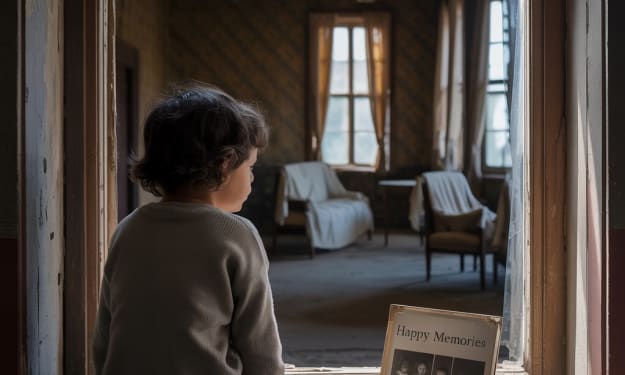
In a dimly lit orphanage nestled at the edge of a quiet town, eight-year-old Ayaan stared out of a cracked window, his small fingers tracing the fog on the glass. The world outside was cold, but not colder than the silence within. The walls of St. Mercy’s Home for Children had long forgotten the sound of laughter. They only echoed footsteps, whispered sobs, and the occasional scolding of Miss D'Souza, the matron with tired eyes and a heart guarded by years of pain. Ayaan had no memory of his parents. He only had a faded photograph: a woman in a yellow dress holding a baby with a smile that didn't reach her eyes. On the back, in shaky handwriting, was a name: Ayaan – born of love. That one line was the only anchor he had to a life before the orphanage. Each day began with chores—washing dishes, folding laundry, scrubbing floors. The older children, hardened by time and rejection, kept to themselves. Ayaan, younger and quieter, often sat alone during meals, watching the door, hoping someone would come. Hoping for a family. On Sundays, potential adoptive parents would visit. The children would dress in their best clothes, recite poems, and force smiles that had grown tired. But Ayaan, with his thin frame and shy eyes, was always overlooked. One by one, his friends left. Some returned, unable to adjust. Others vanished from memory, as though they’d never existed. Years passed. At fifteen, Ayaan had grown tall and thoughtful. He no longer looked out the window with hope. He had traded dreams for books, finding solace in stories of warriors, inventors, and poets. His favorite was a tattered copy of The Little Prince, given to him by an old volunteer. “You’re like him,” she’d said. “Alone, but full of wonder.” One evening, while helping clean the attic, Ayaan stumbled upon an old trunk filled with letters. They were unsent notes written by children over the decades—pleas to unknown parents, birthday wishes, even complaints about the food. Among them was one addressed to My future self. It was written by a boy named Ravi, once a resident, now long gone. "Dear me," it read, "If you’re reading this, I hope you’ve found peace. I hope you know it’s okay to cry, to be angry, but never forget to hope. Hope is the only thing they can’t take from us." That letter sparked something in Ayaan. He began writing, pouring his thoughts into journals. He wrote about loneliness, about longing, about love. Miss D’Souza, noticing the change, encouraged him to keep going. “Your words,” she said once, “they make this place a little warmer.” At seventeen, Ayaan graduated with top marks. Universities were out of reach financially, but he earned a scholarship for his essays on social justice. One of his pieces, titled The Unseen Children, was published in a local newspaper, catching the attention of a social worker named Rhea. Rhea had grown up in foster care. She saw in Ayaan a reflection of herself. She reached out, not to offer adoption—he was nearly an adult—but to be a mentor, a guide. For the first time, Ayaan had someone who asked about his day, celebrated his wins, and reminded him of his worth. Through Rhea, Ayaan met other orphans and foster youth. He began speaking at events, sharing his story, advocating for reforms in the child welfare system. His past, once a source of shame, became his strength. He wasn’t just surviving anymore. He was shaping a future—not just for himself, but for countless others. At twenty-five, Ayaan published his first book: Echoes of the Unheard. It was a memoir interwoven with poetry, letters from the orphanage, and stories of the forgotten. The book stirred hearts, opened eyes, and inspired change. Proceeds went toward building a new, child-centric home—not an orphanage, but a sanctuary—called Ravi’s Hope, named after the letter that saved him. And every evening, in his quiet apartment, Ayaan would light a candle by the window. A small act of remembrance. For the boy who waited by the glass, and for all the others still waiting.
By Muhammad Ali about a year ago in Journal
A Prophet on the Throne of Patience: The Story of Prophet Ayyub (AS)
As the sun sets in the sky, the shadows of the mountains fall on the valley below, the once prosperous town is silent today. The trees stand as if they are witnesses to a history—of a prophet who lost everything, but did not lose faith; who did not cry in his sorrow, but remained grateful to Allah at every moment.
By Abdul Barikabout a year ago in Journal
Resigning From the Role I Never Applied For
Dear Friends, Acquaintances, and Emotional Freeloaders: After much soul-searching, three sleepless nights, a half bottle of Cabernet, and one highly unnecessary loop of Whitney Houston’s “Greatest Love of All”, I, Anthony, am officially and unequivocally resigning from my unofficial, unpaid, and unappreciated position as Everyone’s Reliable Rock, Personal Therapist, Emergency Lifeguard, Calendar Adjuster, and Default Cheerleader.
By Anthony Chanabout a year ago in Journal
I Left Everything Behind to Start Over—And It Was the Best Decision of My Life
There comes a moment in life when you look around and wonder, “Is this really it?” I had a job that paid well, a partner everyone thought was perfect for me, and an apartment in the city most people would envy. But every morning, I woke up with a tightness in my chest and a weight I couldn’t explain. Smiles felt forced. Conversations felt empty. And somewhere in the background of my own life, I had gone missing. It wasn’t one event that pushed me to the edge—it was years of quiet unraveling. I had spent my twenties checking boxes: degree, job, relationship, promotion. But each success felt hollow. The more I achieved, the more I lost myself. I had molded my life into what others told me it should be, never pausing to ask what I wanted. The breaking point came one cold November morning. I sat at my desk, staring at the blinking cursor on my computer screen. Deadlines were looming, my phone wouldn’t stop buzzing, and my boss was shouting down the hall. In the middle of all the noise, a thought cut through with piercing clarity: I can’t do this anymore. That night, I went home and wrote a letter to myself. Not a resignation letter, not a breakup note—just an honest confession of how lost I felt. I cried. I shook. And by the time I finished, I knew what I had to do. I needed to walk away. From everything. Over the next few weeks, I quietly made arrangements. I terminated my lease. I handed in my notice. I packed a single backpack with clothes, my journal, and a few essentials. And then, one gray morning, I boarded a train going north with no real plan—just the burning need to start over. It wasn’t glamorous. I stayed in budget hostels. I worked part-time gigs: café shifts, dog walking, a little freelance writing. But for the first time in years, I felt alive. Every sunrise was mine. Every step I took was a choice. I wasn’t running from my life—I was finally running toward something. I remember standing on a beach one quiet evening, waves crashing, the wind pulling at my hair. I looked out at the vastness of the ocean and realized I had never felt so small—yet so powerful. I had chosen myself. I had chosen uncertainty over a lie. In those early months, I had to confront a lot: guilt, fear, the opinions of people I left behind. Some called me reckless. Others thought I had lost my mind. But the people who truly loved me—the ones who saw through the mask I had worn for so long—they cheered me on, even from afar. There were setbacks. I got sick once and had no health insurance. I ran out of money and had to sleep on a friend’s couch for a week. But even in those moments, I didn’t doubt my decision. Because for the first time, the pain I felt was real—not the quiet, suffocating numbness I had lived with for so long. Over time, I rebuilt—not the old version of my life, but something entirely new. I began volunteering at a local writing center. I started journaling again, and those entries slowly turned into stories. Those stories found readers. And those readers helped me believe I had something worth sharing. I met new people—not because I had to network or fit in, but because I was open, raw, and real. I formed friendships that were rooted in shared growth, not convenience. I even fell in love again, but this time with someone who met me exactly where I was—someone who valued my journey and respected my boundaries. A year later, I returned to the city—not to stay, but to visit. I walked past my old apartment and paused. It felt like watching a scene from someone else’s life. I didn’t feel sadness or regret. I felt pride. Because that version of me, scared as she was, made the bravest choice of all: she walked away. Starting over doesn’t mean forgetting the past. It means honoring where you’ve been while giving yourself permission to grow into something new. It means letting go of perfection and embracing authenticity. It means realizing that comfort isn’t the same as happiness. Today, my life is simpler but fuller. I work remotely as a writer, sharing stories that matter. I live in a small coastal town where the sea reminds me daily of how vast and beautiful the world is. And every time I doubt myself, I look back on the girl who left everything behind—and I thank her. She didn’t have all the answers. She just had the courage to ask the right questions.
By Muhammad Ilyasabout a year ago in Journal
Kindle Your Spark
In a world that often urges us to look outward for validation, inspiration, and success, it's easy to forget that the most powerful source of light exists within us. We scroll through endless feeds for motivation, chase approval from others, and search far and wide for signs that we are on the right path. But what if the spark you're seeking is already burning inside you, waiting to be kindled?
By Habibullah khan about a year ago in Journal