fact or fiction
Is it a fact or is it merely fiction? Fact or Fiction explores the lesser known truths in the corporate culture of Journal.
Beach Dinners in the Maldives: Top Experiences You Shouldn’t Miss
A Dining Concept Born from Nature In the Maldives, dinner is not confined to four walls. As the sun sets, the horizon blushes pink and orange, and stretches of soft white sand are transformed into open-air dining rooms. Tables stand just meters from the shore, their candles flickering in the breeze, while the sound of waves replaces background music.
By Cristian Marinoabout a year ago in Journal
Earning Online Dollars Without Investment in Amazon KDP
💸 What if I told you that you could earn real U.S. dollars from home — without investment, without risk, and without needing to be a bestselling author? Welcome to the world of Amazon KDP — a platform where your ideas can become income, all without spending a single cent.
By Wow Geniusabout a year ago in Journal
The Man Who Walked Between Shadows
The rain had stopped just before dawn, leaving the city streets wet and glistening like sheets of black glass. The man walked alone, his boots splashing softly through shallow puddles. His coat, once a warm brown, now hung heavy and dark against his thin frame. People passed him without a second glance. To them, he was just another face in the crowd, a shadow among shadows. But inside him, something was changing — something had been stirred awake.
By Alexander Mindabout a year ago in Journal
5 Things I Wish I Knew About the Western World Growing Up in Africa. AI-Generated.
Reflections on culture, identity, and the lessons that shaped me Growing up in Africa comes with its own unique rhythm one filled with resilience, strong community bonds, and a deep appreciation for life’s simple joys. But like many kids who grew up hearing stories of “the Western world,” I built an image in my mind that didn’t always align with reality. I thought the West was a land of endless wealth, perfection, and opportunities just waiting to be picked off the ground.
By David Kadiriabout a year ago in Journal
The Secret Keepers
M Mehran I discovered journals when I was twelve. My mother handed me a small leather-bound notebook and said, “Write down what you feel. Someday, you’ll thank yourself.” At the time, I thought she was giving me a book for school, not a portal into my own mind. --- The First Entry The first page was blank, intimidating in its emptiness. I hesitated, pen hovering, unsure what to write. Then I scrawled, “Today was boring. Nothing happened.” And yet, that simple sentence marked the beginning of a habit that would change my life. Journals are not just about recording events—they are about capturing thoughts, feelings, and moments that slip through the cracks of memory. --- A Safe Place Over the years, my journals became a sanctuary. When school was overwhelming, I poured frustration onto the pages. When friendships faltered, I recorded the arguments, the misunderstandings, and the small reconciliations. When life was beautiful, I wrote feverishly, as if capturing joy on paper could make it permanent. Journals are safe places. They are silent, patient, and judgment-free. You can write anything—your triumphs, your fears, your secrets—and the pages will hold them without complaint. --- Discovering Patterns As I grew older, I noticed patterns emerging in my entries. Certain worries repeated. Certain dreams resurfaced. Certain regrets echoed like distant bells. Journals, I realized, are mirrors. They reflect not just the life you live, but the inner life you sometimes ignore. Reading old entries, I saw growth I hadn’t noticed at the time. I saw the shy child who gradually became more confident, the hesitant teenager learning to speak her mind, the young adult discovering resilience. Journals allow us to witness our own evolution. --- The Power of Honesty One summer, I faced a personal crisis. A close friend betrayed my trust, leaving me angry and hurt. I wanted to scream, to lash out, but instead, I opened my journal. I wrote pages of raw, unfiltered emotion. There were typos, smudges, and even tears on the paper. Writing honestly, without filtering for anyone else’s approval, had a strange power. By the time I finished, I felt lighter. Journals do not solve problems, but they help you see them clearly. They allow you to confront feelings you might otherwise bury, and in doing so, they guide you toward healing. --- A Conversation With Myself Over time, journaling became less about recording events and more about conversation. I wrote questions: Why do I feel anxious? What do I want from this friendship? What scares me most? And then I wrote answers, slowly, sometimes painfully. These conversations were never easy. Sometimes I lied to myself, evaded answers, or tore out pages in frustration. But eventually, the journal became a confidant, someone who listens without interruption, someone who forces you to face yourself. --- Moments Captured Not all entries were heavy. Some were moments of wonder. I wrote about sunsets that took my breath away, spontaneous road trips, laughter with friends that left my cheeks sore. I wrote poems, lists of dreams, snippets of conversations I didn’t want to forget. Journals capture life in its fullness. They record sorrow and joy, chaos and calm, love and loss. They remind us that every moment, no matter how small, has meaning. --- The Unexpected Discovery Years later, I found my very first journal, tucked away in a drawer. Flipping through the pages, I laughed at my childish handwriting and the way I overdramatized small events. Yet, beneath the humor, I felt gratitude. That journal had been with me through my earliest struggles, a silent witness to my growth. Journals have a strange magic. They preserve who we were, showing us how far we’ve come. They are artifacts of the self, proof that we have lived, felt, and endured. --- Journals as Legacy I began to see journals not just as personal tools, but as legacies. They hold stories we might never share aloud, memories we might forget, wisdom we may not fully understand until later. Some day, perhaps, someone else might read them—our children, friends, or even strangers—and glimpse the person we were, the person we are. There is power in that preservation. Journals remind us that our lives matter, that our experiences, thoughts, and feelings are worth documenting. They allow us to leave pieces of ourselves behind, quietly, page by page. --- The Living Practice Even now, I write every morning. It’s no longer a chore or a habit; it’s a practice. A meditation. A conversation with the most important person I know: myself. I write to remember, to understand, to dream. I write to process fear, disappointment, love, and gratitude. And sometimes, I write simply because the pen feels alive in my hand, tracing thoughts into existence. Journals are more than notebooks. They are companions, teachers, and mirrors. They are the living record of a life, chaotic and beautiful. --- Closing Reflection In a world that moves quickly, journals slow us down. They remind us that our inner lives matter, that our feelings are valid, and that our stories deserve attention. They teach patience, honesty, and self-compassion. Opening a journal is opening a door to yourself. Every entry, every page, every word is a step toward understanding who you are, who you’ve been, and who you might become. And in that quiet, sacred space, we find something extraordinary: our own voice, patiently waiting to be heard.
By Muhammad Mehranabout a year ago in Journal
The Journal That Wrote Back
M Mehran Maya had always kept journals. Piles of them sat stacked in shoeboxes beneath her bed, filled with everything from teenage heartbreaks to half-baked poems. Writing was her way of making sense of life. When the world felt too loud, she found silence in ink. So, when she stumbled across a dusty leather journal at the thrift shop on Oak Street, she didn’t hesitate. Its cover was worn smooth, its pages edged in gold. The clasp was heavy, almost ceremonial. The tag read: $3.00. “A bargain,” she muttered, dropping it into her basket. That night, she cracked it open. The paper was thick, yellowed, and smelled faintly of cedar. On the very first page, written in elegant script, was a sentence: Welcome, Maya. I’ve been waiting. Her heart thudded. She hadn’t written that. She flipped through the book—every page was blank. Nervously, she wrote: Who are you? For a moment, nothing happened. Then, slowly, letters appeared beneath her words, curling onto the page like smoke: I am the Keeper of Stories. And you are my new author. Maya froze. She wanted to slam the journal shut, but curiosity was a stronger force than fear. Her pen hovered. What do you mean? she scribbled. The reply bloomed instantly. Every life has threads untold—paths not taken, words unspoken, futures that slipped away. My purpose is to let you write them… and live them, if you dare. A thrill rippled through her. Was it some kind of trick? A prank? But the more she wrote, the more real it felt. The Keeper instructed her: Write what you wish you had done differently. Write, and the ink will carry you. Maya hesitated, then scribbled: I wish I had spoken to Daniel that night at the café. Daniel. The one who had smiled at her across the room two years ago, the one she never had the courage to approach. The ink shimmered. The room spun. And suddenly—she was there. The clatter of coffee cups, the hum of conversation, the scent of roasted beans—it was the café. Daniel was at the counter, just as he had been. Only this time, when their eyes met, Maya found herself walking toward him with steady steps. Words tumbled out easily, a conversation bloomed, and his laughter was exactly as she had imagined. When she blinked, she was back in her bedroom, the journal resting on her lap. Her heart pounded. Had it really happened? But her phone buzzed with a new message: Great seeing you again today. Want to grab dinner? It had happened. From then on, Maya couldn’t stop. Each night, she wrote something new: a job she had once turned down, a friendship she had let slip, a regret she had carried too long. And each time, the journal sent her spiraling into that moment, giving her a chance to change it. Her life began to swell with possibilities—new friends, new adventures, laughter that filled the empty spaces. But with each wish, something felt… off. Her old friends began to look at her strangely, as though she were someone else. Memories blurred; conversations she recalled differently didn’t seem to exist for others. Her shoeboxes of journals no longer matched her experiences—entries described a life she no longer remembered living. One evening, trembling, she wrote: What’s happening to me? The Keeper’s reply was sharp this time. You asked to rewrite. With every choice, you unravel the old threads. That is the cost of change. Maya slammed the journal shut, horrified. Was she losing her true self piece by piece? But temptation whispered louder than fear. She still carried regrets. Still wanted to fix more. And each time she opened the journal, it promised her a better version of herself—more confident, more daring, more loved. Until the night she wrote: I wish I had told my mother I loved her before she passed. The ink spread like wildfire, letters twisting violently. The room cracked with thunder though the sky outside was clear. And then—she was in her childhood living room. Her mother sat on the sofa, alive, reading the newspaper. Tears filled Maya’s eyes. She rushed forward, fell into her arms, whispered the words she had never said. But when her mother smiled back, it wasn’t her mother’s smile. The eyes that met hers were hollow, almost… waiting. “You shouldn’t have written this,” her mother’s voice said, but it was the Keeper speaking through her. “Some threads are not meant to be rewoven.” The room dissolved. Maya awoke with a scream, clutching the journal. Its pages were no longer blank—they were filled with her handwriting, endless entries of choices she had never truly made. The final page bore one last message in that elegant script: You can keep rewriting, Maya. Or you can live the story that is truly yours. Choose wisely. For the first time, she left the journal closed. She shoved it into the shoebox under her bed and lay awake until dawn, staring at the ceiling, trembling at the weight of her own choices. Weeks passed. Life settled. Daniel was still in her world, but sometimes she wondered if he truly belonged—or if he was just ink on a page. The journal remained under her bed, heavy as a heartbeat. Some nights, she swore she could hear it whispering, tempting her to pick up the pen again. So far, she hasn’t. But temptation has a way of waiting. And journals—especially the ones that write back—never really close.
By Muhammad Mehranabout a year ago in Journal
From Full Moon to Red Moon: A Magical Night in the Maldives
A Celestial Performance in the Tropics On September 7, the Maldives offered one of the clearest views of a rare blood moon eclipse, blending astronomy, culture, and reflection beneath a tropical sky.
By Cristian Marinoabout a year ago in Journal
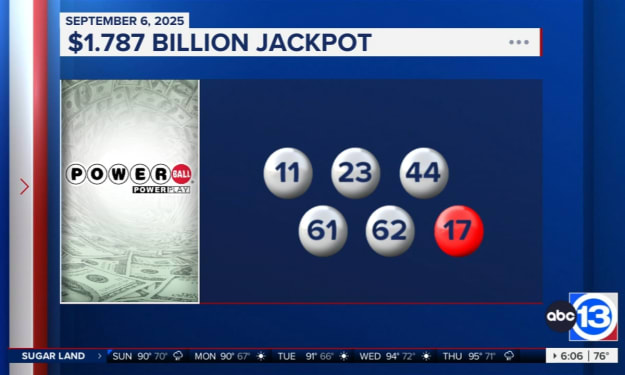
Smashing the Jackpot: Powerball Numbers for Sept 6, 2025 – Two Winners & What It Means for You. AI-Generated.
Winning Powerball Numbers for September 6, 2025 The most-searched phrase of the weekend—Powerball numbers for Sept 6, 2025—now has an answer. The official winning Powerball numbers were:
By Waqar Khanabout a year ago in Journal
The Day Strength Came Back: A Story-Driven Guide to Isometric Exercises for Older Adults
The Day Strength Came Back: A Story-Driven Guide to Isometric Exercises for Older Adults I used to think getting older meant learning to negotiate with fear—fear of stairs, fear of slick sidewalks, fear of that stubborn ache behind the knee. Then I met Sam.
By Tamer salehabout a year ago in Journal
The Myth That Business Culture Is Resistant To Change
I am currently a Nominee in the Running to Receive a Prestigious Award. I cannot talk about the Specific Details yet, but I was Asked a Series of Questions about My Work as part of the Process.
By H.E. Dr. Cody Dakota Wooten, COIE, DFM, DHMabout a year ago in Journal