economy
Economy and the area of production, distribution, trade, and consumption of goods and services.
5 Smartphone Side Hustles You Can Start in 2025 (No Laptop Needed)
Your phone isn’t just for Instagram reels, late-night scrolling, or aesthetic photos anymore. It’s a mini business tool sitting right in your hand, one that can help you earn real money online without leaving your house.
By ELIA MWAPINGAabout a year ago in Journal
6 Halloween Side Hustles That Can Earn You Scary-Good Money
Halloween isn’t just for costumes and candy anymore; it’s become a full-blown economic event. What used to be a one-night celebration has turned into a multi-month spending phenomenon. From August through November, consumers open their wallets for everything from pumpkin-themed decor to spooky treats, turning fall into prime time for profitable side hustles.
By ELIA MWAPINGAabout a year ago in Journal
Biofuels vs. Batteries: The Battle for the Future of Clean Energy
Biofuels vs. Batteries: The Battle for the Future of Clean Energy The race toward a cleaner, greener planet has taken humanity down two very different paths—one grown in the soil, the other mined from the earth. On one side are biofuels, created from plants, waste oils, and organic matter. On the other, batteries, charged by renewable electricity and ready to power everything from smartphones to semi-trucks. Both promise to free us from the grip of fossil fuels. Both carry their share of hope—and hard questions. The truth is, there may not be a single winner. Instead, the future of clean energy might belong to balance, not battle. --- 🌱 The Promise of Biofuels Biofuels have long been seen as a bridge between the old world of oil and the new age of renewables. Derived from corn, sugarcane, algae, or even leftover cooking grease, these fuels can run in existing engines with minimal modifications. The idea is beautifully simple: plants absorb carbon dioxide while they grow, and when we burn them as fuel, they release it back—creating a sort of carbon loop. In theory, this means biofuels could be carbon neutral, especially when produced sustainably. In practice, the story is more complicated. Large-scale biofuel production competes with food crops for land and water. Clearing forests for palm oil or corn ethanol often releases more carbon than the fuel saves. The ethical question becomes clear: should we burn our food to power our cars? Still, research has made progress. Second-generation biofuels, made from non-food waste like agricultural residues or algae, offer cleaner alternatives. If scaled correctly, they could transform waste into energy, turning environmental problems into opportunities. --- ⚡ The Power of Batteries Batteries have become the poster child of modern clean energy—quiet, sleek, and seemingly futuristic. Electric vehicles, solar power storage, and portable electronics all depend on them. Unlike combustion-based fuels, batteries emit no exhaust and can store renewable electricity directly from wind or solar farms. Yet batteries are not without cost. Mining for lithium, cobalt, and nickel leaves deep scars on ecosystems and often raises ethical concerns about labor practices. The process of manufacturing and recycling them remains energy-intensive, and the lifespan of many batteries is limited. But innovation is happening at lightning speed. Researchers are developing solid-state batteries with higher capacity, sodium-based cells that avoid rare minerals, and recycling systems that reclaim 90% of materials. As battery technology improves, the dream of a fully electrified world comes closer to reality. --- 🌍 Efficiency and Real-World Impact When it comes to energy efficiency, batteries hold a significant edge. Electric vehicles convert about 80% of their energy into motion, compared to roughly 30% for combustion engines powered by biofuels. That means less energy wasted—and fewer emissions overall. However, batteries depend on a stable power grid and charging infrastructure, which many regions lack. Biofuels, by contrast, can be distributed using existing systems—especially in developing countries where refueling stations already exist. For heavy industries, aviation, and long-distance shipping, batteries still struggle to meet the demand for energy density—how much power you can pack into a small space. Biofuels, with their high energy content, remain a strong contender in those areas. So while batteries lead in personal transportation and storage, biofuels still matter where electricity can’t easily go. --- 💬 The Human Element Beyond the science, there’s a human story here—our search for balance between progress and responsibility. Every clean energy solution comes with trade-offs. A battery-powered car might cut emissions but still rely on minerals mined under harsh conditions. A biofuel plant might help farmers earn more but also increase deforestation if not managed carefully. True sustainability isn’t just about numbers—it’s about values. How we source, produce, and consume energy reflects who we are as a society. The real victory won’t come from one technology defeating another but from a shared commitment to cleaner choices. --- 🔋🌾 The Future: A Hybrid World Perhaps the most realistic future is not “biofuels or batteries,” but biofuels and batteries—each doing what it does best. Imagine solar farms charging massive batteries for cities while biofuel planes and ships keep the global economy moving. In remote villages, waste-based biofuel generators could bring power where the grid doesn’t reach. In cities, electric cars could glide through quiet streets, powered by renewable energy stored in next-generation cells. The point isn’t to pick a winner—it’s to build a system that works for both the planet and its people. --- 🌅 A Balanced Tomorrow In the end, the battle for the future of clean energy may not be fought with competition but with collaboration. Nature and technology can coexist. Growth and sustainability can share the same ground. Whether our power comes from sunlight captured by leaves or stored in lithium, the goal is the same: a world where energy doesn’t cost us the earth. Because the real future of clean energy isn’t just renewable—it’s responsible.
By Abdul Muhammad about a year ago in Journal
Ditch the Desk: The Secret Reason Australia Adventure Tourism Market is Seeing Explosive Growth
Are you tired of staring at the same four walls? Do you feel like your mind needs a real break? You are not the only one seeking a great escape. Millions of people are now saying no to boring vacations. They are choosing trips that truly change them. This deep desire for genuine experience is driving huge change.
By Kate Brownellabout a year ago in Journal
Zero Investment AI Side Hustle: 5 Ways to Make Money From Home
The world is changing faster than ever, and at the heart of this transformation is artificial intelligence. Did you know that the global AI market is projected to reach over a trillion dollars by 2030? This isn’t just about big tech; it’s about a new frontier of opportunity for everyone, including you.
By ELIA MWAPINGAabout a year ago in Journal
America on Edge: Layoffs and Tariff Threats Shake the U.S. Economy in 2025
**The Storm That Hit the American Workforce** In 2025, the United States is facing one of its most unstable economic moments in years. The ongoing government shutdown, which has already stretched for weeks, has now started to hurt ordinary Americans. Federal agencies have begun cutting thousands of jobs, leaving many workers without paychecks and uncertain about their future.
By Kashif Wazirabout a year ago in Journal
The History of the Dollar: How It Became a Global Standard
The dollar is more than just a piece of paper or a coin; it is a symbol of global trade, stability, and economic influence. Today, the U.S. dollar is the most widely used currency in the world, accepted for international trade, investments, and reserves. But how did it achieve this status? The story of the dollar is a fascinating journey through history, politics, and economics.
By Kashif Wazirabout a year ago in Journal
How Dubai Became a Global Real Estate Investment Hub
Dubai, once a small desert city with modest infrastructure, is now one of the world’s most sought-after destinations for real estate investment. Known for its skyscrapers, luxury properties, and innovative developments, Dubai has transformed into a global hub attracting investors, businesses, and residents from around the world. But how did this transformation happen? Let’s explore the journey that turned Dubai into a real estate powerhouse.
By Kashif Wazirabout a year ago in Journal
How People Are Making Real Passive Income Without Leaving Their Day Job
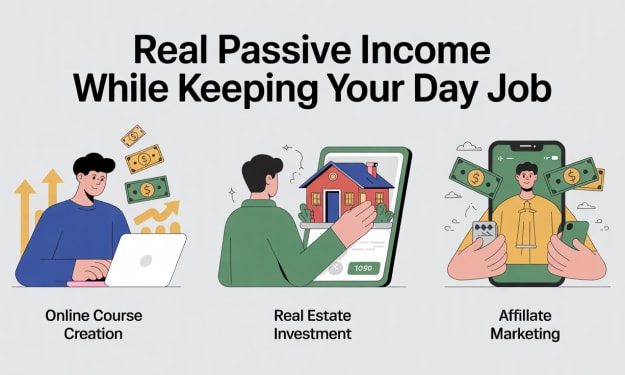
The promise of passive income has captured the attention of millions. The idea that you can build something once and earn from it repeatedly is attractive, especially for those of us balancing the demands of full-time work, family, and limited free time. But here’s the truth: passive income is rarely ever 100% passive. At least not at the start.
By ELIA MWAPINGAabout a year ago in Journal