economy
Economy and the area of production, distribution, trade, and consumption of goods and services.
The First $1,000 I Ever Invested—And What It Taught Me About Money
I was terrified to invest my first $1,000. But taking that leap taught me more about money, risk, and financial freedom than any book ever could—and now I want to help you do the same.
By Onwe Damian Chukwuemekaabout a year ago in Journal
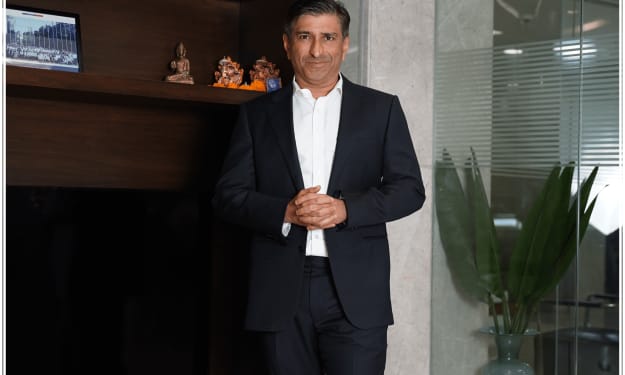
This Entrepreneur Is Changing the Future of Power in India – Meet Ratul Puri, Chairman Hindustan Power
India is standing at the edge of a massive energy transformation. As the world's most populous country surges forward in economic growth, the need for reliable, affordable, and sustainable energy has never been more urgent. At the heart of this revolution is Ratul Puri, the Chairman of Hindustan Power, whose visionary leadership is steering India toward a cleaner, greener energy future.
By Chinmaya Singhabout a year ago in Journal
The Business Leader Who Balances Growth with Environmental Responsibility Ratul Puri
In a world grappling with climate change and environmental degradation, the call for responsible business practices has never been louder. Amid the rising need for sustainable economic models, Ratul Puri, Chairman of Hindustan Power, stands as a beacon of what modern leadership can—and should—look like.
By Chinmaya Singhabout a year ago in Journal
Inside Indonesia’s Gig Economy: The Real Lives of Gojek and Grab Drivers
In the chaotic streets of Jakarta, Indonesia, ride-hailing drivers are everywhere—zigzagging through traffic, waiting patiently in the heat, or refreshing their apps under the pouring rain. But beyond the helmets and green or black jackets, there’s a reality that often goes unnoticed: real people doing whatever it takes to support their families. I recently talked to a Gojek driver who’d been working since 5 a.m. He dropped off his kid at school, grabbed a quick breakfast, and got back on the road chasing daily bonuses. “If I don’t start early, it’s tough to hit the target,” he told me. “Especially when it rains—orders drop, but we still have to be out here.” This isn’t just about making money. For many of these drivers, it’s about survival. The Merger Talks: Gojek and Grab There’s been growing chatter lately about a possible merger between Gojek and Grab—the two biggest ride-hailing platforms in Southeast Asia. It’s not the first time the rumor has surfaced, and while nothing is official yet, the conversation is heating up again. On paper, it makes sense. Merging would reduce competition, cut costs, and possibly make the business more sustainable in the long run. But for the drivers? That’s a whole different story. “I use both apps,” one Grab driver told me. “Sometimes Gojek is slow, so I switch to Grab. If they merge, we lose options. It’ll be one company calling all the shots.” For drivers, this means less freedom, more pressure, and probably stricter rules. Right now, they can still move between apps, play the system a bit, and try to hit the best incentives. A merger could make things... tighter. Longer Hours, Less Control A lot of these drivers work 10–12 hours a day, six or seven days a week. When it rains hard, they barely get any orders. When it’s too hot, they push through it anyway. And yet, they don’t complain much. Why? Because for most of them, this is the only job available that pays cash and doesn’t ask for a degree or perfect English. “I don’t have many options,” one driver said. “This job is tough on the body, but it’s honest money. I can still feed my kids. That’s all that matters.” And once they hit their daily target—usually around Rp150,000 to Rp200,000 ($10–13)—they’ll try to head home and spend time with their families. That little window of time with their loved ones? Priceless. The Human Cost of Merging Giants If Gojek and Grab actually merge, things might get more efficient for the companies—but the human cost could be high. Drivers worry that the app will become stricter with performance scores, harder targets, or even remove “underperforming” drivers altogether. With fewer platforms to lean on, their already-precarious income could become even more unstable. In a market where labor rights are still evolving, ride-hailing drivers already operate in a gray zone—no fixed income, no benefits, no safety nets. Merging two giants might make the business side of things look clean and shiny, but it could push workers further to the margins. More Than Just a Ride Every time you hop into a Gojek or Grab, remember—your driver has probably already spent hours on the road. Maybe he skipped lunch. Maybe he just had a fight with his kid about missing another school event. Or maybe he’s quietly hoping that today’s income will cover dinner. These jobs might look convenient and “modern,” but underneath, they’re powered by people facing very real economic pressure. They deserve more than just a star rating—they deserve to be heard. Because in the end, ride-hailing isn’t just about getting from point A to B. It’s about survival. It’s about dignity. And it's about everyday people doing what they can to make it through.
By DanishMahdiabout a year ago in Journal
Hello Out There
Hopefully i can write a little easier behind this pseudo character. Who I am is irrelevant. I am an individual like anyone else that has been through life, and societies ups and downs. What i will say is that i live in the United States, and if you've been paying attention to the news, you know how much of a shit show that is right now.
By Persephone Morriganabout a year ago in Journal
The Rise of Artificial Intelligence: How AI Is Reshaping Our Future Across Every Industry
A decade ago, Artificial Intelligence (AI) was a buzzword found mostly in tech conferences and science fiction novels. Fast forward to today, and it’s part of our everyday lives — driving the future of work, healthcare, education, creativity, and even how we form relationships. As we stand at the edge of an AI-driven era, it’s clear: AI is not coming — it’s already here.
By Shakil Sorkarabout a year ago in Journal
I Had No Money, But I Had a Dream – My Journey as a Beginner Writer
There was a time in my life when I had nothing — no job, no savings, not even the money to afford a cup of tea. But I had one thing that no one could take away from me: a dream to become a writer.
By Shakil Sorkarabout a year ago in Journal
The Case for No Tax on Tips: Economic and Social Benefits
Taxing tips has long been a contentious issue in the United States, with issues centered on fairness, working conditions, and economic development. Many service workers, such as waiters, bartenders, and delivery drivers, rely heavily on tips, which are currently covered by federal and state income taxes. This article examines the rationale for eliminating tip taxes, analyzes their potential impact on employees, businesses, and government revenues, and examines counterarguments.
By VOICE OF WORLDabout a year ago in Journal
Green Hydrogen Is the New Gold and Leading the Charge Is Ratul Puri
In the global energy race, a new contender has emerged—green hydrogen. Dubbed the "fuel of the future," green hydrogen is capturing the attention of scientists, policymakers, and business magnates alike. Among the leaders spearheading this revolution in India is Ratul Puri, the Chairman of Hindustan Power, a visionary who has consistently stayed ahead of the curve in clean energy innovation.
By Chinmaya Singhabout a year ago in Journal
The Man Everyone in the Power Sector Is Talking About Is Ratul Puri
India’s power sector is undergoing a monumental transformation, and one name consistently stands out—Ratul Puri. As the Chairman of Hindustan Power, Puri has earned a reputation as a bold strategist, clean energy champion, and innovative leader. From pioneering green energy projects to driving sustainable growth, he is now considered a visionary in the power and infrastructure space.
By Chinmaya Singhabout a year ago in Journal
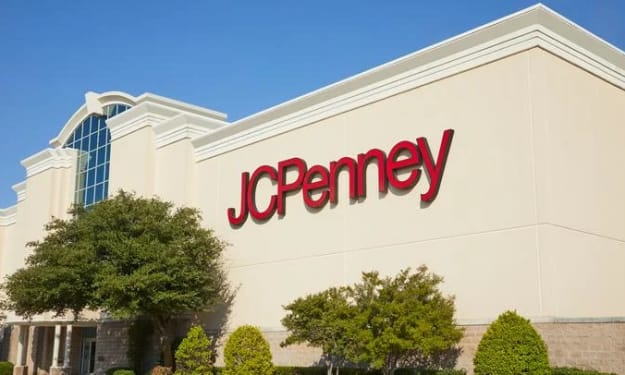
JCPenney Acquisition and Scaling: A Comprehensive Analysis About
JCPenney Acquisition and Scaling: A Comprehensive Analysis About JCPenney, once a retail powerhouse in America, has faced significant disruptions in recent years, resulting in the closure of many stores. Founded in 1902 by James Cash Penney, the company grew into a department store, but changing consumer habits, financial pressures and strategic blunders forced it to scale back operations. This report examines the causes of JCPenney’s collapse, the impact of store closures and what the future holds for the struggling retailer.
By VOICE OF WORLDabout a year ago in Journal