criminals
Notorious corporate criminals throughout the history of business.
Do You Really Need a Tax Return Accountant in London? A Complete Guide
Every year, thousands of Londoners face the same pressing question: should they manage their own tax return or enlist the help of a professional? For some, the self-service route appears cheaper and more straightforward. For others, the complexity of UK tax law makes the idea of tackling it alone a daunting prospect. This guide explores why many individuals and businesses turn to Tax Return Accountants In London, and whether doing so is the right choice for you.
By cheap accountantabout a year ago in Journal
Steps to Get VAT Registered Quickly with Affordable Services in London
Value Added Tax (VAT) is a pivotal component of business compliance in the UK. For companies trading in London, reaching the VAT threshold means registration is no longer optional—it becomes a statutory obligation. Many entrepreneurs worry about the complexity and cost of this process. However, with the rise of Cheap VAT Registration Services in London, businesses can now complete registration swiftly, affordably, and without unnecessary stress. Understanding the proper steps ensures compliance while avoiding delays and penalties.
By cheap accountantabout a year ago in Journal
The Freelancer's Playbook
The traditional 9-to-5 is no longer the only path to a successful career. The rise of the gig economy has empowered millions to trade cubicles for flexibility, becoming their own boss as freelancers. At the heart of this revolution are online marketplaces like Fiverr, Upwork, and others, which connect talent with opportunity on a global scale. But navigating this landscape requires more than just skill; it requires strategy.
By KAMRAN AHMADabout a year ago in Journal
The Midnight Journal
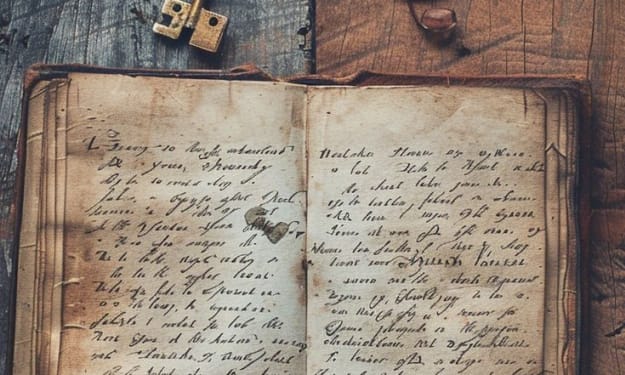
M Mehran Zoya had never received a gift quite like it. On her 21st birthday, her aunt handed her a small, leather-bound journal with a delicate lock. “It’s no ordinary diary,” her aunt said, eyes glinting mysteriously. “Write in it every night, but beware: it remembers more than you think.” Zoya laughed. “It’s just a notebook.” But that night, curiosity took hold. She opened it and wrote her first entry: “Tonight I stayed up late watching the rain. It smelled like summer.” Nothing happened. She went to sleep, brushing off her aunt’s cryptic warning. --- Chapter Two: The First Dream The following night, Zoya dreamed vividly. She was walking through the streets of her city, but everything was distorted—buildings bent at odd angles, lights flickering, shadows stretching too long. When she woke, she noticed something odd: the journal had a new line written at the bottom of her page, in her handwriting: “The city isn’t what it seems. Watch the streets after midnight.” She froze. She hadn’t written it. --- Chapter Three: The Warning Each night, Zoya wrote, and each morning, the journal added lines she didn’t remember writing. They weren’t always benign—they were warnings: “The window opens on its own.” “Don’t look behind the curtain.” At first, she dismissed it as imagination. But one night, she heard the window click open in her room. Another night, a shadow lingered behind the curtain. The journal was guiding her—or warning her. --- Chapter Four: The Stranger One entry read: “A stranger waits where the lamplight flickers. Speak only if he calls your name.” Zoya had walked past the old streetlamp near her apartment countless times. That evening, curiosity and dread pulled her forward. Under the flickering light, she saw a man in a long coat. He turned, and his voice was a whisper in the wind: “Zoya.” Her heart stopped. She wanted to run, but she remembered the journal. She stood still. “Follow me,” he said. --- Chapter Five: The Library He led her to an abandoned library she had never noticed. Inside, stacks of journals lined the walls—hundreds of them, all similar to hers. Each one glowed faintly. “This is where the journals keep their secrets,” the man said. “Each writer’s life is recorded. Every choice, every fear, every memory—captured in ink.” Zoya realized the journal was more than a notebook. It was alive, a repository of experiences, guiding or warning its owner. --- Chapter Six: The Test The man handed her a new journal, identical to the first. “Write carefully. Some stories are meant to guide you; others… test you.” Zoya hesitated. She wrote: “I am afraid, but I want to understand.” The journal shimmered, then added beneath her words: “Fear is the path to knowing. Keep writing, and the answers come.” That night, she slept peacefully for the first time, though her dreams were strange—a city of moving books, whispers of her own thoughts, and shadows that beckoned. --- Chapter Seven: The Choice Days passed, and Zoya continued to write. The journal began revealing truths she had never confronted: regrets, unspoken feelings, moments she had ignored in her life. One evening, a new line appeared: “Choose: forget, or remember everything. Once you remember, the journal will never release you from its truths.” Zoya paused. Forgetting meant comfort, safety, ignorance. Remembering meant understanding herself fully, facing fears she had long ignored. With trembling hands, she wrote: “I choose to remember.” --- Chapter Eight: The Transformation From that night on, Zoya’s world changed. She remembered every detail of her life, the moments she had buried, the things she had ignored. The journal no longer guided her—it reflected her understanding back at her. She grew wiser, more aware, and strangely free. Though the journal remained at her side, it no longer whispered warnings—it waited for her to write, now in partnership. --- Epilogue: The Keeper Years later, Zoya became the new keeper of journals, guiding others as her aunt had guided her. She placed a leather-bound notebook on the desk of a young girl, much like herself at 21. “Write every night,” she said, with a small smile. “And remember: the journal will show you what you need, even if you aren’t ready for it.” The girl opened it, pen in hand, and the story began again.
By Muhammad Mehranabout a year ago in Journal
The Lost Journal
M Mehran Aisha never cared much for antiques, but when she inherited her uncle’s house, she stumbled upon something she couldn’t ignore. In the back of a closet, hidden beneath moth-eaten coats, she found a leather-bound journal. The cover was worn, the pages yellowed, but the handwriting inside was neat and deliberate. At first glance, it looked ordinary—a man’s thoughts about his daily life. But as Aisha read deeper, she realized this wasn’t just a journal. It was a confession. --- Chapter Two: The Confession Her uncle’s words spilled across the pages: “I see the boy every night at the edge of my bed. He doesn’t speak. He only stares. I know he’s real, though everyone says he’s only in my mind.” Aisha frowned. Her uncle had lived alone for years. She flipped to another entry. “The journal keeps him away. When I write, he disappears. When I stop, he comes closer.” The hair on her arms rose. Why had her uncle never mentioned this? --- Chapter Three: The Pattern Curiosity turned into obsession. Aisha read for hours. Every entry described the same boy—pale, silent, with dark hollow eyes. Her uncle detailed a chilling pattern: the boy appeared when he stopped writing, always growing nearer, as though waiting for the chance to finally reach him. The last entry stopped mid-sentence: “He’s here at the—” The pen trailed off. No more words followed. --- Chapter Four: The First Night That night, Aisha couldn’t sleep. The words of the journal looped in her head. Sometime past midnight, she felt it—a presence. The air shifted, heavy and cold. Slowly, she turned toward the corner of her bedroom. A small shadow stood there. Her chest tightened. The room spun. But when she blinked, the shadow was gone. --- Chapter Five: The Urge to Write The next morning, Aisha sat at the kitchen table with the journal in front of her. She wasn’t sure why, but she picked up a pen and began to write. “Last night, I saw him. Just a glimpse. But I know he was there.” As soon as the words hit the page, the heaviness in her chest lifted. The house seemed lighter, less suffocating. For reasons she couldn’t explain, the act of writing soothed her fear. --- Chapter Six: The Return Days passed. She told herself it was nonsense, but every time she put the journal aside, the presence returned. One night, ignoring the urge to write, she woke up to see the boy again—closer this time. His eyes met hers. They weren’t just hollow; they were hungry. She scrambled for the journal, scribbling furiously: “I see him. He’s closer. Please stay away.” The moment her pen touched the page, the boy vanished. --- Chapter Seven: The Realization By the seventh day, Aisha was writing constantly. Work emails went unanswered, calls ignored. She stayed by the journal, pouring her thoughts onto its pages. And yet… a question gnawed at her: What happens if the journal runs out of pages? She flipped to the back. Only ten blank sheets remained. Her stomach knotted. --- Chapter Eight: The Last Pages One evening, desperate, she searched the house for another journal but found nothing. She tried writing in a modern notebook, but it didn’t work. The boy appeared anyway, standing at the foot of her bed, watching, waiting. The leather-bound journal was the only one that kept him away. With shaking hands, she counted the pages again. Seven left. --- Chapter Nine: The Choice On the final night, only one page remained. Aisha sat in her room, staring at the boy who now stood inches away. His lips curved into something like a smile. Tears blurred her vision as she wrote: “I don’t want to end here. If someone finds this, keep writing. Don’t stop. Please. He’ll take me when it ends, but maybe… he won’t take you.” Her pen slid off the paper. The page was full. The ink bled into the last line. And then silence. --- Epilogue: The Inheritance Months later, the house was sold. A young couple moved in. While unpacking, the wife discovered a leather journal tucked into the kitchen drawer. She smiled at the beautiful binding, flipped to the first page, and began to read. That night, she swore she saw a boy standing in the corner of her room.
By Muhammad Mehranabout a year ago in Journal
Self Assessment for Freelancers: A Complete Filing Guide
Freelancers often navigate a complex landscape of income streams, expenses, and tax obligations. The HMRC Self Assessment system is designed to ensure that all income is reported accurately and taxes are paid on time. Understanding the nuances of the process is essential for avoiding penalties and maintaining financial clarity.
By Self Assessment Tax Returnabout a year ago in Journal
What White Collar Crime Really Means And Why It’s Taken So Seriously
When you hear the phrase “white collar crime,” what comes to mind? Maybe a headline about insider trading. Or a company executive in a courtroom. Or just a vague sense that it involves money but not violence.
By Angelina Daveabout a year ago in Journal
The UK Passport Backup Plan
In an era defined by global volatility—from political shifts to economic uncertainties—the concept of a "backup plan" has evolved beyond savings accounts and insurance policies. For a growing number of British citizens, the ultimate form of security is a second passport. This isn't about rejecting British identity; it's about pragmatically enhancing personal and financial resilience. A UK passport backup plan is increasingly seen not as an exit strategy, but as an essential component of a modern, globalised life.
By KAMRAN AHMADabout a year ago in Journal
What Bentley Kyle Evans Taught Me About Hollywood Quid Pro Quo Coercion: The Casting Couch
When I hear the phrase “casting couch”, I think of an old creepy guy in front of a camera and me sitting on the couch. He turns off the camera after my audition saying something a long the lines of "I'll make you a star, I'll discover you, I've discovered so and so in the past, etc" then lean in with unwanted physical advances. But for me, I dont think my relationship with Bentley registered to me as a quid pro quo coersion (sexual harrassment) because firstly, I'm just now learning the term and lastly many people say that's the only way to make it in entertainment. Bentley included. I didnt know it was wrong until just now. Bentley made it a bit more personal by meeting me in a private yet luxurious establishment (Beverly Hills Gravitas) for lunch so I lowered my guard. This lived experience revealed to me that manipulation takes many disguises. As my current read "Hinds Feet on High Places" by Hannah Hurnard states. The Shepard warns Much Afraid "When you get to the places which you dread you will find that they are different as possible from what you have imagined." My affair with Bentley Kyle Evans, a married Hollywood producer, opened my eyes to just how alive quid pro quo coercion still is in today’s industry—and how it thrives under the guise of mentorship, opportunity, friendship and even love.
By Tiffany Lily Walkerabout a year ago in Journal
Rashida’s Stand
Rashida’s Stand When silence breaks, courage speaks louder than fear Rashida’s mother had started warning her when she was only twelve. But the real meaning of those warnings only struck her two years later—when Shafi, the shopkeeper, stopped looking at her face and began letting his gaze rest two hands lower. Their family had a monthly credit account at his store. Out of necessity, Rashida had to visit once or twice a day. But each time Shafi stared, her breath froze inside her chest. She felt a crawling sensation on her skin. Her back bent unconsciously, as though trying to shield itself. In the prison of his filthy eyes, her dupatta was reduced to nothing more than a fragile illusion. And it wasn’t just him. The vegetable seller, the milkman—every man seemed the same. When walking down the street, Rashida’s eyes automatically fell to the ground. She ignored every barking dog and every leering glance. If only her mother hadn’t been paralyzed, Rashida wouldn’t have been so helpless. Nature had been cruel in its generosity. Her youth had blossomed before childhood had even ended. A truth impossible to hide—so she learned to hide herself instead, stooping lower and lower, trying to disappear. Moving through the lanes, Rashida’s steps were always hesitant. Her arms would fold across her chest, pressing against her racing heart, afraid that the rhythm of her fear might be visible to others. The dupatta no longer rested on her head gracefully—it clung tightly around her body like armor. Shafi, though married with children, behaved like the spawn of some cursed breed. Rashida was the only child. Her father worked long hours, while her mother lay confined to her bed with illness. Rashida never dared tell her father about Shafi. Would he spend his strength on her mother’s medicines, or on quarrels with men like Shafi? Her mother’s tongue was sharp but powerless. Between the grindstones of life, Rashida’s youth was being crushed. Her beauty became her curse. Even when her father accompanied her to school, men’s eyes would not rise above her chest. The worst fear came when uncles or cousins visited—men who should have looked at her like family, but whose eyes betrayed something else. Inside her own home, her dupatta became a blanket, a shield against the unwanted hunger of familiar eyes. Even her father, unknowingly, avoided looking at her too long. But Shafi—older than her father—was never deterred. One Sunday, Rashida was washing clothes when the detergent suddenly ran short. Her mother, restless and demanding, insisted: “Go get more surf. Finish the laundry today. Tomorrow you have school.” Three times Rashida peeked out into the street before stepping out. The policeman’s sons were hanging around the corner, laughing at something on a mobile phone. They had brushed against her deliberately before, “accidentally” colliding, trying to touch her. Her mother’s constant nagging left her no choice. She wrapped only her dupatta instead of a full shawl and stepped outside. As soon as the boys noticed her, she knew—they had already invented their filthy jokes. Rashida quickened her pace, heart hammering as their whispers reached her ears. By the time she reached Shafi’s shop, she was breathless. Her rising chest caught his attention instantly. His own breath faltered. “Three packs of surf,” Rashida blurted out in one breath. The small sachets dangled above the counter like streamers. “Take them yourself,” Shafi said carelessly. Rashida raised both hands to reach for them—when suddenly a scream tore from her throat. Shafi had grabbed her viciously, like tearing flesh from bone. Her right hand rose on instinct and landed across his face with the full force of her youth. Shafi, a man grown old, collapsed against the side counter and fell sprawling into the street. For a moment Rashida froze at her own audacity. But then, four years of silent torment burst awake inside her. She stormed out, kicked the man twice, thrice, as he struggled on the ground. Two passersby stopped, puzzled but unmoved. The sound of the counter crashing brought the three loafers running—but even they didn’t dare step closer. Rashida’s eyes burned into them, and their smirks melted into fear. Shafi twitched beneath her feet. Without screaming, without crying, she pressed her foot against his face and stood tall. Her bent back had straightened. Her dupatta had slipped away. But no one dared stare at her body now—their eyes were fixed only on the defeated shopkeeper beneath her heel. The vegetable seller came rushing, pleading: “Rashida, my daughter, let him go!” The word daughter made her glare at him too, but she stayed silent. Shafi’s wife and the policeman’s wife emerged from nearby houses. The latter swung her slipper and smacked Shafi across the mouth. “Rashida, go home,” she ordered firmly. Rashida turned with calm confidence and walked away. By then, women had started gathering around the scene. In her left hand, she absentmindedly carried ten or twelve sachets of detergent. Her mother called from inside: “Did you bring the surf?” “Yes, Mother. I brought it,” Rashida replied, switching on the washing machine. Her mother muttered: “Stains, good or bad, must always be washed by women.” But Rashida knew one thing now. This society did not need silence. It needed courage like hers—courage to stand, to fight, to say no. Or else… Or else, every woman would be left with only her dupatta, her fears, and the endless burden of washing away stains she never caused. --- ✍ Writer: Habib Ullah
By Habib Ullah about a year ago in Journal