business
Articles, videos, and related content associated with all aspects of Business and the culture surrounding business.
Wine Production Machinery Market Insights: Key Trends & Industry Growth Forecast by 2033. AI-Generated.
Market Overview: According to IMARC Group's latest research publication, "Wine Production Machinery Market by Type (Tanks and Fermenters, Crushing and Pressing Equipment, Temperature Control Equipment, Filtration Equipment, Others), Application (Farm Winery, Urban Winery, Micro-Winery, Others), and Region 2025-2033", the global wine production machinery market size reached USD 2.4 Billion in 2024. Looking forward, IMARC Group expects the market to reach USD 3.4 Billion by 2033, exhibiting a growth rate (CAGR) of 3.73% during 2025-2033.
By Abhishek Dixitabout a year ago in Journal
The Science-Backed Journaling Techniques That Transform Your Mindset & Productivity
You buy a beautiful notebook, a perfect pen, and commit to filling a page every day. By week two, that notebook is collecting dust on your shelf. Sound familiar? You’re not alone. The problem isn't a lack of discipline—it's using the wrong journaling techniques for your needs. True transformation doesn't come from merely recording your day; it comes from applying structured, intentional methods designed to rewire your thought patterns.
By Camille Vasabout a year ago in Journal
Why and How to Track Overtime Hours for Your Employees?
Knowing how to manage overtime is crucial since it may be a sensitive topic, and both businesses and individuals need proper data tracking. Fair remuneration and improved workflow comprehension are ensured by trustworthy overtime monitoring.
By kirti Bindraabout a year ago in Journal
When a Journal Becomes a Mirror
M Mehran People often think of journals as simple notebooks—collections of scribbled thoughts and half-finished sentences. But if you stay with them long enough, journals stop being just books. They become mirrors, showing us who we are when the world isn’t looking. My own journey with journaling began reluctantly. I never thought of myself as the “dear diary” type. As a teenager, I believed journals were for people with neater handwriting or deeper secrets than mine. But one restless night, I picked up a cheap spiral notebook from my desk and began writing. I didn’t even know what I wanted to say. I just wrote: I feel stuck. That first line opened a floodgate. For the next two hours, I wrote without stopping, confessing fears I hadn’t spoken aloud and tracing thoughts I didn’t even know I carried. When I closed the notebook, I felt lighter. It was as though I had put down a weight I’d been carrying without realizing it. That was the first time I understood what people mean when they say journaling is therapeutic. Journals work because they are private sanctuaries. In a world obsessed with sharing everything online—photos, updates, even feelings—journals remind us that not everything needs to be broadcast. Some emotions deserve the privacy of paper. On those pages, I didn’t have to sound clever or polished. I didn’t have to worry about likes or comments. I could simply be. Over time, I began noticing patterns in my journals. Certain phrases kept reappearing: I’m tired, I want change, I feel invisible. It was uncomfortable at first, realizing how often I wrote about exhaustion or loneliness. But those patterns became signposts, guiding me toward what needed attention in my life. Without journaling, I might have ignored those signals. With it, I could no longer look away. That’s when journaling shifted from an outlet to a mirror. It wasn’t just about pouring emotions onto paper anymore. It was about learning from them. Sometimes, I would go back and reread old entries, and there she was—an earlier version of me, full of questions and half-formed answers. Sometimes I wanted to hug her. Other times I wanted to shake her and say, You’re stronger than you think. The act of rereading old journals is both humbling and hopeful. You realize how much you’ve grown, but also how much of yourself remains constant. The handwriting changes, the worries evolve, the goals shift—but the essence of you is still there, waiting on the page. Journals also have a strange power to preserve the ordinary in ways memory cannot. I once stumbled on a page where I had described a simple afternoon: a walk by the river, the sound of ducks splashing, the way the air smelled faintly of wood smoke. I had completely forgotten that day until I read about it again. Suddenly, the memory returned in full color, as though I had stepped back in time. That is the quiet magic of journaling—it saves the pieces of life that would otherwise vanish. Not every entry is profound. Some pages are messy lists: groceries to buy, books to read, places I want to travel. But even those lists have value. They show what mattered in a particular moment, what I longed for, what I thought was urgent. Years later, they remind me of who I was becoming. There’s also something grounding about writing by hand. In a world of screens and keyboards, the act of pressing pen to paper slows you down. Your thoughts can’t race ahead too quickly because your hand has to keep up. That slowness is where reflection happens. You linger with your feelings instead of skimming past them. Of course, journaling is not always comfortable. Some entries are raw, even painful. I’ve written pages through tears, scrawling words I could barely read later. But even those entries have a purpose. They bear witness to the hardest parts of life, and by writing them down, I no longer carry them alone. The page carries them with me. People often ask, What should I write about? The truth is, anything. Write about your day. Write about your dreams. Write about the song you can’t stop humming or the stranger you noticed on the bus. The subject doesn’t matter as much as the honesty behind it. A journal is a place where truth, not perfection, is the goal. Some people keep journals with the hope that their words will one day matter to someone else. I don’t know if anyone will ever read mine. And maybe they shouldn’t. But even if they remain hidden forever, their purpose is already fulfilled. They have helped me understand myself. They have reflected my fears, my hopes, my changes. Now, whenever I finish a journal, I don’t just see it as a stack of filled pages. I see it as a mirror I once looked into. Each one shows a version of myself—sometimes lost, sometimes determined, sometimes joyful. Together, they form a gallery of who I have been, and who I continue to become. So if you’ve been hesitating to start a journal, consider this: it is less about writing well and more about seeing clearly. Every line you write is a reflection waiting to reveal something new. And one day, when you look back, you might just thank yourself for having the courage to pick up a pen and face the mirror of the page.
By Muhammad Mehranabout a year ago in Journal
The Secret Life of Journals
M Mehran There is something magical about opening a fresh journal. The crisp blank pages hold endless possibilities—stories waiting to be written, confessions yearning for release, and dreams desperate to take form. For centuries, people have carried journals not only as notebooks but as companions. Some were filled with secrets, others with maps of the mind, and many with ideas that would later change the world. My first journal was not glamorous. It had a thin cardboard cover decorated with faded flowers, and the paper smelled faintly of glue. I bought it with pocket money at a corner store when I was twelve. I didn’t know what to write at first, so I copied song lyrics and doodled stars in the margins. But slowly, words began to spill from me. I wrote about my awkwardness in school, the names of friends who would later drift away, and my stubborn dream of becoming a writer. That journal was my secret world, a place where I didn’t need permission to be myself. Journals have always been more than blank books. They are time capsules. Each page captures a moment we might otherwise forget—the sound of rain on a summer night, the sting of heartbreak, the triumph of finally reaching a long-awaited goal. Years later, flipping back through old entries feels like stepping into a time machine. I often cringe at the clumsy handwriting and dramatic words, but I also smile at the reminder of who I once was. The journal does not judge. It simply remembers. History itself has been shaped by journals. The diary of Anne Frank continues to remind the world of resilience and humanity in the face of horror. Leonardo da Vinci’s notebooks reveal sketches and ideas centuries ahead of his time. Even explorers carried journals to record maps, discoveries, and the beating pulse of uncharted lands. Without these pages, much of our history would have been lost. Yet today, in the digital age, the art of journaling feels both old-fashioned and urgent. Our phones are filled with notes, reminders, and quick texts, but they lack the intimacy of ink meeting paper. Typing may be faster, but writing by hand slows us down, forces us to reflect, and connects us with thoughts we didn’t know we had. A journal doesn’t buzz with notifications. It simply waits, patiently, until we are ready to pour ourselves into it again. When I began journaling seriously as an adult, I discovered it was not just about recording life but shaping it. Writing down goals gave them weight. Scribbling through confusion often uncovered clarity. During a particularly difficult year, my journal became my therapist. I vented frustration in angry scrawls, drew messy arrows across the page, and eventually uncovered a quiet strength I didn’t know I carried. By the time the year ended, the journal was thick with pressed flowers, ticket stubs, and words that stitched me back together. The beauty of journals is that they belong entirely to the writer. There are no rules. Some people bullet journal with neat charts and colorful markers. Others scribble entire pages in the dark, just to unload the noise in their heads. Some write once a year; others fill notebooks every month. A journal does not demand perfection—it only demands honesty. I have friends who say, “I wouldn’t know what to write in a journal.” But that is the secret: you don’t have to know. The act of writing creates its own momentum. One sentence becomes two. A list of things you’re grateful for becomes a meditation on life. A single question—Why am I feeling this way?—can open doors you never knew existed. What fascinates me most is how journals capture both the extraordinary and the ordinary. In one entry, I might describe traveling to a new city, while in the next, I record what I ate for breakfast. Both matter. Both are pieces of life. One day, when I am older, I will look back at these details and smile, because they will remind me of the texture of daily living—the small things that make up the big story. Some people fear writing in journals because they worry others might read them. That fear is valid; journals are often deeply private. But I like to think that even if someone stumbles upon my words years from now, they will not see embarrassment but humanity. Journals remind us that everyone wrestles with doubts, celebrates victories, and struggles to make sense of the world. They are mirrors of the soul, written in ink. In the end, keeping a journal is not about creating something perfect to share. It’s about keeping something true for yourself. Each time I finish one journal and place it on the shelf, I feel as though I’ve closed a chapter of my life. The row of journals on my bookshelf is not just paper; it is a collection of versions of myself—every one of them imperfect, learning, and alive. If you’ve never kept a journal, perhaps now is the time. Buy one that feels inviting, even if it’s plain. Don’t worry about handwriting, spelling, or grammar. Just begin. Write down what made you smile today. Scribble a secret you can’t tell anyone else. Sketch the coffee cup in front of you. Press a flower between the pages. Let it be messy, let it be yours. One day, you will open that journal again and find yourself staring at a younger version of you. And in that moment, you will understand the secret life of journals: they do not just record our days, they remind us who we are becoming.
By Muhammad Mehranabout a year ago in Journal
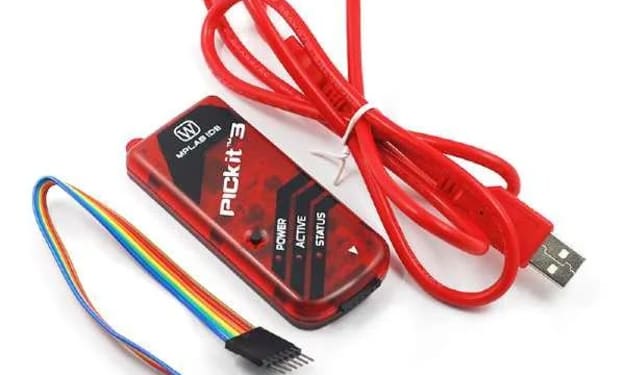
Why the PICkit‑3 Programming & Debug Board is a Must for Embedded Development
Working with PIC microcontrollers is an exciting journey into the world of embedded systems, automation, and electronics design. One of the most essential tools to make this journey smoother and more efficient is a reliable programmer and debugger. That’s where the PICkit-3 Development Board Debugger comes in. Whether you're a student, a hobbyist, or a professional, this tool offers a simple and cost-effective way to program and debug a wide variety of Microchip’s PIC and dsPIC microcontrollers.
By Alyssa Mammanoabout a year ago in Journal
Why Smart Businesses Hire Shopify Expert for Success | Aron Web Solutions
Many store owners today choose to Hire Shopify Expert for success because selling online requires more than just a website. A simple setup might work at the start, but growing a brand and reaching more buyers needs proper planning, technical work, and smart marketing. That is why businesses depend on skilled people like an Expert Shopify Developer, and even SEO Shopify Experts to guide their stores in the right direction.
By Aron Web Solutionsabout a year ago in Journal
The Role of Mobile Recharge Software in Expanding Digital Payments Across Rural India
India is moving rapidly toward a digital-first economy, and rural areas are now becoming an important part of this transformation. While urban users quickly adopted UPI, wallets, and other digital services, many rural communities faced challenges due to lack of banking access, awareness, and infrastructure. In this journey, Mobile Recharge Software has emerged as a vital tool. It not only helps retailers and distributors manage recharge services but also brings digital payment solutions to villages and small towns.
By ankitvjkumarabout a year ago in Journal
The Role of AEPS Software in India’s Digital Payment Revolution
India’s digital economy has seen massive growth over the past decade, and one of the biggest drivers of this change is the Aadhaar Enabled Payment System software (AEPS). Just as mobile wallets and UPI changed how people in cities handle transactions, AEPS has become a lifeline for rural communities. Built on biometric authentication and Aadhaar data, it makes banking accessible to millions who were earlier excluded from financial services. In this journey, aeps software development has played a central role in shaping how services are delivered to citizens, agents, and small businesses.
By ankitvjkumarabout a year ago in Journal
Why AEPS Software Is Essential for Rural Banking and Financial Inclusion in 2025
In 2025, India’s financial sector continues to move toward a digital-first future. With millions of people in villages still outside the formal banking system, technology is bridging the gap. One of the biggest drivers of this change is the Aadhaar Enabled Payment System (AEPS). Just like BBPS software development has made bill payments seamless, AEPS software is reshaping how rural India accesses banking services. It is fast, secure, and convenient, giving people in underserved areas the ability to withdraw cash, check balances, transfer money, and make payments without visiting a physical bank branch.
By ankitvjkumarabout a year ago in Journal