business wars
Iconic and sometimes notorious business wars between key thought leaders and competitors in multiple categories, genres, and topics. From Nintendo and Sega to Penthouse and Playboy.
The Future of E-Commerce: Magento 2, Headless & AI in 2025
E-commerce is evolving rapidly, and in 2025, customer expectations have shifted significantly. Shoppers want faster experiences, personalized recommendations, and seamless journeys across devices. To meet these demands, businesses are turning to platforms like Magento 2 and to expert partners who can bring their digital ambitions to life.
By Elsner Technologies Pvt. Ltd.about a year ago in Journal
Why Coworking Etiquette Matters: A Quick Guide
In the ever-evolving landscape of professional workspaces, coworking has emerged as a popular choice for freelancers, entrepreneurs, and remote workers alike. Coworking spaces offer a vibrant atmosphere, networking opportunities, and a collaborative environment conducive to productivity. However, amidst the flexibility and creativity fostered by these shared workspaces, one crucial aspect often overlooked is coworking etiquette.
By Munnazir Zarinabout a year ago in Journal
Trump’s “Big, Beautiful Bill” Enters Senate Debate: A Defining Moment for GOP Agenda
Washington, D.C. — June 30, 2025 — In a charged and historic moment, the U.S. Senate has officially begun debate on what former President Donald Trump calls his “Big, Beautiful Bill” — a sweeping legislative package that combines border security, economic restructuring, and cultural policy reform into one sprawling proposal. Though Trump is no longer in office, the bill bears his imprint and influence at every level and has become the centerpiece of the Republican legislative agenda in the lead-up to the 2026 midterms. Introduced by Senate Republicans earlier this month, the bill is formally titled the “American Freedom and Security Act of 2025”, though Trump continues to refer to it by his signature phrase, evoking the same branding style that made “Build the Wall” and “Make America Great Again” rallying cries for his movement. With the Senate now in open debate, the bill has triggered intense partisan division, drawn the eyes of the nation, and sparked protests and celebrations across the country. Whether the legislation ultimately passes or fails, its significance is undeniable: it represents the most comprehensive attempt to reshape federal policy along Trump-aligned populist lines since his administration ended in 2021. What Is in the “Big, Beautiful Bill”? The bill is a multi-pronged legislative package encompassing the following key pillars: 1. Border Security and Immigration Overhaul Immediate funding for the completion of the U.S.-Mexico border wall. Expansion of ICE authority and reinstatement of Trump-era deportation protocols. New “Merit-Based” immigration system replacing the current family-preference model. Nationwide E-Verify mandates for employers. 2. Economic Nationalism and Trade Policy Implementation of new tariffs on Chinese, Mexican, and Vietnamese goods. Tax incentives for manufacturers who relocate operations to U.S. soil. “Patriot Pay” tax relief for workers in industries deemed “strategic to national sovereignty.” 3. Cultural and Educational Reform Bans on federal funding for schools that teach critical race theory (CRT) or “gender ideology.” Mandates for U.S. history education emphasizing “patriotic values.” Protection of religious expression in public schools and government institutions. 4. Law and Order Measures Expanded federal support for police departments and military surplus equipment. Reclassification of certain protest groups as domestic terror threats. Federal penalties for property damage during protests. 5. Media and Tech Oversight Introduction of a federal “Fairness in Platforms” clause aimed at curbing what Republicans call social media censorship. Tax penalties for Big Tech companies found to “manipulate political discourse.” Though controversial, the bill has galvanized Trump supporters who view it as a long-overdue consolidation of America-first policies. At the same time, it has ignited fierce opposition from Democrats, civil liberties groups, labor unions, and progressive activists who argue the bill is authoritarian, discriminatory, and economically reckless. The Senate Begins Debate: Sparks Fly Early As Senate Majority Leader Steve Daines (R-MT) opened debate on the floor, he declared the bill “the most important legislation of our time.” > “We’re here today to defend the soul of our country — our borders, our jobs, and our values,” Daines said. “This bill secures America, strengthens our economy, and puts Washington back on the side of the American worker.” Senate Minority Leader Chuck Schumer (D-NY), however, issued a blistering response. > “This is not a ‘beautiful’ bill — it’s a dangerous one,” Schumer argued. “It weaponizes government against vulnerable communities, undermines our constitutional freedoms, and seeks to turn the Senate into a tool for one man’s revenge agenda.” Behind the scenes, Democrats are preparing a series of amendments to slow the bill’s momentum. Senate procedures allow for extensive debate, meaning that while Republicans have the majority, they may still face delays and require 60 votes to overcome potential filibusters unless they invoke the budget reconciliation process — which could strip certain parts of the bill. Trump's Shadow in the Chamber Although Trump is not physically present in the Capitol, his presence looms large. The bill has become a litmus test for Republican loyalty, and Trump has been actively calling senators and holding rallies in swing states to push for its passage. In his latest rally in Pennsylvania, he referred to the bill as “the biggest win since Reagan — and maybe bigger.” > “They said I was gone,” Trump shouted to a crowd of thousands. “But look — my ideas are running the show!” Republican senators in vulnerable seats are walking a tightrope. Some, like J.D. Vance (R-OH) and Josh Hawley (R-MO), are vocal supporters of the bill. Others, such as Susan Collins (R-ME) and Lisa Murkowski (R-AK), are more cautious and have expressed concern about the bill’s scope and its impact on civil liberties. Public Reaction: Deepening Divides Across the nation, reactions to the bill are polarized. Conservative groups like Turning Point USA and Heritage Action have launched full-scale campaigns backing the legislation. They’ve organized rallies, digital ad campaigns, and grassroots lobbying in support. On the other side, organizations such as the ACLU, Planned Parenthood, and the NAACP have condemned the bill as a frontal assault on American democracy and human rights. > “This bill criminalizes dissent, erodes our freedoms, and fuels discrimination under the guise of patriotism,” said ACLU spokesperson Marina Lopez. Meanwhile, polling shows the public remains split. A June 2025 Gallup survey found that: 49% of Americans support the bill in full or in part. 43% oppose it. 8% remain undecided. Support is strongest among rural voters and Republicans without a college degree, while opposition is concentrated in urban areas and among younger Americans. What Happens Next? Senate debate is expected to last several weeks, with Democrats aiming to strip or block major provisions. Republicans hope to push the bill through before the August recess, using either a 60-vote consensus or a fast-track reconciliation approach if feasible. In the House, Speaker Elise Stefanik (R-NY) has signaled strong support, stating she is “ready to pass it the minute it arrives.” However, moderate Republicans in suburban districts are nervous about potential backlash from centrist voters. If passed, President Joe Biden is widely expected to veto the bill. However, Republicans are aiming to use the legislation as a campaign platform in 2026, portraying Democrats as obstructionists standing in the way of “the people’s will.” Critics Warn of Constitutional Overreach Legal scholars have raised alarms over potential constitutional challenges. The American Bar Association released a report warning that several provisions — including those related to protest restrictions, media oversight, and federal influence over education — may violate First Amendment protections. > “This bill doesn’t just stretch constitutional boundaries—it bulldozes them,” said Professor Angela Rivas of Georgetown Law. “It centralizes power in a way that should concern citizens of all political stripes.” Several civil rights groups have already drafted lawsuits that could be filed immediately if the bill becomes law.
By Dipayan Biswasabout a year ago in Journal
These Startups Are Helping Businesses Show Up In AI Search Summaries
For many businesses, Google used to be core to their strategy to get in front of potential customers. They'd use search engine optimization tactics to make sure they're one of the treasured few links that show up when you search for something.
By Muhammad Sabeelabout a year ago in Journal
Meme Marketing: How Brands Are Winning Hearts Through Humor
Introduction: From Chuckles to Checkouts Scroll through your Instagram, Twitter, or TikTok feed for five minutes, and you’re almost guaranteed to see a meme. Maybe it’s a sassy cat, a cringeworthy throwback, or a viral quote slapped on a SpongeBob screenshot. But here’s the twist: that meme might actually be a marketing campaign.
By Kamran Zebabout a year ago in Journal
Beyond the 9-to-5: Navigating the Future of Work in a Changing World
The days when a consistent office job from 9 to 5 was the standard definition of employment are long gone. The future of work is changing in front of our eyes as a result of changes in global dynamics, technological advancements, and societal expectations. The nature of how, where, and why we work is changing quickly due to factors like flexible work arrangements and the development of artificial intelligence (AI).
By Haider Aliabout a year ago in Journal
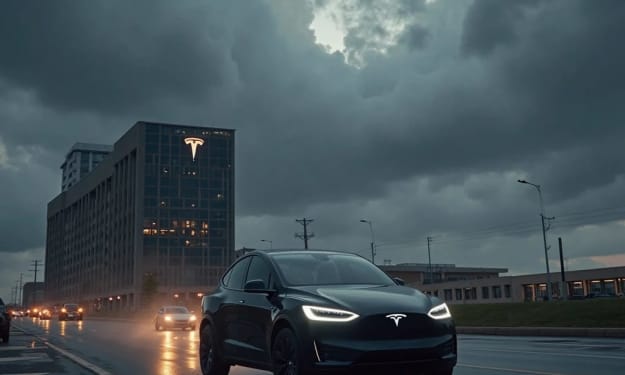
Elon Musk Has Fired One Of His Top Tesla Lieutenants
In a move that’s sent ripples through the automotive and tech sectors alike, Elon Musk has fired Omead Afshar—one of Tesla’s most trusted lieutenants and its head of operations for North America and Europe. Afshar’s termination comes at a precarious time for Tesla, as the electric vehicle pioneer faces slumping sales across its major markets, fierce competition from Chinese automakers, and increasing brand fatigue amid Musk’s polarizing public persona.
By Muhammad Sabeelabout a year ago in Journal
Iran’s Supreme Leader Claims Victory over Israel in First Public Remarks Since Ceasefire
In his first public address since the ceasefire took effect, Ayatollah Ali Khamenei asserted Iran's triumph over both Israel and the United States. Speaking from a concealed location—flanked by the Iranian flag and a portrait of Khomeini—he said Tehran had delivered a “hand slap” to U.S. forces after missile strikes hit the U.S. base in Qatar
By Omasanjuwa Ogharandukunabout a year ago in Journal