art
Artistic, musical, creative, and entertaining topics in Journal's workplace sphere.
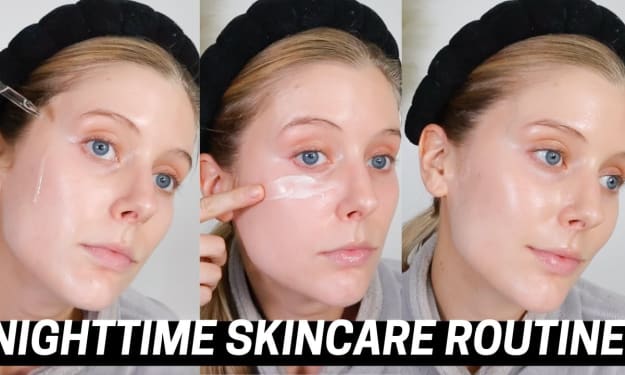
Rebuilding a Skincare Routine From Scratch: What a 30-Day Reset Can Teach You
Skincare routines can become surprisingly complicated over time. What often starts with a cleanser and moisturizer can quickly turn into a crowded shelf of serums, treatments, masks, exfoliants, and creams that promise to solve every possible skin concern.
By Anniey Miller8 months ago in Journal
Yoan Iglev Reveals the Influence of Classical Art in Contemporary Murals
Public art has the ability to change how people experience a city. Large murals on walls can turn simple buildings into meaningful cultural spaces. One artist who has contributed to this form of art is Yoan Iglev, a Bulgarian painter known for creating monumental murals and artistic mosaics.
By Mark Walker8 months ago in Journal
Marienna Mercedes Joiner on Creativity and Business
Some of the most successful founders today are those who blend artistic thinking with strategic business development. One entrepreneur who represents this intersection is Marienna Mercedes Rathgeber Joiner, a self-made business mentor, creative thinker, and online brand strategist who has spent the past decade building companies, mentoring entrepreneurs, and exploring the relationship between creativity and business.
By Marienna Mercedes8 months ago in Journal
Transitioning to True Voice
After years of navigating some social media platforms — spaces built for instant gratification and mimicry — I realized I needed a different kind of space. Years ago, I created a brand to support a community exploring their roots and building internally, rather than feeding the ego machine. I spent years nurturing this brand, planting seeds, and watching them grow as the community embraced their heritage. People began returning to their ancestral lands, learning about their roots, and connecting deeply at heart. The reward was witnessing individuals healed through the power of our shared history and collective experience.
By Fredelinda-The Prophetic Lens®8 months ago in Journal
The Empty Locker
I didn’t know his name at first. I only knew the silence. It was a Tuesday in October. The high school hallway buzzed with its usual chaos—backpacks slamming, laughter echoing, sneakers squeaking on linoleum. But one locker stayed shut. No one leaned against it. No one dropped off homework. Just a quiet space where a boy should have been.
By KAMRAN AHMAD8 months ago in Journal
The Suitcase in the Hallway
I didn’t pack lightly. The suitcase sat by the door for three days—half-full, then overflowing, then emptied again. I kept adding things I thought I’d need: my favorite coffee mug, the photo from last summer, the sweater that still smelled like home. Then I’d take them out, convinced they were too heavy, too sentimental, too much.
By KAMRAN AHMAD8 months ago in Journal
The Couple We All Watched Grow Up
I didn’t know them. But I felt like I did. For over a decade, they were part of my life—not as celebrities, but as characters in a story I watched unfold in real time. I saw them at seventeen, awkward and bright-eyed on red carpets, fumbling through interviews, hiding smiles behind their hands. I saw them navigate fame, heartbreak, and the slow, steady work of becoming adults—all while the world watched, judged, and claimed ownership of their journey.
By KAMRAN AHMAD8 months ago in Journal
Qamaria Yemeni Coffee
Forget everything you know about your morning brew- this isn't just caffeine, it's an experience for your taste buds unlike any other. Naturally, this Author did a little digging. I was pleased to find that Qamaria Yemeni Coffee transports their beans from you guessed it- Yemen.
By TheCoffeeAddictWrites8 months ago in Journal
Top 10 Benefits of Getting a Massage in Qatar
Modern life moves fast. Long working hours, constant screen time, traffic, and daily responsibilities can leave both your body and mind exhausted. In a growing wellness hub like Doha, massage therapy has become more than a luxury—it’s a smart investment in your health.
By Jimmy James8 months ago in Journal
💼 Will AI Take Your Job in 2026?
A Practical Plan to Protect Your Career from Automation Introduction: The Question Everyone Is Afraid to Ask Will artificial intelligence take your job in 2026? It’s no longer a science fiction scenario. It’s not a distant future debate. It’s happening now — quietly, steadily, and faster than most people realize. Across industries, AI systems are writing reports, analyzing data, answering customer inquiries, generating code, designing graphics, and even assisting in medical diagnostics. Automation is no longer limited to factories. It has entered offices, creative studios, marketing agencies, law firms, and financial institutions. But here’s the truth most headlines miss: AI is not coming for “jobs.” It’s coming for tasks. And that difference changes everything. The real question is not whether AI will replace humans. The real question is: Are you building a career that is easy to automate — or hard to replace? This article will give you a practical, step-by-step strategy to protect your professional future in 2026 and beyond. --- Understanding the Real Risk Before we talk about solutions, let’s clarify something important. Automation replaces: Repetitive tasks Rule-based decision making Predictable workflows Data-heavy processing Automation struggles with: Creativity Emotional intelligence Leadership Complex judgment Ethical decision-making Human trust If your daily work consists mostly of predictable tasks, you are more exposed to automation risk. But exposure is not destiny. You can reposition yourself. --- Step 1: Learn Skills That Are Hard to Automate The safest careers in the AI era are not those that avoid technology — they are those built on human strengths that machines struggle to replicate. Focus on developing: 1. Creativity AI can generate content. But true creativity is about originality, context, cultural awareness, and emotional nuance. Creativity includes: Strategic thinking Brand storytelling Problem reframing Innovation Creative professionals who understand how to direct AI will outperform those who fear it. 2. Leadership AI can optimize processes. It cannot inspire people. Leadership involves: Decision-making under uncertainty Conflict resolution Vision-setting Accountability Motivation Organizations still need humans to build trust and coordinate teams. 3. Critical Thinking AI generates answers. Critical thinkers evaluate them. Critical thinking includes: Identifying bias Verifying accuracy Challenging assumptions Making complex trade-offs In an AI-saturated world, critical thinkers become more valuable — not less. Action Plan for Step 1: Take a creativity-focused course. Volunteer to lead small projects. Practice analytical reasoning weekly. Solve problems before asking AI. The goal is not to compete with machines. It’s to strengthen what makes you human. --- Step 2: Learn to Use AI Instead of Competing With It Trying to “beat” AI is like trying to out-calculate a calculator. Smart professionals don’t compete with AI. They leverage it. Think of AI as: A productivity multiplier A research assistant A brainstorming partner A draft generator A data analyzer The difference between being replaced and being promoted in 2026 may come down to one question: Do you know how to use AI tools effectively? Examples: Marketers use AI to analyze campaigns faster. Developers use AI for code suggestions. Designers use AI for rapid prototyping. Entrepreneurs use AI for market research. Those who ignore AI risk being outperformed by those who embrace it. Practical AI Strategy: 1. Choose one AI tool relevant to your industry. 2. Learn advanced prompting. 3. Integrate AI into daily workflow. 4. Use AI for speed — but apply human judgment for final decisions. The future belongs to “AI-augmented professionals,” not AI-resistant ones. --- Step 3: Develop One New Digital Skill Every 6 Months The biggest career risk in 2026 is stagnation. Technology evolves fast. If your skillset stays static for two years, you are already behind. Adopt this rule: Every 6 months, add one new digital skill. It doesn’t have to be extreme. Examples: Data analysis basics SEO optimization No-code automation tools Cybersecurity fundamentals Video editing UX design basics AI workflow optimization Small skills compound over time. After 3 years, that’s 6 additional skills. That creates adaptability — the most valuable asset in the AI era. Why This Matters Employers don’t just hire based on current competence. They hire based on growth potential. A professional who consistently upgrades skills signals resilience. Resilience = employability. --- Step 4: Build a Personal Brand Online In 2026, visibility is leverage. If your only professional identity exists inside your employer’s system, you are vulnerable. But if you build a public presence, you create career insurance. A personal brand means: Sharing insights Writing about your expertise Posting professional content Engaging in industry conversations Platforms like: LinkedIn Professional blogs Industry communities allow you to showcase thinking ability, not just job titles. When layoffs happen, visible professionals recover faster. Because opportunity flows toward visibility. How to Start: 1. Post once per week about your industry. 2. Share lessons from projects. 3. Publish thoughtful commentary. 4. Demonstrate expertise publicly. You don’t need millions of followers. You need credibility. --- The Psychological Shift You Must Make The most dangerous mindset in the AI era is: “I hope my job survives.” Hope is not a strategy. The winning mindset is: “How can I make myself irreplaceable?” Irreplaceable professionals: Combine human strengths with AI tools. Adapt faster than technology evolves. Continuously learn. Think strategically. Fear leads to paralysis. Adaptation leads to advantage. --- Jobs Most at Risk vs. Jobs Most Resilient Let’s be realistic. Higher risk: Data entry Basic customer support Routine administrative tasks Simple content generation Repetitive analysis More resilient: Strategic roles Management Creative direction High-level consulting Complex negotiation Emotional and people-centered work If your role is task-heavy, your strategy is simple: Shift toward decision-making and strategy. --- Automation Is a Filter, Not a Destroyer Throughout history, technology has replaced certain roles — but created others. The printing press. The internet. Cloud computing. Each wave eliminated some tasks while opening new industries. AI will do the same. But only for those prepared. --- A 12-Month Career Protection Blueprint Here’s a practical roadmap you can follow: Months 1–3: Audit your current skills. Identify automation risk level. Start learning one AI tool. Months 4–6: Take a creativity or leadership course. Publish 3–5 professional posts online. Apply AI in real projects. Months 7–9: Add a new digital skill. Expand professional network. Lead a small initiative at work. Months 10–12: Evaluate career direction. Strengthen personal brand. Seek projects that require strategy, not repetition. This isn’t theory. It’s implementation. --- The Truth About 2026 Will AI take some jobs in 2026? Yes. Will AI eliminate the need for humans? No. The future workforce will split into three groups: 1. Those replaced by automation. 2. Those competing against AI. 3. Those amplified by AI. Your goal is clear: Be in group three. --- Final Thoughts: The Advantage Is Still Human AI is powerful. But it lacks: Moral judgment Human empathy Cultural sensitivity Vision Accountability Machines optimize. Humans lead. If you: Strengthen creative skills Develop leadership Master AI tools Learn continuously Build visibility You won’t just survive 2026. You’ll thrive in it. The future doesn’t belong to the smartest person in the room. It belongs to the most adaptable. And adaptability is a choice. Start today.
By Ahmed aldeabella8 months ago in Journal