apparel
The best corporate culture and workplace apparel; from what you should wear in the corporate office to the home office. The best apparel essentials for all of your office needs.
Fifth week of US and Israeli attacks on Iran: Tensions rise further
(Writing and analysis: Journalist Malik Sarfaraz Hossein Awan) The fifth week of the ongoing US and Israeli military operation against Iran has ended today. The US Central Command (CENTCOM) today released video of airstrikes targeting drones, tanks and missile launchers in Iran. These attacks resulted in massive explosions in the central Iranian city of Isfahan, where thick smoke was seen rising. In addition, attacks were also carried out near the international airport in the city of Mashhad. US President Donald Trump, addressing the nation, said that the US is close to achieving its strategic goals against Iran. He announced that severe attacks on Iran will continue in the next two to three weeks and said, "We will send them back to the Stone Age where they belong." Trump also said that countries shipping oil through the Strait of Hormuz needed to show courage. The Iranian military responded quickly, threatening "devastating, widespread and more severe" attacks. Immediately after Trump's speech, Iran fired a large number of missiles towards Israel. Explosions were heard in Tel Aviv and other areas. Israeli air defense systems intercepted most of the missiles, but missile debris injured at least 5 to 14 people near Tel Aviv. It was the largest missile barrage from Iran on Israel in recent weeks. Iran also launched missile attacks on Gulf countries. Bahrain, the United Arab Emirates and Saudi Arabia disabled several missiles. A fire broke out at an airport in Kuwait, which was extinguished. Iranian officials said their military capabilities were still there and they would take "more devastating" actions in response. According to confirmed figures so far, at least 2,076 people have been killed and 26,500 injured in the US and Israeli attacks in Iran. Iran has rejected any request for a ceasefire and said that the fighting will continue until the US and Israel withdraw. Analysis: Situation Overview and Possible Outcomes Today’s developments once again bring the complexity of the entire conflict to the fore in a bloody reality. Imagine smoke rising in the streets of Isfahan, people fleeing their homes, and sirens blaring at Mashhad airport. US President Trump’s address is not only a declaration of military confidence, but also a message that demonstrates his determination to completely weaken Iran. But the Iranian military’s swift and powerful response suggests that this war is far from over. Iran’s missile attacks on Israel and the Gulf countries are an example of a lively response that shows that despite technological superiority, subduing regional powers is not as easy as it seems. This situation is igniting a dangerous fire for regional stability. While the US and Israel claim to have achieved their strategic goals, the threats of further attacks on Israel by Iran’s proxy forces, especially the Houthis in Yemen, are dragging the entire Middle East into a wider circle. Oil prices are skyrocketing, the shadows of a recession are deepening in global markets, and millions of families are being affected. The pain of human losses is not just in the numbers, but in the cries of every injured child, the tears in the eyes of every martyred mother. Behind the 2,076 deaths and 26,500 injuries, there are thousands of stories that can never be told. Military experts say that if this fighting continues for two to three weeks, the pressure on Iran’s economy will be unbearable. The threat of a closure of the Strait of Hormuz could affect global oil supplies, which could shake the economies of Europe, Asia, and the United States. China and Russia are still silent, but if this conflict escalates, they could also come to the fore, which could change the balance of global powers. Iran’s military capability is not yet completely exhausted. It still has missiles, drones, and underground facilities that give it the power to fight a long war. On the other hand, the American and Israeli leaderships are also facing internal pressure. The American public is feeling war fatigue, while the barrage of missiles in urban areas in Israel is spreading fear. This war is not only military but also psychological and economic. If a diplomatic solution is not found immediately, this regional crisis could turn into a world war. This situation teaches us a harsh lesson that when the use of force is excessive, its consequences are always disastrous. The Iranian nation still has the courage to resist, while the United States and Israel will also have to take care of their own goals as well as human lives. The international community must intervene immediately. The United Nations, the European Union, and the Arab League must work together to develop a peace plan to prevent further bloodshed. The situation is changing rapidly. New news is coming in every hour. If this fighting continues, it will change not only the geopolitics of the Middle East but the entire world. Restoring peace now requires not just words, but urgent action.
By Malik Sarfraz Hussain Awan6 months ago in Journal
The Brutal Truth About Trying to Make Money Online
New Perspective Honestly, I have spoken about this topic before on my account, but I am both proud and regretful that I now have a new perspective on making money from home and earning a living online, as it were.
By Timothy A Rowland6 months ago in Journal
Abaya vs Hijab: What’s the Difference and How to Wear Them Together
Modest fashion is often misunderstood, especially when it comes to terms like abaya and hijab. While both are essential elements of modest dressing, they serve different purposes and are styled in unique ways. If you’ve ever been confused between the two—or wondered how to wear them together—this guide will help you understand everything in a simple, practical way.
By Shahnaz Khan7 months ago in Journal
Why Many Women Prefer the Abaya for Comfort and Style
Fashion trends change quickly, but some clothing pieces continue to remain meaningful and relevant over time. One such garment is the abaya. Traditionally worn in several Middle Eastern countries, the abaya has become an important part of modest fashion around the world.
By Shahnaz Khan7 months ago in Journal
Bring some fruit-filled fun to the party with a hilarious and eye-catching banana outfit
Costumes are meant to spark laughter, start conversations, and make events more memorable. Few outfits accomplish that as effortlessly as a bright, oversized banana costume. Its bold yellow colour and playful shape guarantee instant visibility in any crowd. Whether you are heading to a themed party, Halloween event, fun run, or promotional gathering, this fruity ensemble delivers humour and charm in equal measure.
By Costumes in Australia7 months ago in Journal
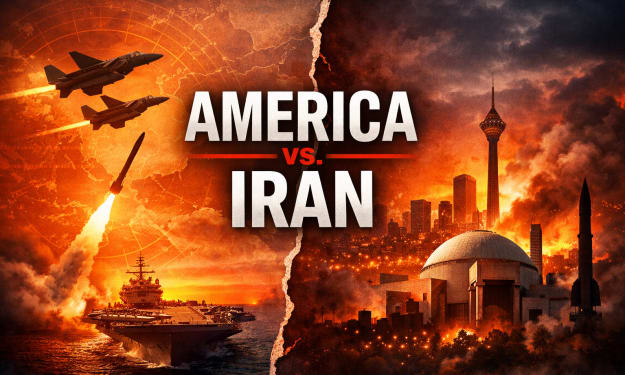
Why America Attacked Iran
“America Just Struck Iran — And the World Is Holding Its Breath” The United States and Israel are now engaged in direct military action against the Islamic Republic of Iran — a dramatic escalation that marks one of the most consequential shifts in American foreign policy in decades. The conflict, which erupted at the end of February 2026, has already reshaped geopolitics in the Middle East and sparked widespread debate over Washington’s objectives and justifications.
By Zakir Ullah7 months ago in Journal
The Empty Locker
I didn’t know his name at first. I only knew the silence. It was a Tuesday in October. The high school hallway buzzed with its usual chaos—backpacks slamming, laughter echoing, sneakers squeaking on linoleum. But one locker stayed shut. No one leaned against it. No one dropped off homework. Just a quiet space where a boy should have been.
By KAMRAN AHMAD7 months ago in Journal
The Suitcase in the Hallway
I didn’t pack lightly. The suitcase sat by the door for three days—half-full, then overflowing, then emptied again. I kept adding things I thought I’d need: my favorite coffee mug, the photo from last summer, the sweater that still smelled like home. Then I’d take them out, convinced they were too heavy, too sentimental, too much.
By KAMRAN AHMAD7 months ago in Journal
The Couple We All Watched Grow Up
I didn’t know them. But I felt like I did. For over a decade, they were part of my life—not as celebrities, but as characters in a story I watched unfold in real time. I saw them at seventeen, awkward and bright-eyed on red carpets, fumbling through interviews, hiding smiles behind their hands. I saw them navigate fame, heartbreak, and the slow, steady work of becoming adults—all while the world watched, judged, and claimed ownership of their journey.
By KAMRAN AHMAD7 months ago in Journal
Why I Swapped My Solitaire for a Women’s Diamond Engagement Band (and Never Looked Back)
There is a specific kind of pressure that comes with getting engaged in the UK. We are conditioned by films, glossy magazines, and now, perfectly filtered Instagram feeds, to believe that a "real" proposal involves a velvet box containing a rock the size of a postage stamp. For a long time, I believed that too.
By Mohd Kaish7 months ago in Journal
💼 Will AI Take Your Job in 2026?
A Practical Plan to Protect Your Career from Automation Introduction: The Question Everyone Is Afraid to Ask Will artificial intelligence take your job in 2026? It’s no longer a science fiction scenario. It’s not a distant future debate. It’s happening now — quietly, steadily, and faster than most people realize. Across industries, AI systems are writing reports, analyzing data, answering customer inquiries, generating code, designing graphics, and even assisting in medical diagnostics. Automation is no longer limited to factories. It has entered offices, creative studios, marketing agencies, law firms, and financial institutions. But here’s the truth most headlines miss: AI is not coming for “jobs.” It’s coming for tasks. And that difference changes everything. The real question is not whether AI will replace humans. The real question is: Are you building a career that is easy to automate — or hard to replace? This article will give you a practical, step-by-step strategy to protect your professional future in 2026 and beyond. --- Understanding the Real Risk Before we talk about solutions, let’s clarify something important. Automation replaces: Repetitive tasks Rule-based decision making Predictable workflows Data-heavy processing Automation struggles with: Creativity Emotional intelligence Leadership Complex judgment Ethical decision-making Human trust If your daily work consists mostly of predictable tasks, you are more exposed to automation risk. But exposure is not destiny. You can reposition yourself. --- Step 1: Learn Skills That Are Hard to Automate The safest careers in the AI era are not those that avoid technology — they are those built on human strengths that machines struggle to replicate. Focus on developing: 1. Creativity AI can generate content. But true creativity is about originality, context, cultural awareness, and emotional nuance. Creativity includes: Strategic thinking Brand storytelling Problem reframing Innovation Creative professionals who understand how to direct AI will outperform those who fear it. 2. Leadership AI can optimize processes. It cannot inspire people. Leadership involves: Decision-making under uncertainty Conflict resolution Vision-setting Accountability Motivation Organizations still need humans to build trust and coordinate teams. 3. Critical Thinking AI generates answers. Critical thinkers evaluate them. Critical thinking includes: Identifying bias Verifying accuracy Challenging assumptions Making complex trade-offs In an AI-saturated world, critical thinkers become more valuable — not less. Action Plan for Step 1: Take a creativity-focused course. Volunteer to lead small projects. Practice analytical reasoning weekly. Solve problems before asking AI. The goal is not to compete with machines. It’s to strengthen what makes you human. --- Step 2: Learn to Use AI Instead of Competing With It Trying to “beat” AI is like trying to out-calculate a calculator. Smart professionals don’t compete with AI. They leverage it. Think of AI as: A productivity multiplier A research assistant A brainstorming partner A draft generator A data analyzer The difference between being replaced and being promoted in 2026 may come down to one question: Do you know how to use AI tools effectively? Examples: Marketers use AI to analyze campaigns faster. Developers use AI for code suggestions. Designers use AI for rapid prototyping. Entrepreneurs use AI for market research. Those who ignore AI risk being outperformed by those who embrace it. Practical AI Strategy: 1. Choose one AI tool relevant to your industry. 2. Learn advanced prompting. 3. Integrate AI into daily workflow. 4. Use AI for speed — but apply human judgment for final decisions. The future belongs to “AI-augmented professionals,” not AI-resistant ones. --- Step 3: Develop One New Digital Skill Every 6 Months The biggest career risk in 2026 is stagnation. Technology evolves fast. If your skillset stays static for two years, you are already behind. Adopt this rule: Every 6 months, add one new digital skill. It doesn’t have to be extreme. Examples: Data analysis basics SEO optimization No-code automation tools Cybersecurity fundamentals Video editing UX design basics AI workflow optimization Small skills compound over time. After 3 years, that’s 6 additional skills. That creates adaptability — the most valuable asset in the AI era. Why This Matters Employers don’t just hire based on current competence. They hire based on growth potential. A professional who consistently upgrades skills signals resilience. Resilience = employability. --- Step 4: Build a Personal Brand Online In 2026, visibility is leverage. If your only professional identity exists inside your employer’s system, you are vulnerable. But if you build a public presence, you create career insurance. A personal brand means: Sharing insights Writing about your expertise Posting professional content Engaging in industry conversations Platforms like: LinkedIn Professional blogs Industry communities allow you to showcase thinking ability, not just job titles. When layoffs happen, visible professionals recover faster. Because opportunity flows toward visibility. How to Start: 1. Post once per week about your industry. 2. Share lessons from projects. 3. Publish thoughtful commentary. 4. Demonstrate expertise publicly. You don’t need millions of followers. You need credibility. --- The Psychological Shift You Must Make The most dangerous mindset in the AI era is: “I hope my job survives.” Hope is not a strategy. The winning mindset is: “How can I make myself irreplaceable?” Irreplaceable professionals: Combine human strengths with AI tools. Adapt faster than technology evolves. Continuously learn. Think strategically. Fear leads to paralysis. Adaptation leads to advantage. --- Jobs Most at Risk vs. Jobs Most Resilient Let’s be realistic. Higher risk: Data entry Basic customer support Routine administrative tasks Simple content generation Repetitive analysis More resilient: Strategic roles Management Creative direction High-level consulting Complex negotiation Emotional and people-centered work If your role is task-heavy, your strategy is simple: Shift toward decision-making and strategy. --- Automation Is a Filter, Not a Destroyer Throughout history, technology has replaced certain roles — but created others. The printing press. The internet. Cloud computing. Each wave eliminated some tasks while opening new industries. AI will do the same. But only for those prepared. --- A 12-Month Career Protection Blueprint Here’s a practical roadmap you can follow: Months 1–3: Audit your current skills. Identify automation risk level. Start learning one AI tool. Months 4–6: Take a creativity or leadership course. Publish 3–5 professional posts online. Apply AI in real projects. Months 7–9: Add a new digital skill. Expand professional network. Lead a small initiative at work. Months 10–12: Evaluate career direction. Strengthen personal brand. Seek projects that require strategy, not repetition. This isn’t theory. It’s implementation. --- The Truth About 2026 Will AI take some jobs in 2026? Yes. Will AI eliminate the need for humans? No. The future workforce will split into three groups: 1. Those replaced by automation. 2. Those competing against AI. 3. Those amplified by AI. Your goal is clear: Be in group three. --- Final Thoughts: The Advantage Is Still Human AI is powerful. But it lacks: Moral judgment Human empathy Cultural sensitivity Vision Accountability Machines optimize. Humans lead. If you: Strengthen creative skills Develop leadership Master AI tools Learn continuously Build visibility You won’t just survive 2026. You’ll thrive in it. The future doesn’t belong to the smartest person in the room. It belongs to the most adaptable. And adaptability is a choice. Start today.
By Ahmed aldeabella8 months ago in Journal
What Are the Different Types of Abaya Styles?
The abaya is more than just a piece of clothing. For many women, it is comfort, identity, and quiet confidence stitched into fabric. Over the years, abaya styles have changed beautifully. They are still modest and graceful, but now they also reflect personal taste, lifestyle, and even mood.
By Shahnaz Khan8 months ago in Journal