advice
Workplace advice for any issue, problem, or concern; from changing careers to co-working advice and decorating needs.
Unlocking Team Potential with Team Building Activities in Rishikesh . AI-Generated.
In today’s fast-paced corporate world, fostering teamwork and collaboration is essential for organizational success. One of the most effective ways to strengthen bonds among employees is through Team Building Activities in Rishikesh. Nestled in the foothills of the Himalayas, Rishikesh offers a perfect blend of adventure, spirituality, and natural beauty, making it an ideal destination for corporate offsites.
By sk vishesh2 years ago in Journal
Spotify : How a Tiny Swedish Startup Took on the Entire Music Industry
In the early 2000s, the music industry was in chaos. CDs were dying, piracy was rampant, and artists were losing money while record labels panicked. It was the Wild West of digital music — a world dominated by illegal downloads from platforms like Napster and LimeWire. But in the middle of this mess, a little-known Swedish entrepreneur, Daniel Ek, saw an opportunity. What followed was one of the most impressive business stories of the modern era — the rise of Spotify, a company that didn’t just survive in a crumbling industry but transformed how music is discovered, shared, and consumed globally. --- A Frustration That Sparked an Idea Daniel Ek wasn’t your typical music executive. He was a tech-savvy kid from Stockholm who started coding at the age of 13. By his early 20s, Ek had already built and sold a successful advertising company. But something about the state of music online bothered him. Piracy was easy, legal options were clunky and expensive, and consumers were frustrated. That’s when Daniel partnered with Martin Lorentzon, a fellow entrepreneur and early investor in his ad business. Together, they set out to answer a simple but bold question: “What if you could listen to any song you wanted — instantly, legally, and for free?” --- Building the Impossible Launched in October 2008, Spotify was designed to be faster and more seamless than piracy itself. The trick was using streaming technology instead of downloads, making songs play immediately without waiting. But convincing record labels to trust a tiny startup from Sweden was a colossal challenge. At the time, labels saw digital as a threat — not a business partner. So Daniel Ek did what any persistent entrepreneur would do: he wore them down. After months of negotiations, Spotify secured licensing deals with major labels, offering them equity stakes in the company and promising a new revenue stream through ad-supported and subscription models. --- Winning Over the World, One Country at a Time Initially, Spotify was only available in a few European countries. It was so exclusive that new users could only join through invitations, which ironically boosted its desirability. In 2011, Spotify finally launched in the United States — a market notoriously tough for foreign companies to crack. But thanks to a strong social media presence, clever marketing, and integrations with Facebook and other platforms, Spotify exploded in popularity. It wasn’t long before Spotify wasn’t just an app — it was the way people listened to music. --- A Business Model That Changed the Game Unlike iTunes, which sold individual songs, Spotify introduced a freemium model: Free users could stream music with ads. Premium users paid a monthly subscription for an ad-free experience, offline listening, and better audio quality. This model appealed to casual listeners and hardcore music lovers alike. By 2015, Spotify had over 75 million users. By 2020, it crossed 345 million, with more than half paying for premium accounts. --- Fighting Off Giants Spotify’s journey wasn’t without threats. Tech titans like Apple, Amazon, and Google entered the streaming space. Apple Music launched with exclusive artist deals and aggressive marketing. But Spotify stayed ahead by focusing on what it did best: Personalized playlists like Discover Weekly and Release Radar. A massive, constantly updated library. Podcast integration, which later included high-profile exclusives like The Joe Rogan Experience. It also invested in data-driven recommendations, understanding that the better the music suggestions, the longer users would stay. --- The IPO That Broke the Rules In April 2018, Spotify went public — but in true Spotify style, it did it differently. Instead of a traditional IPO, they chose a direct listing, avoiding Wall Street underwriters and letting the market set the price. On its first day, Spotify’s valuation reached $26.5 billion. Today, Spotify is available in 180+ countries with over 600 million users worldwide. It remains the world’s largest music streaming platform. --- Lessons from Spotify’s Success Identify a real frustration. Daniel Ek’s annoyance with piracy led to a billion-dollar solution. Be persistent in tough industries. Winning over record labels took time and diplomacy. Innovate with user experience first. Fast, simple, and personalized. Adapt and expand. Spotify’s pivot to podcasts and audiobooks shows it’s never done evolving. --- Final Thought: Spotify’s story proves that even in industries dominated by giants and gatekeepers, a disruptive, user-focused idea — when executed with passion and patience — can change the world.
By SHADOW-WRITES2 years ago in Journal
How to Increase Your Earnings on Vocal Media and Other Platforms
Do you check your Vocal Media earnings all the time? Are you constantly racking your brains about how to boost your earnings on the platform? I get it. The truth is, if you focus on money and nothing else, you’ll be very disappointed.
By Edina Jackson-Yussif --personal growth 2 years ago in Journal
Top 10 Baby Store Brands for Online Shopping in Pakistan. AI-Generated.
1. MomYom MomYom is the official distributor of PatPat® in Pakistan, offering trendy and budget-friendly kids' clothing. The brand specializes in soft, comfortable, and fashionable babywear, making it a favorite among parents who want both style and affordability.
By Sara Javed2 years ago in Journal
Healing From Within: Trauma, Body Image, and the Power of Specialized Therapy
Trauma doesn’t always look like a visible wound. Sometimes, it’s the silent grief carried in the heart, the shame etched into self-perception, or the fear hidden behind a smile. Whether it’s the devastation of betrayal or the quiet torment of body image obsession, true healing begins not with fixing—but with feeling, understanding, and transforming.
By Isabella Parker2 years ago in Journal
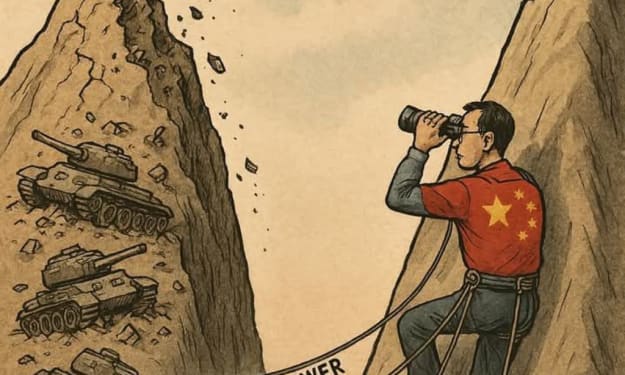
China vs. U.S
Trade War and China Strategy The geopolitical competition between China and the United States is a watershed event in contemporary world politics. According to Kishore Mahabubani's analysis, the United States is showing very clear strategic weaknesses in its competition against China, and China is meeting that challenge very systematically, subtly, and pragmatically.
By Rohitha Lanka2 years ago in Journal
Seven remote methods to generate money online in 2025
Seven remote methods to generate money online in 2025 — how I earn $1000 per day from anyplace in the world. I am living proof of how the digital era has changed our source of income. I have established many revenue sources over the years that enable me to work remotely from everywhere—no office, no set hours, no geographical restrictions. This guide will present 7 honest remote income ideas that I have personally used to reach the point of earning over $1,000 a day — and sometimes even more, if you are wondering how you also can start working remotely as a total beginner in 2025. This article is grounded on personal experience rather than financial advice and intended only for entertainment and educational purposes. 1. Zero-Inventory Online Retailers (Dropshipping) Starting an eCommerce business used to involve stockpiling inventory and running shipping; those days have gone. Starting a zero-inventory online business using tools including Shopify and vendors via AutoDS applications can begin in 2025. It works in this way:
By ELIA MWAPINGA2 years ago in Journal
With Mamata Banerjee's assistance, RSS has expanded its presence in West Bengal. AI-Generated.
On Sunday, April 20, 2025, the Communist Party of India (Marxist) launched a scathing attack on West Bengal Chief Minister Mamata Banerjee, accusing her of indirectly facilitating the rise of the Rashtriya Swayamsevak Sangh (RSS) in the state. The accusation intensified the already charged political atmosphere in Bengal. Senior CPI(M) leaders made the remarks during a public rally in Kolkata, alleging that the Trinamool Congress (TMC) government's policies and selective appeasement had enabled the Hindutva organization to establish a significant foothold in the state's social and political spheres.
By Parvej Hossain 2 years ago in Journal
Airbnb: The $100 Billion Idea That Was Born Out of Desperation
In October 2007, Joe Gebbia and Brian Chesky were two struggling roommates living in a cramped San Francisco apartment. They were behind on rent, low on cash, and unsure about what to do next with their careers. What they didn’t realize was that in a matter of months, they would stumble upon an idea — almost by accident — that would reshape the way people travel, disrupt the global hotel industry, and create a company valued at over $100 billion. This is the remarkable true story of how Airbnb was born. --- The Idea That Started on an Air Mattress It all began with a problem. The annual Industrial Design Conference was coming to San Francisco, and every hotel room in the city was booked solid. Joe and Brian, both design graduates, saw an opportunity. With no spare rooms but a small living room, they decided to set up three air mattresses on their apartment floor and offer travelers a place to stay for $80 a night. They called it the “AirBed & Breakfast” and even served homemade breakfast in the morning. To their surprise, three guests actually booked the space — a woman from Boston, a man from India, and another from Utah. The experience was positive for everyone. The guests loved the local connection, and Joe and Brian realized this quirky idea might have bigger potential. --- Turning a Quirky Experiment into a Startup After the conference, the roommates roped in their engineer friend, Nathan Blecharczyk, and officially co-founded what would later be known as Airbnb. But the early days were far from glamorous. When they tried pitching their business to investors in Silicon Valley, they were met with skepticism. Most investors dismissed the idea of strangers paying to sleep in other people’s homes as risky, odd, and unscalable. To keep themselves afloat, the trio even started selling novelty breakfast cereals — “Obama O’s” and “Cap’n McCain’s” — during the 2008 U.S. presidential election. The limited-edition boxes were a hit, earning them around $30,000 and just enough cash to keep working on Airbnb. --- The Struggles and the Breakthrough The turning point came when they were accepted into Y Combinator, a prestigious startup accelerator. The program gave them seed funding, mentorship, and access to valuable investors. But most importantly, it pushed them to fix their biggest issue: trust. In the early days, Airbnb’s listings lacked quality photos, making homes look unappealing. So Joe and Brian personally visited hosts in New York, took professional-grade photos of their properties, and uploaded them to the platform. Almost immediately, bookings surged. This small yet smart move taught them a crucial startup lesson: small tweaks can trigger big changes. --- Airbnb Goes Global Over the next few years, Airbnb slowly expanded beyond the U.S., attracting hosts and guests from around the world. Travelers loved the concept of experiencing a destination through the eyes of locals, often staying in unique properties like treehouses, castles, boats, and tiny homes. Despite early controversies over regulations, safety concerns, and opposition from hotel chains, Airbnb persevered by implementing stronger safety measures, identity verification, host guarantees, and a user-friendly app. By 2015, Airbnb was valued at over $20 billion. By 2020, even amid a global pandemic that devastated travel, the company adapted quickly by promoting local stays, long-term rentals, and virtual experiences. --- The IPO That Made History In December 2020, Airbnb went public. Despite fears over the future of travel during COVID-19, its stock price skyrocketed on the first day of trading, giving Airbnb a market valuation of over $100 billion — making it one of the largest IPOs in U.S. history. Today, Airbnb has hosted over 1 billion guests in more than 220 countries. --- Lessons from Airbnb’s Success Solve a real, immediate problem. Airbnb started as a fix for their own rent troubles and a citywide hotel shortage. Be persistent despite rejection. Most early investors rejected them — over 20 times. Don’t underestimate small changes. Upgrading listing photos was a game-changer. Adapt quickly. Airbnb thrived during crises by pivoting and innovating. --- Final Thought: Airbnb’s story isn’t just about a billion-dollar business — it’s a reminder that great ideas don’t always start with perfect plans or ideal conditions. Sometimes, all it takes is an air mattress, a little hustle, and the courage to believe in something others think is crazy.
By SHADOW-WRITES2 years ago in Journal