advice
Workplace advice for any issue, problem, or concern; from changing careers to co-working advice and decorating needs.
God is the Author of Wisdom
What if the wisdom you’ve been searching for… isn’t something you learn, but someone you meet? In a world overflowing with opinions, hot takes, self-help books, and endless scrolling, there’s a question that cuts through the noise like lightning through a storm:
By Randolphe Tanoguem2 years ago in Journal
The Dark Reality of Dimonds
Diamonds are often regarded as symbols of love, luxury, and status. Advertisements glorify them as "forever," and they dominate engagement rings, red carpets, and royal regalia. However, beneath their sparkling surface lies a troubling reality that involves human suffering, environmental destruction, and exploitative practices. The journey of a diamond, from the earth to the display case, is often riddled with blood, corruption, and inequality. Blood Diamonds and Human Suffering The term "blood diamond" or "conflict diamond" refers to diamonds mined in war zones and sold to finance armed conflict against governments. This practice became widely known during the brutal civil wars in African nations such as Sierra Leone, Angola, and the Democratic Republic of Congo during the 1990s and early 2000s. Rebel groups seized control of diamond-rich areas, exploiting local populations and using the profits to fund war efforts. Miners, including children, were often forced to work in horrific conditions. Many were subjected to violence, mutilation, and even death. Families were displaced, communities destroyed, and entire regions destabilized — all in pursuit of profits from diamonds. The 2006 film Blood Diamond, starring Leonardo DiCaprio, helped raise awareness about this issue, but the problem still persists in less visible forms. The Illusion of Ethical Regulation In response to international pressure, the Kimberley Process Certification Scheme was established in 2003 to prevent the trade in conflict diamonds. While it brought some improvement, the system has major flaws. The Kimberley Process only defines conflict diamonds as those used to fund rebel movements against recognized governments. It does not account for human rights abuses committed by governments themselves or by companies operating under legal contracts. Furthermore, the certification process is often easy to manipulate. Diamonds can be smuggled across borders and mixed with ethically sourced stones to obscure their origin. As a result, consumers are frequently misled into thinking their purchase is conflict-free when it may not be. Environmental Devastation Diamond mining has a severe environmental impact, especially in developing countries. Open-pit mining, one of the most common methods, involves digging massive holes in the earth, displacing soil and ecosystems. Forests are cleared, rivers diverted, and landscapes permanently altered. In some cases, abandoned mines become toxic wastelands, contaminating water supplies and harming wildlife. Alluvial mining, often used in riverbeds, causes erosion and disrupts local agriculture and fishing industries. In areas where regulations are weak or non-existent, companies may leave without rehabilitating the land, creating long-term ecological disasters. Exploitation and Inequality The diamond industry generates billions of dollars annually, but very little of this wealth reaches the communities where diamonds are mined. In many cases, local workers earn meager wages and are exposed to dangerous working conditions without protective equipment or health care. Child labor is still prevalent in some regions. Meanwhile, multinational corporations and elites profit immensely, widening the gap between rich and poor. Countries rich in natural resources like diamonds often suffer from what's known as the "resource curse" — where resource wealth leads to corruption, conflict, and economic stagnation instead of development. The Rise of Alternatives In recent years, there has been a growing demand for ethically sourced and sustainable diamonds. Lab-grown diamonds, which are chemically and visually identical to natural ones, have emerged as a popular alternative. These stones are created using high-tech processes that eliminate the need for mining, significantly reducing environmental and ethical concerns. Some companies also offer traceable diamonds mined under strict ethical standards, but verifying their claims remains a challenge. Consumers can play a role by researching brands, asking questions about sourcing, and considering alternatives to traditional diamonds. Conclusion The beauty of a diamond often masks a dark and disturbing reality. From financing wars and human rights abuses to environmental destruction and economic exploitation, the diamond industry has a long history of injustice. While steps have been taken to address these issues, much more work is needed to ensure that diamonds no longer come at the cost of human and ecological suffering. As consumers, we hold the power to demand change. By choosing ethically sourced or lab-grown diamonds, supporting transparent businesses, and spreading awareness, we can help shift the industry toward a more humane and sustainable future. Behind every glittering gem lies a choice — and it’s up to us to make the right one.
By Shah saab IT2 years ago in Journal
Be Your Own Muse. Top Story - May 2025.
"I am my own muse. I am the subject I know best. The subject I want to know better." -Frida Kahlo I wanted to use the note taking function on my Kindle Scribe a little bit more. Just to help me stay consistent with journalling. I bought three of Nina Madsen's books on my birthday. It was a steal of a deal for only $0.99 per book. I started working on this journal and the first few prompts captured my attention.
By Chloe Unfiltered2 years ago in Journal
Why Creativity is the Key to Digital Marketing Success
In a noisy sea of content, ads, and infinite scrolling, one thing can break through it all: creativity. A hilarious campaign or strides taken for a memorable brand story, striking visual identity - creativity fuels the success of digital marketing and branding in more ways than one. For any business wanting to stand out in a digital environment, it is not whether creativity is the question, it is how creatively you can deliver your message.
By PromotEdge2 years ago in Journal
Empowered by Faith: Understanding Women’s Rights in Islam
Islam, often misunderstood in the modern world, is a religion that granted women rights and dignity at a time when they were widely oppressed and marginalized. Long before the West began recognizing women's rights, Islam had laid down a comprehensive framework to honor, protect, and empower women — not just spiritually, but socially, economically, and politically. 1: Spiritual Equality At its core, Islam teaches the complete spiritual equality of men and women. The Qur’an is replete with verses emphasizing that both are accountable before God and will be rewarded or punished based on their own deeds — not their gender. > “Indeed, the Muslim men and Muslim women, the believing men and believing women… Allah has prepared for them forgiveness and a great reward.” (Qur’an 33:35) This verse is one of many that affirm the equal spiritual standing of men and women in the eyes of their Creator. Women in Islam are encouraged to seek knowledge, perform worship, and fulfill moral obligations just as men are. 2: Economic Independence One of the most progressive aspects of Islam regarding women's rights is their economic independence. A woman in Islam has the right to own property, run a business, and earn her own income. Her wealth remains solely hers — even after marriage. The Qur’an makes this clear: > “For men is a share of what they have earned, and for women is a share of what they have earned.” (Qur’an 4:32) Unlike many pre-Islamic societies and even many cultures today, Islam never placed a woman’s wealth under the control of her husband or male guardian. 3:Rights in Marriage Marriage in Islam is not a one-sided contract; it is a mutual agreement based on love, respect, and mercy. A woman has the right to accept or reject a marriage proposal. Forced marriages are not permissible in Islam. Once married, a woman has the right to a mahr (a marriage gift), maintenance, kind treatment, and, if needed, the option to seek divorce. The Prophet Muhammad (peace be upon him) emphasized the good treatment of women, famously stating: > “The best of you are those who are best to their women.” (Tirmidhi) This was a revolutionary message in a time and culture where women were often treated as property. 4: Education and Knowledge Islam not only permits women to seek knowledge, it encourages them to do so. The Prophet said: > “Seeking knowledge is an obligation upon every Muslim.” (Ibn Majah) Throughout Islamic history, women have been scholars, poets, teachers, and jurists. Aisha bint Abu Bakr, the Prophet’s wife, is among the most prolific narrators of Hadith and was an authority in Islamic law. 5: Misconceptions and Cultural Practices Many practices wrongly attributed to Islam — such as denying girls education, forcing women into marriages, or barring them from working — stem not from Islamic teachings but from cultural traditions or patriarchal misinterpretations. Islam, in its pure form, provides dignity, honor, and rights to women. It's essential to distinguish between what Islam teaches and what some Muslims practice. 6: Political and Social Participation Women in early Islamic society played active roles in public life. They participated in battles, took part in the marketplace, and even advised leaders. One notable example is Shifa bint Abdullah, appointed by Caliph Umar as a market inspector — a position of authority and public responsibility. Conclusion Islam views women as valuable, independent individuals with rights equal to men in many spheres of life. Their responsibilities may differ due to natural roles, but their value in the eyes of God remains the same. As global conversations around gender equality continue, it's vital to return to authentic Islamic sources to understand the true essence of women’s rights in Islam — rights that were divinely granted over 1,400 years ago. #MyFaithMyPower #WomenOfColor #WomensRightsAreHumanRights #EqualityForAll #DiversityInFaith #AmericanMuslims #VoicesUnheard #JusticeForAll #IntersectionalFeminism
By Dr Gabriel 2 years ago in Journal
How AI Helped Me Survive Office Pressure as an HR Admin
It started in 2023 — just casual scrolling through social media when I kept seeing people talk about AI. They said it could help with office work, communication, and even ease daily stress. At first, I didn’t pay much attention. It sounded a bit too good to be true.
By DanishMahdi2 years ago in Journal
Make Money on Autopilot With These 5 Smart Passive Income Ideas
Key Takeaways To successfully generate passive income, you must provide value in a way that isn't directly tied to your time. There are five smart ways to earn extra income without minimal ongoing effort, including investing in stocks, affiliate marketing, selling digital products and more. The key is to focus on one or two strategies, automate them as much as possible and use the income to support and grow your primary business.
By ELIA MWAPINGA2 years ago in Journal
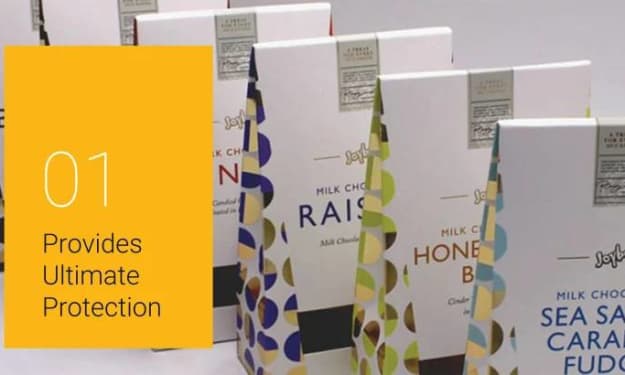
Boost Your Brand Impact: 5 Reasons Why Packaging Matters
In today’s competitive market, packaging is more than just encasing your products—it’s about making a statement. At Palsa Design Studio, we understand that your packaging is the first interaction customers have with your brand. It’s the silent ambassador that speaks volumes about your product’s quality, your brand’s ethos, and your commitment to excellence. Here’s why smart packaging design is indispensable for your brand’s success.
By Palsa Design Studio2 years ago in Journal