
Sustainable CBD Packaging: Why Green Choices Are Becoming a Buying Decision
Sustainable CBD Packaging

Sustainable CBD Packaging: Why Green Choices Are Becoming a Buying Decision
The CBD industry markets itself on wellness, nature, and clean living. Yet for a long time, a lot of it arrived wrapped in exactly the kind of packaging that clashes with those values: mixed-material boxes, unnecessary plastic, and inserts destined for landfill. That gap between message and material is closing fast, and the reason is simple: the people buying CBD increasingly care what their purchase is wrapped in.
For any brand in this space, sustainable packaging has shifted from a nice gesture to something that shapes whether a certain kind of customer buys at all. Here's why it matters and what "sustainable" actually means in practice.
The CBD buyer is exactly the buyer who cares
Think about who reaches for CBD. Broadly, it skews toward health-conscious, wellness-minded, values-driven consumers, the same demographic that reads ingredient lists, avoids single-use plastic where they can, and rewards brands that align with their principles. This isn't a fringe preference for them; it's part of how they judge whether a brand is trustworthy.
That creates an obvious tension. A customer drawn to CBD for its natural, plant-derived appeal notices when it turns up in wasteful, over-engineered packaging. The dissonance undercuts the brand's whole pitch. Sustainable packaging, by contrast, reinforces that the outside finally matches the promise on the inside.
What "sustainable packaging" actually means
The phrase gets used loosely, so it's worth being concrete. In practice, greener CBD packaging tends to involve some combination of:
● Recyclable materials — cardboard and paperboard that go straight into standard recycling streams rather than mixed materials that can't be separated.
● Recycled content — packaging made partly or wholly from post-consumer waste, reducing demand for virgin material.
● Biodegradable or compostable options — materials designed to break down rather than persist.
● Soy or water-based inks instead of petroleum-based ones.
● Minimalist design — using less material overall, cutting unnecessary layers, inserts, and void fill.
● Right-sizing — boxes built to fit the product rather than oversized packaging that wastes material and shipping space.
Not every brand can do all of these at once, and that's fine. Sustainability here is a direction of travel, not a single box to tick.
Less can genuinely be more
One of the most effective sustainable moves is also one of the cheapest: simply using less. Over-packaging a small bottle inside a large box, padded with layers of filler wastes material, raises shipping costs, and increasingly reads as tone-deaf to buyers.
Paring packaging back to what the product actually needs cuts waste and often lowers cost at the same time. It also tends to look better. Clean, minimal packaging reads as modern and considered, which happens to be exactly the aesthetic much of the wellness market responds to. Sustainability and good design pull in the same direction here rather than against each other.
Protection still comes first
Here's the balance that matters: sustainable packaging can't come at the expense of doing its actual job. CBD is sensitive to light, heat, air, and moisture, all of which degrade the product over time. Eco-friendly materials still have to protect what's inside, or the whole exercise backfires a product that spoils early because its packaging couldn't shield it properly is far more wasteful than the packaging ever saved.
The goal is packaging that's both genuinely protective and genuinely responsible. That's a real design challenge, and it's one reason working with a packaging partner who understands the category matters. Purpose-built CBD packaging can be designed around sustainable materials and protective performance together, rather than treating one as a compromise on the other.
Watch out for greenwashing
A word of caution, because buyers are getting sharper about this. Slapping a leaf icon and the word "eco" on a box that's no greener than before doesn't fool the audience it's aimed at and when it's spotted, it does more damage than plain, honest packaging ever would.
The credible approach is specificity. Say what the material actually is, what it's made from, and how to dispose of it. "Recyclable FSC-certified board, printed with water-based inks" tells a customer something real. Vague claims tell them to be suspicious. In a category already fighting for trust, honesty about packaging is part of earning it.
The business case, briefly
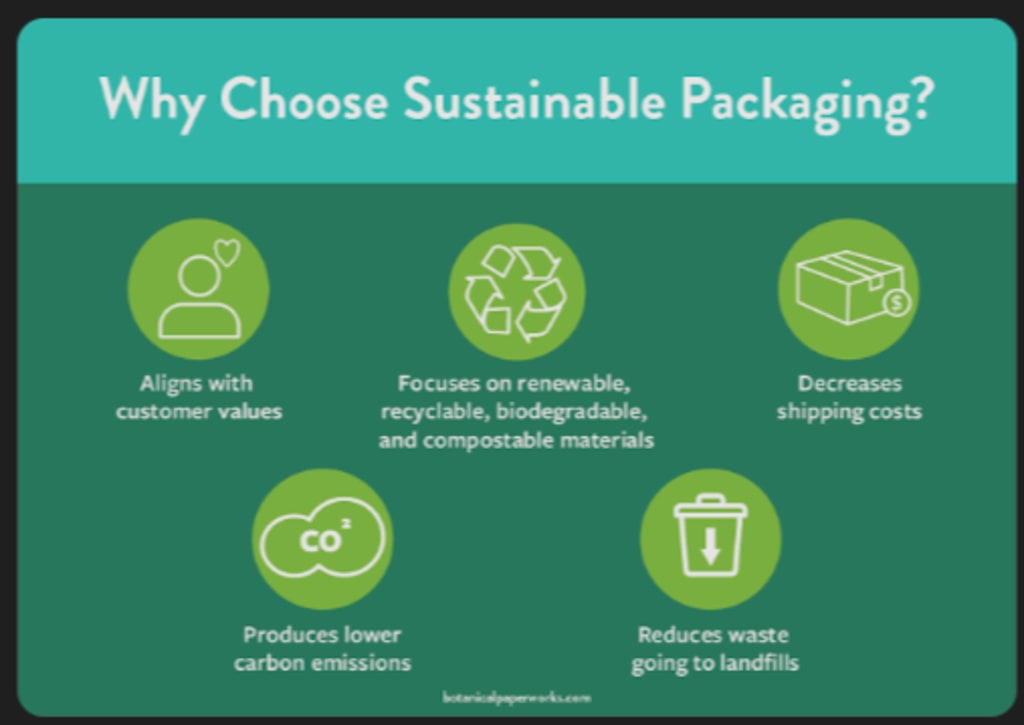
It's tempting to frame sustainable packaging purely as a cost, but that misses the point. Beyond the environmental benefit, it functions as a genuine differentiator in a lookalike market, it aligns the packaging with the values the product is already sold on, and minimalist, right-sized formats frequently reduce material and shipping costs. Add tightening regulation and retailer expectations around packaging waste, and the direction is fairly clear: brands that get ahead of it aren't just doing the responsible thing; they're future-proofing.
The takeaway
For CBD brands, sustainable packaging is no longer a bonus feature; it's increasingly part of the buying decision for the exact audience the industry depends on. Done well, it reinforces everything the product already stands for: natural, clean, considered. Done cynically, it backfires. The brands that win here are the ones that treat it honestly, choosing genuinely better materials, protecting the product properly, and being straight with customers about both.
In a market where trust is hard-won and easily lost, that consistency between what a brand says and what it wraps its product in is worth far more than any icon on a box.
About the Creator
Gulshan
SEO Services, Guest Post & Content Writter.
Enjoyed the story? Support the Creator.
Subscribe for free to receive all their stories in your feed.
Comments
There are no comments for this story
Be the first to respond and start the conversation.