
Survival at Stake: Ukraine’s Deepening Economic and Fiscal Crisis
Kryvyi Rih Silenced War Costs Soar Aid Delayed Businesses Scale Back as Winter Looms

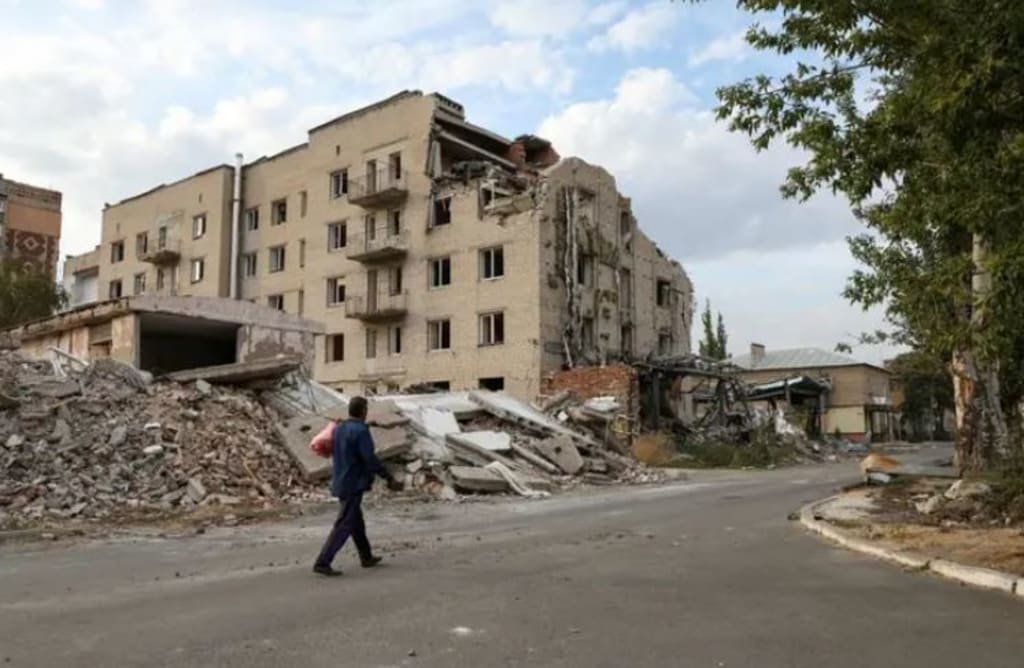
Kryvyi Rih, the sprawling industrial hometown of President Volodymyr Zelenskiy, once thrived as one of Ukraine’s economic heartlands. Today, it stands as a symbol of the country’s widening crisis. Russian missile strikes have fallen repeatedly on ArcelorMittal’s massive mining and steel complex, the city’s largest employer, forcing operations to a halt. Furnaces that burned day and night for decades are cold; trains that carried ore and steel no longer run. Mayor Oleksandr Vilkul does not mince words: “The situation is actually worse than anywhere else, apart from the front line itself.” For its six hundred thousand residents, and for the nation as a whole, the challenge is no longer just winning; it is surviving.
The Steel Industry Silenced, Revenues Collapse
What has happened in Kryvyi Rih is being repeated across Ukraine. Before the invasion, steel and related industries accounted for roughly one-tenth of the country’s entire economic output. Today, giant mills in Zaporizhzhia and other industrial centres stand idle. Export routes have been severed. The escalation of Russian drone and missile attacks through the summer has targeted not only factories but ports, railways, warehouses, and commercial districts, disrupting supply chains, shuttering businesses, and eroding the tax base just as the cost of defending the nation rises.
The numbers tell a grim story. In the first nine months of this year, Ukraine’s government collected about forty-two billion dollars in tax revenue — even as defence spending alone surpassed forty-four billion. Attacks on infrastructure and commerce have cost the state more than one billion one hundred million dollars in lost revenue since the start of the year, with total losses projected to reach nearly one billion six hundred million by December. Economist Oleksandra Myronenko of the Centre for Economic Strategies describes this as more than a temporary shortfall: “We have not a temporary but a structural problem with revenues at the very time when spending really requires resources.”
The Rising Price of Defence
Two years ago, a single day of fighting cost Ukraine approximately one hundred and forty million dollars. That figure has climbed to one hundred and ninety million, and it continues to rise. The growing expense stems from multiple pressures: the need to deploy more advanced, longer-range weapons; the expanded size of the armed forces and their wage bill; and the mounting cost of supporting families of those killed, wounded, or missing in action. In the first nine months of the year alone, defence expenditure exceeded forty-four billion dollars, a sum that does not include military equipment provided directly by allies. Parliament’s budget committee head Roksolana Pidlasa puts it plainly: “Expenditure will continue to rise. This is one more pragmatic reason why the United States and Europe need to act faster to force Russia to end this war.”
Foreign Aid Caught in Limbo
For more than four years, Ukraine has maintained financial stability through massive support from Western partners, nearly two hundred billion dollars in total since the full-scale invasion began. Today, however, nearly twenty-nine billion five hundred million dollars of that promised assistance is delayed. The disbursements have stalled over parliament’s failure to pass long-demanded tax reforms and anti-corruption legislation, measures Kyiv has resisted but allies insist are necessary to ensure funds are used responsibly. Prime Minister Sergii Koretskyi has ordered non-essential capital spending frozen until December, hoping the required laws will pass by October 15 and unlock the funds. “Only then will we get all the money,” he has told reporters. “This is absolutely vital.”
Even once released, accelerating these payments creates its own risk: advancing funds due next year eases pressure now but deepens the fiscal gap when 2027 arrives, exactly as elections in key European nations such as France and Poland may make continued support politically harder to sustain. The European Commission has confirmed it has identified resources to bridge this year’s gap, but the long-term path remains uncertain.
Businesses Pause, Agriculture Bears the Brunt
The strain is spreading through every sector of the economy. Business confidence is darkening; capital investment is being put on hold or cancelled entirely. Industrial park founder Vasyl Khmelnytskyi has scrapped plans to build three new factories near Kyiv, explaining that “the risks are simply too great right now both for the business and for the people.” No sector has felt this more acutely than agriculture, Ukraine’s historic backbone and largest export earner. Grain exports through Black Sea ports fell by more than thirty-six percent in September compared with a year earlier. Economy Minister Oleksandr Kravchenko estimates that roughly forty billion dollars in export revenue is at risk this year due to the continuing blockade.
Against this backdrop, projected economic growth has slipped to between zero point five and one point five percent, modest, but far below what is needed to rebuild. For next year, the outlook is even starker: the proposed defence budget alone would reach one hundred and ten billion dollars, leaving an estimated unfunded gap of more than thirty-two billion. Finance Minister Sergii Marchenko has raised the possibility of using frozen Russian central bank assets some two hundred and ten billion euros immobilised in the European Union, to cover the shortfall, calling it the only just and sustainable path forward. Until that is resolved, however, the country faces a winter of difficult choices.
A Winter of Survival
Back in Kryvyi Rih, the priority is keeping hospitals open, lights on in schools, and buses running, the quiet, essential work of holding a community together through relentless hardship. “It is about survival,” Mayor Vilkul has said. “Right now, we need to survive.” That is no longer just a local sentiment; it has become the defining challenge for the entire nation. Every delayed payment, every missile strike, every cancelled investment pushes Ukraine closer to the edge. The question is not whether the country will fight on, its resolve remains unshaken, but whether the resources to sustain that fight will arrive in time.
About the Creator
Mark Lim
Hi I am mark an automotive student and a car, tech and food enthusiast ! Im gonna try and post daily & hope you enjoy what I write and do share my page with people you know. I would gladly appreciate it! Cheers
Enjoyed the story? Support the Creator.
Subscribe for free to receive all their stories in your feed.
Comments
There are no comments for this story
Be the first to respond and start the conversation.