
Strait of Hormuz Under Fire: U.S.-Iran Combat Reignites Oil Market Volatility
As American forces strike Iranian launchers and President Trump threatens key export infrastructure, the return of direct military conflict sends crude prices surging and reshapes the global energy security landscape.

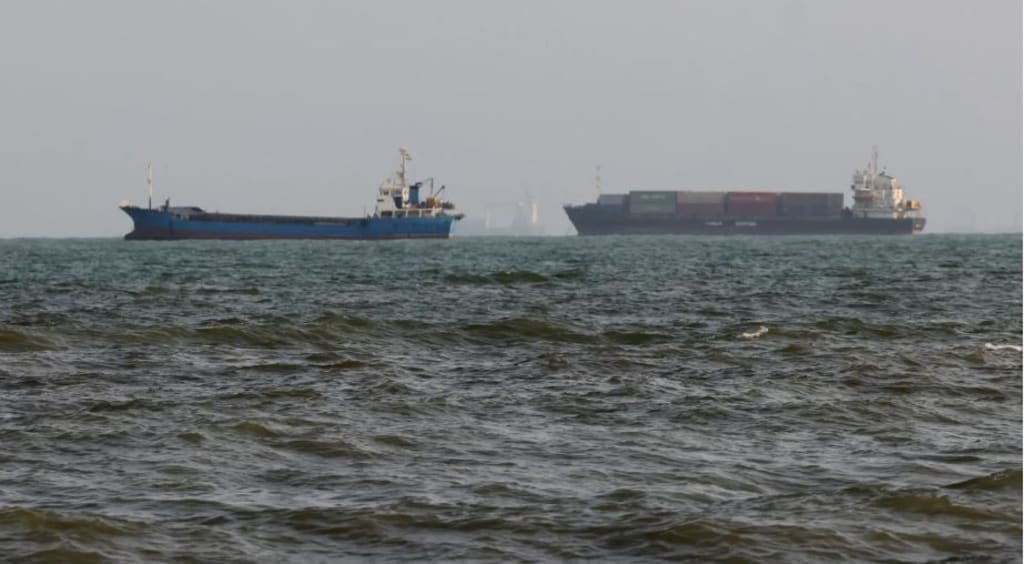
Global oil markets experienced a sharp jolt on Monday as the fragile geopolitical equilibrium in the Middle East fractured once again. Futures for international benchmark Brent crude climbed 2.7% to close at $90.49 a barrel, while U.S. West Texas Intermediate gained 2.8% to settle at $85.76. The price surge was a direct market response to a significant escalation in hostilities: U.S. forces struck two Iranian rocket launchers on Larak Island, marking the first publicly acknowledged American combat operation against Iranian positions since late July. This return to direct kinetic engagement between Washington and Tehran has not only spiked near-term crude prices but has also fundamentally altered the risk calculus for global energy supplies, signaling that the six-month-old Middle East conflict is entering a more dangerous and economically consequential phase.
The military exchange has been both swift and reciprocal. According to Navy Capt. Tim Hawkins, a spokesperson for U.S. Central Command, Islamic Revolutionary Guard Corps (IRGC) forces were observed preparing to launch rockets armed with sea mines into the Strait of Hormuz. The preemptive U.S. strike successfully destroyed the launchers but resulted in Iranian casualties, prompting Tehran to retaliate with attacks on American military bases in Jordan. This tit-for-tat escalation confirms what energy analysts have long feared: the conflict is no longer contained to proxy skirmishes or maritime harassment but has evolved into direct state-on-state combat involving critical chokepoints. The Strait of Hormuz, through which roughly one-fifth of the world’s consumed oil passes daily, is now an active theater of war, transforming theoretical supply risks into immediate operational realities for global shipping and insurance markets.
Political rhetoric from Washington has further amplified market anxiety. In a Sunday evening post on Truth Social, President Donald Trump extended his military threats beyond tactical targets to Kharg Island, Iran’s primary oil export terminal, declaring it “going to be blown to smithereens!” While such statements may serve domestic political purposes, their impact on global commodity markets is profound and immediate. Kharg Island handles the vast majority of Iran’s crude exports; any credible threat to its infrastructure introduces the possibility of removing over a million barrels per day from an already tight global market. Markets are now pricing in not just the current disruption but the tail risk of a full-scale infrastructure war that could permanently impair regional export capacity. Traders are forced to weigh whether this rhetoric represents imminent policy or strategic posturing, but in an environment of active combat, the distinction becomes increasingly blurred.
The structural implications of this escalation extend far beyond Monday’s price movements. As Tamas Varga of PVM Oil Associates noted, the Iranian crisis has likely changed the security status quo in the Middle East permanently. Supply risks are no longer transient events but persistent features of the market landscape, meaning oil inventories will continue to deplete in the coming weeks and months as precautionary demand rises and physical flows face disruption. Goldman Sachs reinforced this assessment, highlighting that rising strikes on refineries across both the Middle East and Russia have severely constrained an already stretched global refining system. When crude supply disruptions coincide with refining bottlenecks, the result is amplified volatility in both raw crude and refined products like gasoline and diesel, pushing margins to new highs and transmitting inflationary pressure directly to consumers worldwide.
Ultimately, Monday’s market reaction reflects a sobering reality: the era of relatively stable Middle East energy flows may be over. The combination of direct U.S.-Iran combat, threats to critical export infrastructure, and constrained global refining capacity has created a perfect storm for sustained oil price elevation. While diplomatic off-ramps may still exist, the current trajectory suggests that energy markets must now operate under a permanent war premium. For policymakers, central banks, and consumers alike, the implications are clear: the cost of geopolitical instability is being paid at the pump, and until the security architecture of the Persian Gulf is stabilized, the global economy will remain vulnerable to every missile launched and every threat uttered in this increasingly volatile theater.
About the Creator
Mark Lim
Hi I am mark an automotive student and a car, tech and food enthusiast ! Im gonna try and post daily & hope you enjoy what I write and do share my page with people you know. I would gladly appreciate it! Cheers
Enjoyed the story? Support the Creator.
Subscribe for free to receive all their stories in your feed.
Comments
There are no comments for this story
Be the first to respond and start the conversation.