
State Library Exchange: RMIT and Scape Forge $270M Transit-Oriented Hub Above Melbourne’s New Metro Station
In one of the CBD’s largest recent commercial leases, a 46-level tower integrating academic facilities and student housing atop the State Library station redefines urban campus strategy while anchoring Melbourne’s identity as a global education city.

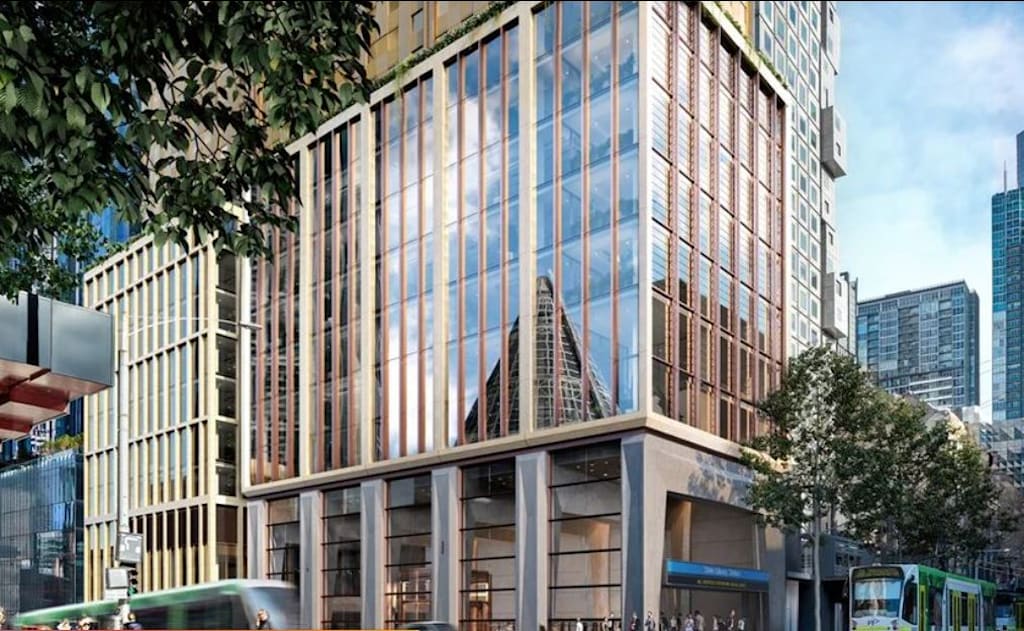
RMIT University and student accommodation provider Scape have committed over $270 million to develop the State Library Exchange, a landmark 46-level mixed-use tower rising directly above Melbourne’s forthcoming State Library train station. Scheduled for completion in 2029, the project represents one of the most significant commercial lease agreements in Melbourne’s central business district in recent years and embodies a new paradigm for urban university infrastructure: vertically integrated, transit-connected, and purpose-built for collaboration between academia, industry, and student life. RMIT will occupy the first nine levels for teaching, research, and industry partnership spaces, while Scape, part of The Living Company group, will develop and operate student accommodation on the upper floors. This arrangement transforms a major public transport node into a living ecosystem where learning, residence, and innovation converge, reinforcing Melbourne’s status as a world-leading student destination at a time when cities globally are reimagining the relationship between higher education and urban form.
The strategic significance of State Library Exchange extends far beyond its physical footprint. For RMIT, it is a cornerstone of its Living Places Plan, a long-term vision to reshape its 67-hectare Melbourne campus serving more than 104,000 students. Vice-Chancellor Professor Alec Cameron described the investment as “a defining moment for RMIT’s future,” emphasizing that proximity to State Library Station embeds the university within one of Melbourne’s most vital civic and cultural precincts. This isn’t merely expansion; it’s intentional placemaking. By situating academic and residential functions atop a key Metro Tunnel station, one of five new underground stops in Victoria’s $11 billion rail project, RMIT ensures seamless connectivity across the city while activating the station precinct with continuous daytime and evening activity. Property executive director Seamus McCartney called it “a city-shaping commitment,” noting it serves as a catalyst for broader campus evolution rather than an isolated facility. The project also builds on RMIT’s existing partnership with Scape at Franklin Street, where University Pathways students already live and learn under one roof, demonstrating a tested model now scaled to anchor a major transit hub.
For Scape and its parent, The Living Company, the development reinforces a national growth strategy centered on institutional partnerships and transit-oriented sites. Just last week, The Living Company acquired Boston University’s Sydney Academic Centre in Chippendale for $72.5 million, adding to a portfolio managing over $18 billion in assets and operating upwards of 30,000 beds nationwide. CEO Anouk Darling highlighted that locating student housing directly above a major transit node “reinforces Melbourne's standing as a destination for students,” framing the project as evidence of “meaningful relationships” that sustain the city’s educational competitiveness. This reflects a broader shift in student accommodation from commoditized dormitories to integrated lifestyle and learning environments. By embedding housing within academic and civic infrastructure, Scape moves beyond transactional lodging toward holistic student experience design, a response to evolving expectations around well-being, belonging, and accessibility in post-pandemic higher education.
Critically, the State Library Exchange arrives as Melbourne grapples with dual challenges: revitalizing its CBD amid hybrid work trends and accommodating surging international student enrollments. Transit-oriented developments like this offer a solution by concentrating density where infrastructure exists, reducing car dependency while activating underutilized airspace above public assets. The Victorian Government’s Metro Tunnel project creates rare opportunities for such integration, but realizing them requires aligned incentives between public agencies, universities, and private operators. Here, the alignment appears robust: RMIT gains strategic presence without capital-intensive land acquisition; Scape secures a prime, demand-resilient asset; and the state activates a station precinct with built-in foot traffic and economic spillover. Yet success will depend on execution beyond construction. Will industry partners truly co-locate and collaborate? Can student housing foster community rather than isolation? Does transit connectivity translate into equitable access for non-CBD residents? These questions will determine whether the tower becomes a vibrant nexus or merely a tall building.
Ultimately, State Library Exchange signals a maturation of Australia’s education-city compact. It rejects the siloed campus model in favor of porous, multi-functional urbanism where education infrastructure doubles as civic infrastructure. In doing so, it offers a template for other cities navigating similar pressures: leverage public transit investments to anchor knowledge economies, partner across sectors to share risk and reward, and design for human connection as much as functional efficiency. As Melbourne prepares to welcome thousands more students in coming decades, projects like this won’t just house or teach them they’ll shape how they experience the city itself. That may be the most valuable return on $270 million.
About the Creator
Mark Lim
Hi I am mark an automotive student and a car, tech and food enthusiast ! Im gonna try and post daily & hope you enjoy what I write and do share my page with people you know. I would gladly appreciate it! Cheers
Enjoyed the story? Support the Creator.
Subscribe for free to receive all their stories in your feed.
Comments
There are no comments for this story
Be the first to respond and start the conversation.